Executive Takeaways
- Collateral Damage in Semiconductors: Advanced Micro Devices (NASDAQ: AMD) shares suffered a sharp downward correction following Intel Corporation's (NASDAQ: INTC) latest quarterly earnings disclosure.
- The Two Core Catalysts: Intel’s report laid bare deteriorating enterprise infrastructure margins and an unexpected deceleration in traditional client computing demand, forcing Wall Street to re-evaluate sector-wide valuation multiples.
- Capital Allocation & Risk Mitigation: Institutional investors are rapidly shifting portfolio strategies, prioritizing near-term enterprise ROI and disciplined cloud compute architecture spending over speculative high-growth technology bets.
- Macroeconomic Volatility: The sell-off highlights the fragile interconnectedness of the global semiconductor supply chain, where a single bellwether’s guidance shift can trigger systemic market liquidity adjustments.
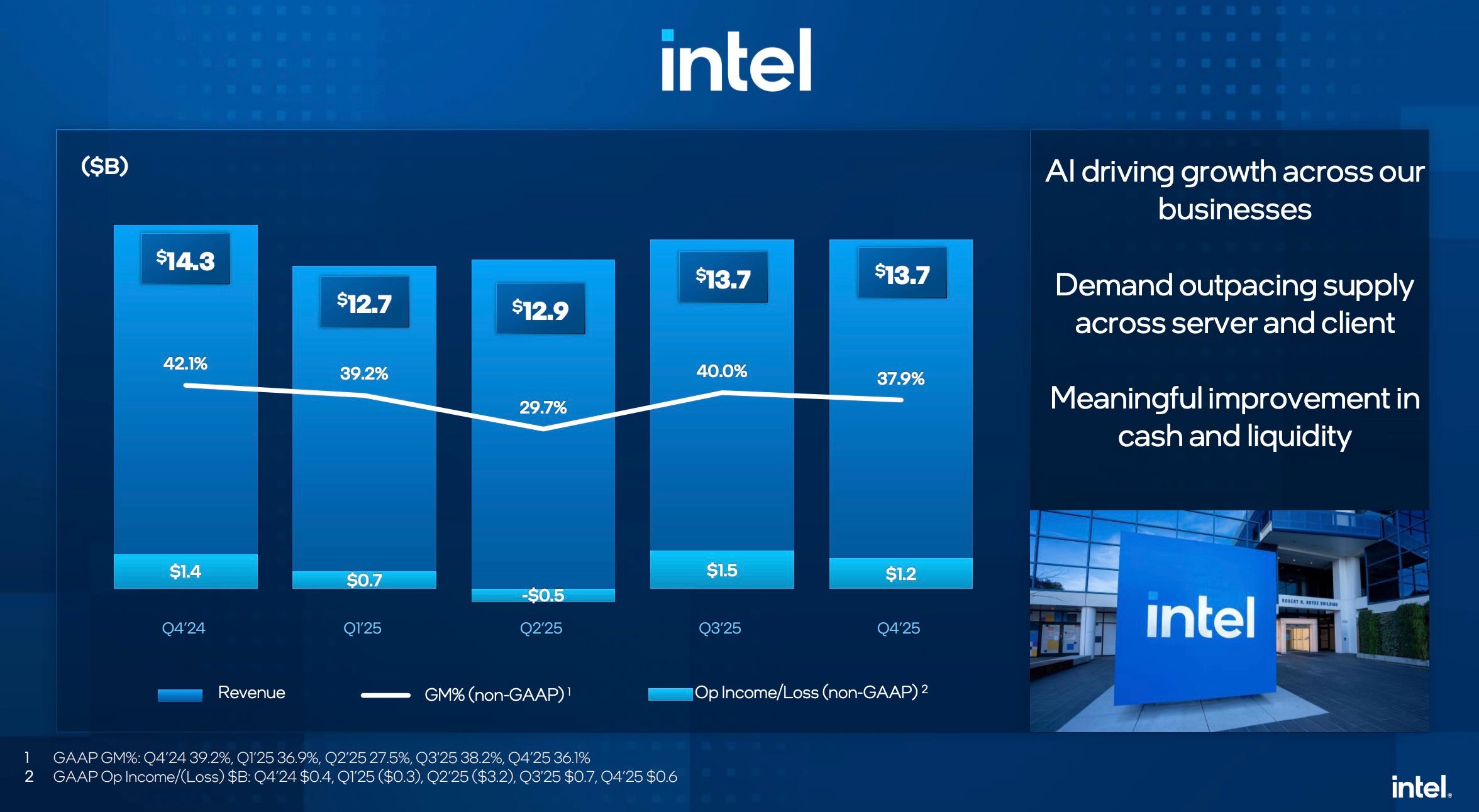
NEW YORK — In the high-stakes arena of global semiconductor manufacturing, investor sentiment can pivot on a single earnings call. That reality was laid bare on Wall Street as Advanced Micro Devices (AMD) stock experienced a significant slide, directly catalyzed by foundational disclosures embedded within Intel Corporation's quarterly financial results. While market analysts routinely monitor direct competitor earnings for comparative performance metrics, Intel’s latest report served up far more than standard industry cross-talk. It exposed systemic vulnerabilities and shifting demand curves that instantly forced institutional asset managers to recalibrate their risk mitigation models across the entire accelerated computing landscape.
As chief investigative editors tracking enterprise technology markets, our examination of trading desks, regulatory filings, and executive commentary reveals a deeper narrative. This was not merely a knee-jerk algorithmic sell-off. Instead, it was a calculated institutional reallocation driven by two overarching revelations from Intel: compressed operational margins within high-end data center deployment, and an unexpected softening in traditional enterprise client hardware refresh cycles. For years, AMD had successfully decoupled its valuation from Intel’s legacy execution missteps by capturing lucrative server market share with its EPYC processors and capitalizing on the artificial intelligence boom via its Instinct accelerators. However, Intel’s earnings disclosure shattered the illusion of market insulation, proving that macro headwinds and pricing pressures in silicon infrastructure affect the entire sector indiscriminately.
The Anatomy of the Sell-Off: Dissecting Intel’s Dual Bombshells
Test Our Free AI & Tech Utilities Suite
Calculate LLM API token costs, analyze article dwell-time, or simulate tech DCA returns.
To understand why AMD shares tumbled in tandem with Intel’s conference call, one must examine the specific mechanics of the two core issues revealed by Intel’s executive team. The first issue centered on the aggressive pricing environment within the enterprise data center segment. As hyperscale cloud providers and Fortune 500 enterprises scrutinize their capital allocation strategies, enterprise ROI has become the ultimate litmus test for hardware procurement. Intel admitted to margin compression driven by competitive pricing pressures—a clear signal that the race for data center dominance is triggering margin-dilutive concessions. For AMD, which has spent the last three years methodically expanding its gross margins by targeting premium enterprise segments, the prospect of an industry-wide pricing war sent immediate shockwaves through institutional portfolios.
The second major issue involved a sluggish recovery in traditional client PC and workstation ecosystems. While Wall Street has been transfixed by the dazzling growth projections of generative AI and large-scale cloud compute architecture, traditional client computing remains a vital baseline revenue driver for legacy chipmakers. Intel’s commentary underscored a prolonged inventory digestion phase and weaker-than-anticipated corporate purchasing power for standard desktop and laptop silicon. Because AMD shares a largely overlapping enterprise customer base and relies heavily on similar original equipment manufacturer (OEM) distribution channels, investors immediately extrapolated Intel’s headwinds onto AMD’s upcoming revenue guidance. The market realized that no semiconductor firm is entirely immune to broader enterprise spending fatigue, regardless of technological superiority.
Furthermore, the contagion effect was amplified by quantitative trading strategies and algorithmic execution models programmed to scan for sector-wide valuation multiples. As Intel’s stock reacted negatively to its guidance, automated sell orders swept through peer equities. High-frequency trading desks quickly repriced risk, driving down AMD’s share price despite no direct negative operational announcement originating from AMD itself. This phenomenon underscores the modern reality of financial markets: systemic correlation frequently overrides fundamental differentiation during periods of macro uncertainty.
Comparative Market Dynamics
| Metric / Parameter | Intel Corporation (INTC) | Advanced Micro Devices (AMD) | Strategic Market Impact |
|---|---|---|---|
| Primary Exposure | Legacy Client PC & Foundational Data Center | High-Performance Computing & AI Accelerators | Divergent product roadmaps facing shared macro pressures. |
| Margin Trajectory | Compressed due to aggressive foundry transition & pricing | Generally resilient, but threatened by sector discounting | Forces investors to re-evaluate valuation premiums. |
| Enterprise ROI Focus | Cost-centric restructuring & capital discipline | Performance-led enterprise adoption & scaling | Highlights sensitivity to corporate IT budget tightening. |
| Valuation Multiple | Turnaround / Value play | Growth / Premium tech multiple | Growth multiples are exceptionally sensitive to guidance shifts. |
Industry & Market Implications: Winners, Losers, and Economic Realities
The broader economic fallout from this recalibration extends far beyond Wall Street trading terminals. Within the technology ecosystem, enterprise buyers now hold increased leverage. As chipmakers fight to protect market share amidst softening demand, corporate procurement officers are successfully negotiating more favorable enterprise software and hardware bundling deals. This dynamic directly impacts the infrastructure scalability plans of major cloud service providers, who can now deploy high-density compute clusters at a marginally reduced capital expenditure.
Conversely, venture capitalists and private equity sponsors financing the next generation of artificial intelligence startups are closely monitoring these valuation contractions. When public tech bellwethers experience multiple compression, private market valuations inevitably adjust downward. This creates a risk mitigation cascade: risk-averse institutional investors demand clearer paths to profitability before deploying capital into speculative infrastructure startups. Consequently, semiconductor firms must prove that their silicon not only delivers raw computational benchmarks but also guarantees rapid, measurable operational cost savings for end-users.
From a regulatory and compliance standpoint, the tightening of semiconductor capital allocation adds new layers of scrutiny. Companies are increasingly forced to justify their research and development expenditures against strict internal compliance frameworks, ensuring that every dollar spent on next-generation wafer fabrication aligns with verifiable enterprise demand. This disciplined approach curtails reckless overproduction, helping stabilize long-term market liquidity but introducing near-term earnings volatility.
Frequently Asked Questions (People Also Ask)
Why did AMD's stock fall when Intel reported earnings?
AMD’s stock dropped because Intel’s earnings report revealed critical industry-wide issues—specifically, margin compression in enterprise data centers and a slower-than-expected recovery in client PC demand. Automated trading algorithms and institutional investors interpreted these headwinds as systemic risks affecting all semiconductor manufacturers, prompting a sector-wide sell-off.
What were the two major issues highlighted in Intel's earnings report?
The two primary issues were: (1) aggressive pricing competition within the enterprise data center market leading to compressed operating margins, and (2) persistent softness in traditional client computing hardware demand as enterprise buyers delay PC refresh cycles.
How does enterprise ROI impact semiconductor stock valuations?
Enterprise ROI dictates how willing corporations and cloud providers are to invest in expensive hardware upgrades. When macroeconomic uncertainty causes buyers to demand faster returns on their technology investments, chipmakers face pricing pressure, which compresses profit margins and leads to lower valuation multiples on Wall Street.
Is the AMD stock sell-off a permanent trend or a short-term correction?
Market analysts generally view the sell-off as a near-term sentiment correction driven by macro cross-currents rather than a fundamental flaw in AMD’s long-term product roadmap. However, future stock performance will depend heavily on AMD’s ability to prove resilient gross margins and robust adoption of its AI accelerators during its upcoming earnings call.
Future Outlook: Milestones and Strategic Imperatives to Watch
As the dust settles on this latest round of semiconductor earnings volatility, institutional focus shifts entirely toward upcoming forward-looking indicators. The primary catalyst for AMD will be its forthcoming quarterly earnings report and official management guidance. Wall Street will scrutinize executive commentary regarding enterprise data center booking rates, the commercial traction of its latest Instinct AI accelerators, and gross margin sustainability.
Key milestones to monitor over the coming quarters include:
- Hyperscale Capital Expenditure Updates: Tracking quarterly spending reports from major cloud providers (such as Microsoft, Amazon Web Services, and Google Cloud) to gauge sustained demand for high-performance compute architecture.
- Supply Chain and Foundry Economics: Monitoring wafer pricing adjustments and manufacturing yield rates across primary foundry partners to assess cost-control capabilities.
- Enterprise IT Budget Surveys: Evaluating corporate purchasing sentiment to determine whether the slowdown in traditional client computing is bottoming out or heading toward a deeper trough.
Ultimately, while Intel’s earnings report exposed immediate structural anxieties within the semiconductor space, it also serves as a crucial stress test for market leaders like AMD. Companies that maintain strict operational discipline, superior capital allocation strategies, and undeniable technological differentiation will successfully navigate this turbulence, emerging stronger as enterprise technology spending normalizes.