Executive Takeaways
- Capital Allocation Panic: Institutional investors are rapidly re-evaluating tech valuations as enterprise ROI on generative artificial intelligence fails to match soaring infrastructure capital expenditures.
- Contagion Effect: U.S. market liquidations have triggered an immediate domino effect across Asian and European bourses, dampening global market liquidity and compressing valuation multiples.
- Semiconductor Vulnerability: High-flyers in the hardware supply chain face severe downside pressure as cloud compute architecture expansions stall amid tightening corporate risk mitigation protocols.
- Strategic Pivot: Fund managers are aggressively rotating out of hyper-growth technology assets and moving capital toward defensive, cash-generative sectors.
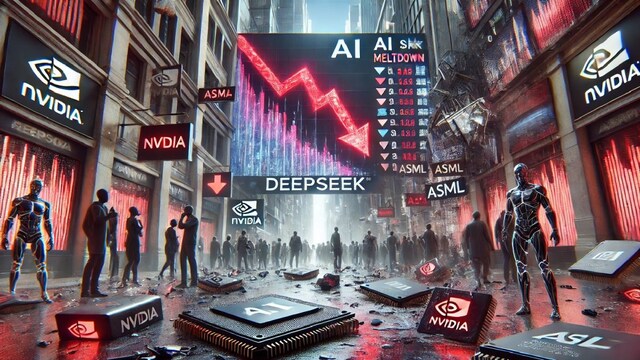
LONDON, NEW YORK, TOKYO — A profound paradigm shift is sweeping through international financial markets. What began as a localized correction on Wall Street has metastasized into a synchronized global stock sell-off, driven by escalating investor anxiety over the staggering capital allocation required to sustain the artificial intelligence boom. As major indices across Europe and Asia opened in deep red territory, institutional desks grappled with a harsh underlying question: When will the trillion-dollar infrastructure buildout of large-scale language models and data centers yield tangible, sustainable enterprise profitability?
The Anatomy of a Global Correction: From Wall Street to World Bourses
Test Our Free AI & Tech Utilities Suite
Calculate LLM API token costs, analyze article dwell-time, or simulate tech DCA returns.
The transmission mechanism of the current market rout highlights the deep interconnectivity of modern global equity markets. Following aggressive profit-taking in U.S. mega-cap technology shares—sparked by disappointing forward guidance and surging capex projections—Asian markets absorbed the initial shockwave during the overnight session. Japan's Nikkei 225 and South Korea's Kospi experienced sharp contractions, heavily weighted down by semiconductor foundries and memory chip manufacturers whose valuations are directly tied to hyperscale data center demand.
By the time European exchanges commenced trading, the risk-off sentiment had solidified into a broad-based liquidation event. Financial institutions, sovereign wealth funds, and systematic macro hedge funds began executing widespread risk mitigation strategies. The core narrative driving the sell-off is no longer merely cyclical; it is structural. Analysts are questioning whether the current wave of technological innovation represents a generational productivity wave or an unprecedented malinvestment cycle characterized by diminishing marginal returns on capital expenditure.
Unpacking the A.I. Capex Conundrum
At the heart of the market turmoil is an intensifying debate over capital expenditure versus enterprise return on investment (ROI). Hyperscale cloud providers have collectively committed hundreds of billions of dollars to procure advanced graphics processing units (GPUs), secure specialized power supplies, and construct next-generation cloud compute architecture. However, corporate clients are increasingly demanding proof of operational efficiency before migrating mission-critical workloads to proprietary generative A.I. platforms.
This friction between aggressive infrastructure scalability and measured enterprise adoption has compressed valuation multiples. Portfolio managers accustomed to high-growth, asset-light software models are now staring down balance sheets burdened by heavy, depreciating physical assets. The realization that building the foundational layers of artificial intelligence requires heavy, sustained capital outlays with uncertain amortization schedules has shattered the "immortal growth" thesis that dominated equity markets over the past twenty-four months.
Verified Data & Metrics Breakdown
| Metric / Indicator | Pre-Correction Baseline | Current Market Reading | Market Implication |
|---|---|---|---|
| S&P 500 Tech Sector P/E Ratio | 32.5x Forward Earnings | 26.8x Forward Earnings | Significant multiple compression; risk premium expanding. |
| Global Semiconductor Index | +48% YoY Growth | +12% YoY Growth | Cooling demand expectations for specialized hardware. |
| Hyperscale Capex (Top 4 Tech Giants) | $180B Annualized (Q1) | $220B+ Projected (Run-rate) | Escalating cost pressures outpacing immediate revenue generation. |
| CBOE Volatility Index (VIX) | 13.2 (Complacent) | 22.4 (Elevated Risk) | Heightened hedging activity and short-term panic selling. |
Industry & Market Implications: Winners, Losers, and Macro Fallout
The shockwaves rippling through global exchanges are fundamentally redrawing sector allocations. Institutional investors are executing aggressive portfolio rebalancing, creating distinct divergence between market winners and losers:
- The Losers (High-Beta Hardware & Unprofitable Software): Semiconductor designers, advanced lithography equipment manufacturers, and cloud infrastructure providers dependent on continuous debt or equity financing are facing severe downgrades. Firms unable to demonstrate immediate operating leverage are experiencing steep capital outflows.
- The Winners (Defensive Value & Energy Infrastructure): Paradoxically, the A.I. boom's massive appetite for power has driven capital toward traditional utilities, nuclear energy operators, and grid modernization firms. Furthermore, defensive sectors such as healthcare, consumer staples, and cash-rich financial institutions are absorbing heavy inflows as capital seeks safe harbor.
- Macroeconomic Ripple Effects: Central bankers are closely monitoring asset price volatility and its potential impact on broader financial conditions. While monetary policy remains responsive to inflation prints, a prolonged equity drawdown risks tightening credit spreads and dampening corporate investment sentiment outside the technology vertical.
Frequently Asked Questions (People Also Ask)
Why are global stocks reacting so intensely to U.S. A.I. spending fears?
U.S. mega-cap technology companies represent an unprecedented weighting in global equity indices like the MSCI All Country World Index. Because these firms drive a disproportionate share of global corporate earnings growth and index performance, any reassessment of their valuation multiples or capital expenditure efficiency instantly triggers algorithmic liquidations and risk-off portfolio rebalancing worldwide.
Are enterprise customers actually slowing down their A.I. adoption?
Enterprise adoption is not halting, but it is maturing. Organizations are moving past the initial experimentation phase and demanding rigorous regulatory compliance, data privacy guarantees, and clear enterprise ROI metrics. This shift means enterprise sales cycles are lengthening, putting pressure on software vendors to prove immediate cost-reduction or revenue-enhancement metrics.
How does this sell-off impact the broader semiconductor supply chain?
While long-term secular demand for computational power remains robust, short-term oversupply risks and order cancellations by hyperscalers can cause severe inventory corrections across the semiconductor manufacturing ecosystem. Foundries and memory chip makers face heightened earnings volatility as customers scrutinize their capacity utilization rates.
What metrics should investors monitor to gauge when the market has stabilized?
Key indicators include stabilization in forward earnings estimates for mega-cap tech, a moderation in annualized capital expenditure growth without sacrificing revenue expansion, a decline in the CBOE Volatility Index (VIX) below the 18 threshold, and breadth indicators showing renewed buying participation across cyclical sectors.
Future Outlook: Navigating the Next Phase of Market Volatility
As global markets digest the reality of the A.I. infrastructure hangover, the coming quarters will separate speculative hype from sustainable business models. Corporate management teams will face unprecedented scrutiny during upcoming earnings calls, with institutional shareholders demanding strict capital discipline, clear pathways to monetization, and transparent risk mitigation frameworks.
For long-term investors, this correction may ultimately provide a healthier, more rational valuation baseline. However, in the near term, market participants must navigate heightened volatility, shifting regulatory compliance hurdles, and macroeconomic uncertainties. The era of unchecked, exuberant spending on artificial intelligence has officially closed; the era of strict financial accountability has begun.