The Make-or-Break Week: Global Flash PMIs to Unmask Inflation Paths and Central Bank Dilemmas
NEW YORK & MUMBAI — Global financial markets are bracing for a critical reality check this week. As the debate over the timing and depth of central bank rate cuts reaches a fever pitch, the upcoming release of February’s Flash Purchasing Managers’ Index (PMI) data is set to provide the most comprehensive, real-time diagnostic of the global economy yet. Published by S&P Global, these leading indicators will either validate the market’s optimistic "soft landing" narrative or expose stubborn, underlying stagflationary currents that could force central banks to keep interest rates higher for longer.
With corporate earnings season winding down, the macroeconomic spotlight shines brightly on the week of February 16, 2026. Investors are searching for definitive clues on whether the global manufacturing slump has bottomed out and if the services sector can continue to shoulder the burden of global growth without reigniting wage-price spirals.
The S&P Global Flash PMIs: The Ultimate Leading Indicator
Scheduled for release on Thursday, February 19, the S&P Global Flash PMIs for the United States, the Eurozone, the United Kingdom, Japan, and Australia will offer the first look at economic conditions for February. Because PMI surveys measure real-time corporate decision-making—including new orders, employment, backlog, and output prices—they historically lead official GDP data by several weeks.
According to Jingyi Pan, Economics Associate Director at S&P Global Market Intelligence, the upcoming data will be pivotal in assessing whether global demand is genuinely recovering or merely stabilizing under the weight of restrictive monetary policies.
"The February flash PMIs will be crucial in confirming whether the early-year momentum observed in several major economies has legs," Pan noted in the weekly preview. "Of particular importance will be the price indices. If we see selling prices rising again, it will severely complicate the path forward for the Federal Reserve and the European Central Bank."
Three Critical Themes to Watch This Week
As trading floors prepare for a high-velocity week, institutional desks are focusing on three primary macroeconomic pillars:
- The U.S. Resilience vs. Inflation Trade-Off: While U.S. consumer spending has remained remarkably robust, any acceleration in the services PMI price-charged index could signal that service-sector inflation remains sticky. This would likely push bond yields higher and delay anticipated Fed rate cuts.
- The Eurozone’s Slow Crawl Out of Stagnation: After months of hovering near the contractionary 50-point threshold, analysts are looking to see if the Eurozone's manufacturing engine—particularly in Germany—is showing signs of life, or if the bloc remains mired in a low-growth trap.
- Global Supply Chain Integrity: Amid ongoing geopolitical tensions and maritime shipping diversions, supply chain delivery times will be scrutinized. Any lengthening of delivery times could presage a renewed uptick in global goods inflation.
Regional Deep Dive: What’s at Stake?
United States: Will the "Goldilocks" Scenario Hold?
In the U.S., the composite PMI has remained comfortably in expansionary territory, driven by a resilient services sector. However, the manufacturing sector has flirted with contraction. If the February Flash manufacturing PMI ticks above the neutral 50.0 mark, it will signal a broader, healthier economic expansion. Conversely, if input costs rise alongside this expansion, the Federal Reserve’s "higher-for-longer" rhetoric will gain significant traction, potentially rattling equity markets.
Europe and the UK: Searching for a Turning Point
In the Eurozone, the narrative remains one of fragile stabilization. The consensus forecast points to a marginal improvement in the Eurozone Composite PMI, though it is expected to remain uncomfortably close to contraction. The United Kingdom, meanwhile, has shown surprising resilience in recent services sector prints. A strong showing in the UK PMIs could embolden the Bank of England to maintain its hawkish posture, supporting the British Pound but squeezing heavily indebted households.
Asia-Pacific: Japan’s Pivot and China's Post-Holiday Pulse
In Asia, Japan's flash PMI will be closely watched for signs of wage-driven inflation, which could give the Bank of Japan further justification to normalize its historic monetary policy. Meanwhile, global markets will be digesting the post-Lunar New Year economic activity levels from China, looking for signs that Beijing's targeted stimulus measures are finally translating into sustained industrial demand.
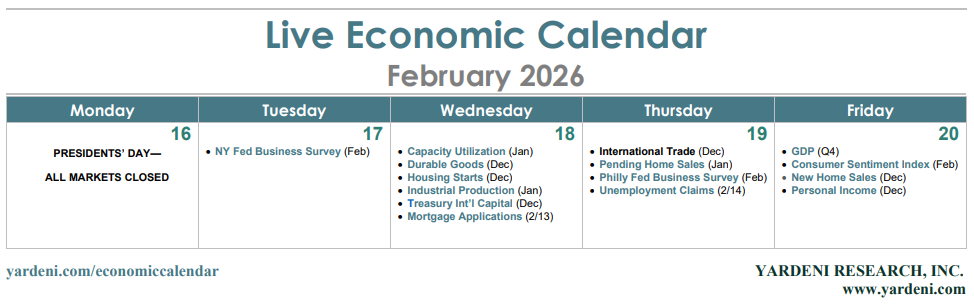
Macroeconomic Calendar: Key Releases for the Week of February 16, 2026
To help navigate the dense week ahead, here is a curated schedule of the most market-sensitive economic releases, compiled from S&P Global and various national statistical agencies:
| Date (2026) | Country / Region | Economic Indicator / Event | Market Impact Potential |
|---|---|---|---|
| Feb 17 | Australia | RBA Monetary Policy Meeting Minutes | Moderate |
| Feb 18 | United States | Weekly Crude Oil Inventories | Moderate |
| Feb 19 | Japan | S&P Global Flash Manufacturing & Services PMI | High |
| Feb 19 | Eurozone | S&P Global Flash Composite PMI | High |
| Feb 19 | United Kingdom | S&P Global / CIPS Flash PMI | High |
| Feb 19 | United States | S&P Global Flash Composite PMI | High |
| Feb 20 | Canada | Retail Sales (MoM) | Moderate |
The Investor Outlook: Navigating the Macro Crosscurrents
For Chief Investment Officers and retail traders alike, the message for the coming week is clear: do not ignore the pricing power sub-indices within the PMI reports. While the headline growth numbers get the media attention, the underlying inflation metrics (input prices and output charges) will dictate the next moves of the world's most powerful central bankers.
If the PMIs reveal a global economy that is expanding while inflationary pressures continue to cool, the rally in risk assets could find a second wind. However, if growth accelerates alongside rising input costs, the market must prepare for a repricing of interest rate expectations, putting pressure on both equities and long-duration bonds.
Frequently Asked Questions (FAQ)
1. Why are the S&P Global Flash PMIs considered more important than other lagging indicators?
Unlike backward-looking data such as Gross Domestic Product (GDP) or industrial production—which report on what happened months ago—PMIs are forward-looking. They survey purchasing managers who are actively making inventory, hiring, and pricing decisions today. Consequently, they are highly sensitive to shifts in the economic cycle and act as reliable leading indicators for monetary policy decisions.
2. What PMI level indicates expansion, and how should investors interpret a "stagflationary" reading?
A PMI reading above 50.0 indicates economic expansion compared to the previous month, while a reading below 50.0 indicates contraction. A "stagflationary" reading occurs when the headline growth index falls or remains near 50.0 (indicating stagnant growth), but the input and output price sub-indices rise significantly (indicating persistent inflation). This scenario is particularly challenging for markets because it limits the ability of central banks to cut rates to support growth.