The Space Dividend: How NASA Quietly Built the Backbone of Modern Medicine
WASHINGTON — When taxpayers and Capitol Hill budget hawks scrutinize the multi-billion-dollar ledgers of aerospace exploration, debate inevitably centers on distant targets: the moon, Mars, and orbital platforms. Yet, behind closed doors in the nation’s leading teaching hospitals and life-science venture labs, a vastly different narrative commands the boardroom. Over six decades of spaceflight, the National Aeronautics and Space Administration (NASA) has acted as one of the most prolific, if unheralded, incubators of modern medical technology.
From the miniaturized fuel pumps designed for the Space Shuttle to the deep-space algorithms calibrated to map celestial craters, federal investments originally greenlit for the Cold War space race have yielded high-margin clinical transformations. What began as survival systems for astronauts operating in the unforgiving void of microgravity has systematically revolutionized inpatient triage, surgical oncology, cardiology, and digital diagnostics across global healthcare systems.
The Heart Pump Engineered by Rocket Scientists
Perhaps no single clinical intervention demonstrates this cross-disciplinary transfer more dramatically than the ventricular assist device (VAD). In the late 1980s, pioneering cardiac surgeon Dr. Michael DeBakey recognized an engineering impasse in mechanical circulatory support: conventional artificial pumps caused severe turbulence, shearing delicate red blood cells and triggering fatal clots.
DeBakey turned to engineers at NASA’s Johnson Space Center in Houston, including David Saucier, who had survived his own heart transplant. The multidisciplinary team analyzed the high-pressure fuel turbopumps powering the Space Shuttle’s main engines. By applying computational fluid dynamics used to control volatile liquid hydrogen, the team engineered an axial-flow miniature impeller. The resulting technology, commercialized as the MicroMed DeBakey VAD (now the HeartAssist 5), weighed a fraction of traditional pumps, operated with minimal friction, and kept critically ill end-stage heart failure patients alive while awaiting donor organs.
From Lunar Cartography to Diagnostic Imaging
Long before magnetic resonance imaging (MRI) and computed tomography (CT) became standard clinical lines in hospital revenue models, NASA was grappling with an image-fidelity crisis. During the Apollo program, analog images beamed from the lunar surface arrived distorted by cosmic noise and extreme distance. Scientists at the Jet Propulsion Laboratory (JPL) developed sophisticated digital image processing techniques to clean, sharpen, and reassemble raw signals into high-resolution terrain maps.
That algorithmic framework laid the groundwork for modern medical imaging. When radiologists today adjust digital radiographic scans, review cross-sectional CT slices, or utilize computer-aided detection (CAD) algorithms to flag early-stage breast cancer, they are employing the mathematical descendants of JPL’s spaceflight software.
Executive Briefing: Space-Derived Clinical Breakthroughs
- Infrared Tympanic Thermometry: Born from JPL sensors that measured the temperature of distant stars and interstellar gas clouds, handheld ear thermometers translate infrared radiation from the tympanic membrane in seconds, mitigating infection risks across pediatric and intensive care units worldwide.
- Advanced Laser Surgery: Laser tracking systems developed for autonomous spacecraft docking maneuvers were adapted to measure corneal position 4,000 times per second during LASIK and PRK ophthalmic procedures, ensuring sub-millimeter surgical accuracy.
- Photodynamic Cancer Therapy: High-emittance light-emitting diodes (LEDs), originally engineered to cultivate plants aboard the Space Shuttle, were repurposed to activate light-sensitive oncology drugs to treat deep-seated glioblastomas and accelerate soft-tissue wound repair.
- Prosthetics and Dynamic Orthotics: Shock-absorbing viscoelastic polyurethanes—colloquially known as "memory foam," created to cushion astronaut cockpits—have fundamentally reduced pressure points and skin breakdown in lower-limb prostheses, while NASA robotics architectures power next-generation bionic limbs.
Cross-Industry Transfer: NASA Technology in Contemporary Medicine
| NASA Origin / Mission Program | Original Aerospace Function | Modern Healthcare Application | Clinical Impact |
|---|---|---|---|
| Space Shuttle Fuel Turbopumps | Liquid rocket propellant movement | Ventricular Assist Devices (VADs) | Prevents red blood cell lysis in mechanical heart pumps |
| JPL Digital Signal Processing | Lunar and planetary image enhancement | CT, MRI, and Full-Field Digital Radiography | Eliminates diagnostic artifacts; improves cancer detection |
| Star-Temperature Infrared Scanners | Measuring thermal signatures of celestial bodies | Infrared Aural / Forehead Thermometers | Non-invasive, rapid clinical temperature triage |
| Autonomous Target Tracking | Spacecraft rendezvous and orbital docking | Refractive LASIK Eye Surgery Scanners | Compensates for involuntary microsaccades of the human eye |
| Astronaut Telemetry Monitoring | Continuous remote vital-sign transmission | Modern Telemedicine & Smart ICU telemetry | Enables scalable, non-colocated patient critical care |
The Economic Rationale: The ROI of Orbital R&D
For institutional investors and pharmaceutical conglomerates, the economic yield from NASA’s scientific pipeline illustrates the potent mechanics of dual-use research. According to data tracked via the agency's Technology Transfer Program, commercial spinoffs have created billions in downstream domestic revenue, alongside tens of thousands of skilled biomedical engineering jobs.
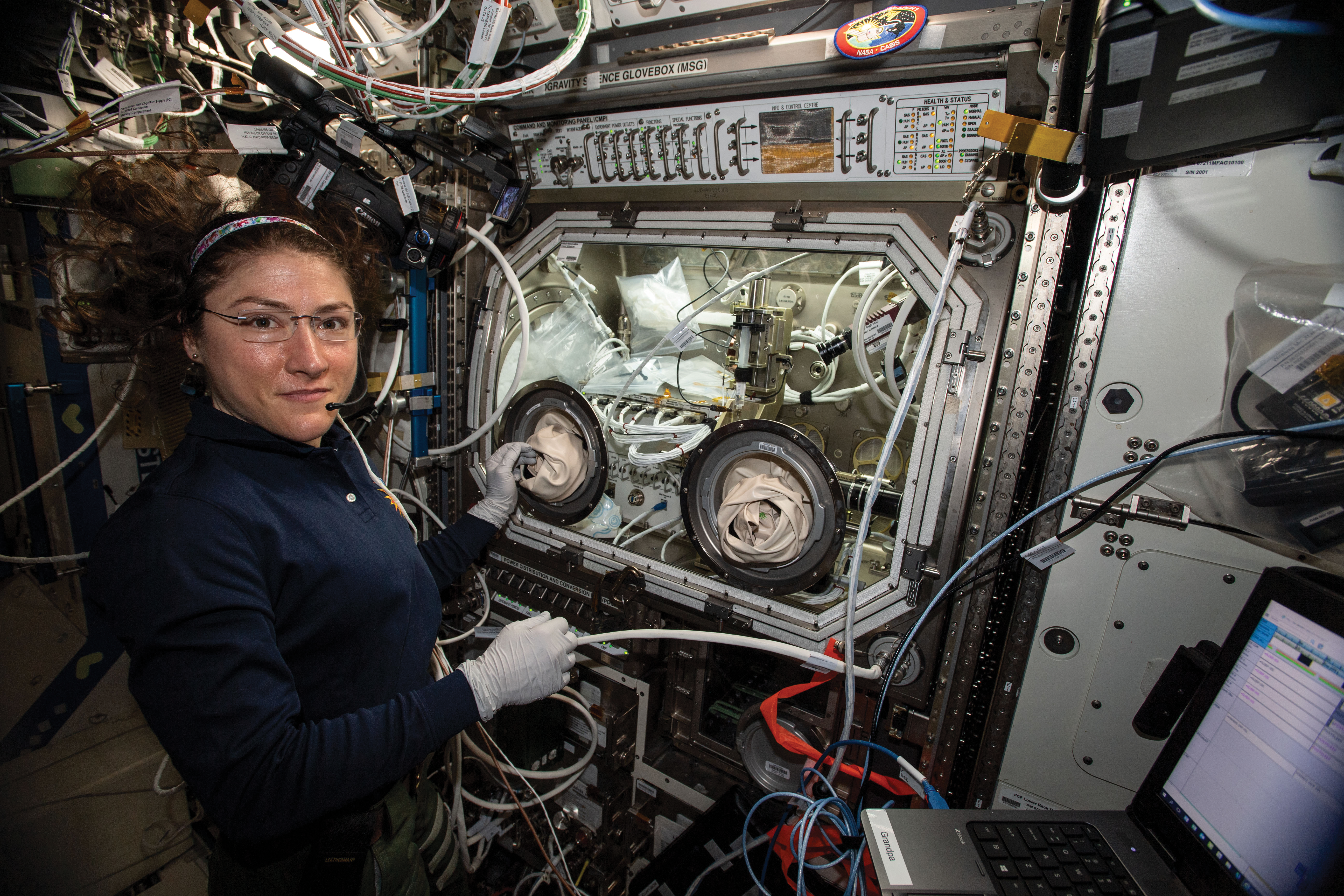
Today, the locus of innovation has shifted toward the International Space Station (ISS) U.S. National Laboratory. In orbit, the removal of gravitational sedimentation allows protein macromolecules to crystallize with unprecedented purity. Pharmaceutical leaders routinely deploy microgravity experiments to refine the suspension stability of monoclonal antibodies, including oncology drugs like Keytruda, while biotech firms utilize orbital bioreactors to culture 3D human organoids free from terrestrial hydrostatic distortion.
As the commercial space industry expands toward private space stations, the line between aerospace exploration and industrial biotechnology will blur further. The historic lessons from NASA's medical legacy are unequivocal: the greatest return on investment from sending machinery into orbit may ultimately reside in the clinics, operating theaters, and diagnostic suites that sustain human health on Earth.
Frequently Asked Questions
Did NASA invent MRI scanners?
No. While NASA did not invent the physical principles of Magnetic Resonance Imaging (which rely on nuclear magnetic resonance advances made by Raymond Damadian, Paul Lauterbur, and Peter Mansfield), the space agency’s Jet Propulsion Laboratory created the digital image-processing algorithms that made reconstructing raw scanner data into actionable, high-resolution diagnostic cross-sections technically and commercially feasible.
How does microgravity research directly benefit pharmaceutical manufacturing today?
Microgravity removes the physical forces of buoyancy, shear stress, and convection-driven sedimentation. This unique physical environment enables biotechnology and pharmaceutical companies to cultivate superior protein crystals, accelerating the structural determination of disease pathways and aiding in the formulation of high-concentration, room-temperature stable injectables for complex immune therapies.