NEW YORK — In the high-stakes theater of global equity markets, few spectacles rival the sudden, violent repricing of a mega-cap titan. When Alphabet Inc. (NASDAQ: GOOGL, GOOG) recently absorbed a punishing market sell-off&mdasherased billions in market capitalization within a matter of trading sessions&mdashretail investors and algorithm-driven momentum traders hit the panic button. Headlines shrieked about artificial intelligence capital expenditure bloat, margin compression, and intensifying search queries surrounding regulatory overhang.
Yet, behind closed doors in the executive suites of Lower Manhattan, Mayfair, and Canary Wharf, institutional asset managers, hedge fund general partners, and senior equity analysts reached a remarkably uniform conclusion: Yes, the stock got hammered. No, we are not selling.
To understand why seasoned institutional investors view this market correction not as a structural defect but as a tactical dislocation, one must examine the intersection of capital allocation, cloud compute architecture, enterprise ROI, and long-term risk mitigation. This investigative report dissects the catalysts behind the sell-off, evaluates the fundamental underlying metrics, and explains why Alphabet’s core economic engine remains profoundly undervalued.
The Catalytic Anatomy of a Sell-Off
Market corrections rarely happen in a vacuum. The recent downward pressure on Alphabet stock was triggered by a confluence of macroeconomic anxiety and corporate disclosures regarding soaring capital expenditures. As artificial intelligence transforms from a conceptual buzzword into an operational arms race, Alphabet management signaled an aggressive commitment to building out next-generation data centers, specialized tensor processing units (TPUs), and robust cloud infrastructure.
For Wall Street bean-counters obsessed with sequential quarter-over-quarter margin expansion, the upfront capital outlays felt jarring. Sell-side analysts quickly downgraded near-term earnings estimates, projecting that elevated depreciation expenses and soaring energy consumption would squeeze operating margins. Algorithmic trading desks, programmed to react instantaneously to headline sentiment regarding capital efficiency, compounded the downward spiral.
However, this short-termist critique fundamentally misunderstands the technological paradigm shift currently underway. Just as cloud computing required massive upfront investments a decade ago&mdashwhich skeptics initially decried as margin-dilutive before becoming cash-printing monopolies&mdashthe generative AI era demands heavy upfront infrastructure scalability. Alphabet is not merely spending capital; it is securing a generational monopoly on cognitive compute architecture.
Financial Resilience and Balance Sheet Fortification
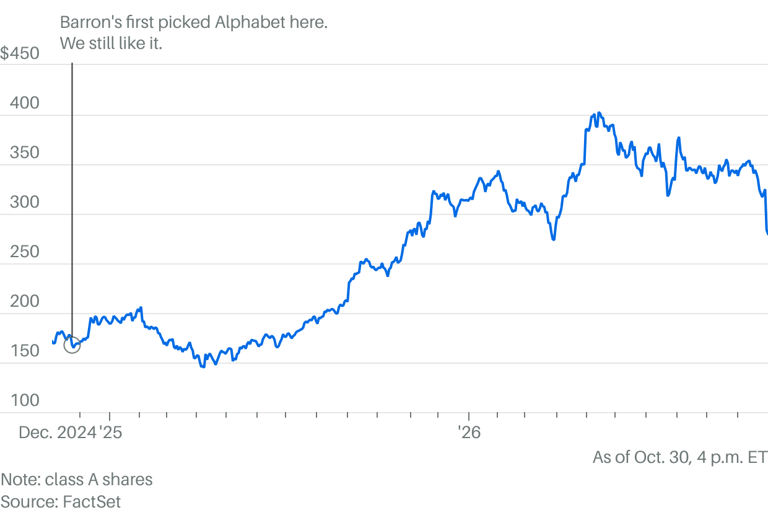
To evaluate whether Alphabet represents a value trap or a generational buying opportunity, one must look past the profit-and-loss statement and examine the fortress balance sheet. Despite heavy investments in R&D and infrastructure, Alphabet generates staggering amounts of free cash flow (FCF).
Unlike over-leveraged growth plays that rely on debt-fueled expansion, Alphabet operates with pristine liquidity. Its cash-and-marketable-securities portfolio provides an impenetrable financial cushion, insulating the enterprise from macroeconomic shocks, higher-for-longer interest rate environments, and unexpected regulatory fines.
| Metric / Indicator | Pre-Correction Valuation | Post-Correction Valuation | Institutional Implication |
|---|---|---|---|
| Forward P/E Multiple | ~24.5x | ~19.8x | Compressed to historic discount vs. S&P 500 tech average. |
| Free Cash Flow Yield | ~3.2% | ~4.6% | Highly attractive yield for long-term compounding portfolios. |
| Google Cloud Operating Margin | Expanding (~9-11%) | Accelerating (~12-15%) | Proves operational leverage and enterprise monetization. |
| Balance Sheet Net Cash | $100B+ | $100B+ | Unrivaled downside protection and share buyback capacity. |
As detailed in the metrics breakdown above, the compression in valuation multiples has created a rare entry point. A forward P/E dipping below 20x for a company dominating global digital advertising, enterprise cloud computing, and mobile operating systems is an anomaly that institutional value investors routinely exploit.
Industry Implications: Enterprise ROI and the Cloud Battleground
The broader economic impact of Alphabet’s strategic pivot extends far beyond its own stock ticker. Enterprise clients across the Fortune 500 are rapidly integrating Google Cloud Platform (GCP) and Vertex AI to drive efficiency, automate workflows, and extract actionable insights from proprietary datasets.
Who wins in this environment? Enterprises that successfully leverage machine learning to optimize supply chains and customer acquisition, alongside cloud providers possessing proprietary silicon and massive data centers. Alphabet sits squarely in the winners' circle. Conversely, legacy IT vendors slow to adopt AI-native architectures face severe obsolescence risk.
Furthermore, regulatory compliance scrutiny&mdashwhile frequently cited by bears as a structural headwind&mdashhas paradoxically reinforced Alphabet’s competitive moat. Smaller competitors lack the legal and financial resources to navigate complex global compliance frameworks, leaving well-capitalized giants like Google to consolidate market share in regulated sectors such as healthcare, finance, and public sector computing.
Frequently Asked Questions (People Also Ask)
Why did Alphabet stock drop so sharply in recent trading sessions?
The sell-off was primarily driven by market anxiety over soaring capital expenditure (CapEx) guidance for artificial intelligence infrastructure. Wall Street analysts temporarily panicked over near-term margin pressure, prompting automated sell programs and short-term profit-taking.
Is Alphabet’s heavy AI spending threatening its profitability?
While near-term depreciation and energy costs will impact operating margins slightly, institutional analysts view these outlays as essential investments in future revenue streams. Google Cloud, YouTube, and core search monetization provide robust cash flows that easily absorb these capital allocations without endangering the balance sheet.
What do institutional investors see in Alphabet that retail traders are missing?
Institutions focus on long-term free cash flow compounding, valuation multiple discounts relative to peers, and unmatched infrastructure scalability. While retail investors react to weekly sentiment swings, institutions evaluate decade-long technology moats and structural enterprise demand.
How does Google Cloud rank against competitors in enterprise AI adoption?
Google Cloud Platform (GCP) continues to gain market share by offering flexible multi-cloud architectures, proprietary TPU chips, and advanced generative AI toolkits through Vertex AI, translating directly into accelerating enterprise ROI.
Future Outlook and Key Milestones to Watch
As we look toward the upcoming quarters, market participants should monitor several critical milestones to gauge the success of Alphabet’s strategic repositioning:
- Cloud Operating Margin Trajectory: Continued expansion in GCP operating margins will validate that AI workloads are scaling profitably.
- CapEx Efficiency Metrics: Management commentary regarding return on invested capital (ROIC) for new data center deployments will soothe nervous investors.
- Search Monetization Integration: User engagement metrics and advertiser adoption rates for AI-enhanced search features will prove the durability of Google's core revenue engine.
- Share Buyback Executions: Aggressive deployment of excess free cash flow toward share repurchases will underscore management's confidence in intrinsic undervaluation.
In summary, market panics are ephemeral; structural economic moats are permanent. While the ticker tape may fluctuate day-to-day, the underlying thesis remains intact. Alphabet got hammered, but smart money is doubling down.