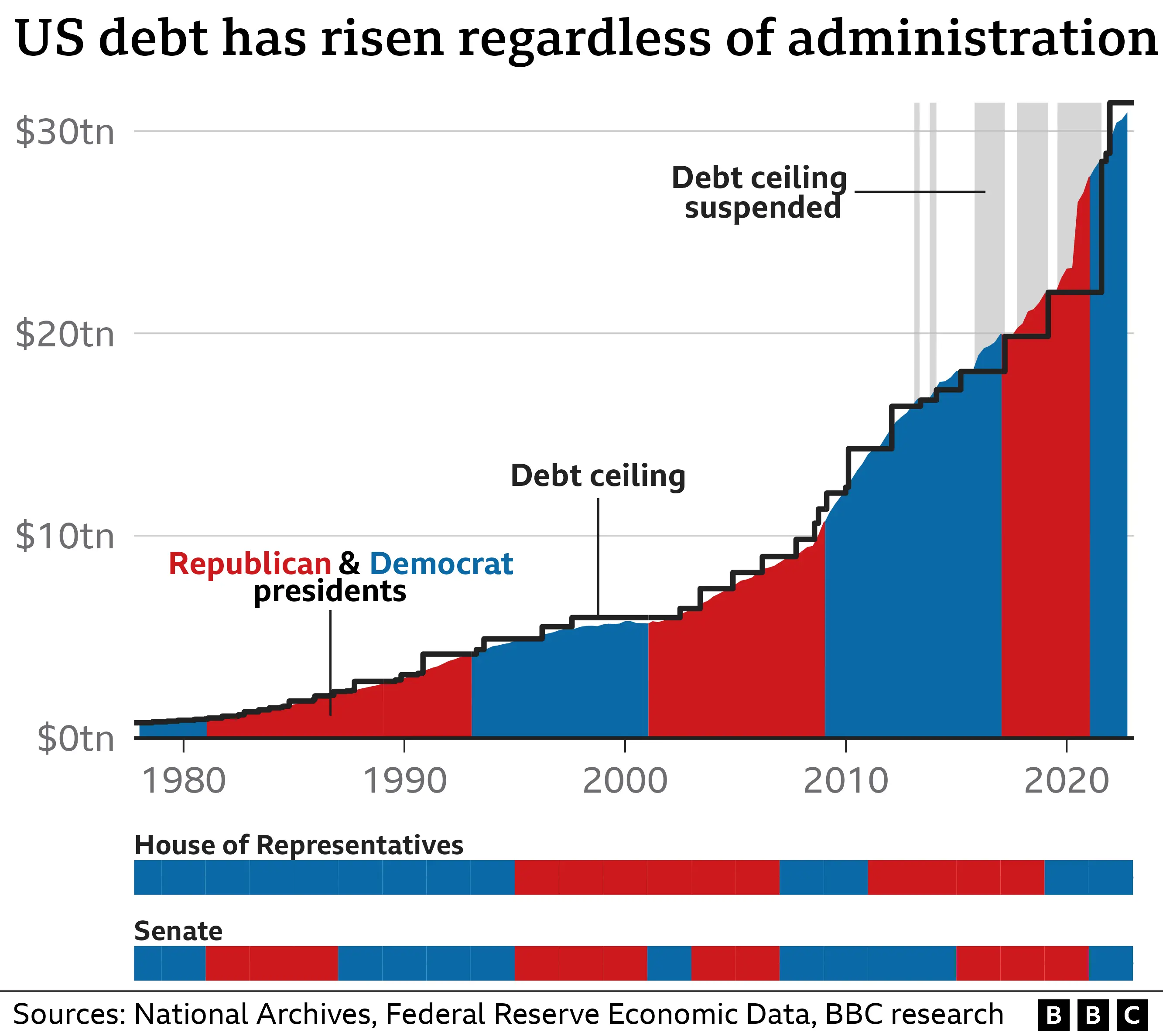
WASHINGTON & NEW YORK — A decisive election outcome delivering a pivotal political victory for Democrats has fundamentally altered the macroeconomic calendar on Wall Street and Capitol Hill. While party leaders celebrate a rejuvenated legislative mandate, fixed-income strategists, primary dealers, and global institutional investors are confronting an immediate, high-consequence collateral effect: an accelerated timeline for a volatile debt ceiling collision in Washington. The political shift reshapes expectations around federal spend-side trajectories, fiscal deficit expansion, and sovereign issuance, threatening to destabilize the $27 trillion U.S. Treasury market precisely as the Federal Reserve navigates an uncertain monetary policy transition.
Executive Takeaways
Test Our Free AI & Tech Utilities Suite
Calculate LLM API token costs, analyze article dwell-time, or simulate tech DCA returns.
- Accelerated X-Date Horizon: The Democratic victory solidifies expectations of sustained fiscal spending and high net Treasury issuance, pulling forward the debt ceiling "X-Date"—the point at which the U.S. Treasury exhausts its extraordinary measures and cash balance—into late Q2 or early Q3.
- Severe T-Bill Curve Distortion: Money market desks are already pricing in a pronounced yield "kink" in short-dated Treasury bills maturing near estimated default windows, driving yields on high-risk maturities higher while safe-haven maturities trade at deep premiums.
- Bear Steepening Pressures: Increased long-term fiscal deficit projections coupled with political resistance from congressional conservatives are driving an expansion in the term premium, pushing 10-year and 30-year Treasury yields higher via a classic bear-steepening dynamic.
- Institutional Portfolio Re-allocation: Asset managers are aggressively recalibrating duration risk, pivoting toward high-grade corporate debt, liquidity-buffered money funds, and short-term repurchase agreements (repo) to insulate against potential sovereign volatility.
The Political Catalyst: How the Democratic Win Accelerates Fiscal Friction

The election results have redrawn the balance of power in Washington, injecting fresh urgency into the federal fiscal trajectory. With Democrats securing vital legislative seats, the political leverage required to pass a clean, unencumbered statutory debt limit increase has become fraught with systemic friction. Congressional conservatives, facing a energized Democratic executive and legislative bloc, are mobilizing to demand dollar-for-dollar spending caps, structural entitlement reform, and clawbacks of unspent appropriations as explicit preconditions for raising the federal debt ceiling.
For financial markets, the core issue is not merely political posturing, but the rapidly diminishing runway available to U.S. Treasury Secretary and fiscal managers. With the national debt exceeding $34 trillion, the combination of elevated baseline borrowing costs, sustained entitlement outlays, and robust discretionary spending under Democratic priorities has accelerated the burn rate of the Treasury General Account (TGA).
Historically, the Treasury relies on a series of accounting maneuvers known as "extraordinary measures"—such as suspending investments in the Civil Service Retirement and Disability Fund and the Thrift Savings Plan G Fund—to forestall a formal technical breach. However, with daily fiscal deficits averaging historically high non-recessionary levels, institutional desks project that the cushion provided by these measures will erode far faster than previously modeled by consensus estimates.
Anatomy of the Bond Market Reaction: Yield Curves, Term Premiums, and Liquidity Risk
The immediate fallout from the election has reverberated across the sovereign bond market, triggering distinct structural realignments across the yield curve. Fixed-income trading desks at major Wall Street primary dealers report three primary phenomena taking shape: severe Treasury bill yield distortions, an expansion of the term premium, and heightened volatility in the sovereign credit default swap (CDS) market.
1. The Sovereign T-Bill Curve Kink
The most immediate microstructural impact of the impending debt limit battle is visible in the short-term Treasury bill market. Money market mutual funds and institutional liquidity managers are actively avoiding T-bills scheduled to mature within the projected X-date window. This selective divestment creates a severe "kink" in the yield curve, where bills maturing right before the X-date trade at depressed yields (high prices) due to flight-to-safety demand, while bills maturing during the projected window trade at elevated yields (discounted prices) to compensate investors for payment delay risk.
2. Expansion of the Term Premium and Bear Steepening
Further down the curve, intermediate and long-dated benchmark yields are responding to the long-term fiscal outlook. A emboldened Democratic policy platform signals sustained fiscal stimulus, green energy infrastructure allocations, and social sector outlays. In the absence of a credible long-term deficit reduction framework, primary dealers are adjusting their balance sheet capacity to absorb massive upcoming Treasury coupon auctions.
Consequently, the yield curve is undergoing a aggressive "bear steepening"—a regime where long-term yields rise faster than short-term rates. Investors are demanding a significantly higher "term premium"—the extra yield required to hold long-dated sovereign debt—to protect against persistent inflation risks, relentless debt supply, and political instability surrounding fiscal governance.
3. Stress in Credit Default Swaps and Secondary Collateral
While an actual, unmitigated default on U.S. sovereign obligations remains a low-probability event, the cost of insuring against a technical default has surged. One-year U.S. Sovereign Credit Default Swap (CDS) spreads have widened substantially, reflecting elevated hedging demand from foreign central banks, non-bank financial intermediaries, and global sovereign wealth funds. Moreover, high-frequency desks are monitoring repo market clearing rates, anticipating that collateral haircuts on Treasury securities could widen if credit rating agencies issue negative outlook warnings on U.S. sovereign debt.
Data & Market Metrics Breakdown
The table below outlines key financial indicators, pricing dislocations, and fiscal metrics illustrating the market's real-time adjustment following the election results:
| Market Metric / Fiscal Indicator | Pre-Election Baseline | Post-Election Real-Time Level | Implied Market Signal & Financial Impact |
|---|---|---|---|
| Treasury General Account (TGA) Balance | $750 Billion | $620 Billion (Projected Drawdown) | Rapid balance depletion accelerates X-Date timing toward early Q3. |
| 1-Month vs. 3-Month T-Bill Yield Spread | +12 Basis Points | +48 Basis Points (Kinked) | Severe secondary market pricing dislocation surrounding X-Date maturities. |
| US 10-Year Benchmark Yield | 3.85% | 4.25% - 4.40% (Range Expansion) | Rising term premium driven by deficit expectations and auction absorption capacity. |
| 1-Year US Sovereign CDS Spread | 18 Basis Points | 45 Basis Points | Surge in institutional hedging demand against sovereign rating downgrades. |
| Primary Dealer Net Treasury Inventory | $45 Billion | $28 Billion (De-risking) | Dealers reducing balance sheet exposure to absorb expected fiscal supply surges. |
Industry & Institutional Implications: Winners, Losers, and Capital Allocation Shift
The intersection of political stalemate and debt limit risk creates distinct operational and portfolio management challenges across the capital markets spectrum.
Fixed Income Desks & Primary Dealers
Primary dealers��the elite banking institutions obligated to bid at U.S. Treasury auctions—face heightened balance sheet constraints. As the Treasury Department ramps up borrowing to build liquidity before extraordinary measures run dry, auction tailing (when the final accepted yield is higher than expected at the bid deadline) has become more frequent. Dealers are demanding larger concessions to digest supply, dampening secondary market liquidity and driving corporate credit spreads wider.
Money Market Funds & Institutional Liquidity Managers
Institutional prime and government money market funds managing trillions in short-term capital are executing detailed collateral segregation strategies. Fund managers are shifting out of potentially vulnerable T-bills into the Federal Reserve’s Overnight Reverse Repurchase Facility (ON RRP) and short-term private tri-party repo markets. This operational rotation provides safety but can compress net fund yields, impacting yield-seeking enterprise treasury operations.
Enterprise CFOs & Corporate Borrowing Costs
For corporate treasurers, the political friction in Washington translates directly into elevated capital costs. Corporate bond issuance typically front-loads ahead of anticipated political deadlocks to lock in liquidity. High-grade and high-yield corporate borrowers are rushing to execute debt offerings before debt ceiling rhetoric peaks, seeking to mitigate the risk of market freezes or extreme yield volatility during the final legislative negotiations.
Frequently Asked Questions (People Also Ask)
How does a debt ceiling standoff specifically distort Treasury bill yields?
A debt ceiling standoff distorts Treasury bill yields by creating default or payment-delay fears for specific maturities. Investors and institutional funds actively avoid buying T-bills that mature during the window when the government is projected to run out of cash (the X-Date). This lack of demand causes the prices of those specific bills to drop and their yields to spike. Conversely, bills maturing comfortably before the X-date experience artificially high demand and lower yields as investors seek safe havens.
What is the difference between a government shutdown and reaching the debt ceiling X-date?
A government shutdown occurs when Congress fails to pass discretionary spending legislation (appropriations bills), forcing non-essential federal agency operations to pause. Reaching the debt ceiling X-date is far more severe: it means the U.S. Treasury has exhausted its legal borrowing authority and cash reserves, leaving it unable to fulfill existing legal financial obligations, including entitlement payments, military salaries, federal vendor contracts, and potentially principal and interest payments on national debt.
How are institutional asset managers repositioning fixed-income portfolios ahead of the X-date?
Institutional asset managers are executing strategic risk mitigation by shortening effective duration, increasing allocations to top-tier liquid agency debt, utilizing overnight Fed liquidity facilities, and building cash buffers. Additionally, portfolio managers are engaging in "curve steepener" trades, positioning for long-term yields to rise relative to short-term yields as the sovereign risk premium expands under structural fiscal deficits.
Will major credit rating agencies downgrade U.S. sovereign debt during this standoff?
Rating agencies such as Fitch Ratings, Moody's, and S&P Global closely monitor fiscal governance and debt sustainability. If political brinkmanship leads to prolonged gridlock near the X-date, or if the government relies on questionable operational workarounds, agencies may place the U.S. AAA sovereign credit rating on "Negative Watch" or issue outright downgrades, similar to the historical debt ceiling crises of 2011 and 2023. A downgrade typically raises long-term borrowing costs across municipal, corporate, and structured finance markets.
Future Outlook: Strategic Milestones and Market Watchpoints
As Washington approaches the fiscal deadline under a newly empowered Democratic bloc and a resistant opposition, market participants must monitor several critical forward-looking indicators:
- April Tax Receipts (Treasury Cash Infusion): The volume of non-withheld individual income tax receipts collected in mid-April will serve as the ultimate variable determining the exact timing of the X-Date. Strong tax receipts will extend the runway into late summer, whereas disappointing tax inflows will compress the timeline into early June.
- Daily Treasury Statement (DTS) Balances: Institutional traders will track the daily DTS reports to monitor the burn rate of the Treasury General Account, evaluating the effectiveness of ongoing extraordinary measures.
- Primary Dealer Auction Bid-to-Cover Ratios: Upcoming 10-year and 30-year Treasury note and bond auctions will signal whether foreign central banks and domestic institutional buyers are absorbing U.S. sovereign supply without requiring excessive yield concessions.
- Legislative Rider Maneuvers: Strategic signals from congressional leadership regarding debt-limit suspension riders attached to mandatory spending or defense authorization bills will serve as early indicators of political compromise or systemic escalation.
The Democrats' major election victory has set the stage for an extraordinary fiscal test. As the political process plays out on Capitol Hill, the global bond market will remain the ultimate arbiter of confidence, demanding higher risk premiums and enforcing market discipline on an increasingly constrained federal balance sheet.