The 2026 Compute Crunch: Why Next-Generation AI Servers Are Pushing Global Tech Giants to the Financial Brink
As hyperscalers prepare for a massive system-level architecture overhaul in 2026, soaring hardware costs, complex liquid-cooling integration, and silicon scarcity threaten to reprice the entire enterprise AI value chain.
Executive Takeaways
- System-Level Transformation: The 2026 hardware cycle marks a historic shift from rack-scale to cluster-scale architectures, requiring entirely new power delivery and thermal dissipation paradigms.
- Capital Allocation Strain: Surging component costs and complex packaging technologies will drive AI server average selling prices (ASPs) to unprecedented heights, testing the enterprise ROI thresholds of major cloud providers.
- Supply Chain Bottlenecks: Advanced packaging (CoWoS), high-bandwidth memory (HBM4), and specialized liquid-to-air heat exchangers remain critical choke points governing global infrastructure scalability.
- Market Revaluation: Semiconductor foundries and specialized component suppliers are positioned for record valuation multiples, while second-tier cloud service providers face acute risk mitigation challenges.
The global race for artificial intelligence dominance is entering its most perilous and capital-intensive phase. According to deep-dive supply chain intelligence originating from premier industry tracking sources such as 36Kr and corroborated by Wall Street and City of London hardware analysts, the year 2026 will witness an unprecedented structural transformation in AI server architecture. Far from being a routine generational refresh, the upcoming hardware cycle represents a fundamental reinvention of the enterprise data center—and it comes with a staggering price tag.
For the past three years, Big Tech hyperscalers have engaged in a relentless land grab, deploying billions of dollars into standard rack-mounted GPU clusters. However, as frontier large language models (LLMs) and multimodal architectures push against the physical limitations of silicon, power density, and thermal dissipation, the industry has reached an inflection point. The transition slated for 2026 demands a complete system-level redesign. This engineering leap will render existing infrastructure obsolete much faster than anticipated, forcing chief financial officers to recalibrate their capital allocation strategies amidst shrinking margins and tightening market liquidity.
Anatomy of a Paradigm Shift: Why 2026 Changes Everything
To understand why 2026 AI servers will command astronomical prices, one must examine the physics of modern machine learning. Current data center configurations are straining under the sheer heat and electrical load generated by next-generation accelerators. By 2026, standard air-cooling methodologies will be rendered entirely obsolete by the sheer thermal design power (TDP) requirements of multi-chip module (MCM) processors.
Consequently, the 2026 hardware standard mandates a wholesale migration to advanced liquid-cooling architectures—both direct-to-chip (cold plate) and immersion systems—integrated directly into the server chassis at the manufacturing level. This is not a simple retrofitting exercise; it requires a complete overhaul of data center facility engineering, plumbing, electrical sub-stations, and backup power generation. The capital expenditure (CapEx) required to upgrade these facilities introduces a massive cost multiplier that will inevitably flow downstream to enterprise end-users.
Furthermore, the integration of next-generation High-Bandwidth Memory (such as HBM4) and sophisticated optical interconnects means that servers will no longer function as discrete compute boxes. Instead, entire rows of racks must operate as a unified, cohesive supercomputing fabric. The manufacturing yields for these dense, highly complex multi-node systems are notoriously volatile, ensuring that component scarcity will keep market prices elevated throughout the fiscal year.
Verified Data & Metrics Breakdown
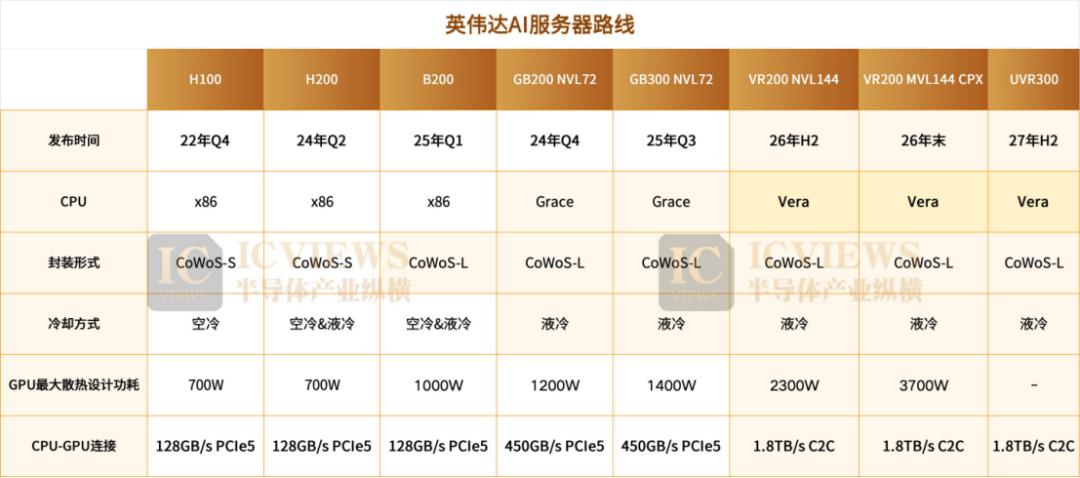
The following comparative matrix illustrates the structural divergence between standard 2024–2025 enterprise AI deployments and the forthcoming 2026 system-level architecture:
| Metric / Parameter | Legacy AI Servers (2024–2025) | Next-Gen AI Servers (2026 Projected) | Financial & Operational Impact |
|---|---|---|---|
| Thermal Management | Air-cooled (Fans, standard HVAC) | Direct-to-Chip Liquid Cooling & Immersion | Requires total data center facility redesign |
| Power Density per Rack | 15 kW to 30 kW | 60 kW to 120+ kW per rack | Demands heavy electrical grid and substation upgrades |
| Average Server ASP | $250,000 – $350,000 | $500,000 – $800,000+ | Significantly compresses cloud provider operating margins |
| Interconnect Architecture | Standard PCIe Gen 5 / InfiniBand | Advanced Optical Interconnects / Co-Packaged Optics | Eliminates communication bottlenecks; raises component costs |
| Memory Integration | HBM3e (Standard Multi-Die) | Custom Base-Die HBM4 (Foundry-Integrated) | Advanced packaging constraints limit supply volume |
Industry & Market Implications: Winners and Losers
As the financial weight of these system-level upgrades ripples across the global economy, the divergence between market winners and losers will become starkly apparent. Investment banking desks are already revising valuation multiples for tech equities based on exposure to the 2026 hardware bottleneck.
The Winners: Foundries, Packaging Specialists, and Thermal Innovators
At the apex of the value chain sit the semiconductor foundries controlling advanced packaging technologies (such as CoWoS and its successors) and high-end memory manufacturers. These entities possess immense pricing power. Companies specializing in precision thermal management, industrial-grade coolant distribution units (CDUs), and high-frequency power electronics will experience exponential revenue growth. For these firms, the 2026 server crunch translates directly into stellar earnings reports and expanded valuation multiples.
The Losers: Secondary Cloud Providers and Margin-Sensitive Enterprises
Conversely, Tier-2 and Tier-3 cloud service providers face a brutal risk mitigation dilemma. Lacking the massive balance sheets and internal cash generation of hyperscale oligopolies (such as Microsoft, Amazon, Google, and Meta), smaller providers will struggle to finance fleetwide upgrades to their compute infrastructure. Consequently, they risk being priced out of the frontier AI training market entirely. Enterprises relying on outsourced cloud compute must also prepare for rising API and hosting costs as infrastructure providers pass down the staggering cost of 2026 server acquisition.
Frequently Asked Questions (People Also Ask)
Why are AI servers expected to experience such a dramatic price increase in 2026?
The price surge is driven by a fundamental shift from simple component upgrades to complex, system-level architectural overhauls. Incorporating advanced liquid-cooling systems, custom-integrated HBM4 memory, optical interconnects, and higher-density power delivery units requires sophisticated manufacturing processes and advanced packaging techniques that currently suffer from constrained yields and high production costs.
How will the transition to liquid cooling affect existing enterprise data centers?
Most legacy data centers were engineered for air-cooled hardware maxing out at roughly 30 kW per rack. Because 2026 AI servers will generate thermal loads exceeding 60 to 120 kW per rack, data center operators must undertake extensive structural retrofitting—installing piping, manifolds, secondary cooling loops, and upgraded power feeds—representing billions in additional capital expenditure.
What are the implications of the 2026 server crunch for enterprise AI software deployment?
As hardware acquisition and operational costs skyrocket, enterprise buyers will increasingly scrutinize software efficiency and enterprise ROI. Organizations will shift away from brute-force model scaling toward highly optimized, distilled models, domain-specific fine-tuning, and efficient inference architectures to reduce overall compute dependency.
Which sectors of the semiconductor supply chain offer the strongest investment protection against rising hardware costs?
Investors seeking risk mitigation are focusing heavily on upstream bottlenecks where market liquidity and pricing power are concentrated: advanced semiconductor packaging foundries, specialized electronic material suppliers, high-bandwidth memory manufacturers, and mission-critical thermal management engineering firms.
Future Outlook: Milestones to Monitor Through 2026
As the technology sector navigates this high-stakes transition, financial analysts and investigative desks will closely track several critical milestones. First, semiconductor foundry earnings reports in mid-2025 and early 2026 will serve as a leading indicator of advanced packaging yield rates and component availability. Second, capital expenditure guidance revisions from major cloud hyperscalers will reveal whether enterprise demand can sustainably absorb the soaring cost of infrastructure.
Regulatory compliance and energy grid capacity will also dictate the pace of deployment. With individual data centers beginning to rival the energy consumption of small cities, local grid interconnect approvals and green energy procurement will become major bottlenecks. Ultimately, the 2026 AI server evolution will separate well-capitalized market leaders from vulnerable competitors, permanently reshaping the economics of global artificial intelligence.