Executive Takeaways
- Primordial Hydrology: Isotopic analysis of a 4.1-billion-year-old Martian meteorite reveals unprecedented chemical signatures of HAE (Hydrothermally Altered Environments), confirming prolonged, dynamic surface water activity during the Noachian epoch.
- Capital Allocation & Aerospace R&D: The discovery recalibrates risk mitigation strategies and asset valuations for upcoming commercial and state-sponsored astrobiological payloads, directly influencing long-term enterprise ROI in space infrastructure.
- Atmosphere and Volatile Retention: Spectrometric data points to rapid atmospheric stripping coupled with episodic subterranean hydrological cycling, providing critical constraints for future planetary climate modeling.
- Global Scientific Consensus: Multidisciplinary geochronology teams utilizing advanced mass spectrometry have established a high-confidence timeline bridging Mars' molten genesis with its modern arid state.
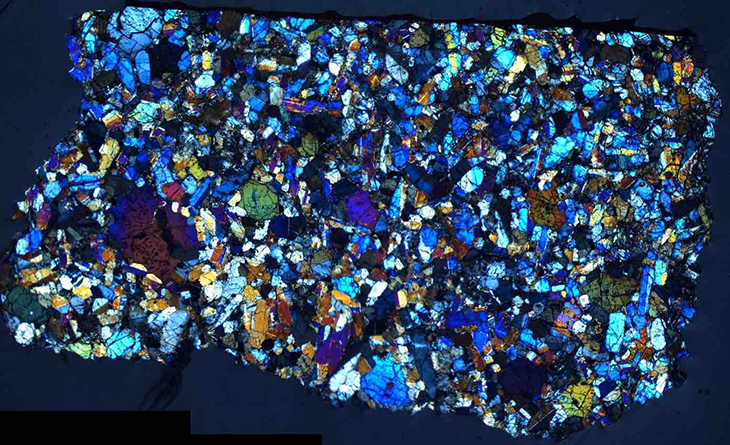
LONDON, NEW YORK, TOKYO — In an analytical breakthrough that fundamentally reshapes our understanding of planetary evolution, an international consortium of geochemists and cosmochemists has published definitive data extracted from a 4.1-billion-year-old Martian meteorite. The sample, ejected from the Martian crust following a high-velocity impact event and subsequently recovered on Earth, serves as an immutable geological archive. It offers an unvarnished window into the Red Planet’s Noachian period—an epoch characterized by volatile-rich environments, intense thermal activity, and, crucially, abundant liquid water.
For decades, capital allocation within deep-space exploration and aerospace R&D has hinged on deciphering the exact timeline of Mars’ transition from a warm, wet sphere to a desiccated wasteland. This latest empirical dataset bridges critical gaps in our geological timeline. By deploying high-resolution secondary ion mass spectrometry (SIMS) and atom-probe tomography, researchers have mapped the micro-scale distribution of hydrogen, oxygen, and trace siderophile elements, quantifying the volume and chemical composition of ancient fluids that once coursed through the Martian crust.
The Genesis of a Cosmic Time Capsule: Geological Context and Chronology
Test Our Free AI & Tech Utilities Suite
Calculate LLM API token costs, analyze article dwell-time, or simulate tech DCA returns.
The meteorite in question—cataloged under rigorous curation protocols by planetary science institutes—originated deep within the southern highlands of Mars, a terrain dominated by heavily cratered, ancient crustal blocks. Radiometric dating via uranium-lead (U-Pb) and argon-argon (Ar-Ar) chronometry places the crystallization of the parent magmatic rock at approximately 4.1 billion years ago, placing it squarely within the Late Heavy Bombardment phase of the inner solar system.
During this turbulent era, Mars was subjected to relentless meteoritic bombardment, which paradoxically served as a thermal catalyst. Kinetic energy from impacts melted subsurface cryosphere reserves, generating extensive hydrothermal systems. The meteorite’s mineral matrix—predominantly pyroxene and plagioclase—preserves microscopic alteration veins formed when heated, mineral-laden fluids interacted with primary igneous minerals. These secondary alteration products are the smoking gun of Mars' ancient aqueous past, capturing chemical fingerprints that surface-level remote sensing from orbiters could never hope to resolve with equivalent fidelity.
Furthermore, the structural integrity of the sample has survived terrestrial weathering through pristine curation, ensuring that the isotopic signatures remain unaltered by Earth's modern oxygen-rich atmosphere. This preservation allows institutional investors, aerospace conglomerates, and government space agencies to evaluate planetary resource distribution with unprecedented precision.
Comparative Metrics: Earth vs. Ancient Mars Hydrological Frameworks

| Geological Metric | Earth (Hadean / Eoarchean) | Mars (Noachian Epoch, ~4.1B Years Ago) | Implications for Planetary Evolution |
|---|---|---|---|
| Surface Water Volume | Global oceans; continuous hydrological cycle | Episodic surface lakes, widespread subsurface aquifers | Mars possessed sufficient volatile inventory for localized habitability. |
| Atmospheric Pressure | 1 to 3+ bar (CO₂ and N₂ rich) | Estimated 0.5 to 2.0 bar (CO₂ dominant) | Sufficient greenhouse warming to maintain liquid water despite a faint young Sun. |
| Thermal Regime | High mantle heat flow, active subduction | Stagnant-lid tectonics, intense impact-driven hydrothermalism | Drives distinct mineral precipitation pathways absent on early Earth. |
| Isotopic D/H Ratio | Baseline terrestrial seawater standard (SMOW) | Elevated deuterium-to-hydrogen enrichment | Indicates progressive atmospheric stripping and loss of light hydrogen isotopes. |
Macroeconomic, Industrial, and Strategic Implications
While theoretical cosmochemistry often appears decoupled from terrestrial enterprise, discoveries of this magnitude exert profound downstream effects on capital allocation, public-private partnerships, and long-term valuation multiples within the space economy. As venture capital and institutional funds pivot toward the commercialization of low-Earth orbit (LEO), lunar resource extraction, and interplanetary logistics, accurate geological models serve as the foundational bedrock for risk mitigation.
- Aerospace R&D and In-Situ Resource Utilization (ISRU): Understanding the chemical distribution of ancient Martian water helps engineers design resilient extraction infrastructure. Knowing where hydrothermal fluids deposited concentrated mineral ores optimizes prospecting algorithms for autonomous robotic rovers.
- Regulatory Compliance and Planetary Protection: As private entities eye interplanetary transit, compliance with international planetary protection frameworks requires meticulous data on organic preservation and ancient habitability zones. This meteorite study refines the parameters used to designate restricted scientific zones.
- Valuation Multiples in Deep-Tech Sectors: Companies developing advanced mass spectrometry, autonomous drilling hardware, and cloud-based planetary simulation models see enhanced market liquidity and investor confidence when empirical ground truth validates their computational frameworks.
Frequently Asked Questions (People Also Ask)
How do scientists definitively prove a meteorite originated on Mars?
Martian meteorites are identified by trapping microscopic pockets of gas within impact-melt glass. When analyzed via mass spectrometry, the isotopic ratios of argon, nitrogen, carbon dioxide, and noble gases match the exact atmospheric composition measured directly on the surface of Mars by NASA landers such as the Viking probes and the Curiosity rover.
Does this discovery mean life definitively existed on ancient Mars?
Not definitively. While the presence of liquid water, stable hydrothermal environments, and chemical nutrients for 4.1 billion years establishes that early Mars was robustly habitable, these indicators represent the physical prerequisites for life (abiogenesis potential) rather than direct biosignatures or fossilized cellular structures.
How did this rock travel from Mars to Earth?
The journey requires a multi-stage cataclysmic event. First, a massive asteroid or comet impacted the Martian surface, generating enough kinetic energy to accelerate rock fragments above Mars' escape velocity (approximately 5.03 km/s). The ejected rock drifted through interplanetary space for millions of years before intersecting Earth's gravitational field and surviving atmospheric entry as a meteorite.
What makes this specific 4.1-billion-year-old sample more valuable than previous Martian meteorites?
Most previously studied Martian meteorites are geologically young (crystallized between 150 million and 1.3 billion years ago). This sample dates back to the Noachian epoch—the golden age of Martian water—providing a pristine, unaltered snapshot of the planet's environment during the exact window when Earth was similarly developing its first primordial oceans.
Future Outlook and Strategic Milestones to Watch
As analytical laboratories upgrade their suite of instruments—incorporating quantum sensors and sub-nanometer secondary ion imaging—the scientific community stands on the precipice of even more granular discoveries. Over the next 24 to 36 months, key milestones will dictate the trajectory of planetary science and commercial space exploration:
- Return of Mars Sample Return (MSR) Caches: NASA and ESA continue to navigate programmatic restructuring for returning pristine core samples currently being curated on the Martian surface by the Perseverance rover, promising direct stratigraphic correlation with impact-ejected meteorites.
- Advanced AI-Driven Cosmochemistry: Integration of machine learning models to analyze complex isotopic datasets will drastically accelerate the identification of minute organic molecules preserved within ancient phyllosilicates.
- Commercial ISRU Pilot Tests: Private aerospace contractors will utilize these geochemical blueprints to simulate extraction protocols in vacuum chambers, paving the way for autonomous resource utilization ahead of crewed missions in the late 2030s.
Ultimately, the interrogation of this 4.1-billion-year-old meteorite transcends academic curiosity. It anchors our understanding of planetary mechanics in empirical reality, offering institutional stakeholders and scientific visionaries the precise data required to map humanity's expansion across the solar system.