Executive Takeaways
- Sovereign Architecture Shift: Digital Public Infrastructure (DPI) models like India's Unified Payments Interface (UPI) and Brazil's Pix have bypassed legacy card networks, driving massive systemic inclusion and compressing transaction costs.
- Enterprise ROI & Valuation Pressure: The zero-to-low MDR (Merchant Discount Rate) model forces traditional fintech giants and legacy payment processors to radically alter capital allocation, cloud compute architecture, and monetization strategies.
- Cross-Border Interoperability: As bilateral linkages expand across Asia, Latin America, and Europe, DPI is emerging as the foundational layer for global trade liquidity and real-time wholesale settlements.
- Regulatory & Security Imperatives: Rapid scaling demands sophisticated risk mitigation, API security protocols, and robust data privacy frameworks to combat synthetic fraud and systemic cyber vulnerabilities.
For decades, the plumbing of global finance was defined by friction. Visa, Mastercard, and legacy SWIFT rails imposed an invisible tax on global commerce, extracting high merchant discount rates (MDR) while cementing oligopolistic control over cross-border capital flows. Today, that architecture is fracturing. From the bustling market stalls of São Paulo to the remote agricultural hubs of rural India, sovereign-backed Digital Public Infrastructure (DPI) has upended conventional payments economics. The blueprint is no longer theoretical; it is operational, massive in scale, and forcing boardrooms from Wall Street to Frankfurt to reassess enterprise valuations, infrastructure scalability, and long-term risk mitigation strategies.
At the center of this revolution are two distinct yet structurally parallel platforms: Brazil’s Pix, launched by the Central Bank of Brazil in November 2020, and India’s Unified Payments Interface (UPI), engineered by the National Payments Corporation of India (NPCI) in 2016. According to landmark research and analytical frameworks published by institutions like the Observer Research Foundation (ORF), these systems have transcended mere payment utilities. They have become foundational layers of sovereign economic identity, financial inclusion, and monetary transparency. For chief financial officers, venture capitalists, and regulatory compliance officers, understanding the trajectory of DPI is no longer optional—it is critical for enterprise survival in an increasingly real-time global economy.
The Catalytic Evolution: How Pix and UPI Rewrote the Playbook
To comprehend the disruptive force of UPI and Pix, one must examine the macroeconomic pain points that birthed them. In India, a cash-dominated economy burdened by high friction and limited banking penetration required a scalable, interoperable mobile payment layer that could unify fragmented banking APIs. UPI solved this by introducing a proxy-based identifier (Virtual Payment Address or VPA), abstracting complex bank account numbers into seamless, instant peer-to-peer (P2P) and peer-to-merchant (P2M) transactions.
In parallel, Brazil faced chronic financial exclusion, high credit card fees, and a sluggish legacy interbank transfer ecosystem (DOC and TED) that operated only during banking hours and incurred exorbitant fees. Pix shattered these barriers by operating 24/7/365, settling transactions in under ten seconds via simple keys (CPF, email, phone numbers, or random alphanumeric strings). By mandating that all financial institutions with over 500,000 active accounts integrate with Pix, the Banco Central do Brasil engineered a mandatory network effect that bypassed legacy incumbents almost overnight.
The technical architecture underpinning both systems relies on open APIs, modular cloud compute infrastructure, and centralized clearing switches. Unlike Western payment models reliant on proprietary closed-loop hardware, DPI leverages open-source foundations. This dramatically reduces capital expenditure for participating banks and fintech startups, democratizing market access and compressing transaction costs to near-zero for end-users.
Verified Data & Metrics Breakdown
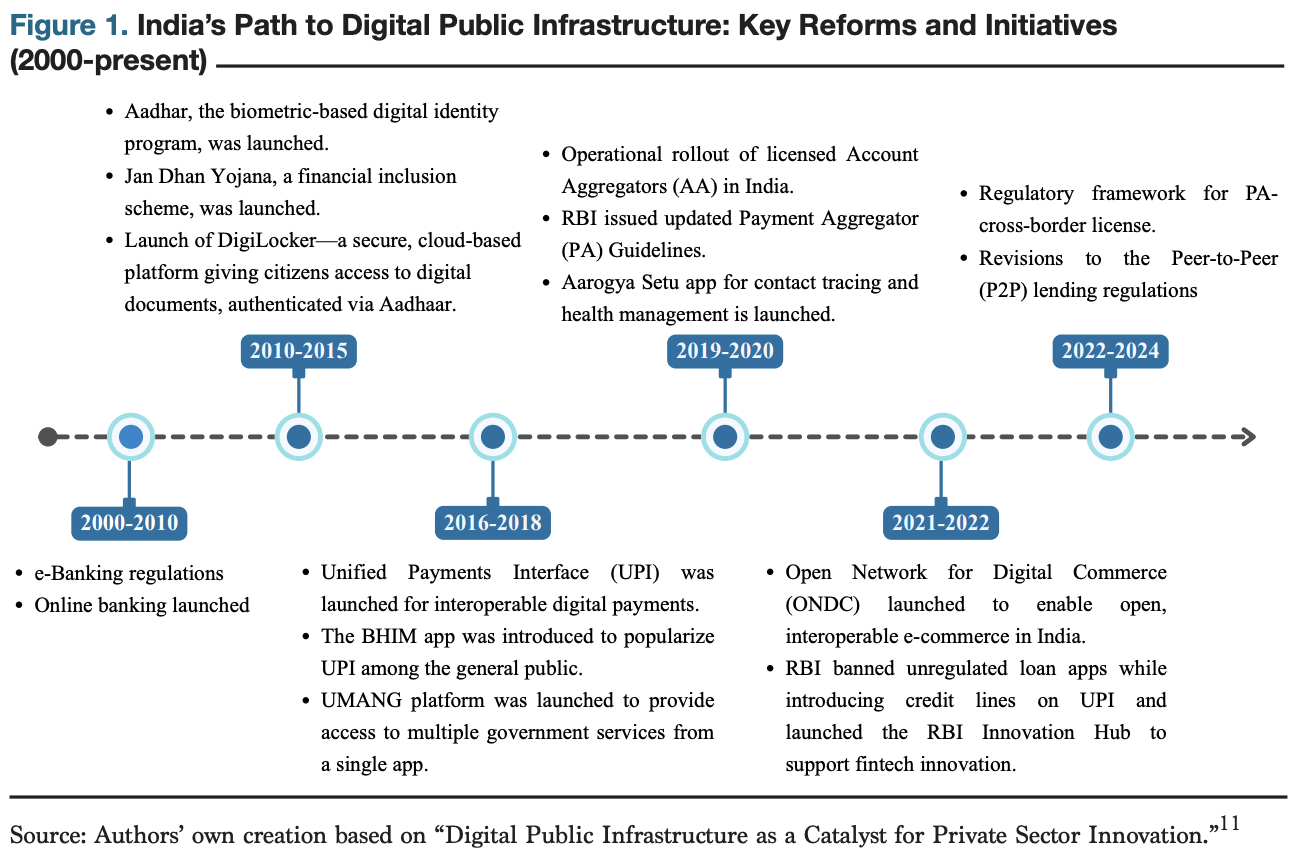
The quantitative scale of UPI and Pix defies historical precedent. The following comparative matrix outlines the operational metrics, launch timelines, and transaction velocities of both systems:
| Metric / Parameter | India (UPI - NPCI) | Brazil (Pix - Central Bank) |
|---|---|---|
| Launch Date | April 2016 | November 2020 |
| Operating Entity | National Payments Corporation of India | Central Bank of Brazil (Banco Central do Brasil) |
| Monthly Transaction Volume | Exceeds 13 Billion Transactions | Exceeds 5 Billion Transactions |
| Merchant Discount Rate (MDR) | 0% for P2M standard (Government subsidized) | 0% for individuals; capped low rates for merchants |
| Settlement Speed | Real-time (< 5 seconds) | Real-time (Instantaneous, 24/7/365) |
| Financial Inclusion Impact | Over 350+ million active users | Over 140+ million active users / 70M previously unbanked |
Industry & Market Implications: Who Wins, Who Loses
The ascent of DPI introduces profound structural shifts across the global financial ecosystem. As transaction volumes migrate toward zero-fee or ultra-low-fee sovereign rails, market participants are forced to recalibrate their business models.
The Winners: Enterprise Agility and Consumer Welfare
- Micro, Small, and Medium Enterprises (MSMEs): Freed from the crushing 2% to 4% merchant discount rates levied by traditional credit card networks, MSMEs retain critical working capital, boosting net profit margins and market liquidity.
- Agile Fintech Innovators: Companies that build value-added services—such as automated accounting, embedded lending, and AI-driven credit scoring on top of DPI rails—are capturing massive valuation multiples.
- Sovereign Fiscal Authorities: Governments benefit from enhanced tax compliance, reduced cash-handling expenditures, and transparent audit trails that curb the shadow economy.
The Losers: Legacy Incumbents and High-MDR Intermediaries
- Traditional Card Networks & Acquiring Banks: Firms whose revenue models rely on interchange fees face severe margin compression. Their enterprise valuations are increasingly scrutinized by public markets as growth plateaus in DPI-dominant jurisdictions.
- Legacy Cross-Border Remittance Providers: High-fee wire services are seeing their market share erode as central banks link UPI and Pix to international fast-payment networks, slashing remittance costs from percentages to basis points.
Frequently Asked Questions (People Also Ask)
How do UPI and Pix achieve instant settlement without exposing users to high credit risks?
Both systems operate on a credit-push model rather than a debit-pull model. Funds are transferred directly from the payer’s account to the payee’s account in real-time through centralized clearing switches managed by national central banks or designated authorities. Because transactions settle immediately with verified balances, counterparty settlement risk and chargeback fraud are virtually eliminated.
Why are transaction fees on UPI and Pix significantly lower than traditional credit card networks?
Traditional card networks maintain proprietary, multi-layered infrastructure involving acquirers, card issuers, and payment gateways, each extracting a cut via the Merchant Discount Rate (MDR). DPI models are built as public goods underpinned by sovereign infrastructure. By standardizing open APIs and mandating bank participation, infrastructural overhead is minimized, and governments often subsidize or cap fees to promote broader financial inclusion.
Are DPI payment rails secure against sophisticated cyber threats and fraud?
While DPI architectures utilize robust cryptographic security, multi-factor authentication, and end-to-end tokenization, the sheer volume of transactions makes them prime targets for social engineering, phishing, and authorized push payment (APP) fraud. Consequently, regulatory bodies continuously mandate advanced AI-based anomaly detection, real-time transaction monitoring, and stringent API security protocols to safeguard ecosystem integrity.
Can Western economies adopt DPI models like Pix or UPI?
Adoption in Western economies faces structural hurdles, notably entrenched legacy banking lobbies, fragmented regulatory jurisdictions, and legacy revenue models tied to interchange fees. However, initiatives like the Federal Reserve’s FedNow service in the United States and SEPA Instant Credit Transfer in Europe reflect a growing recognition that real-time payment infrastructure is essential to remain competitive in the global digital economy.
Future Outlook: Global Interoperability and Strategic Milestones
As we look toward the latter half of the decade, the horizon of Digital Public Infrastructure extends far beyond domestic borders. The next frontier is bilateral and multilateral cross-border linkage. India has already successfully linked UPI with Singapore’s PayNow, enabling instant, low-cost international remittances. Similar frameworks are being explored across the G20 and with nations in the Middle East, Southeast Asia, and Latin America.
For global enterprises, investors, and financial institutions, strategic planning must incorporate DPI readiness. Regulatory compliance frameworks, API resilience, and cloud compute architecture must be engineered to interface seamlessly with emerging sovereign payment layers. Companies that treat DPI merely as local public utilities risk displacement; those that integrate and build value-added financial products atop these rails will capture the next wave of global enterprise growth and liquidity.