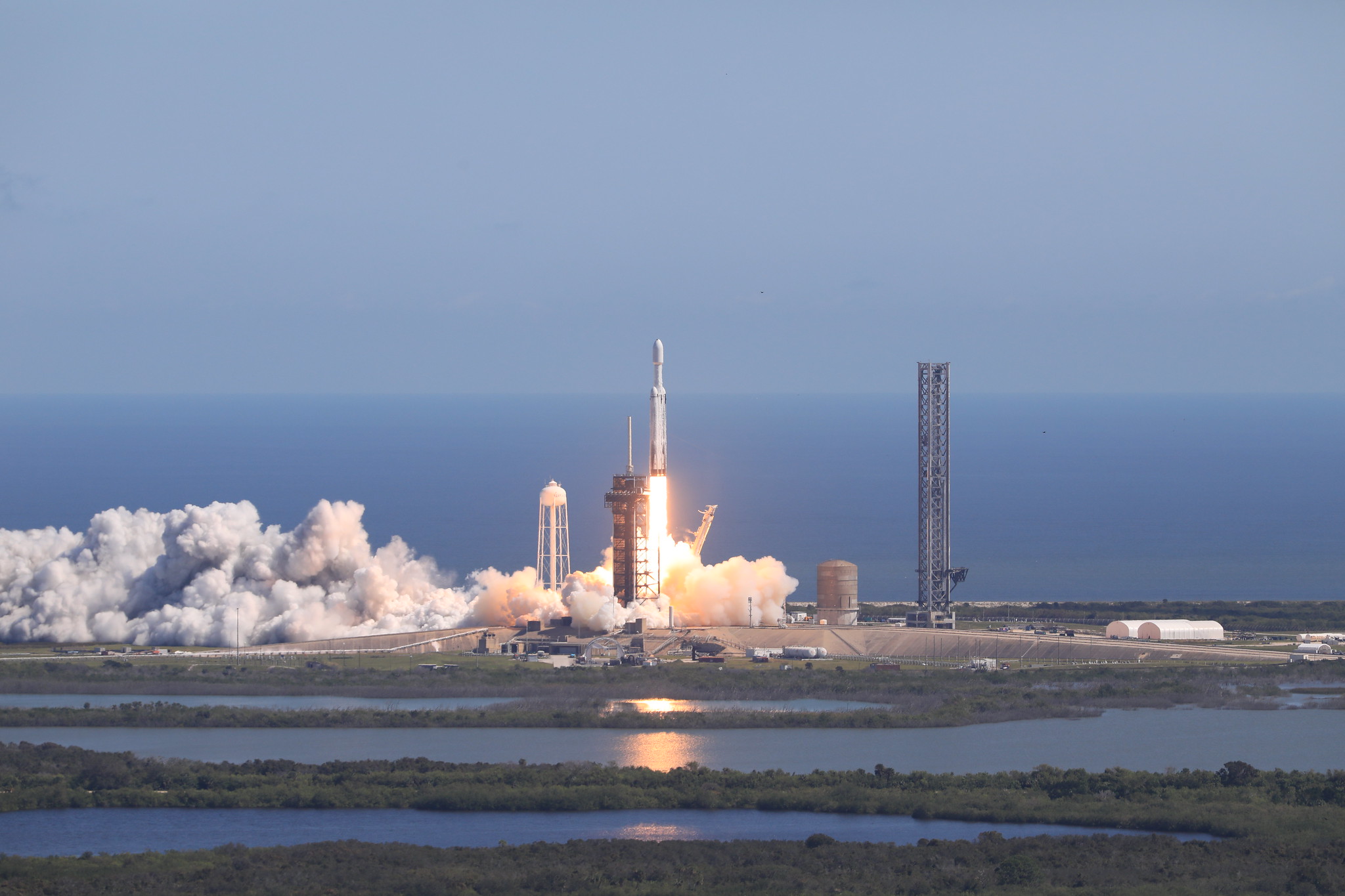
The Third Force: How NASA’s Relentless 2024 Rocket Campaign Unlocked Earth’s Long-Lost Electric Shield
WASHINGTON, D.C. — In a year marked by geopolitical tensions on Earth and a fierce commercial race in orbit, NASA has quietly executed one of its most scientifically consequential campaigns in decades. On December 6, 2024, agency officials consolidated a year of unprecedented high-altitude exploration, revealing how a rapid-fire cadence of sounding rocket launches has fundamentally rewritten our understanding of Earth’s habitability—and how we hunt for life across the cosmos.
Driven by an aggressive schedule of 14 sounding rocket missions in 2024, NASA scientists have successfully mapped the limits of Earth’s atmosphere. More importantly, peer-reviewed findings from a crucial polar mission launched in 2022 have finally confirmed the existence of a planet-wide, invisible energy field: the ambipolar electric field. First hypothesized over sixty years ago, this discovery positions Earth alongside gravity and magnetics as a planet governed by three primary global physical forces.
Executive Summary: The 2024 Space & Earth Science Dividend
- The 14-Rocket Blitz: NASA successfully launched 14 sounding rocket missions in 2024, utilizing suborbital paths to probe the boundary zone between Earth's atmosphere and vacuum.
- The "Third Force" Confirmed: Peer-reviewed data from the 2022 Endurance sounding rocket mission, finalized and detailed in late 2024, proved the existence of the ambipolar electric field, which continuously lifts our upper atmosphere into space.
- Open-Access Earth Science: Under its "Earth Science for All" mandate, NASA has democratized terabytes of real-time climate and atmospheric data, offering commercial entities and global researchers unprecedented modeling tools.
- The Economic & Spaceflight Implications: Understanding this electric field allows satellite operators to more accurately predict orbital drag, saving billions in premature satellite decay and fuel burn.
The suborbital Edge: Why Sounding Rockets Rule NASA's Budget
While massive projects like the James Webb Space Telescope and the Artemis moon program capture global headlines, the unsung workhorse of NASA’s science division remains the sounding rocket. These suborbital vehicles do not enter sustained orbit; instead, they fly parabolic trajectories, spending just several minutes in the ionosphere before falling back to Earth.
For NASA, the 14-rocket campaign of 2024 represents an exceptionally cost-effective scientific yield. "Sounding rockets allow us to place highly sensitive instruments directly into the 'ignorosphere'—the region of our atmosphere too high for research balloons but too low for satellites," explained a senior NASA heliophysics director. "In terms of scientific discovery per dollar spent, there is no better asset in our portfolio."
These flights have allowed researchers to test cutting-edge instrumentation, measure solar radiation impacts, and study how space weather interacts with Earth's upper atmosphere—all at a fraction of the cost of a full satellite deployment.
The Breakthrough: Deciphering the Ambipolar Field
The crown jewel of NASA’s recent science announcements stems from a sounding rocket launched in May 2022 from the remote Svalbard archipelago near the North Pole. The Endurance mission was designed to measure a microscopic electric potential across Earth’s ionosphere. In 2024, after rigorous data verification, NASA scientists announced the definitive results.
The rocket detected a mere 0.55-volt potential change over an altitude of several hundred miles. While seemingly weak—equivalent to a dying watch battery—this charge is applied across the entire planet. It is strong enough to counter gravity for lighter ions, launching hydrogen and helium out of our atmosphere and into the magnetosphere at supersonic speeds, creating the "polar wind."
This "third force" explains why Earth has retained a thick, water-supporting atmosphere, whereas planets like Mars and Venus lost theirs. Without this weak electric field acting as a selective filter, Earth’s water cycle and atmospheric composition would look radically different today.
Bridging Space Exploration and Earth Science
NASA’s "Earth Science for All" initiative, accelerated throughout 2024, translates these complex space physics discoveries into actionable public utilities. By integrating sounding rocket data with satellite telemetry, NASA has created highly accurate models of the ionosphere.
For the private sector—particularly satellite mega-constellations operated by SpaceX, OneWeb, and Amazon’s Project Kuiper—these models are vital. Fluctuations in the ionosphere, driven by solar storms and modulated by Earth’s ambipolar field, cause the upper atmosphere to swell. This creates unexpected drag on low-Earth orbit (LEO) satellites, sometimes dragging them to fiery, premature deorbits. NASA’s open-access data gives operators the foresight needed to adjust orbits and preserve capital assets.
| Mission / Program | Launch Window / Status | Key Objective | Primary Scientific Value |
|---|---|---|---|
| Sounding Rocket Campaign | 14 Launches in 2024 | Suborbital Ionospheric Probe | Real-time upper atmospheric dynamics, space weather mapping. |
| Endurance Mission | Launched 2022 (Data Verified 2024) | Measure Weak Polar Electric Potential | Confirmed the ambipolar electric field; explains atmospheric retention. |
| Earth Science for All | Ongoing Public-Private Initiative | Data Democratization | Provides commercial satellite operators with orbital drag prediction models. |
The Global Outlook: Looking Beyond Earth
The implications of NASA's 2024 milestones reach far beyond our own skies. By proving that a planet’s ambipolar field acts as a critical variable in atmospheric retention, astrobiologists now have a new metric for evaluating exoplanet habitability. Future space telescopes designed to analyze the atmospheres of distant planets will look specifically for signatures of similar global electric fields.
As NASA looks toward 2025, the agency’s dual-mission strategy is clear: look outward to conquer the deep-space frontier, but look closely inward to protect, understand, and monetize the very shield that makes human life possible on our home world.
Frequently Asked Questions
What is a sounding rocket, and why doesn't it go into orbit?
Sounding rockets are suborbital research rockets that carry scientific instruments into space for short-duration measurements. They do not have the speed or trajectory to enter sustained orbit, making them highly cost-effective tools for taking direct physical samples of the atmosphere between 30 and 800 miles above Earth.
Why is the discovery of the ambipolar electric field such a major milestone?
Though suspected to exist since the 1960s, the field was too weak to measure until the Endurance mission’s highly sensitive instruments recorded a 0.55-volt charge. Confirmed in 2024, it is now recognized as Earth's third global energy field (alongside gravity and electromagnetism), and it plays a vital role in keeping our atmosphere intact while venting lighter ions into space.