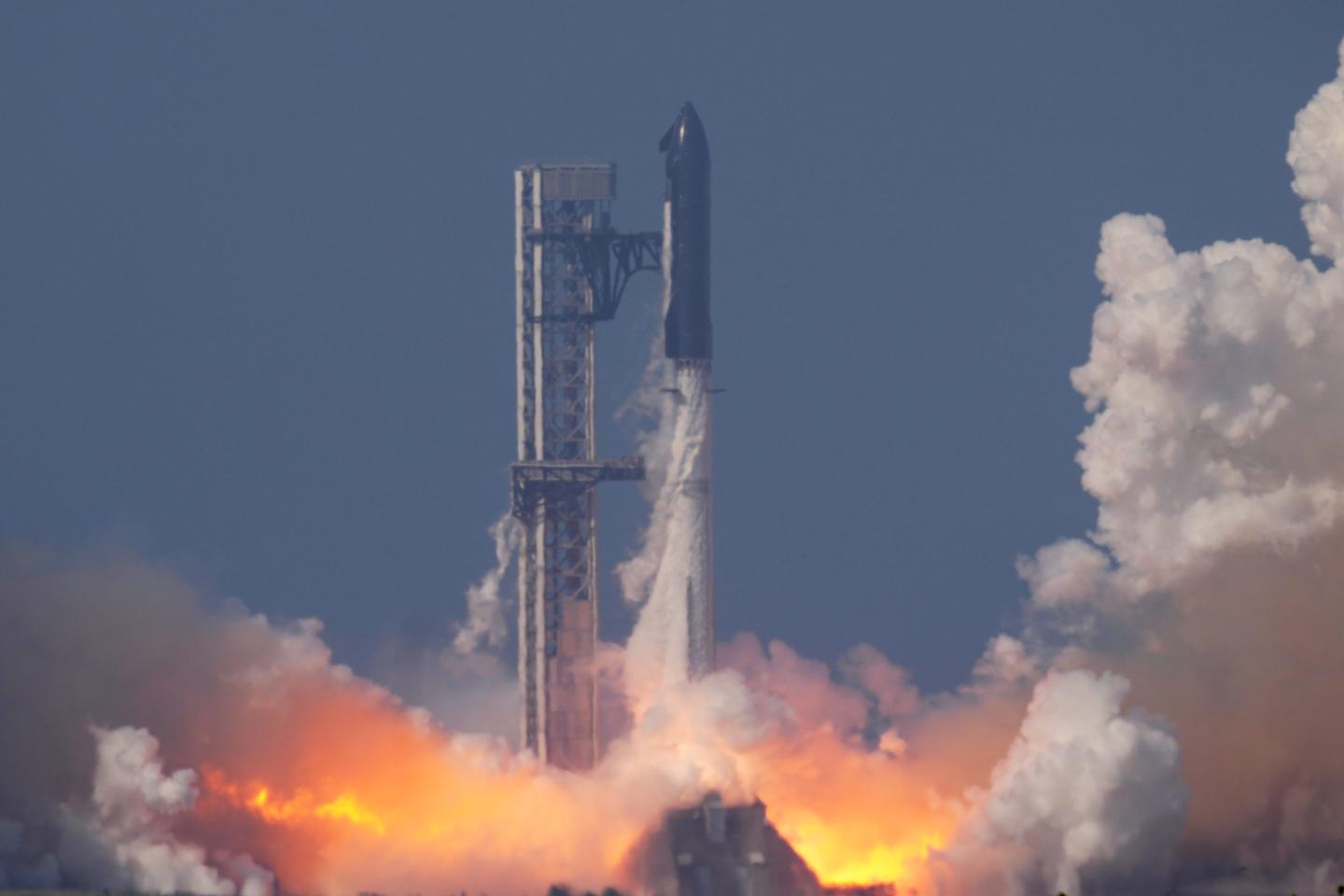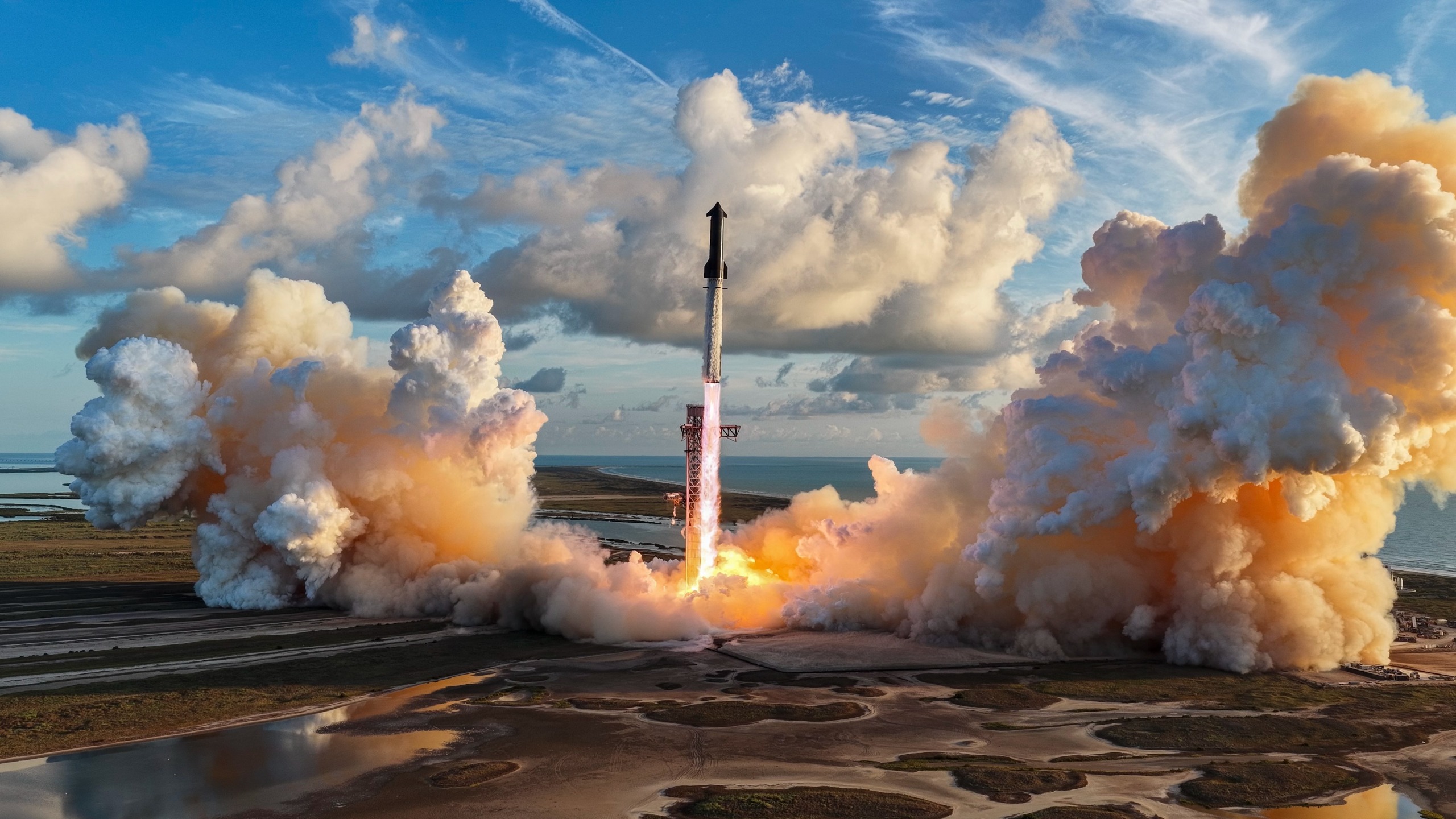
BOCA CHICA, Texas — In a watershed moment for commercial aerospace and interplanetary exploration, SpaceX successfully pushed its massive Starship rocket into Earth’s orbit for the very first time. The milestone was achieved during a high-stakes, dramatic Flight 14 test from the company’s Starbase facility in South Texas, marking the definitive crossing of a technological Rubicon that forever changes humanity’s trajectory in space.
For years, critics and skeptics have watched the iterative, often explosive development cycle of the world’s largest and most powerful rocket. But on this crisp launch morning, the gamble paid off. Starship not only cleared the tower and survived the punishing crucible of Max-Q—maximum aerodynamic pressure—but it successfully executed its secondary engine burn in space, achieving stable orbit and proving the fundamental architecture of the vehicle designed to carry humans back to the Moon and eventually to Mars.
The Anatomy of Flight 14: A Masterclass in Resilience
The journey to this orbital triumph has been fraught with structural failures, fiery anomalies, and relentless regulatory scrutiny. Flight 14, however, represented a mature evolution of the spacecraft. Engineers incorporated dozens of hardware upgrades following previous telemetry mishaps, tightening thermal protection tile layouts and refining the hot-staging ring separation mechanism.
As the countdown reached zero, 33 Raptor engines roared to life, unleashing an unprecedented 16.7 million pounds of thrust. The sheer acoustic energy rattled windows miles across the Gulf Coast. Spectators and aerospace analysts held their collective breath as the colossal stainless-steel stack pierced the stratosphere.
- The Liftoff: Clean separation from the orbital launch mount with nominal performance across all primary booster engines.
- Hot-Staging Success: The upper-stage Starship successfully separated from the Super Heavy booster mid-flight, a complex maneuver that has bedeviled past tests.
- aching orbital velocity, confirming the spacecraft's payload deployment and long-duration coast capabilities.
Industry veterans noted that the success of Flight 14 validates Elon Musk’s unconventional "test, fail, fix fast" methodology. Where traditional aerospace programs spend decades and billions on theoretical computer modeling, SpaceX relies on empirical hardware data gathered from the flight line.
Why This Matters: The Economics of the Interplanetary Economy
From an economic and geopolitical standpoint, achieving orbit with a fully reusable, heavy-lift vehicle of this magnitude is a seismic event. Financial markets and defense contractors are already recalibrating their long-term strategies.
Traditional payload costs per kilogram have historically acted as a massive bottleneck for commercial enterprise in low-Earth orbit and beyond. Starship’s projected capability to lift up to 150 metric tons to orbit—while being rapidly and fully reusable—threatens to shatter legacy pricing models. Satellites the size of office buildings, next-generation space telescopes, and deep-space infrastructure can now be conceptualized without the strict mass limitations that have constrained scientists for decades.
Furthermore, NASA’s Artemis program hinges entirely on Starship’s success. The vehicle has been selected as the Human Landing System (HLS) to ferry American astronauts down to the lunar surface later this decade. Today’s orbital insertion marks the single greatest de-risking event for NASA's lunar ambitions since the Apollo era.
Key Mission Metrics at a Glance
| Metric / Parameter | Specification |
|---|---|
| Total Vehicle Height | 121 meters (397 feet) |
| Liftoff Thrust | ~16.7 million pounds |
| Primary Achievement | First successful orbital insertion (Flight 14) |
| Payload Capacity (Reusable) | 100 - 150 metric tons |
| Primary Engine Type | Raptor (methane-fueled) |
Looking Ahead: The Road to Mars and Beyond
Despite the jubilation at Starbase, SpaceX engineers emphasize that this is merely chapter one of a much longer operational playbook. The immediate next steps involve perfecting the controlled ocean splashdowns and eventual tower-catch recoveries for both the Super Heavy booster and the Starship upper stage.
Refueling in low-Earth orbit—a notoriously complex technological hurdle involving cryogenic propellant transfer—remains the next major hurdle on the path to lunar missions. Without orbital refueling, deep space transit to Mars remains mathematically out of reach.
As the dust settles over Boca Chica, one thing is abundantly clear: the space race has entered a completely new paradigm. Isaac Newton’s laws of motion remain undefeated, but SpaceX has finally bent them to its will, opening the door to a multi-planetary future that was once relegated strictly to the realm of science fiction.
Frequently Asked Questions
What makes Starship different from previous rockets?
Starship is the largest and most powerful rocket ever built, constructed primarily of stainless steel rather than carbon composites, and powered by liquid methane and liquid oxygen. Most importantly, it is designed from the ground up for 100% rapid reusability, aiming to drastically lower the cost of access to space.
How does this impact NASA's Artemis program?
NASA has contracted SpaceX to provide a modified version of Starship to serve as the Human Landing System (HLS) for Artemis III, which aims to return American astronauts to the Moon's surface. Successfully reaching orbit is a mandatory prerequisite for proving the spacecraft's safety and long-duration spaceflight capabilities.