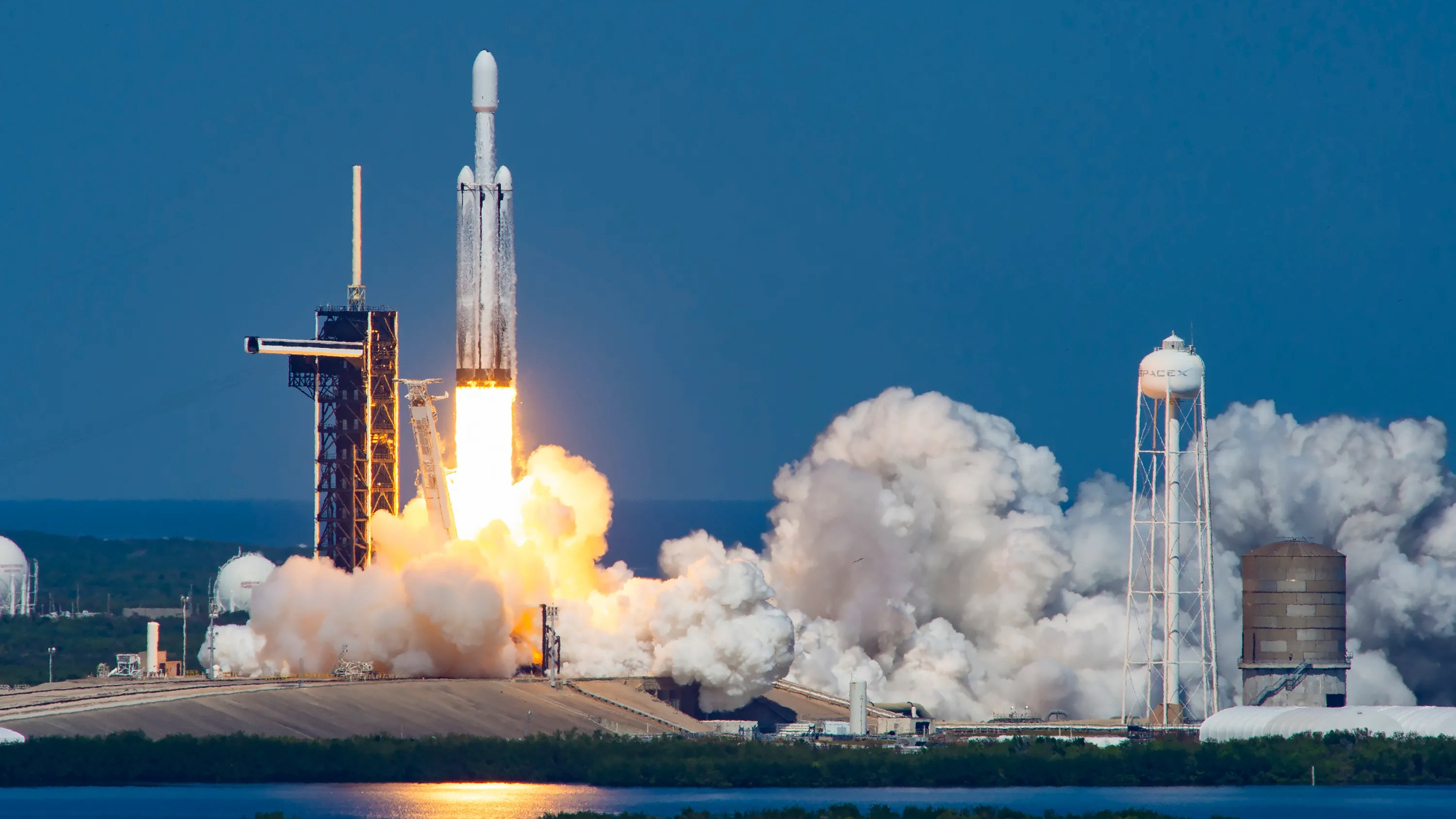
CAPE CANAVERAL, Fla. — SpaceX is primed to light up the Florida Space Coast tonight with one of its rarest and most awe-inspiring spectacles: a nighttime liftoff of the triple-booster Falcon Heavy rocket, ferrying a classified national security reconnaissance payload for the United States government. The mission, conducted in tight coordination with the U.S. Space Force and the intelligence community, underscores Elon Musk’s aerospace firm’s expanding near-monopoly on super-heavy national defense space transport.
The gargantuan rocket, generating more than 5.1 million pounds of liftoff thrust across 27 Merlin engines, is scheduled to blast off from historic Launch Complex 39A at NASA’s Kennedy Space Center. While the precise specifications of the payload remain shielded behind top-secret security clearances, the launch represents a crucial deployment in the Pentagon’s accelerating drive to upgrade orbital surveillance, communications, and electronic intelligence architecture amid intensifying geopolitical friction.
Executive Summary: The Critical Details
- The Rocket: SpaceX Falcon Heavy, comprising three modified Falcon 9 nine-engine core stages strapped together.
- The Customer: U.S. Space Force / National Reconnaissance Office (NRO) under the National Security Space Launch (NSSL) framework.
- The Launch Site: Launch Complex 39A (LC-39A), Kennedy Space Center, Florida.
- The Recovery Profile: Synchronized return-to-launch-site (RTLS) touchdown of the two side boosters at Landing Zones 1 and 2 (LZ-1 and LZ-2), accompanied by dual sonic booms across Brevard County. The center core will be fully expended to maximize orbital energy.
- Public Access: SpaceX will broadcast the countdown, launch, and booster touchdowns live via its official X (formerly Twitter) channel and website, beginning roughly 15 minutes prior to T-0.
The Anatomy of a Classified Mission: What Is Lurking Inside the Fairing?
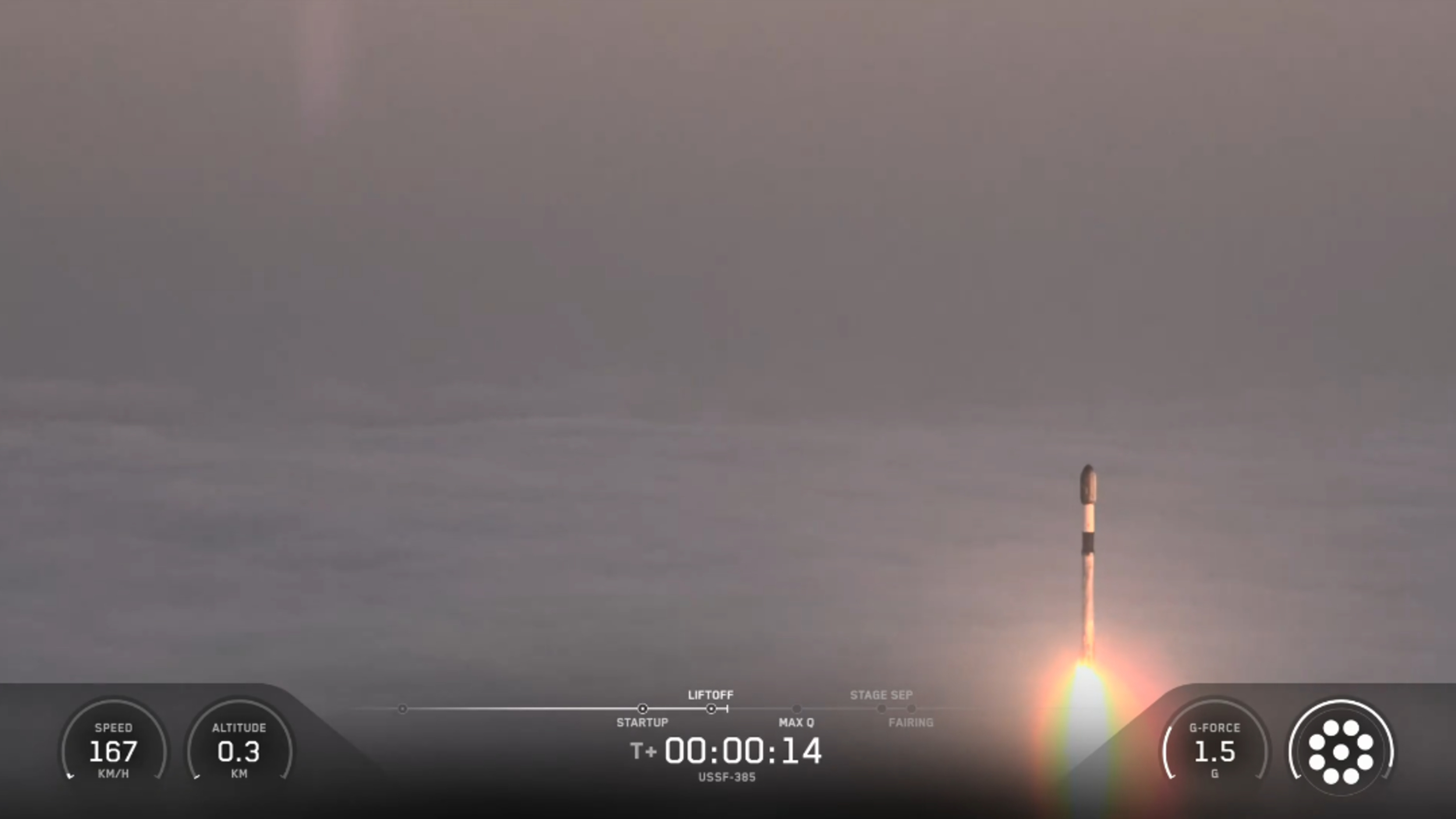
In keeping with strict military protocols governing classified missions, the U.S. Space Force and the intelligence community have declined to disclose the payload's technical parameters, mass, or exact orbital destination. However, industry analysts and orbital tracking specialists point toward a mission demanding an exceptionally energetic orbital trajectory.
Falcon Heavy's flight profile tonight requires the intentional disposal of its central core booster in the Atlantic Ocean, a clear operational indicator that the upper stage requires every drop of propellant to deliver the clandestine hardware directly to a high-energy perch—most likely a Geosynchronous Earth Orbit (GEO) roughly 22,236 miles (35,786 km) above the equator, bypassing the fuel-depleting transfer burns typically handled by the satellite itself.
Military space analysts suggest the satellite could serve multiple critical roles: advanced signals intelligence (SIGINT), ultra-secure tactical communications impervious to terrestrial jamming, or sophisticated space domain awareness (SDA) designed to detect and track adversarial counter-space assets deployed by geopolitical competitors like China and Russia.
Commercial Dominance Meets National Defense
Tonight’s operation reflects an entrenched defense-industrial reality: SpaceX has evolved from a commercial market disruptor into the bedrock of American national security space architecture. Under the Pentagon’s multi-billion-dollar National Security Space Launch Phase 2 procurement contracts, SpaceX shares heavy-lift responsibilities with United Launch Alliance (ULA), a joint venture between Boeing and Lockheed Martin.
Yet, while ULA works to ramp up the operational cadence of its newly certified Vulcan Centaur rocket, SpaceX’s flight-proven Falcon Heavy remains the Department of Defense’s go-to hammer for mission-critical, high-mass payloads requiring immediate and proven orbital insertion capacity.
“The operational capability to place massive, highly complex assets directly into operational orbits on short notice fundamentally alters the strategic calculus,” notes an aerospace defense consultant familiar with Pentagon launch operations. “SpaceX has converted heavy-lift launches from rare, multibillion-dollar administrative marathons into dependable, repeatable fleet operations.”
Verified Flight Profile and Technical Data
| Parameter | Mission Specification |
|---|---|
| Launch Vehicle | SpaceX Falcon Heavy (Block 5 architecture) |
| Thrust at Liftoff | 5.13 million lbf (~22.81 MN) via 27 Merlin 1D engines |
| Side Boosters Fate | Land recovery: Landing Zones 1 & 2 (Cape Canaveral Space Force Station) |
| Center Core Fate | Expended in the Atlantic Ocean (No recovery hardware installed) |
| Target Orbit | Classified (High-energy / Direct-to-Geosynchronous suspected) |
| Primary Payload Class | Classified National Defense / U.S. Space Force Reconnaissance |
| Live Broadcast Window | Begins T-minus 15 minutes; coverage ends shortly after fairing separation |
Dual Boosters, Sonic Booms: The Ballistics of Recovery
For ground observers across Central Florida, the launch promises one of spaceflight's most thrilling kinetic ballets. Approximately two and a half minutes into flight, the two outer boosters will exhaust their liquid oxygen and rocket-grade kerosene (RP-1) propellants, disconnect from the core stage, execute an acrobatic flip maneuver, and ignite their engines for boostback burns back toward the Florida coastline.
Approximately eight minutes after launch, if conditions hold, the two 13-story side boosters will fire their center engines, deploying landing legs to execute simultaneous touchdowns on concrete pads at Landing Zones 1 and 2 at Cape Canaveral Space Force Station. The maneuvers will be punctuated by thunderous dual sonic booms rolling across the Space Coast, signaling successful atmospheric deceleration.
In accordance with national security rules, SpaceX’s public video stream will terminate visual tracking of the upper stage shortly after payload fairing separation, blacking out telemetry data to protect the payload's orbital insertion coordinates from foreign monitoring.
How to Watch Tonight’s Falcon Heavy Launch Live
SpaceX will host a high-definition live webcast of the mission, giving viewers worldwide front-row access to the countdown, ignition, ascent, and synchronized booster landings.
- Livestream Source: The official SpaceX account on X (
@SpaceX) and the corporate portal at spacex.com/launches. - Broadcast Start: Coverage goes live approximately 15 to 20 minutes prior to the opening of the launch window.
- Visual Highlights to Watch: Max-Q (maximum dynamic pressure at ~T+1:12), Side Booster Separation (~T+2:25), and the simultaneous propulsive landings of the side boosters (~T+8:15).
Frequently Asked Questions (FAQ)
Why is the center booster being discarded if SpaceX specializes in reusability?
Classified military satellites destined for high orbits require exceptional kinetic energy. Recovering a booster requires withholding a substantial reserve of propellant for the boostback and landing burns. By opting to burn the center core’s fuel to depletion and discarding the hardware in the ocean, SpaceX maximizes the payload mass and speed imparted to the second stage, ensuring the reconnaissance asset reaches its required classified orbital envelope.
Why will the SpaceX live broadcast cut off before satellite deployment?
For commercial missions such as Starlink or commercial telecom deployments, SpaceX broadcasts the entire flight profile through final payload release. However, on classified Department of Defense and NRO missions, the exact time of deployment, orbital velocity, inclination, and separation maneuvers are guarded national security secrets. Webcasts for such missions consistently terminate coverage shortly after payload fairing jettison to prevent foreign intelligence services from tracking precise orbital insertion vectors.