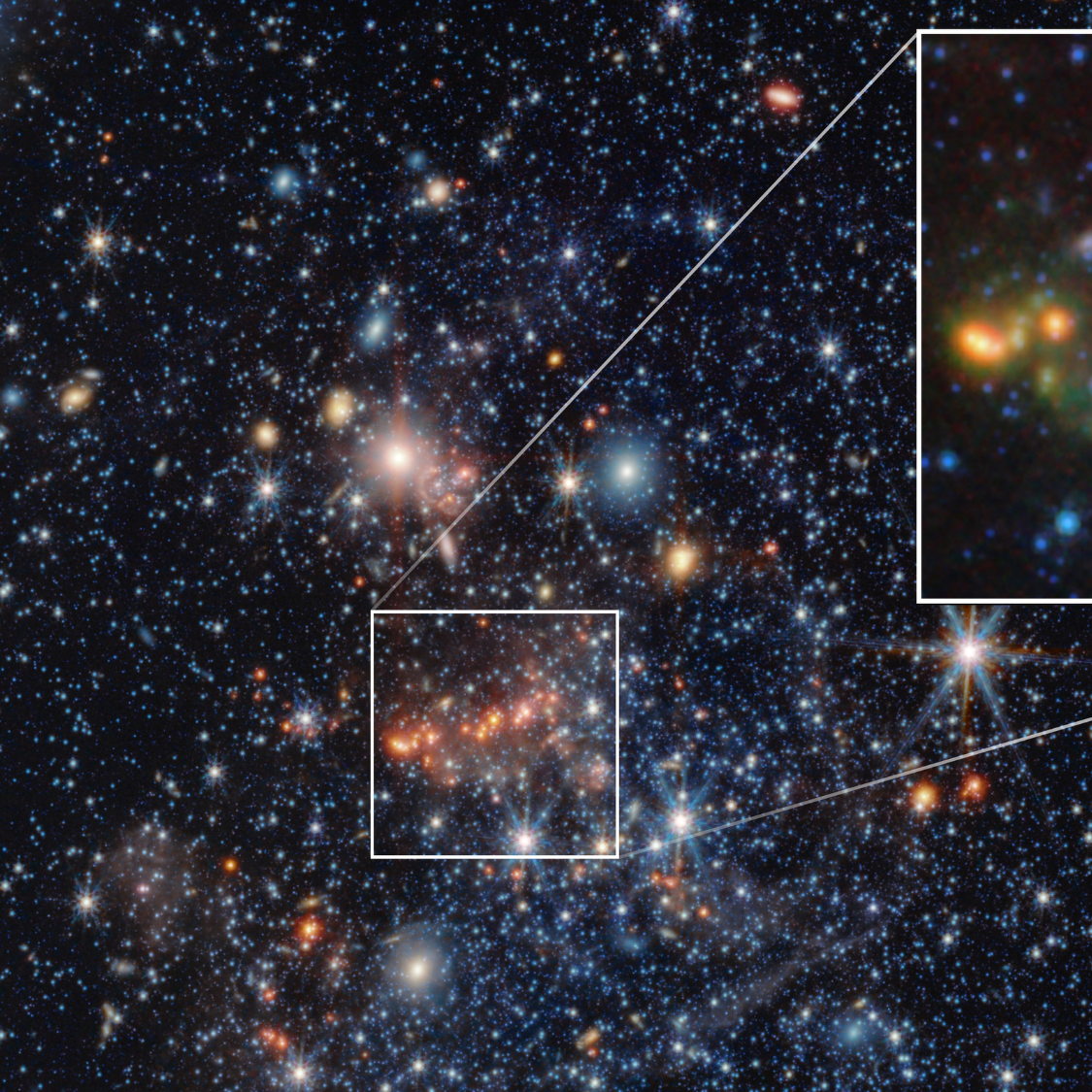
WASHINGTON & MUMBAI — In a monumental breakthrough that reshapes our understanding of cosmic history, astronomers utilizing the James Webb Space Telescope (JWST) have successfully unmasked the ancient "factories" that flooded the primordial universe with stardust. The findings, announced following intensive deep-space observations, offer unprecedented clarity on how the very building blocks of rocky planets, moons, and ultimately life itself were forged during the universe's infancy.
For decades, astrophysicists have grappled with a profound cosmic mystery: how massive quantities of dust accumulated so rapidly in the early universe, long before mature stars should have had time to live, die, and shed their heavy elements. Now, armed with JWST’s peerless infrared vision, researchers have captured direct evidence of how these celestial manufacturing hubs operated just hundreds of millions of years after the Big Bang.
Executive Summary: Key Takeaways
- Stardust Genesis: JWST has exposed the mechanisms behind ancient cosmic dust factories, explaining how heavy elements spread across the early universe.
- Population Boom: Data reveals over 100 more relatively bright galaxies in the very early universe than pre-JWST models projected.
- Planetary Race: Observations of 72 young, sun-like stars indicate that planet formation is a hyper-competitive, rapid celestial race.
- Economic & Scientific Impact: This deep-space paradigm shift redefines the timeline of cosmic evolution, directly impacting aerospace investments and deep-tech instrumentation markets.
Inside the Primordial Dust Refineries
Cosmic dust is far more than mere space debris; it is the fundamental scaffolding of the cosmos. Without it, stars cannot efficiently cool and collapse, and rocky worlds like Earth could never coalesce. Until recently, scientists debated whether supernovas—the explosive deaths of massive stars—or asymptotic giant branch (AGB) stars were the primary engines behind this early enrichment.
By peering deeper into the cosmic dawn than any instrument before it, the James Webb Space Telescope has captured the precise chemical signatures of these dust-producing engines at work. The telescope's Near-Infrared Camera (NIRCam) and Mid-Infrared Instrument (MIRI) sliced through obscuring cosmic veils, allowing researchers to analyze the chemical composition of light originating from the edge of observable time.
The data confirms that early supernovae acted as hyper-efficient blast furnaces, instantly cooking up and expelling colossal quantities of silicates and carbon grains. These microscopic particles were subsequently caught in galactic winds, seeding the intergalactic medium and paving the way for subsequent generations of star and planet formation.
Rewriting the Cosmic Census
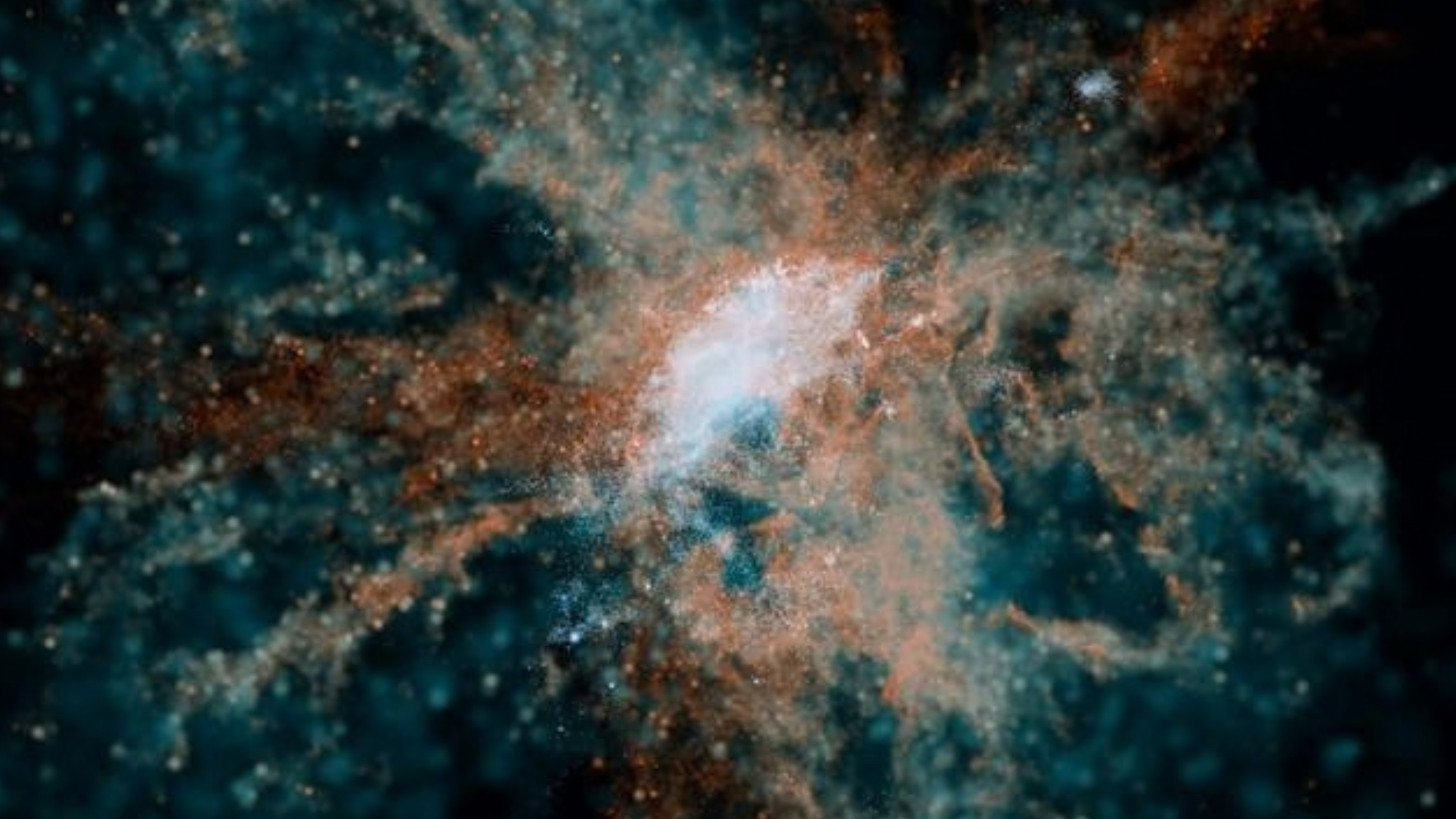
The implications of the JWST data extend far beyond dust grains, fundamentally challenging standard cosmological models. According to leading astrophysicists analyzing the latest datasets, the early universe was far more crowded and luminous than previously assumed.
"There are, very roughly, over 100 more relatively bright galaxies in the very early universe than were expected based on pre-JWST observations," note lead researchers spearheading the survey. This unexpected abundance of early luminous structures suggests that star formation during the universe's first billion years proceeded at a blistering, highly accelerated pace.
This stellar overpopulation forces a complete recalibration of how dark matter halos and baryonic matter interacted during the cosmic dawn. Financial analysts and tech strategists monitoring the aerospace and deep-science sectors note that these continuous revisions in astrophysics are driving a surge in demand for advanced computational modeling and high-performance quantum algorithms capable of processing JWST’s massive data streams.
At a Glance: JWST Cosmic Dust & Stellar Survey
| Parameter | Pre-JWST Estimate | Current JWST Finding |
|---|---|---|
| Early Bright Galaxies | Baseline standard models | >100 more relatively bright galaxies than expected |
| Young Stars Studied | Limited regional samples | 72 young sun-like stars analyzed in detail |
| Planet Formation | Gradual, protracted timeline | A hyper-accelerated "real race" |
| Primary Dust Source | Theoretical models | Direct observation of early supernova enrichment |
A High-Speed Race for Planetary Systems
The revelations from the James Webb Space Telescope are not confined strictly to the distant edge of the universe. In a complementary breakthrough, astronomers using the observatory have focused on local stellar nurseries to observe 72 young, sun-like stars in unprecedented detail.
The findings indicate that forming planets is a real race. The circumstellar disks of gas and dust surrounding these infant stars evolve, clump, and clear out much faster than classical theories predicted. This rapid planetary assembly suggests that terrestrial and gaseous worlds begin taking shape almost simultaneously with their host stars, leaving a remarkably narrow window for material accretion.
For planetary scientists, this "cosmic sprint" explains the surprising diversity of exoplanetary systems discovered over the last two decades. If planet formation is an aggressive, high-speed evolutionary sprint, planetary systems should be ubiquitous across the Milky Way—bolstering the statistical probability of finding habitable worlds.
Future Outlook and Market Implications
As the James Webb Space Telescope continues its flawless operations at the Sun-Earth Lagrange Point 2 (L2), the global scientific community anticipates even more paradigm-shifting data. Ground-based observatories, including the upcoming Extremely Large Telescope (ELT), are already pairing their datasets with JWST's infrared discoveries to build multi-wavelength maps of cosmic history.
From an economic standpoint, the space economy continues to outperform expectations. The technologies developed to process, transmit, and analyze JWST data—ranging from advanced photonics to neural-network-driven data pipelines—are finding lucrative commercial applications in terrestrial telecommunications, artificial intelligence, and advanced material sciences.
Ultimately, by unlocking the secrets of the universe's original dust factories, the James Webb Space Telescope has done more than just map ancient stardust; it has proven that the universe was primed for complexity and life from its earliest days.
Frequently Asked Questions
1. What exactly are cosmic "dust factories"?
Cosmic dust factories refer to stellar environments—primarily massive supernovae and aging giant stars—where heavy elements like carbon, silicon, and iron are synthesized, condensed into solid microscopic grains, and distributed into interstellar space.
2. Why is the discovery of excess bright early galaxies significant?
Finding significantly more bright galaxies than predicted challenges current models of galaxy formation, forcing scientists to rethink how fast matter collapsed and stars ignited during the first few hundred million years after the Big Bang.