The Power of a Tweet: Why PM Modi’s Birthday Message to Nirmala Sitharaman Quieted India's Cabinet Reshuffle Rumors
In the high-stakes theater of New Delhi’s political economy, silence is rarely empty, and public gestures are never accidental. For weeks, the corridors of Lutyens’ Delhi and the trading desks of Mumbai had been abuzz with intense speculation. Rumors of an impending Cabinet reshuffle in the newly formed Modi 3.0 coalition government were growing louder, with whispers questioning whether Union Finance Minister Nirmala Sitharaman would retain her portfolio at North Block.
Then came August 18. A single social media post from Prime Minister Narendra Modi, wishing Sitharaman on her birthday, did more than offer customary greetings—it delivered a decisive political masterstroke. The meticulously timed message sent a clear signal to markets, political allies, and bureaucrats alike: Sitharaman remains indispensable to India’s macroeconomic vision.
For global investors and domestic businesses seeking policy stability in a volatile global market, the subtext of the Prime Minister's greeting was loud and clear. It reaffirmed continuity at a time when the ruling Bharatiya Janata Party (BJP) is navigating a complex coalition government and preparing for crucial state assembly elections.
Decoding the "Perfect Timing" of PM Modi’s Message
The birthday wish, posted on social media platform X (formerly Twitter), was not a template greeting. PM Modi wrote: "Birthday wishes to Union Minister Smt. @nsitharaman Ji. She is pioneering path-breaking reforms to make our economy stronger and more vibrant. Her dedication to public service is commendable. Praying for her long and healthy life."
To the untrained eye, it was a standard birthday message. To seasoned political analysts and market observers, the phrase "pioneering path-breaking reforms" was a targeted endorsement. It was published at a moment when Sitharaman was facing intense scrutiny from both opposition parties and internal party circles over the provisions of the FY 2024-25 Union Budget.
Key Reasons Why the Message Held Deep Political Significance:
- Quelling Reshuffle Rumors: Speculation was rife that the BJP might reallocate key ministries to satisfy coalition partners (such as the TDP and JD-U) or to rejuvenate the government's public image ahead of elections in Haryana, Maharashtra, and Jharkhand. Modi’s public praise effectively shut down rumors of her exit.
- Endorsement of Fiscal Policy: The budget had faced criticism from middle-class voters over changes to capital gains tax and the initial removal of indexation benefits on real estate. By calling her reforms "path-breaking," Modi publicly backed her fiscal discipline over populist demands.
- Market Assurance: Foreign Institutional Investors (FIIs) prize policy predictability. A sudden change in the leadership of the Finance Ministry could have triggered market anxiety. The Prime Minister's public vote of confidence restored institutional calm.
The Economic Tightrope of Modi 3.0
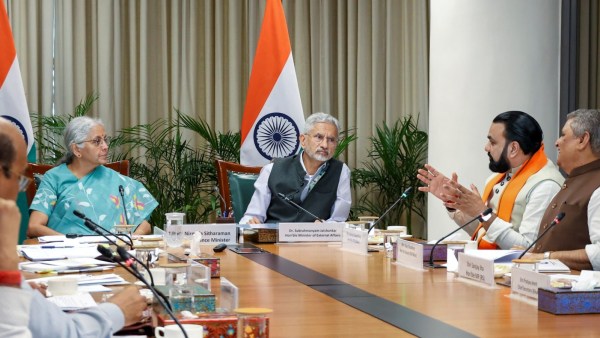
The political backdrop of this exchange is critical. Unlike his previous two terms, PM Modi's third term relies on a coalition. This shift has placed immense pressure on the Finance Ministry to balance the ambitious, long-term capital expenditure drive with the immediate, localized financial demands of key allies in Andhra Pradesh and Bihar.
Sitharaman has consistently championed fiscal consolidation, successfully steering India's fiscal deficit downward from its pandemic-era peaks. Her budget set a fiscal deficit target of 4.9% of GDP for FY25, aiming to bring it below 4.5% by FY26. To achieve this while funding coalition demands required a delicate balancing act—one that the Prime Minister has now firmly validated.
The Indian Economy Under Sitharaman's Stewardship
To understand why the Prime Minister chose to stand firmly behind his Finance Minister, one must look at the hard economic indicators. Despite global headwinds, inflation surges, and geopolitical conflicts, India has remained the fastest-growing major economy in the world.
| Economic Indicator | FY 2020-21 (Pandemic Peak) | FY 2024-25 (Current Projections) | Strategic Outlook |
|---|---|---|---|
| GDP Growth Rate | -5.8% (Contraction) | 7.0% - 7.2% (Projected) | Driven by robust domestic demand and manufacturing rebound. |
| Fiscal Deficit (% of GDP) | 9.2% | 4.9% | A aggressive path toward fiscal consolidation and debt reduction. |
| Monthly GST Collections | ~₹95,000 Crore | ~₹1.75 Lakh Crore | Indicates formalized economy and improved tax compliance. |
| Capital Expenditure (CapEx) | ₹4.39 Lakh Crore | ₹11.11 Lakh Crore | Heavy state-led investment in infrastructure, roads, and railways. |
Political Continuity and the Road Ahead
By reinforcing Sitharaman’s position, PM Modi has signaled that the government will not pivot to reckless populism despite political pressures. The immediate challenges ahead for the Finance Minister include navigating volatile global oil prices, managing domestic food inflation driven by erratic monsoon patterns, and accelerating private sector capital expenditure, which has lagged behind public spending.
The public endorsement also strengthens Sitharaman's hand within the GST Council, where state finance ministers frequently debate tax slabs and revenue-sharing models. With the Prime Minister’s explicit backing, she retains the political capital necessary to push through complex federal economic reforms, including potential overhauls of the direct tax code and energy sector tariffs.
Ultimately, in the language of Indian politics, what is left unsaid is often as important as what is spoken. By using the platform of a birthday greeting to celebrate her economic stewardship, PM Modi delivered a clear message to his cabinet, his allies, and global markets: the architect of India's economic policy is here to stay.
Frequently Asked Questions (FAQ)
1. Why was there speculation about Nirmala Sitharaman’s role in the Cabinet?
Following the 2024 Lok Sabha elections, the BJP fell short of a majority on its own, requiring the support of coalition partners. This led to rumors that key portfolios, including Finance, might be reshuffled to accommodate allies or to introduce new faces to address public concerns regarding unemployment, inflation, and taxation changes in the latest budget.
2. What does PM Modi's endorsement mean for global investors?
PM Modi's endorsement signals policy continuity and stability. It assures global investors that India will remain committed to its path of fiscal consolidation, capital expenditure-led growth, and structural tax reforms, reducing political risk and policy uncertainty in the medium term.