
Executive Takeaways
- Capital Efficiency Usurps Growth-at-All-Costs: Indian agritech startup Myca’s $1.3 million pre-seed round exemplifies an institutional shift across Asia toward micro-ticket, high-conviction funding targeting vertical enterprise AI over capital-dilutive consumer plays.
- Agritech 3.0 Deploys Applied Intelligence: Agricultural platforms are abandoning asset-heavy farm-to-consumer logistics to prioritize algorithmic yield forecasting, real-time supply-chain arbitrage, and cloud-native ERP integration for fragmented emerging markets.
- The Fintech-Crypto Institutional Convergence: Across Singapore, Tokyo, and Mumbai, digital asset liquidity is realigning under strict regulatory oversight, merging cross-border programmable settlement with legacy trade finance architectures.
- Sovereign Compute & Vertical Specialization: Asian venture capital dry powder—totaling an estimated $42 billion across regional funds—is migrating rapidly into sovereign cloud infrastructure, localized language models, and high-margin B2B software stacks with clear paths to positive unit economics.
The Crucible of Capital: Asia’s Disciplined Tech Rebound
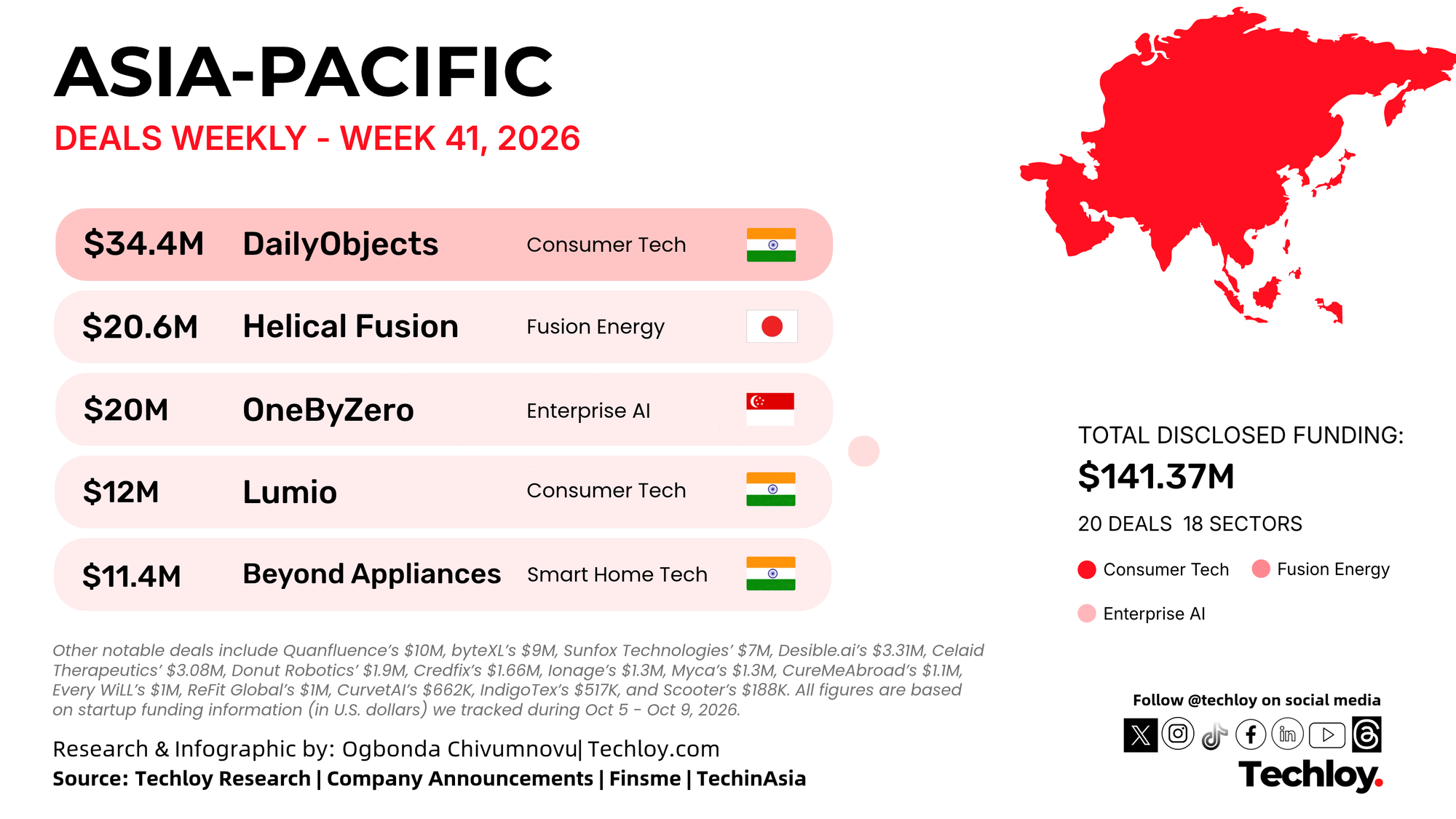
For decades, Asia’s venture capital story was written through brute-force capitalization: subsidizing consumer customer acquisition costs, financing sprawling hyper-delivery networks, and prioritizing top-line gross merchandise value over fundamental unit economics. Today, that playbook has been decisively dismantled. Across the innovation corridors stretching from Bengaluru to Singapore and Tokyo, a fundamentally restructured financial architecture is emerging—one rooted in capital discipline, mission-critical infrastructure, and deep vertical domain expertise.
The catalytic baseline of this market correction is captured in deals like that of Myca, an Indian artificial intelligence agribusiness enterprise that recently secured $1.3 million in pre-seed financing. While small in scale compared to the late-stage mega-rounds of the late-2021 liquidity peak, the transaction signals a profound reallocation of early-stage private equity. Institutional allocators and venture partners are aggressively seeking high-conviction software assets capable of unlocking enterprise ROI within traditional, historically pen-and-paper economies. India’s agricultural sector, a $350 billion macroeconomic engine, remains one of the world's most fragmented markets; injecting real-time algorithmic processing into this ecosystem shifts the narrative from speculative hype to tangible productivity extraction.
This reallocation is unfolding against a complex macroeconomic backdrop. With the U.S. Federal Reserve maintaining restrictive real interest rates and Asian central banks navigating currency volatilities, the era of undisciplined cross-border capital deployment has ended. In its place stands a bifurcated market: consumer-facing internet companies are weathering severe valuation multiple compression and down-rounds, while deep-tech, vertical artificial intelligence, B2B fintech, and compliance-first digital asset architectures command premium entry multiples.
Agritech 3.0: Embedding Intelligence into the Physical Supply Chain
The structural evolution of Asian agritech reflects the maturity of the wider venture ecosystem. Early "Agritech 1.0" models relied heavily on asset-heavy physical warehousing and disintermediation plays that collapsed under high working-capital requirements and operational friction. "Agritech 2.0" introduced basic mobile telematics and price-discovery dashboards, yet struggled with monetization due to low willingness-to-pay among decentralized smallholder farmers.
The current iteration—Agritech 3.0, championed by modern platforms like Myca—operates higher up the margin chain. Rather than owning tractors or leasing physical storage facilities, these enterprises deploy asset-light software architectures that act as an intelligent operating layer across agricultural supply chains, food processors, and input distributors. By leveraging predictive neural networks trained on hyper-local soil chemistry, localized microclimate variables, and historical spot-market price fluctuations, they deliver immediate enterprise ROI through margin optimization and inventory waste mitigation.
Crucially, the unit economics of this vertical software layer address the structural vulnerabilities that previously plagued rural-focused technologies:
- Near-Zero Marginal Distribution Cost: Cloud compute architecture and lightweight mobile APIs allow platforms to scale across multi-tier regional distributor networks without parallel operational headcount expansions.
- Predictive Working Capital Deployment: By analyzing real-time harvesting timelines alongside regional warehousing capacity, algorithmic models mitigate credit default risks for institutional lenders underwriting trade finance in rural markets.
- Enterprise Software Monetization: Shifting customer acquisition away from individual producers toward agricultural enterprises, bulk procurement syndicates, and sovereign commodity boards secures recurring SaaS and transactional revenue models.
In developing Asian economies, where the spread between farm-gate realization prices and terminal retail costs often exceeds 40%, algorithmic supply-chain routing does not just protect margins—it serves as a powerful deflationary instrument for emerging economies balancing trade deficits and food price volatility.
The B2B Fintech & Regulated Crypto Convergence
While artificial intelligence restructures real-world industrial supply chains, a parallel modernization is sweeping through Asian financial technology and digital asset corridors. The historical division between legacy enterprise banking, cross-border payments, and decentralized finance is rapidly dissolving under institutional mandates for regulatory compliance and operational speed.
Across Southeast Asia, where cross-border trade transactions exceed $1.8 trillion annually, traditional B2B payment corridors remain burdened by multi-day settlement windows, opaque correspondent banking fees, and friction in currency exchange mechanisms. Modern fintech infrastructure providers are countering these inefficiencies by embedding specialized treasury management systems, programmatic FX hedging, and digital asset liquidity pools directly into corporate resource planning software.
This structural modernization is largely governed by progressive regulatory environments in key financial centers. The Monetary Authority of Singapore (MAS) and the Hong Kong Securities and Futures Commission (SFC) have laid down comprehensive regulatory regimes for virtual asset service providers (VASPs), commercial tokenization, and asset-backed stablecoins. Institutional players are increasingly eschewing unregulated offshore venues to construct institutional-grade digital asset infrastructure: wholesale cross-border settlements, tokenized short-term sovereign debt, and programmable escrow facilities built on private-permissioned distributed ledgers.
By removing liquidity bottlenecks and counterparty credit risks, these hybrid fintech architectures give regional trading conglomerates the agility to navigate geopolitical trade realignments and localized currency devaluations with near-zero latency.
Comparative Analysis: Asia’s Shifting Venture & Tech Landscape
The tactical pivot away from consumer platforms toward high-barrier vertical software, compliance-anchored financial rails, and deep tech is demonstrated across historical deal flows, valuation dynamics, and capital efficiency metrics:
| Sector & Strategic Vector | Median Round Sizes (Pre-Seed to Series A) | Prevailing Valuation Multiples (ARR / GMV) | Primary Technological Drivers | Key Geographic Innovation Hubs |
|---|---|---|---|---|
| Vertical AI & Agritech (e.g., Myca, Field-Level SaaS) |
$1.0M – $6.5M | 8x – 14x Forward Net Revenue | Predictive neural networks, localized computer vision, asset-light cloud ERP integration | India (Bengaluru, Hyderabad), Vietnam, Indonesia |
| Institutional B2B Fintech (Trade Rails & Treasury) |
$3.0M – $12.0M | 10x – 16x Net Revenue | Real-time programmatic settlement, dynamic credit scoring APIs, automated cross-border FX | Singapore, Hong Kong, India |
| Regulated Digital Assets (VASP, Asset Tokenization) |
$2.5M – $10.0M | 6x – 11x Trailing Revenue | Zero-knowledge settlement proofs, programmable stablecoin rails, institutional cold-custody architectures | Singapore, Tokyo, Hong Kong |
| Consumer Tech / Quick-Commerce (Legacy Late-Stage Paradigms) |
Depressed / Down-Rounds | 0.6x – 1.8x Gross Merchandise Value | Route-density optimization algorithms, hyper-local consumer delivery applications | Pan-Asia (Market Rationalization Phase) |
Strategic Implications: Winners, Losers, and Capital Asymmetry
The reallocation of capital across Asia’s primary digital hubs is creating clear divides across enterprise tiers, venture strategies, and competitive positioning.
The Structural Winners
- Vertical AI Enablers: Software operators deploying domain-specific machine learning models directly into foundational industries—such as agribusiness, industrial manufacturing, and cold-chain cold storage—command resilient pricing power and defendable proprietary datasets that generalized enterprise models cannot replicate.
- Regulated Financial Infrastructure: Custodians, cross-border corporate payment engines, and compliance-first tokenization platforms that proactively secure institutional licenses from regulators like MAS and SFC are monopolizing institutional capital inflows.
- Specialized Seed & Early-Stage Funds: Boutique venture firms deploying targeted checks ($1M to $3M) into capital-efficient founders are capturing favorable entry valuations, insulating limited partners from late-stage growth-round drawdowns.
The Structural Losers
- Generic AI "Wrappers": Startups utilizing third-party LLM APIs without proprietary data assets, specialized hardware infrastructure, or deep workflow integration face rapid commoditization and compressing net margins.
- Unlicensed Digital Asset Operators: Off-shore speculative exchanges and regulatory-arbitrage entities are being systematically excluded from Tier-1 commercial banking on-ramps and sovereign-backed digital asset ecosystems.
- Capital-Intensive B2C Aggregators: Platforms reliant on persistent capital subsidies to maintain active user volumes are encountering a barren secondary market, forced into distressed consolidations, debt restructuring, or outright liquidation.
Frequently Asked Questions (People Also Ask)
How is venture capital deployment shifting across Asia’s technology sectors?
Venture capital deployment in Asia has shifted from high-burn, consumer-facing internet platforms toward capital-efficient, high-margin vertical software, deep tech, and institutional fintech. Institutional allocators are prioritizing positive unit economics, enterprise software pricing power, and transparent paths to profitability over market-share accumulation via operational subsidies. This trend is demonstrated by robust seed-stage activity in focused sectors like AI agritech and industrial workflow automation, even as later-stage mega-rounds remain subdued.
Why are artificial intelligence and vertical SaaS platforms gaining traction in Indian agribusiness?
India’s agricultural ecosystem has historically suffered from extreme distribution fragmentation, high post-harvest losses, and an absence of standardized price-discovery mechanisms. Vertical SaaS and artificial intelligence platforms, such as Myca, address these challenges through lightweight, asset-light software layers. By analyzing microclimate dynamics, supply chain throughput, and regional procurement pricing, these technologies give commercial buyers, trade intermediaries, and producers institutional-grade predictive tools, materially improving net margins without the capital liabilities of asset-heavy operational models.
What impact do Singapore and Hong Kong’s regulatory frameworks have on Asian fintech and crypto funding?
The clear, comprehensive regulatory environments established by the Monetary Authority of Singapore (MAS) and the Hong Kong Securities and Futures Commission (SFC) have effectively de-risked institutional participation in the region’s fintech and digital asset ecosystems. By providing unambiguous guidelines for asset-backed stablecoins, tokenized sovereign securities, and institutional custody, these regulatory bodies have attracted regulated balance sheets, multinational investment banks, and enterprise treasuries. This institutional migration comes directly at the expense of non-compliant offshore jurisdictions, permanently raising the bar for early-stage digital asset compliance.
How does modern B2B fintech address legacy vulnerabilities in cross-border Asian trade?
Legacy cross-border Asian trade has long been hindered by complex correspondent banking chains, opaque foreign exchange fees, and settlement horizons spanning three to five business days. Modern B2B fintech platforms eliminate these frictions by embedding real-time automated treasury management, algorithmic foreign exchange liquidity routing, and programmable smart contracts directly into regional ERP networks. This software integration facilitates near-instant settlement and minimizes foreign exchange exposure, releasing billions in trapped working capital across Southeast Asian and Indian supply corridors.
Future Outlook & Key Catalysts to Watch
Over the next 18 to 36 months, Asia’s technology landscape will be shaped by three macro catalysts that will dictate private market valuations and enterprise execution.
First, the push toward sovereign cloud infrastructure and local-language artificial intelligence will accelerate. Asian nations, acutely aware of geopolitical shifts and the concentration of compute capacity within Western hyperscalers, are actively funding and incentivizing domestic data centers and localized language models. Startups that fine-tune generative and predictive capabilities on proprietary, regional linguistic and industrial data—such as agricultural micro-terminologies, vernacular B2B trade documentation, and domestic banking standards—will establish formidable moats against standardized global foundation models.
Second, a substantial consolidation wave across fragmented mid-tier software and legacy fintech is approaching. Companies funded during the 2020–2022 valuation peak that have failed to achieve operational break-even will run out of runway. This will create compelling programmatic M&A opportunities for well-capitalized, cash-flow-positive platforms to acquire distressed technological assets, customer databases, and regulatory licenses at deep discounts.
Finally, the institutional integration of programmable digital finance into physical supply chains will cross the inflection point from pilot to production. As platforms like Myca bring algorithmic transparency to physical supply chains, the logical next step is pairing that data with programmatic, auto-executing trade finance. When crop delivery confirmations, quality assays, and cross-border currency conversions are linked within a single automated pipeline, the speed of commerce across Asia’s emerging markets will transform permanently. The foundations laid by today’s early-stage investments are quietly assembling the operating system for Asia’s next economic cycle.