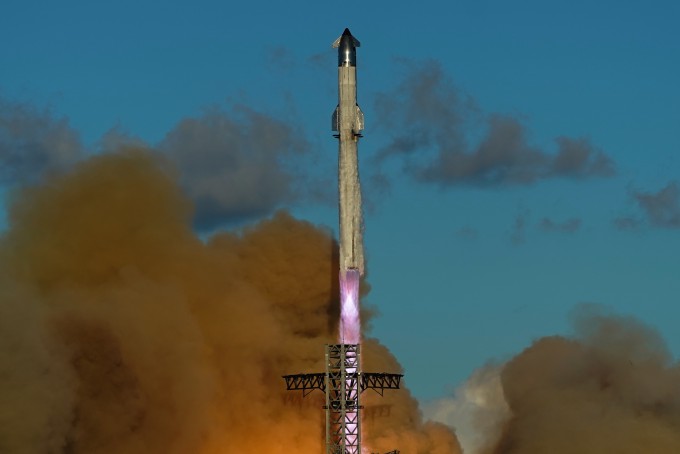
Musk’s Great Pivot: SpaceX Reorders Starship Priorities to Target Uncrewed Moon Landing by March 2027
BOCA CHICA, Texas — In a sweeping strategic realignment carrying profound implications for the global space economy, SpaceX has formally downshifted its near-term Mars ambitions to concentrate maximum industrial firepower on the Moon. The commercial aerospace titan has locked in a target date of March 2027 for its first uncrewed landing of the Starship Human Landing System (HLS) on the lunar surface, according to disclosures first detailed by South Korean wire service DongA Science and verified by senior industry sources.
The pivot marks a pragmatic pause on Chief Executive Elon Musk’s career-defining rhetoric of establishing an immediate, direct pipeline to the Red Planet. Faced with mounting contractual exposure under NASA’s $4-billion-plus Artemis portfolio, excruciating technical hurdles in orbital propellant transfer, and a fast-closing geopolitical window against China’s rival lunar program, SpaceX is choosing commercial reality over interplanetary romance.
The Contractual Crucible: Artemis III and Cryogenic Reality
While Musk has long framed SpaceX’s founding mission around Martian colonization, the company’s near-term balance sheet remains intrinsically tethered to Washington. Under NASA’s Artemis program, Starship serves as the critical path for the Artemis III and IV missions, which aim to return American astronauts to the lunar south pole.
The revised internal roadmap establishes March 2027 as the definitive operational gate for Starship HLS to touch down on the Moon without a crew. Achieving this threshold is a mandatory prerequisite before NASA will permit crewed integration. Agency leadership has privately grown anxious over schedule slips; initial projections had slated uncrewed demonstrations as early as 2024–2025, before cascading technical delays forced repeated baseline recalibrations.
The pivot comes on the heels of major industrial lessons extracted from Starship’s iterative flight campaign. Following the watershed integrated flight test from Starbase in Boca Chica on October 13, 2025—which proved out critical booster recovery and heat-shield upgrades—SpaceX engineering teams hit a fundamental logistical inflection point. The volume of launches required to prove ship-to-ship cryogenic orbital refueling cannot support parallel Mars and lunar tracks without diluting critical engineering resources.
Executive Takeaways: The Strategic Realignment
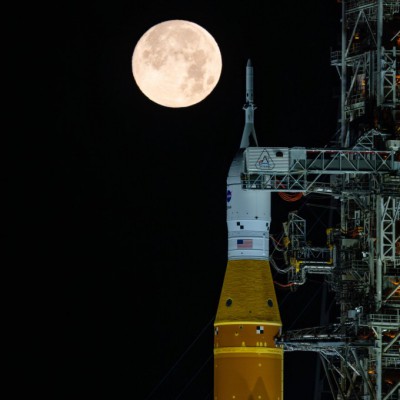
- The March 2027 Target: SpaceX has established an uncompromising internal and customer-facing schedule to land a full-scale, uncrewed Starship on the lunar regolith by the close of Q1 2027.
- Mars on Ice: While Musk maintains that uncrewed exploratory probes could depart during favorable synodic windows, the architecture, human life support, and capital allocation are now subverted to lunar HLS obligations.
- The Tanker Bottleneck: The lunar mission requires validating complex orbital propellant transfers—demanding anywhere from 8 to 16 consecutive Super Heavy tanker launches to fill a single lunar lander in Low Earth Orbit (LEO).
- Geopolitical Stakes: The timeline keeps the United States narrowly ahead of Beijing, which has committed to placing taikonauts on the Moon before 2030 via its Long March 10 architecture.
The Orbital Refueling Conundrum
The primary barrier to the March 2027 lunar window is not the launch of Starship itself, but the sheer logistical choreography of orbital logistics. Unlike the direct-ascent architecture used during the Apollo era, Starship’s gargantuan dry mass requires an orbital depot.
To propel a vehicle of Starship's scale to the Moon and execute a propulsive landing, SpaceX must execute multiple launches in rapid succession. Liquid oxygen and liquid methane must be transferred between ships in orbit at cryogenic temperatures without catastrophic boil-off. Insiders indicate that SpaceX will spend the entirety of late 2026 conducting low-Earth-orbit docking and fuel transfer trials. Only after a sustained chain of tanker flights demonstrates high-cadence turnaround will the March 2027 mission receive final flight clearance.
Starship Manifest: Timeline & Programmatic Shifts
| Target Window | Mission / Milestone | Primary Objective | Strategic Status |
|---|---|---|---|
| Q3–Q4 2026 | LEO Propellant Transfer Demo | Ship-to-ship cryogenic transfer and orbital depot docking | Active Engineering Focus |
| March 2027 | Uncrewed Starship Lunar Landing | Soft touchdown on lunar south pole; validate landing engines | Prioritized Baseline |
| Late 2027–2028 | Artemis III Crewed Landing | Ferry NASA astronauts from Orion to the lunar surface | Contingent on March '27 Success |
| 2028+ (Indefinite) | First Uncrewed Mars Direct | Initial surface payloads and landing testing on Mars | Deprioritized / Secondary |
The China Factor: Why the Moon Can No Longer Wait
From an institutional and geopolitical perspective, SpaceX had virtually no alternative. The China National Space Administration (CNSA) and its primary state contractors have maintained clockwork progress on their crewed lunar landing systems, systematically achieving milestones for their Mengzhou spacecraft and Lanyue lander.
Congressional appropriators and the Pentagon have explicitly signaled to SpaceX that federal backing relies on national dominance at the Moon’s Shackleton Crater—a site rich in water ice deposits that represents the strategic high ground of the cis-lunar economy. Falling behind Beijing on the Moon while chasing an ideological venture to Mars would have triggered immense political fallout and jeopardized SpaceX’s near-monopoly on high-value defense payloads.
By realigning the corporate vanguard behind the Moon, Musk is securing the institutional moat around SpaceX. The road to Mars, as SpaceX’s engineers have finally acknowledged, must pass directly through the lunar dust.
Frequently Asked Questions (FAQ)
Has SpaceX abandoned its long-term plan to colonize Mars?
No. Mars remains SpaceX’s foundational corporate mission. However, capital expenditure, launch cadences, and high-level engineering bandwidth are zero-sum games. SpaceX has formally shifted its near-term operational priority to the lunar theater to satisfy its contractual obligations to NASA's Artemis program and secure vital space logistics capabilities before attempting long-duration deep-space transit.
What is the single biggest engineering risk to the March 2027 landing?
Cryogenic propellant boil-off and transfer cadence. SpaceX must prove it can launch multiple Super Heavy/Starship tanker missions in unprecedentedly rapid succession (potentially days apart) to fill an orbital depot without losing mass to boil-off, followed by a flawless automated trans-lunar injection burn.
![[HMG Tech Talent Forum 2026 Series ②] Minwoo Park, President and Head of AVP Division at Hyundai Motor Group and CEO of 42dot; Hyundai Motor Group’s Roadmap for Commercializing AI Technology](https://www.hyundaimotorgroup.com/image/upload/asset_library/MDA00000000000079943/06e7fc79563c448eb27874eeea34f579.jpg)