LONDON and SEOUL — In the subterranean depths of global macroeconomics, few creatures are as reliable as the South Korean export engine. Long before corporate earnings season rattles Wall Street or economic sentiment surveys ripple across Frankfurt, the daily customs data streaming out of Incheon and Busan provides an unvarnished diagnostic of global technological demand. Today, that diagnostic reveals a troubling cough. As markets digest the latest trade prints, institutional investors are increasingly viewing South Korea not merely as an economic powerhouse, but as the proverbial canary in the artificial intelligence coalmine.
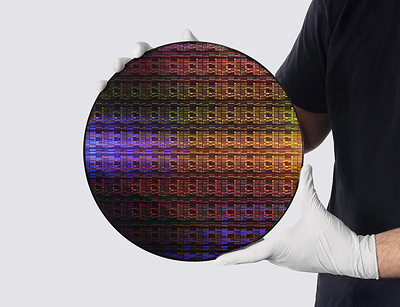
The core tension in global markets today centers on a fundamental disconnect: the staggering capital expenditure (CapEx) commitments being poured into cloud compute architecture by hyperscalers versus the actual, realized enterprise return on investment (ROI). For the past twenty-four months, semiconductor manufacturers, particularly memory giants like Samsung Electronics and SK Hynix, have enjoyed an unprecedented windfall driven by relentless demand for specialized chips and High-Bandwidth Memory (HBM) paired with Nvidia graphics processing units. However, recent preliminary data indicates that this exponential growth curve is encountering structural resistance.
The Anatomy of the Korean Trade Signal
To understand why a shift in Seoul's export ledger sends immediate shockwaves to European bourses—impacting everything from the German DAX to specialized Dutch lithography equipment manufacturers—one must examine the hyper-integrated nature of the modern technology supply chain. South Korea accounts for a disproportionate share of global memory chip production. When enterprise demand for generative AI tooling experiences a temporary plateau or supply chains achieve temporary equilibrium, Korean export volumes react almost instantaneously.
Recent figures highlight a narrowing of trade surpluses and a deceleration in month-over-month semiconductor shipment velocity. While headline figures remain buoyed by legacy AI infrastructure orders, underlying order books reveal a more nuanced narrative. Chief investment officers across London and New York are asking a critical question: Are we witnessing a routine inventory digestion phase, or is this the leading edge of a broader demand contraction driven by cash-strapped corporate buyers rethinking their software licensing budgets?
Macroeconomic Metrics & Technology Supply Chain Indicators
| Metric / Indicator | Current Period Reading | Historical Context (YoY Change) | Market Implication |
|---|---|---|---|
| Korean Semiconductor Exports | Moderate deceleration (+12.4%) | Down from peak surges of +45% | Signals normalization of hardware demand cycles. |
| Hyperscaler CapEx Growth | Elevated ($50B+ quarterly aggregate) | Continues to outpace enterprise software monetization. | Raises long-term valuation multiple sustainability concerns. |
| German DAX Tech Sensitivity | Heightened beta correlation | Increased volatility around Asian trade prints | European industrials trading in tandem with tech supply flows. |
| Enterprise AI Software ROI | Prolonged payback periods (18–36 mos.) | Slower adoption among Fortune 500 CFOs | Forces hardware buyers to re-evaluate infrastructure scalability. |
Capital Allocation and Valuation Multiples

The ripple effects of this Korean canary dynamic are forcing a profound re-evaluation of valuation multiples across global equities. For the past two years, the narrative has been dominated by an infallible growth thesis: every dollar spent on data center build-outs would be met with an exponential return in enterprise productivity. Yet, as corporate Chief Financial Officers demand clearer lines of sight to profitability, discretionary software spending is coming under intense regulatory and internal financial scrutiny.
This scrutiny directly impacts capital allocation frameworks. Institutional portfolio managers are shifting from high-beta growth strategies toward defensive positioning. In European markets, this is reflected in cautious trading across the DAX and CAC 40, where industrial and automotive giants reliant on embedded software and digital transformation initiatives are finding their margins compressed by rising input costs and uncertain end-market demand.
Industry & Market Implications: Winners and Losers
A structural shift in the AI hardware super-cycle creates distinct bifurcation across global industries:
- The Winners — Disciplined Infrastructure Providers & Energy Assets: Firms that can demonstrate immediate, tangible operational cost reductions through AI integration, alongside energy providers powering next-generation data centers, retain strong pricing power.
- The Losers — Speculative Hardware Intermediaries & Over-Leveraged Cloud Startups: Entities reliant entirely on continuous venture capital infusions or aggressive debt financing to purchase high-end chips face severe liquidity contraction if enterprise ROI metrics fail to accelerate.
- Broader Economic Impact: Central banks monitoring these cross-currents must balance persistent inflation risks with the potential deflationary impulse of overbuilt technological capacity hitting secondary markets.
People Also Ask (Frequently Asked Questions)
Why is South Korea considered a leading economic indicator for global technology?
South Korea houses two of the world's largest memory semiconductor manufacturers (Samsung and SK Hynix) and relies heavily on international trade. Because memory chips are foundational components required across all consumer electronics, data centers, and AI infrastructure, shifts in Korean export volumes reveal changes in global hardware demand months before they appear in Western corporate earnings reports.
What does 'infrastructure scalability' mean in the context of the AI market?
Infrastructure scalability refers to the economic and physical viability of expanding data center capacity, power grids, and cooling systems to support massive artificial intelligence workloads. As physical and financial constraints emerge—such as surging electricity costs and prolonged chip delivery times—tech firms face challenges scaling their operations profitably.
How do Korean semiconductor trends impact European stock indices like the DAX?
European markets, particularly Germany's export-driven DAX, are deeply connected to global supply chains. When Asian technology production slows, it often signals softer global demand for industrial automation, automotive semiconductors, and enterprise software, prompting institutional investors to reprice European equities accordingly.
Future Outlook: Milestones to Watch
As markets navigate this delicate transition phase, executive leadership teams and portfolio managers must monitor several critical forward-looking milestones. First, upcoming quarterly earnings reports from hyperscale cloud providers will provide granular insight into whether capital expenditure budgets are expanding or contracting. Second, trade prints from Seoul in the coming months will confirm whether the current deceleration is a temporary seasonal adjustment or the onset of a cyclical correction.
Ultimately, the Korean canary has done its job. It has signaled that the era of unbridled, frictionless expansion in the artificial intelligence trade is giving way to a more disciplined regime governed by strict enterprise ROI metrics and rigorous risk mitigation. For investors navigating today's complex macroeconomic landscape, agility and adherence to fundamental valuation principles will separate the market leaders from the casualties of the next tech cycle.