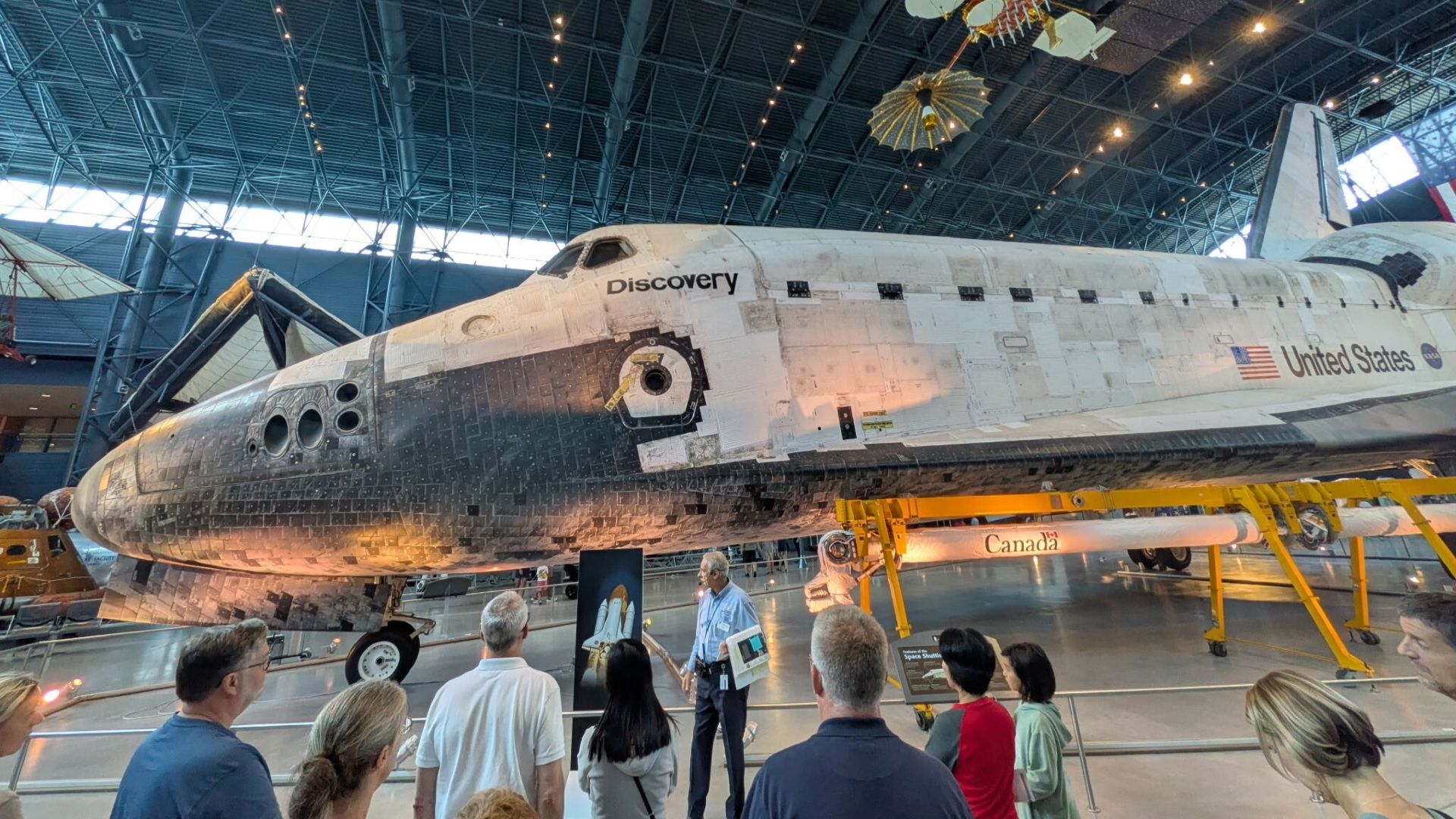
WASHINGTON — Humanity is on the precipice of a monumental leap in our understanding of the cosmos. NASA is entering the final, high-stakes countdown for the deployment of a revolutionary new space telescope—an engineering marvel designed to pierce the deepest veils of interstellar dust, peer further back into cosmic history than ever before, and fundamentally alter how we perceive our place in the universe.
For decades, instruments like the Hubble and James Webb Space Telescopes have pushed the boundaries of human ingenuity, capturing the imagination of the public and generating unprecedented volumes of astrophysical data. Yet, as space agencies look toward the horizon of mid-decade exploration, this upcoming launch promises to bridge theoretical physics and empirical observation in a way that senior researchers are calling a generational inflection point for the global scientific community.
The Dawn of a New Observational Era
The upcoming mission represents the culmination of years of meticulous engineering, international collaboration, and billions of dollars in public and private investment. Set against a backdrop of rapidly accelerating commercial and scientific space endeavors, this telescope is not merely an upgrade to existing hardware; it is a completely reimagined architecture designed to capture wavelengths and phenomena previously hidden from human instruments.
Astrophysicists emphasize that the mission's primary objective is to decode the earliest epochs of galaxy formation. By utilizing cutting-edge optics and cryogenic cooling systems, the telescope will hunt for the primordial light of the very first stars—celestial bodies that ignited mere millions of years after the Big Bang. Understanding these stellar ancestors is crucial for explaining how complex chemistry, and ultimately life, became possible in our universe.
- Unprecedented Depth: Designed to capture infrared and optical light with a clarity that bypasses atmospheric and terrestrial interference entirely.
- Cosmic Evolution: Aims to map the distribution of dark matter and dark energy with pinpoint precision, offering new clues into the invisible forces shaping our cosmos.
- Exoplanet Characterization: Equipped with advanced spectroscopy to analyze the atmospheric compositions of distant worlds, searching for potential biosignatures.
- Global Collaboration: Involves partnerships with international space agencies and leading academic institutions to process and analyze incoming data streams.
Economic and Technological Implications

Beyond the pure scientific pursuit, the development and impending launch of this space telescope underscore a massive economic engine. The aerospace sector continues to drive high-tech manufacturing, advanced material sciences, and software engineering innovations that routinely trickle down into consumer markets. Economists tracking the space economy note that missions of this scale act as a powerful stimulus, fostering high-skilled labor markets and cementing national leadership in cutting-edge technology.
Furthermore, the mission highlights the growing synergy between institutional space agencies and private sector contractors. The stringent requirements for lightweight mirrors, radiation-hardened microprocessors, and ultra-reliable propulsion systems have forced supply chains to evolve rapidly. Investors and market analysts are closely watching how these technological breakthroughs will translate into commercial advantages for participating aerospace firms over the next decade.
| Mission Parameter | Project Specification | Scientific Impact |
|---|---|---|
| Primary Target | Primordial galaxies & Exoplanet atmospheres | Unlocks origin of stars and potential habitable zones |
| Operational Orbit | Deep space Lagrange point | Ensures thermal stability and unobstructed views |
| Primary Technology | Advanced segmented optics & infrared sensors | Penetrates cosmic dust clouds with extreme fidelity |
What Lies Ahead: The Countdown to Liftoff
As mission controllers conduct final integration tests and rigorous dry runs, the global astronomical community waits with bated breath. Every calibration, software patch, and hardware stress test is being scrutinized under a microscope to ensure flawless execution once the vehicle clears Earth's atmosphere.
The implications of what this telescope might find are profound. Whether it confirms existing cosmological models or shatters them entirely, forcing theorists back to the drawing board, the mission guarantees one thing: our view of the universe will never be the same again. As the launch window approaches, humanity stands united in anticipation, ready to take another monumental step into the dark and wondrous unknown.
Frequently Asked Questions
When is the official launch window for the new space telescope?
While mission schedules are subject to rigorous safety checks and weather conditions, mission planners have targeted the upcoming operational window to begin deployment preparations, with comprehensive data collection expected to commence shortly after reaching its designated orbital position.
How does this telescope differ from the James Webb Space Telescope (JWST)?
While JWST revolutionized infrared astronomy, this new mission introduces enhanced spectral resolution, wider field-of-view capabilities, and specialized instrument suites designed to target specific unresolved anomalies in cosmic evolution and exoplanetary atmospheric chemistry.