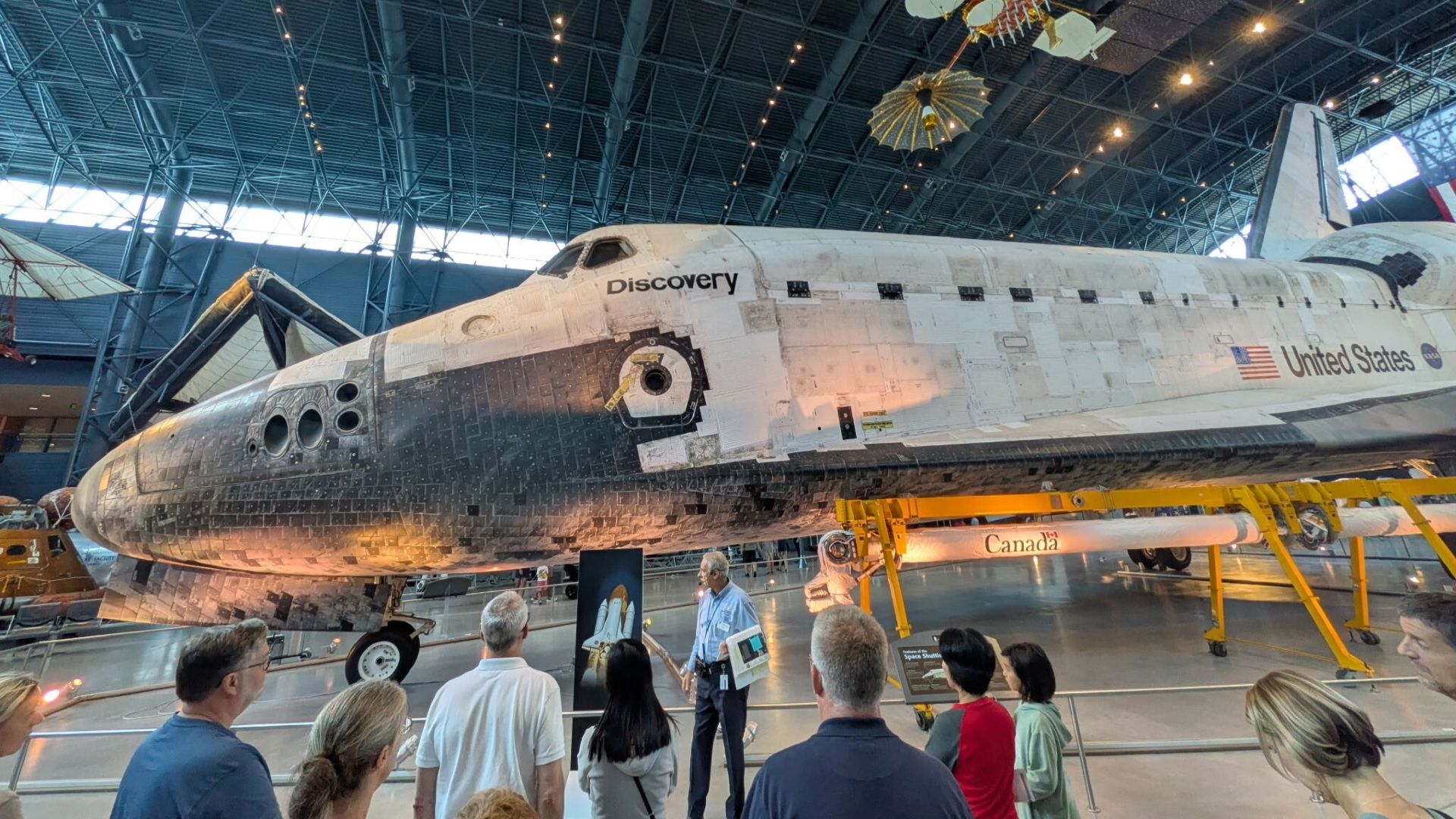
The Dissection of a Legend: Why the Smithsonian May Be Forced to Cut Space Shuttle Discovery into Pieces for Texas Transfer
WASHINGTON — In what is shaping up to be the most controversial and logistically harrowing aerospace dilemma of the decade, the Smithsonian Institution is facing an unthinkable choice: surgically dismantle the Space Shuttle Discovery—the crown jewel of America’s retired space fleet—or abandon a high-profile, multi-million-dollar transport initiative to Texas.
According to internal documents and logistical briefs obtained by industry insiders, engineering teams have concluded that moving the 122-foot-long orbiter from its current home at the Steven F. Udvar-Hazy Center in Virginia to a state-of-the-art aerospace exposition and research facility in Texas is physically impossible under current transport protocols. Without the specialized Boeing 747 Shuttle Carrier Aircraft (SCA) active, and with overland routes blocked by impassable infrastructure, experts warn that the only viable path forward may involve cutting the historic spacecraft into transportable sections.
The revelation has sent shockwaves through the aerospace preservation community, sparking fierce debates between state officials, curators, and structural engineers over the physical integrity of the world’s most famous space shuttle.
The Logistics Bottleneck: Why Discovery is Grounded
For more than a decade, Discovery has remained stationary in Virginia, attracting millions of visitors. The proposal to temporarily or permanently relocate the orbiter to Texas for an advanced aerospace preservation and scanning initiative was met with initial enthusiasm. However, the sheer physics of moving an orbiter across state lines in 2025 presents unprecedented challenges.
During the active shuttle program, NASA relied on heavily modified Boeing 747s to transport orbiters across the country. Today, those aircraft are retired, de-certified, or preserved as museum pieces themselves. Re-activating a Shuttle Carrier Aircraft is financially and regulatorily prohibitive, leaving transport teams with only two options: sea or land.
The Roadblocks to a Safe Passage:
- The Clearance Crisis: Discovery’s 78-foot wingspan and 57-foot tail height make overland transport via interstate highways impossible. Hundreds of low-clearance bridges, power lines, and highway overpasses would have to be permanently dismantled and rebuilt.
- Marine Limitations: While water transport via the Atlantic and Gulf of Mexico was considered, the overland journey from the coast to final inland destinations in Texas still requires navigating dense urban corridors with impassable physical bottlenecks.
- Structural Fragility: Unlike commercial aircraft, the shuttle's fuselage is integrated with highly delicate Thermal Protection System (TPS) tiles. Jarring road transport over long distances risks vibrating these priceless ceramic tiles to pieces.
Surgical Dissection: The High-Stakes Proposal
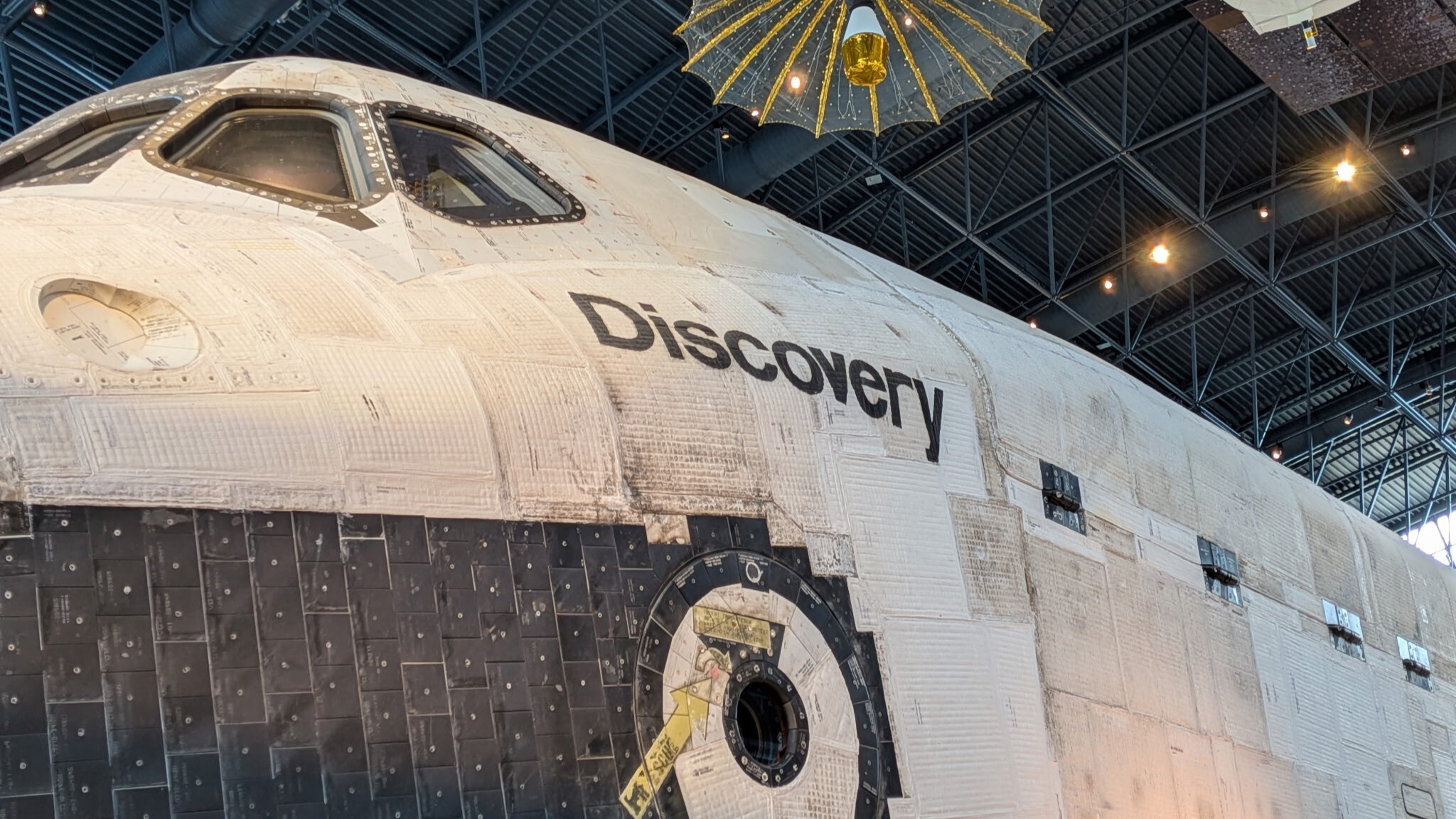
To bypass these physical barriers, a highly controversial contingency plan has emerged: "Surgical Dissection." Under this proposal, teams of aerospace engineers would systematically cut or decouple the orbiter into three to five primary modules. These sections would then be transported individually via custom-built, climate-controlled flatbed convoys and reassembled on-site in Texas.
While modern engineering allows for highly precise cuts, the process is fraught with peril. Discovery’s airframe is composed of vintage aluminum alloys, titanium, and carbon-composite materials that have endured the extreme stresses of 39 orbital missions and atmospheric re-entry. Cutting into these materials could release internal structural tensions, permanently warping the frame and making perfect reassembly nearly impossible.
Furthermore, the thermal tiles—each custom-fitted to a specific millimeter of the shuttle's underbelly—cannot simply be sliced. Thousands of tiles would need to be meticulously scraped off, documented, stored, and re-bonded using specialized, obsolete adhesives, a process that could take years and cost millions of extra dollars.
Discovery by the Numbers: The Scale of the Challenge
To understand the sheer scale of the transport dilemma, one must look at the physical realities of the orbiter:
| Specification | Dimension / Metric | Transport Impact / Risk Factor |
|---|---|---|
| Total Length | 122 feet (37.2 meters) | Exceeds standard turning radiuses on public roads. |
| Wingspan | 78 feet (23.8 meters) | Requires clearing multiple lanes of highway and removing toll booths. |
| Empty Weight | Approximately 151,300 lbs | Requires specialized multi-axle heavy-haul transporters. |
| Thermal Tiles | Over 24,000 unique tiles | Extremely fragile; high risk of delamination during transit vibration. |
| Space Missions | 39 completed flights | Irreplaceable historical value; any damage is a loss to national heritage. |
Outrage and Backlash from the Aerospace Community
The mere suggestion of cutting Discovery has met with fierce resistance from historians and retired NASA personnel. "Discovery is not a model airplane; it is a national monument," said one retired shuttle commander. "To cut it apart is to desecrate a piece of human history. If we cannot move it safely intact, then it should stay exactly where it is."
Preservationists point out that any structural cuts would permanently compromise the authenticity of the vehicle. Under international museum standards, irreversible alterations to primary artifacts are heavily discouraged. If the cuts are made, Discovery could lose its status as a pristine, flight-certified historical artifact, turning it into what critics call a "glorified jigsaw puzzle."
Conversely, proponents of the Texas transfer argue that the state-of-the-art facility in Texas offers superior climate control and advanced scientific scanning technologies that could help preserve the orbiter's digital twin for centuries to face. They argue that the temporary pain of a surgical move is worth the long-term educational and preservation benefits.
The Path Forward: A Decision Looming
As the October 2025 planning deadline approaches, the Smithsonian and its Texas partners are running out of time to finalize a transport protocol. Engineers are currently conducting non-destructive testing on Discovery’s wing-to-fuselage joints to see if they can be unbolted rather than structurally cut. However, because the orbiters were built to never be disassembled once completed, the outlook for a clean "unbolting" remains bleak.
If the technical challenges cannot be resolved without cutting the airframe, public pressure may force the Smithsonian to cancel the Texas initiative altogether, keeping Discovery permanently anchored in Virginia. For now, the fate of America's most traveled spacecraft hangs in a delicate balance between modern logistics and historical preservation.
Frequently Asked Questions
Why can't Discovery fly to Texas on top of a 747 like it used to?
The modified Boeing 747 Shuttle Carrier Aircraft (SCA) used by NASA have been permanently retired. Restoring one of these aircraft to flight-readiness, securing FAA certification, and recreating the specialized mounting hardware would cost tens of millions of dollars, rendering the flight option economically unviable.
Will cutting the shuttle affect its structural integrity permanently?
Yes. Cutting through the aluminum-lithium skin and structural longerons of the orbiter releases residual stresses within the metal, which can cause warping. Even with precision laser cutting and advanced welding during reassembly, the original structural rating of the spacecraft would be permanently lost.


![[HMG Tech Talent Forum 2026 Series ②] Minwoo Park, President and Head of AVP Division at Hyundai Motor Group and CEO of 42dot; Hyundai Motor Group’s Roadmap for Commercializing AI Technology](https://www.hyundaimotorgroup.com/image/upload/asset_library/MDA00000000000079943/06e7fc79563c448eb27874eeea34f579.jpg)