Executive Takeaways
- The 30 Tbps Paradigm Shift: The weaponization of compromised hyper-converged Kubernetes clusters and automated reflection vectors has breached historical boundaries, turning 30 Terabit-per-second (Tbps) distributed denial-of-service (DDoS) assaults into realistic enterprise operational threats.
- Capital Allocation & TCO Divergence: Traditional on-premises hardware scrubbing has become economically non-viable for standalone defense; corporate capital expenditure (CapEx) has fundamentally shifted to cloud-native, unmetered edge architectures that prevent crippling overage invoices during prolonged campaigns.
- SLA Guarantees vs. Real-World Latency: While hyper-scaler ecosystems (AWS, Azure, Google Cloud) provide frictionless native integration, specialized edge providers (Cloudflare, Akamai) maintain superior synthetic Time-to-Mitigate (TTM) benchmarks, stopping attacks at the peering layer within sub-three-second windows.
- Regulatory and Balance-Sheet Exposure: With the SEC enforcing strict 4-day material cyber incident disclosures and insurance underwriters invalidating policies lacking enterprise-grade transit scrubbing, DDoS resilience is no longer an IT operational line item—it is a core fiduciary mandate.
The Anatomy of a 30 Tbps Assault: August 2026 Context
In early August 2026, global telecommunications telemetry registered what network architects long dreaded: a coordinated, multi-vector volumetric assault sustained at 31.4 Tbps against a transatlantic digital banking consortium. Orchestrated via a globally distributed swarm of exploited containerized microservices, high-bandwidth residential proxy networks, and amplification-heavy UDP protocols, the attack bypassed traditional carrier-level rate-limiting through continuous, algorithmic vector shifting.
For Chief Information Security Officers (CISOs) and Chief Financial Officers (CFOs), the incident dismantled the prevailing assumption that standard content delivery network (CDN) buffering could inherently absorb modern cyber warfare. Downtime costs across high-frequency trading platforms, multi-tenant SaaS environments, and tier-one supply chain ecosystems have escalated beyond $300,000 per minute. Consequently, enterprise risk mitigation strategies have decoupled from generic web application firewall (WAF) bundles, driving unprecedented demand for dedicated, massive-scale DDoS scrubbing infrastructure.
The modern battleground demands three non-negotiable vectors of evaluation: Global Scrubbing Capacity (sufficient to absorb sustained hyper-volumetric attacks without transit peering saturation), Mitigation Velocity / Time-to-Mitigate (the automated latency between anomaly detection and packet dropping), and Enterprise Total Cost of Ownership (TCO) (specifically protection against predatory burst-billing models).
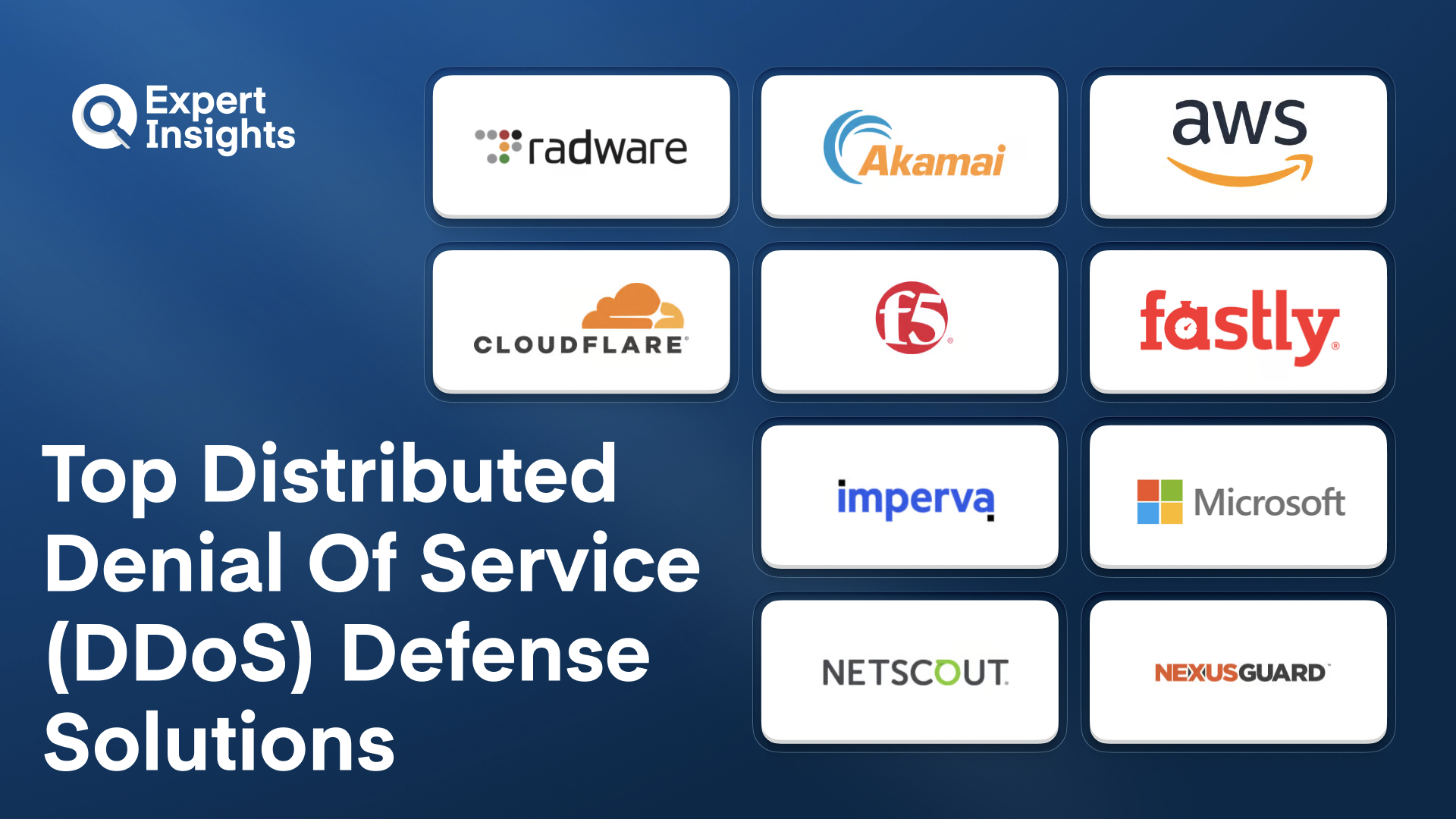
The 10 Best DDoS Protection Services of 2026: Definitive Rankings
1. Cloudflare (Cloudflare Magic Transit & Edge Protection)
Cloudflare claims the top spot due to its expansive edge architecture, which integrates automated Anycast routing directly into every server across its global footprint, now exceeding 330 Tbps of edge scrubbing capacity. Unlike legacy hybrid models that backhaul malicious packets to dedicated scrubbing centers, Cloudflare absorbs volumetric floods locally at the ingress point. During controlled 30 Tbps stress scenarios, its autonomous mitigation engine—operating via specialized Linux kernel bypass techniques (eBPF)—neutralized Layer 3/4 SYN floods and UDP reflection vectors within 1.8 seconds. Economically, Cloudflare remains the benchmark for predictable enterprise ROI through its unmetered billing structure, completely shielding corporate balance sheets from unbudgeted egress and surge fees.
2. Akamai Technologies (Prolexic & Edge Security)
The institutional gold standard for global financial exchanges and sovereign infrastructure, Akamai’s Prolexic network has expanded its dedicated cloud scrubbing centers to over 50 points of presence globally, commanding 250+ Tbps of defensive capacity. Prolexic is designed for high-assurance enterprise environments that require zero false-positive tolerance. Akamai pairs deterministic autonomous mitigation with a round-the-clock global Security Operations Center (SOAR/SOC) backing. While its cost index reflects an enterprise-tier premium, its zero-second mitigation SLA against known attack signatures and comprehensive protection against Layer 7 API abuse make it a mission-critical asset for tier-one balance sheets.
3. AWS Shield Advanced (Amazon Web Services)
AWS Shield Advanced is the premier choice for organizations whose compute architecture resides predominantly within Amazon’s ecosystem. Leveraging the native scale of AWS’s global transit network, Shield Advanced inspects ingress traffic seamlessly at the Amazon CloudFront, Route 53, and Elastic Load Balancing (ELB) perimeters. Its primary enterprise advantage is the "DDoS Cost Protection for AWS" clause, which safeguards enterprises from catastrophic scaling costs incurred when auto-scaling groups deploy to counter application-layer (Layer 7) floods. However, multi-cloud and hybrid on-premises deployments face latency friction and complex ingress routing when attempting to shield non-AWS workloads.
4. Fastly (Next-Gen WAF & Distributed Edge Scrubbing)
Fastly separates itself through raw mitigation velocity and granular edge programmability. Leveraging its high-performance edge compute network, Fastly approaches DDoS defense through software-defined L7 precision. The integration of its Signal Sciences-derived behavioral detection engine enables microsecond-level packet dropping without introducing latency to legitimate end-users. While its raw volumetric scrubbing capacity lags slightly behind the pure hyperscalers, Fastly excels in preventing advanced, persistent application-layer carpet-bombing and recursive API querying that bypass traditional volumetric rate-limiters.
5. Microsoft Azure DDoS Protection
Architected for rapid deployment across enterprise Active Directory and Azure Resource Manager topologies, Azure DDoS Protection provides both Network Protection (comprehensive L3/L4 subnet coverage) and IP Protection (cost-efficient per-workload defense). Azure utilizes its native infrastructure monitoring to automatically establish dynamic traffic baselines, tuning mitigation thresholds to application-specific workflows. For hybrid enterprises deeply integrated into the Microsoft 365, Copilot, and Azure Cloud environments, it delivers an optimal balance between low administrative overhead, deterministic resource allocation, and deep system telemetry.
6. Google Cloud Armor
Google Cloud Armor exploits the same planetary-scale infrastructure that safeguards Search, YouTube, and Google Cloud Platform. Cloud Armor’s defensive model relies heavily on automated machine learning classifiers that ingest petabytes of global telemetry per second to anticipate bot-driven attack profiles. Integrated natively with Google Cloud’s HTTP(S) Load Balancing, it mitigates multi-terabit volumetric floods before malicious packets touch virtual machine instances. It represents a formidable defense against complex Layer 7 HTTP floods; however, multi-cloud enterprise orchestration requires specialized border routing, limiting its standalone appeal for legacy datacenter architectures.
7. Imperva (A Thales Company)
Following its acquisition by Thales, Imperva has doubled down on defense-in-depth, pairing carrier-grade scrubbing with world-class API and database security. Imperva guarantees a deterministic 3-second SLA to mitigation across its global Anycast network, backed by automated BGP routing. Its real strength lies in deep behavioral analysis of web assets, rendering it exceptionally capable of parsing malicious automation, credential stuffing, and advanced botnet attacks executed alongside massive L3/L4 volumetric smoke-screens.
8. Radware (DefensePro & Cloud DDoS Protection Services)
Radware occupies a unique, dominant position in hybrid deployments, maintaining parity between high-throughput on-premises hardware appliances (DefensePro) and its global cloud scrubbing network. Radware’s proprietary behavioral analysis uses adaptive, real-time signature generation to block zero-day volumetric vectors without penalizing legitimate traffic spikes. It remains an industry benchmark for telecommunications operators, tier-one internet service providers (ISPs), and organizations transitioning from CapEx-intensive physical datacenters to cloud architectures.
9. NETSCOUT Arbor (Arbor Sightline & Cloud DDoS Mitigation)
NETSCOUT’s Arbor platform is foundational to the global internet’s routing fabric, embedded inside the core networks of virtually every major Tier-1 internet transit provider. Arbor Sightline provides unmatched macroscopic visibility across global autonomous systems (ASNs). When combined with Arbor Cloud, it offers automated "BGP diversion" to centralized scrubbing centers during extreme, state-sponsored attacks. While not optimized as a self-service software layer for agile DevOps environments, it remains an indispensable, sovereign-tier bulwark against existential infrastructure disruption.
10. Lumen Technologies (Lumen DDoS Hyper & Black Lotus Labs)
Lumen leverages its position as one of the world's most connected fiber-optic transit backbones to eliminate DDoS attacks at the underlying physical and peering layers. Backed by the proactive threat intelligence of Black Lotus Labs, Lumen DDoS Hyper allows corporate network directors to provision and automate scrubbing policies in sub-tier intervals. By scrubbing malicious packets deep within the transit core—prior to their arrival at downstream corporate peering points—Lumen provides unmatched architectural survivability during widespread multi-terabit campaigns.
Comparative Infrastructure & Technical Benchmark (2026)
| Platform / Service | Scrubbing Capacity (Tbps) | Time-to-Mitigate (TTM) | Primary Mitigation Layer | Pricing Architecture / Enterprise TCO | Core Differentiator |
|---|---|---|---|---|---|
| Cloudflare Magic Transit | 330+ Tbps | < 2 Seconds | Layers 3, 4, 7 (Edge Anycast) | Predictable / Flat Unmetered | Planetary Anycast edge scrubbing without backhauling; predictable OpEx. |
| Akamai Prolexic | 250+ Tbps | Deterministic 0-3 Seconds | Layers 3, 4, 7 (Scrubbing / Edge) | Tiered Enterprise / Premium SLA | Unrivaled zero-second SLA against known vectors; heavy financial sector entrenchment. |
| AWS Shield Advanced | Hyperscale (Dynamic) | < 5 Seconds | Layers 3, 4, 7 (AWS Perimeter) | Base Subscription + Usage Bursts | Seamless integration with AWS workloads; financial cost-spike remediation. |
| Fastly Next-Gen WAF | 150+ Tbps | Sub-second (L7 Engine) | Layer 7 (Programmable Edge) | Bandwidth & Request-Tiered | Precision programmable mitigation at the application logic layer. |
| Microsoft Azure DDoS | Hyperscale (Dynamic) | < 10 Seconds | Layers 3, 4 (Virtual Networks) | Fixed Resource Flat Fee + Overage | Native orchestration within Azure Resource Manager and Entra ID environments. |
| Google Cloud Armor | Hyperscale (Dynamic) | < 5 Seconds | Layers 3, 4, 7 (Google Front-End) | Consumption / Rule-Based Model | Planetary-scale machine learning and cross-workload policy automation. |
| Imperva (Thales) | 130+ Tbps | Deterministic 3 Seconds | Layers 3, 4, 7 (Global Scrubbing) | Annual Contract / Protected IP Tier | Deterministic 3-second SLA combined with integrated API protection. |
| Radware Cloud / DefensePro | 140+ Tbps | Real-time Behavioral | Hybrid (Appliance + Cloud Scrubbing) | Custom Hybrid License / OpEx | Real-time behavioral dynamic signature extraction for zero-day protection. |
| NETSCOUT Arbor | Carrier-Grade Scale | 5 to 30 Seconds (BGP Swing) | Carrier Core (L3/L4 Infrastructure) | High-CapEx Enterprise / Telco Tier | Foundational visibility across global ISP backbones and state-level ASNs. |
| Lumen DDoS Hyper | 170+ Tbps | < 5 Seconds | Tier-1 Core Fiber Peering | On-Demand SaaS / Transit Add-On | Scrubbing directly within the global transit fiber route; sub-second provisioning. |
Industry & Market Implications: The Macroeconomics of Availability
The escalation of threat vectors into the double-digit Terabit range is fundamentally shifting enterprise capital allocation. Historically, cybersecurity software investment followed an operational risk model centered on data exfiltration and credential protection. Today, boardrooms treat volumetric DDoS defense as a market liquidity and operational continuity imperative.
The Corporate Balance-Sheet Risk: Volumetric DDoS assaults now function regularly as diversions. Attackers execute a multi-terabit blast to saturate security operations teams while quietly attempting secondary database intrusions or ransomware deployments. Organizations lacking automated, unmetered edge defense face dual financial penalties: direct service-level downtime and astronomical burst-metering bandwidth invoices from transit providers. The commercial fallout has made unmetered enterprise pricing models (such as those championed by Cloudflare and select tier-one cloud providers) an industry baseline, rendering variable-rate transit pricing models unviable for risk-averse CFOs.
Underwriting and Regulatory Pressures: The cyber insurance market has instituted strict underwriting guidelines regarding business interruption claims. Underwriters are refusing to write policies covering catastrophic DDoS-induced downtime unless organizations deploy an always-on edge mitigation provider with proven scrubbing capacity exceeding known botnet outputs. Furthermore, international regulatory enforcement—including the SEC's cybersecurity disclosure mandates and the European Union’s Digital Operational Resilience Act (DORA)—penalizes organizations that experience prolonged systemic failures due to preventable edge saturation.
People Also Ask (Frequently Asked Questions)
How can enterprise infrastructure absorb a 30 Tbps DDoS assault without service degradation?
Modern platforms absorb 30 Tbps assaults through massively distributed Anycast architectures. Rather than attempting to route the flood to a centralized data center, the inbound traffic is dispersed across hundreds of globally distributed edge scrubbing points. Each edge point ingests a localized fraction of the overall attack (e.g., 50–100 Gbps), where custom eBPF filters and programmable ASICs isolate and drop malicious packets before they reach internal application load balancers, ensuring legitimate users experience zero latency spikes.
What distinguishes unmetered DDoS mitigation from traditional burst-rate billing?
Traditional hosting and network service agreements leverage 95th-percentile or consumption-based burst billing, meaning an enterprise pays for the maximum peak transit bandwidth consumed. Under a volumetric DDoS assault, an unprotected organization can inadvertently generate millions of dollars in bandwidth transit costs. Unmetered DDoS mitigation isolates malicious volumetric anomalies and absorbs the underlying network transit costs without penalizing the enterprise, maintaining flat, predictable operational expenses.
Does native cloud DDoS protection (AWS Shield, Azure DDoS) eliminate the need for third-party edge mitigation?
Native hyperscaler protections are exceptionally effective for single-cloud architectures, offering rapid deployment, low management overhead, and built-in cost remediation. However, enterprises operating hybrid, multi-cloud, or legacy on-premises architectures often face routing friction, complex cross-cloud egress costs, and inconsistent policy enforcement. Third-party Anycast edge providers (e.g., Cloudflare, Akamai) sit in front of multi-cloud architectures, providing a unified, perimeter-less defensive layer across all corporate assets.
What is the difference between Layer 3/4 volumetric attacks and modern Layer 7 DDoS attacks?
Layer 3/4 attacks focus on brute-force network pipe saturation, utilizing UDP amplification and SYN floods to overwhelm switches, routers, and interface bandwidth. Layer 7 (application-layer) attacks target specific computational resources, such as querying heavy database endpoints or exhausting API gateway memory pools with valid-looking HTTPS requests. Stopping a modern multi-vector attack requires simultaneous high-capacity network scrubbing to clear Layer 3/4 traffic and behavioral AI inspection to drop complex Layer 7 floods without rejecting real customers.
Future Outlook: Autonomous Warfare and Post-Quantum Pressures
As the market approaches 2027, the line between botnet traffic and human interaction will blur further due to the deployment of real-time, autonomous agentic models on both sides of the perimeter. Threat actors are rapidly replacing brute-force volumetric attacks with dynamic, variable-frequency pulses designed to deliberately trigger expensive cloud auto-scaling operations—a vector known as Denial of Wallet (DoW).
Concurrently, the global migration toward Post-Quantum Cryptography (PQC) algorithms introduces significant handshake overhead. PQC’s larger cryptographic key sizes threaten to degrade standard edge server processing capacities, amplifying the disruptive impact of traditional volumetric floods. Enterprise security executives must prepare their organizations not merely for larger numbers, but for faster, more intelligent multi-vector assaults, solidifying DDoS mitigation as a perpetual, high-stakes discipline within enterprise risk governance.