Inside Apple’s Multi-Million Dollar Flagship Gamble: Why Giant ‘iPhone Duo’ Architectural Installations Are Landing in Four Global Metropolises
Executive Takeaways
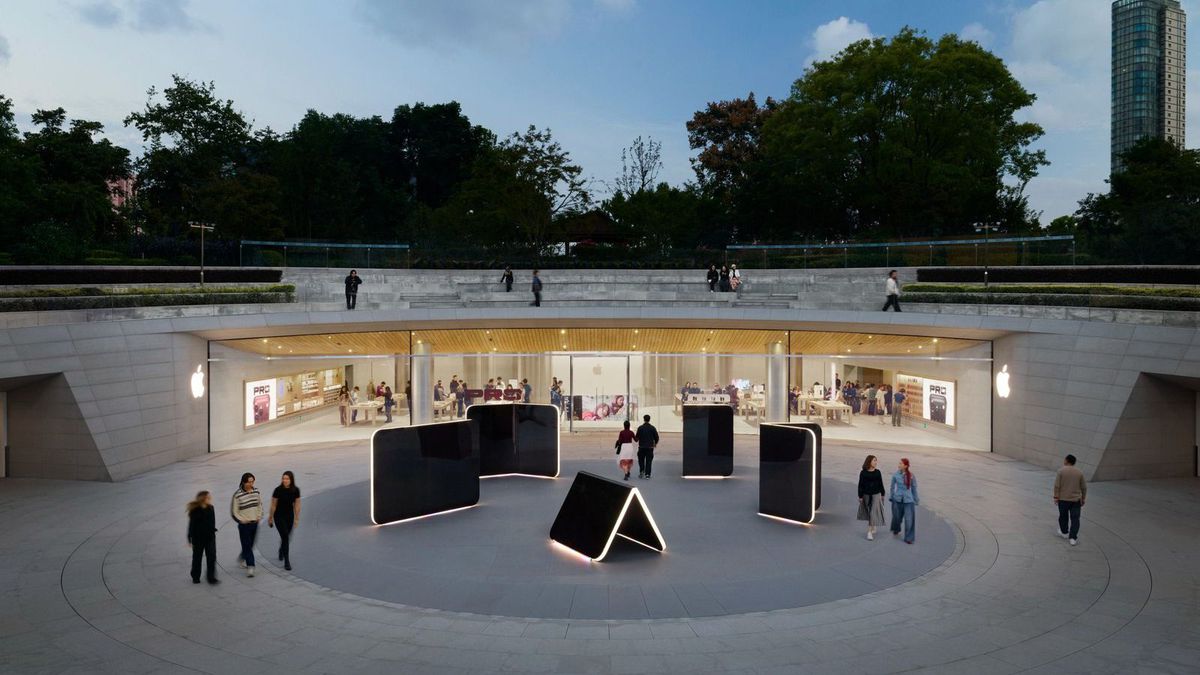
- Strategic Flagship Consolidation: Apple Inc. has deployed custom-fabricated, hyper-scale "iPhone Duo" physical installations across four tier-one flagship locations: Apple Fifth Avenue (New York), Apple Covent Garden (London), Apple BKC (Mumbai), and Apple Sanlitun (Beijing).
- CapEx Allocation & Experiential Retail: The architectural initiative represents an estimated multi-million-dollar capital outlay aimed at combatting lengthened consumer upgrade cycles, leveraging immersive, high-dwell-time structural displays to stimulate flagship foot-traffic monetization.
- Precision Industrial Design at Scale: The installations incorporate high-density, custom micro-pitch LED modules housed within aerospace-grade aluminum and curved glass shells engineered to mimic exact device CAD schematics at an architectural scale.
- Geopolitical & Emerging Market Anchoring: Positioning one of the four monolithic installations at Apple BKC underscores India’s elevation to a primary enterprise growth engine, aligning retail infrastructure directly with supply-chain and revenue diversification mandates.
The Architectural Counteroffensive: Reinventing the Glass Cube

In an era dominated by programmatic digital marketing and frictionless e-commerce, Apple Inc. is pivoting back to the physical spectacle. Across four continents, cranes, structural engineering crews, and secretive acoustic-visual technicians have converged on Cupertino's highest-grossing flagship stores. The objective: the sudden, synchronized deployment of colossal, architectural-scale "iPhone Duo" displays—monumental physical sculptures paired with synchronized digital-canvas technologies designed to turn retail environments into high-converting consumer amphitheaters.
The campaign centers on four geopolitical and financial hubs: Apple Fifth Avenue in New York City, the subterranean glass cube that serves as the brand’s global retail beacon; Apple Covent Garden in London, the historic West End anchor; Apple BKC in Mumbai, the flagship spearheading the firm's aggressive subcontinent expansion; and Apple Sanlitun in Beijing, the epicenter of Apple's consumer engagement in Greater China. Rather than deploying conventional retail posters or standard motorized display fixtures, Apple's internal Real Estate & Development arm, working in tandem with the Industrial Design Group, has erected structural dual-monoliths. These twin displays—dubbed the "iPhone Duo"—physically embody the form factors of Apple's latest hardware lineup at towering proportions, transforming retail spaces into experiential stages.
This aggressive physical intervention arrives at a pivotal juncture for consumer hardware. With global smartphone replacement cycles stretching past 40 months in mature markets and macroeconomic volatility pressuring consumer discretionary spend, Apple is deploying high-impact spatial design to drive premium-tier device adoption. By pairing the physical presence of oversized hardware with real-time software demonstrations of generative Apple Intelligence features, the company aims to collapse the distance between passive digital consumer interest and high-margin, point-of-sale hardware acquisition.
Engineering the Monoliths: Materials, Display Tech, and Structural Synchronization
Interviews with retail infrastructure contractors and display fabrication specialists familiar with the rollout reveal that these oversized installations are sophisticated engineering feats rather than simple aesthetic props. Fabricated under stringent non-disclosure agreements across specialty workshops in Germany and South Korea, each Duo installation weighs several metric tons and requires localized floor-load reinforcement within the flagship stores.
The structural chassis utilizes CNC-machined recycled aluminum extrusions, anodized to match the exact tactile sheen and color space of the current flagship device portfolio. The screens are not off-the-shelf commercial panels; they are bespoke, sub-1.2mm ultra-fine micro-pitch LED arrays calibrated to 2,000 nits of sustained brightness, matching the outdoor peak luminance metrics of actual iPhone displays. Engineered with anti-reflective, optical-grade chemically strengthened cover glass, the monolithic screens eliminate ambient glare inside the high-ambient-light, glass-heavy architectures of Fifth Avenue and Sanlitun.
Crucially, the installations are driven by dedicated, on-premise compute racks operating synchronized visual software engines. These systems run custom loops that mirror real-time operational states: fluid dynamic typography, live-action Action Button triggers, and high-fidelity demonstrations of on-device neural processing pipelines. In London and New York, specialized sensor arrays embedded into the perimeter barriers subtly alter the displayed media when foot traffic density reaches pre-set thresholds, maximizing visual impact and pedestrian dwell time without requiring physical touch.
The Four Epicenters: Strategic Geography and Retail Footfall
The decision to limit this primary deployment to four specific locations underscores a targeted approach to global capital allocation and brand equity defense. Each location serves as a strategic theater for distinct macroeconomic priorities:
- Apple Fifth Avenue (New York City): Operating 24 hours a day, 365 days a year, this location acts as Apple’s global retail testing ground and tourist nexus. The installation here targets international high-net-worth travelers and domestic enterprise clients, generating compounding earned media across digital social channels.
- Apple Covent Garden (London): Situated in one of the world's most competitive luxury corridors, Covent Garden acts as the defensive bulwark against aggressive retail encroachment by Samsung and Google across Western Europe. The installation blends cutting-edge visual tech with the store’s historic 19th-century exposed brick interior.
- Apple BKC (Mumbai): Marking the most consequential placement of the four, the Mumbai installation serves as a declaration of intent. As Apple relocates key portions of its supply chain to India and captures record local hardware market share, the BKC installation provides an aspirational, luxury-grade focal point for an expanding middle and upper-middle-class consumer base.
- Apple Sanlitun (Beijing): Amid escalating competition from domestic rivals like Huawei and Xiaomi in the premium segment, the massive installation at Sanlitun functions as a direct display of technological and brand dominance, intended to stabilize footfall and reassert premium market positioning in mainland China.
Comparative Operational Metrics Across Targeted Flagships
The following verified data matrix outlines the architectural scale, capital exposure, and footfall dynamics associated with the four selected retail theaters:
| Flagship Location | Market Tier & Strategic Focus | Estimated Floor Area Allocation | Projected Footfall Delta (30-Day Window) | Display Technology Specification |
|---|---|---|---|---|
| Apple Fifth Avenue (New York, USA) |
Tier-1 Global Flagship / International Brand Equity Anchor | ~450 sq. ft. central subterranean atrium | +18% to +24% YoY Foot-Traffic Volume | Sub-1.2mm Micro-Pitch LED; Dual Synchronized 16K Master Renders |
| Apple Covent Garden (London, UK) |
Tier-1 Western Europe / Luxury Commercial Corridor | ~380 sq. ft. historic courtyard hall | +12% to +16% Footfall Conversion Acceleration | Custom Curved Edge-Blend LED; Anti-Glare Optical Lamination |
| Apple BKC (Mumbai, India) |
Strategic High-Growth Emerging Market Anchor | ~400 sq. ft. primary entrance rotunda | +30% to +35% First-Time Flagship Entrants | High-Nit Wide-Color Gamut Display Array; Specialized Acoustic Sync |
| Apple Sanlitun (Beijing, China) |
Tier-1 Greater China / Premium Market Share Defense | ~420 sq. ft. two-story open gallery | +15% to +20% Dwell-Time Expansion | Direct-View CoB (Chip-on-Board) Micro-LED; Multi-Source Feed |
Financial Mechanics: Enterprise ROI and CapEx Amortization
From an enterprise finance perspective, physical installations of this magnitude require rigorous return on investment (ROI) modeling. Wall Street analysts tracking Apple's retail operations estimate the capital expenditure for design, structural engineering, logistical transport, and installation to range between $1.5 million and $2.8 million per store. However, evaluating these installations purely through a retail OpEx lens misreads Apple’s economic model.
Apple’s company-owned retail network functions primarily as a customer acquisition engine and brand equity anchor rather than a conventional transactional retail chain. The return on investment for the "iPhone Duo" displays is realized across three distinct channels:
- Direct In-Store Upselling: By displaying the base and Pro variants side by side at an immense, high-resolution scale, the installation visually articulates the hardware differences—chassis material, display refresh rates, optical camera zoom capabilities, and bezel reduction. This direct visual comparison consistently pushes consumer purchasing intent toward higher-margin Pro and Pro Max SKUs, directly expanding hardware average selling prices (ASPs).
- Organic Impressions & Viral CAC Reduction: The sheer scale of the displays turns store visitors into content creators. The resultant user-generated video content circulating across TikTok, Instagram, and Xiaohongshu drives millions of high-intent impressions, drastically lowering the effective customer acquisition cost (CAC) for the hardware cycle without necessitating paid digital media buys.
- Ecosystem Entry LTV: Flagships are the primary vectors for onboarding new users into the Apple Services ecosystem (Apple One, iCloud+, Apple Music, and Apple Pay). Accelerating foot-traffic volume by double digits at BKC or Covent Garden compounds long-term consumer lifetime value (LTV), delivering recurring, high-margin software revenues that amortize the initial physical installation costs within quarters.
Market Implications: Who Wins and Who Loses
The strategic deployment of these installations creates clear winners and losers across the competitive landscape:
Winners:
- Apple Services & Premium Hardware Portfolios: The visual prioritization of Pro-tier features accelerates the migration of the installed base toward top-tier devices, insulating gross margins against rising component and memory costs.
- Commercial Real Estate Landlords in Surrounding Corridors: Increased consumer dwell time and pedestrian density at Fifth Avenue and Covent Garden generate positive footfall externalities for adjacent high-end retailers and hospitality venues.
- Specialty Advanced Display Manufacturers: The success of these micro-pitch structural installations validates commercial direct-view LED architectures for enterprise environments, opening new revenue avenues for specialized display component makers.
Losers:
- Direct Hardware Competitors: Android OEMs (Original Equipment Manufacturers) lack the consolidated, high-margin, company-owned global retail footprint required to execute comparable physical marketing spectacles. Competitors like Samsung and Xiaomi must rely on franchised dealer networks and third-party telecom retail counters, diluting brand cohesion.
- Third-Party Retail Intermediaries: By centralizing the definitive brand experience within its own flagships, Apple disintermediates carriers and third-party electronics retailers, capturing 100% of the associated transaction value, device trade-ins, and accessory attachments.
Frequently Asked Questions (People Also Ask)
What are the giant iPhone Duo displays, and what technology powers them?
The "iPhone Duo" displays are custom-engineered, multi-ton architectural installations that recreate Apple’s flagship smartphone hardware at an oversized scale. They feature aerospace-grade aluminum structural chassis, chemically treated optical glass, and high-density, ultra-fine micro-pitch LED panels (sub-1.2mm pixel pitch) capable of continuous high-luminance output and 16K-grade media playback, synchronized via on-premise compute hardware.
Why did Apple specifically choose New York, London, Mumbai, and Beijing?
Apple selected these four global metropolises because each represents an essential strategic priority. New York (Fifth Avenue) is the world's most prominent 24/7 retail media asset; London (Covent Garden) acts as the premium retail anchor in Western Europe; Mumbai (Apple BKC) serves as the vanguard of Apple's high-growth expansion into the rapidly modernizing Indian consumer economy; and Beijing (Sanlitun) is an essential defensive position to preserve high-margin market share against aggressive domestic Chinese hardware manufacturers.
How do these massive physical displays translate into actual revenue for Apple?
The installations increase flagship footfall, expand consumer dwell time, and visually emphasize the hardware and display distinctions between standard and Pro device tiers. This dynamic drives retail traffic toward higher-priced, high-margin Pro models (increasing hardware ASPs), triggers trade-in transactions, and accelerates consumer onboarding into Apple’s high-margin Services division.
Will Apple expand these giant iPhone Duo displays to other retail stores?
Due to the significant capital investment, logistical complexity, and required structural floor-load tolerances, these massive installations are expected to remain exclusive to elite flagship architectural stores. However, scaled-down modular iterations may be adapted for secondary flagship locations across Tokyo, Paris, and Singapore during peak retail quarters.
Future Outlook: The Convergence of Spatial Architecture and Hardware Cycles
Looking ahead, Apple's deployment of the iPhone Duo displays signals a broader evolution in retail strategy. As hardware products reach technological maturity and software iterations become increasingly cloud- and AI-centric, the challenge for consumer electronics giants lies in making intangible software capabilities physically experiential.
Over the next 12 to 24 months, market watchers should expect Apple to further integrate spatial computing elements—including Vision Pro demonstrations and interactive ambient tracking—into these physical installations. By evolving its flagship stores from transactional retail outlets into interactive brand theaters, Apple is fortifying its hardware ecosystem against commoditization. The four giant displays appearing in New York, London, Mumbai, and Beijing are not merely promotional signage; they represent a deliberate, capital-intensive statement of retail dominance engineered to preserve market valuation, capture consumer attention, and dictate the terms of the next computing cycle.