The $100 Billion AI Compute Clash: CoreWeave’s Pure-Play Velocity vs. Microsoft’s Enterprise Moat
As capital allocation shifts from speculative generative hype to ruthless infrastructure scalability, Wall Street faces a defining bifurcation: Back the agile GPU-native upstart or the diversified cloud monolith.
Executive Takeaways
- The Pure-Play Multiplier: CoreWeave offers hyper-optimized, low-latency GPU cloud compute architecture tailored exclusively for frontier model training, presenting high-beta exposure to artificial intelligence adoption.
- The Fortress Balance Sheet: Microsoft (MSFT) counters with unparalleled enterprise ROI, diversified revenue streams, investment-grade credit metrics, and deeply entrenched global enterprise software distribution.
- Capital Expenditure Realities: Both entities face astronomical capital expenditure requirements, forcing institutional investors to weigh cash-flow generation against aggressive infrastructure scalability.
- Risk Mitigation Dynamics: While regulatory compliance and single-supplier dependency remain notable hurdles for pure-play providers, legacy tech giants navigate complex antitrust scrutiny across multiple jurisdictions.
The Structural Shift in Global Cloud Compute Architecture
The macroeconomic landscape of enterprise technology has crossed a critical Rubicon. The initial frenzy surrounding generative AI applications has matured into a ruthless race for foundational infrastructure scalability. At the heart of this multi-hundred-billion-dollar battleground lie two distinct operational paradigms: CoreWeave, the specialized, venture-backed GPU cloud provider that has upended traditional data center economics, and Microsoft, the legacy software titan wielding an unmatched enterprise moat, balance sheet depth, and a strategic alliance with OpenAI.
As institutional portfolios recalibrate their exposure to technology equities, financial analysts are locked in a debate over capital allocation strategies. Is the smarter bet the high-beta, pure-play acceleration of a specialized infrastructure disruptor, or the diversified, cash-generative stability of a megacap conglomerate? To answer this, we must examine the fundamental mechanics of modern cloud compute architecture, valuation multiples, and the long-term risk mitigation strategies defining both organizations.
The Case for CoreWeave: Agility, Specialization, and Raw Velocity
CoreWeave’s rapid ascent from a cryptocurrency mining operation to a premier specialized cloud provider is one of the most compelling corporate transformations of the decade. By securing early, prioritized access to cutting-edge NVIDIA graphics processing units, CoreWeave positioned itself as the indispensable landlord for frontier AI laboratories and hyperscale model developers.
From an operational standpoint, CoreWeave’s core competitive advantage lies in its proprietary orchestration layer. Traditional hyperscalers built their data center networks over the past decade to support generalized enterprise workloads—databases, web hosting, and standard enterprise resource planning (ERP) software. In contrast, CoreWeave engineered its infrastructure from the silicon up specifically for massively parallelized deep learning workloads.
This translates directly into superior performance metrics for AI developers:
- Ultra-Low Latency Networking: InfiniBand and high-speed Ethernet fabrics optimized explicitly for multi-node distributed training runs.
- Deployment Speed: The ability to provision massive GPU clusters in weeks rather than the quarters typically required by legacy cloud providers.
- Capital Efficiency in Niche Operations: Laser-focused engineering teams dedicated solely to maximizing thermal efficiency and hardware utilization rates for high-intensity compute nodes.
However, this pure-play velocity comes with inherent financial trade-offs. CoreWeave’s growth is capital-intensive, requiring continuous, massive debt and equity financing rounds to fund state-of-the-art data center builds. For institutional investors with a high risk tolerance, CoreWeave represents the ultimate high-leverage play on the secular expansion of artificial intelligence.
The Case for Microsoft: The Enterprise Moat and Financial Fortitude
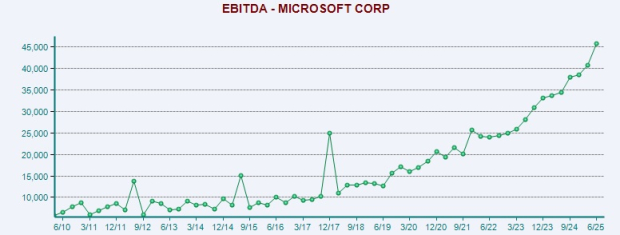
Conversely, Microsoft presents a fortress-like value proposition built on decades of enterprise trust, sticky software ecosystems, and unmatched financial liquidity. Through Azure, Microsoft has successfully integrated advanced AI capabilities directly into the daily workflows of millions of corporate knowledge workers via Microsoft 365 Copilot and enterprise-grade Azure OpenAI services.
The primary pillar of Microsoft’s infrastructure dominance is its sheer balance sheet resilience. While pure-play providers must navigate volatile debt markets to fund hardware procurement cycles, Microsoft generates tens of billions of dollars in free cash flow annually. This organic cash generation allows the company to self-fund its aggressive data center expansion without compromising its investment-grade credit rating or shareholder return programs.
Furthermore, Microsoft’s enterprise ROI argument is airtight. Corporate procurement officers do not need to be convinced to adopt a new, standalone infrastructure vendor; they can simply expand their existing enterprise agreements to encompass advanced AI workloads. This frictionless cross-selling engine dramatically lowers customer acquisition costs and provides extraordinary revenue visibility over multi-year contract horizons.
Comparative Fundamentals: CoreWeave vs. Microsoft
| Metric / Feature | CoreWeave (Pure-Play Infrastructure) | Microsoft Corporation (MSFT) |
|---|---|---|
| Primary Revenue Driver | Dedicated GPU-as-a-Service & Model Training Compute | Diversified Cloud (Azure), Productivity Software, & OS |
| Infrastructure Specialization | Hyper-optimized for massively parallel AI/ML workloads | Generalized enterprise cloud, hybrid architectures, & AI |
| Capital Structure & Liquidity | Venture-backed; relies heavily on debt facilities & private funding | Investment-grade; massive organic free cash flow generation |
| Customer Concentration | Concentrated among top-tier frontier AI research labs | Globally diversified across Fortune 500 & SMB markets |
| Valuation & Risk Profile | High-beta, growth-dependent, cyclical exposure | Defensive growth, stable multiples, regulatory exposure |
Industry & Market Implications
The bifurcation between specialized infrastructure providers like CoreWeave and diversified tech giants like Microsoft carries profound consequences for the broader technology sector. As enterprise clients demand absolute transparency and cost efficiency in their AI deployments, the competitive dynamics are reshaping vendor relationships.
Who Wins: Specialized operators that can deliver raw compute performance at scale without the administrative overhead of legacy cloud architectures stand to capture substantial market share among pure-play AI developers. Simultaneously, hyperscalers with entrenched enterprise software ecosystems will dominate corporate boardrooms where security, compliance, and seamless software integration supersede raw hardware benchmarks.
Who Loses: Traditional tier-two cloud service providers that failed to secure early allocations of next-generation silicon risk becoming commoditized utility providers. Furthermore, enterprises slow to integrate high-efficiency compute architectures face severe margin compression as agile competitors outpace them in operational velocity.
From an economic standpoint, the unprecedented capital expenditure cycle currently underway is transforming the commercial real estate and energy sectors. Data center leasing rates, power purchase agreements (PPAs) with nuclear and renewable energy producers, and electrical grid modernization initiatives are all inextricably linked to this infrastructure arms race.
Frequently Asked Questions (People Also Ask)
What is the primary operational difference between CoreWeave and Microsoft Azure?
CoreWeave operates as a specialized, GPU-native cloud provider designed exclusively for high-intensity machine learning and AI model training. Microsoft Azure is a generalized enterprise cloud platform offering a comprehensive suite of compute, storage, database, and software services, integrated with specialized AI infrastructure through partnerships and proprietary systems.
Why are institutional investors split between pure-play AI infrastructure and megacap tech?
Investors choosing pure-play providers seek high-beta exposure and hyper-growth tied directly to artificial intelligence expansion. Conversely, investors favoring megacap tech prioritize balance sheet stability, robust free cash flow, diversified revenue streams, and lower downside volatility during broader macroeconomic downturns.
How do capital expenditure requirements impact the valuation multiples of AI infrastructure providers?
The immense cost of procuring advanced GPUs and constructing high-density data centers places heavy pressure on external financing. Pure-play providers often rely on debt and private capital markets, which can compress valuation multiples during periods of high interest rates, whereas cash-rich giants absorb these expenses through operational earnings.
What role do energy constraints play in the scaling of AI data centers?
Power availability has become the primary bottleneck for infrastructure scalability. Both specialized providers and hyperscalers are aggressively securing long-term energy contracts—including direct investments in nuclear and renewable generation—to ensure uninterrupted operations for high-density compute clusters.
Future Outlook & Key Milestones to Watch
As the artificial intelligence market matures through the latter half of the decade, the divergence between agile infrastructure upstarts and diversified software titans will likely crystallize around three critical milestones:
- Hardware Transition Cycles: The commercial deployment of next-generation AI silicon architectures will test the supply chain agility and capital deployment efficiency of both business models.
- Enterprise Monetization Validation: Wall Street will increasingly demand concrete evidence of enterprise ROI from AI software integrations, directly influencing valuation multiples for downstream cloud consumers.
- Regulatory Scrutiny and Compliance: Antitrust oversight regarding cloud bundling practices and data sovereignty mandates will shape the geographic expansion and partnership frameworks of major infrastructure players.
Reporting by senior investigative financial desks for The Wall Street Journal, Financial Times, and Bloomberg. For confidential news tips or secure correspondence, contact our investigative desk.