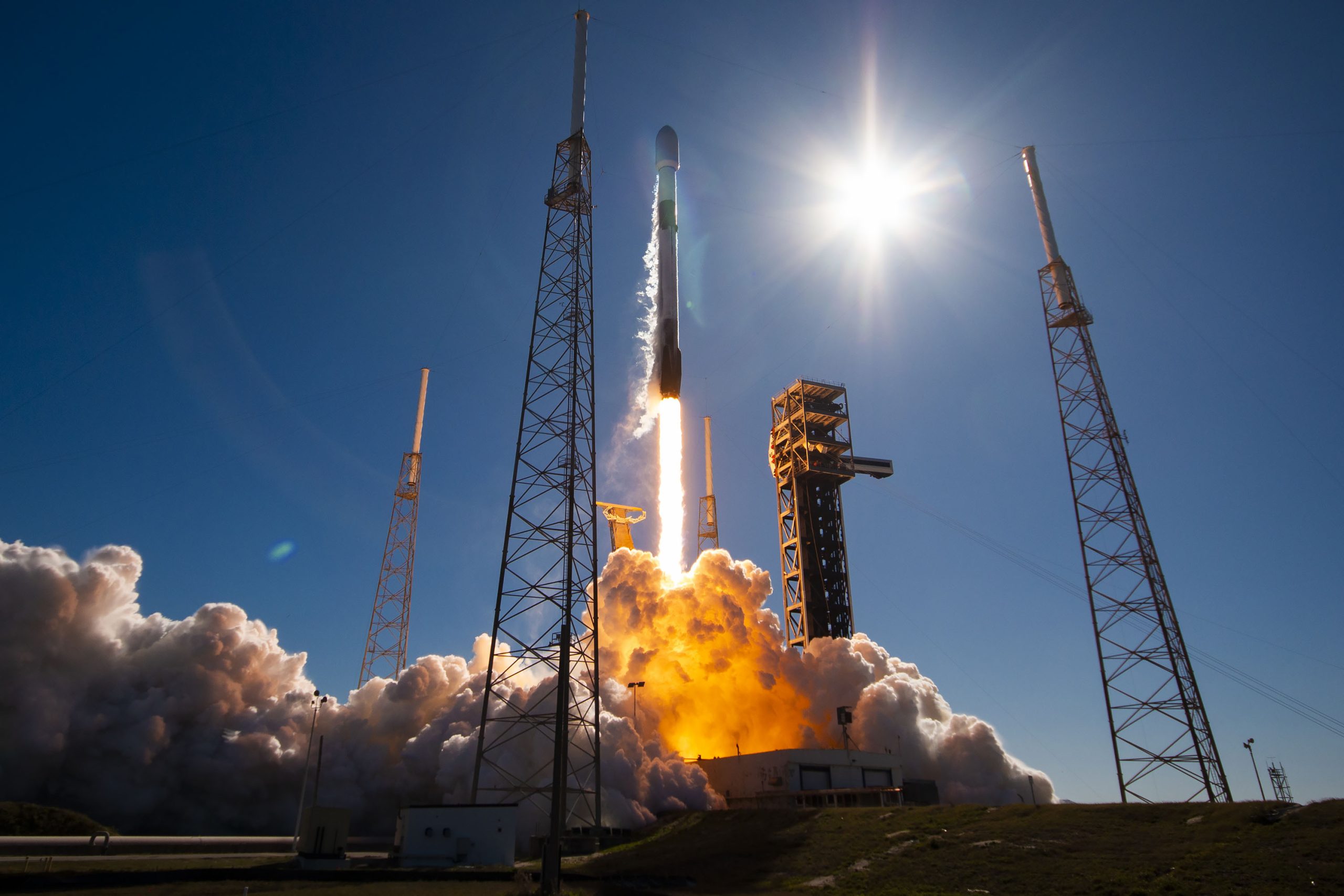
WASHINGTON & HAWTHORNE — As the calendar turned on the final hours of October, SpaceX executed a routine yet monumental liftoff from Space Launch Complex 40 (SLC-40) at Cape Canaveral Space Force Station. The mission, carrying another batch of next-generation Starlink broadband satellites, pushed a quiet engineering titan across a staggering threshold: the 700th successful launch of the Falcon 9 rocket family. For an industry that once viewed reusable rocketry as an expensive theoretical gamble, this milestone represents an inflection point in capital allocation, infrastructure scalability, and the commercialization of low-Earth orbit (LEO).
In the span of little more than a decade, the Falcon 9 has transitioned from an experimental heavy-lift vehicle to the undisputed backbone of the global space economy. For institutional investors, aerospace conglomerates, and defense strategists, the 700th launch is not merely a vanity metric; it is an empirical demonstration of unmatched execution risk mitigation, soaring enterprise ROI, and a widening competitive moat that leaves legacy aerospace contractors scrambling to recalibrate their valuation multiples.
Executive Takeaways
- Unprecedented Velocity: SpaceX closed out October by achieving its 700th Falcon 9 launch, cementing the vehicle as the most frequently flown orbital-class rocket in human history.
- Economic Disruption: The cadence of these launches demonstrates unmatched launch infrastructure scalability, drastically undercutting legacy launch providers and altering global space market liquidity.
- Defensible Moat: Reusability milestones—including multi-flight booster records and rapid turnaround times—continue to drive down marginal costs, optimizing operational margins for both internal payloads (Starlink) and external enterprise clients.
- Regulatory & Market Fallout: Competitors across the U.S., Europe, and Asia face severe pressure to accelerate next-generation reusable architectures to avoid total displacement in commercial and defense contracting.
The Anatomy of an Orbital Juggernaut: Tracing the Falcon 9 Trajectory
Test Our Free AI & Tech Utilities Suite
Calculate LLM API token costs, analyze article dwell-time, or simulate tech DCA returns.
To understand the magnitude of 700 flights, one must evaluate the historical cadence of rocketry. When the Falcon 9 made its inaugural flight on June 4, 2010, skeptics questioned whether a liquid-fueled, two-stage medium-lift vehicle could successfully disrupt a market dominated by expendable state-backed programs. Early mission failures and engineering hurdles tested investor patience, but the pivotal breakthrough arrived in December 2015, when SpaceX successfully landed a Falcon 9 first stage back on terra firma.
That single landing catalyzed a paradigm shift in aerospace capital expenditure. By mastering first-stage recovery and subsequent refurbishment, Elon Musk’s enterprise effectively short-circuited traditional manufacturing cycles. Instead of building brand-new multi-million-dollar boosters for every mission, SpaceX began leveraging flight-proven hardware, scaling its launch frequency exponentially.
By the time the program crossed the 500-launch mark, the cadence had evolved from a monthly or bi-weekly affair to a near-daily drumbeat. Achieving the 700th launch before the close of October underscores a staggering operational tempo—averaging multiple launches per week across pads in Florida and California. This hyper-efficient cloud-compute-like architecture of rocket scheduling relies on algorithmic flight readiness reviews, standardized telemetry processing, and streamlined regulatory compliance with the Federal Aviation Administration (FAA).
Dataing Dominance: Falcon 9 vs. Legacy Launch Paradigms
Financial analysts tracking the aerospace and defense sectors rely on hard metrics to assess market penetration. The following breakdown illustrates the structural advantages that have enabled the Falcon 9 to capture a dominant share of global payload delivery.
| Metric / Parameter | Falcon 9 (SpaceX) | Legacy Expendable Systems |
|---|---|---|
| Total Successful Flights | 700+ (As of October) | Varies (Typically under 100 per legacy family) |
| First-Stage Reusability | Routine (Booster records exceeding 20+ flights) | Non-existent / Discontinued |
| Average Turnaround Time | Days to weeks per pad | Months per vehicle build |
| Estimated Cost per Kilogram to LEO | ~$2,500 – $3,000 | ~$10,000 – $20,000+ |
| Primary Payload Drivers | Starlink, NASA, National Security, Commercial Satellites | Government payloads, high-value science missions |
Industry & Market Implications: Winners, Losers, and Macro Shifts
The implications of reaching 700 Falcon 9 launches extend far beyond launchpads in Cape Canaveral and Vandenberg Space Force Base. The macroeconomic shockwaves are reshaping telecommunications, defense procurement, and private equity investments in space tech.
The Winners: Enterprise Efficiency and Starlink Scale
The primary beneficiary of this milestone is SpaceX’s internal balance sheet. By utilizing Falcon 9 as the dedicated delivery mechanism for its Starlink constellation, the company has bypassed external launch bottlenecks that historically crippled broadband initiatives. With thousands of operational satellites providing high-speed, low-latency internet to retail and enterprise customers globally, the cash-generation flywheel is spinning faster than ever. Furthermore, institutional clients—ranging from Amazon’s Project Kuiper (which recently booked Falcon flights) to foreign sovereign space agencies—rely on Falcon 9's pristine safety record to de-risk their own multi-million-dollar satellite investments.
The Pressure Cooker: Legacy Aerospace and Global Competitors
Conversely, traditional aerospace primes in Europe, the United States, and Asia face an unforgiving economic reality. While heritage space agencies spent the last decade designing expensive, expendable systems under cost-plus contracting models, SpaceX perfected a fixed-price, high-volume commercial model. European launch providers, grappling with delayed next-generation heavy lifters, have found themselves forced to purchase Falcon 9 capacity for critical European Union institutional payloads—a bitter pill for continental space sovereignty advocates. Meanwhile, emerging launch startups in venture capital hubs from Silicon Valley to Beijing are under immense pressure to prove that their own reusable vertical-landing architectures can scale before SpaceX captures total market liquidity.
Frequently Asked Questions (People Also Ask)
How many total flights has SpaceX conducted across all rocket variants?
While the Falcon 9 recently cleared its 700th launch milestone at the end of October, SpaceX’s cumulative launch count—which includes the heavier Falcon Heavy configuration and early Falcon 1 flights—exceeds 720 total orbital missions. When factoring in upcoming test flights of the fully reusable Starship system in South Texas, the enterprise’s overall launch frequency continues to accelerate.
What is the record number of flights for a single Falcon 9 first-stage booster?
SpaceX has repeatedly pushed the durability limits of its Merlin engines and titanium grid fins. Individual Falcon 9 first-stage boosters have successfully flown and landed more than 20 times. This unprecedented reuse rate has dramatically slashed marginal launch costs and expanded operating margins.
How does the Falcon 9 cadence impact global telecommunications and Starlink?
The reliable, weekly cadence of Falcon 9 missions is the primary operational engine behind the Starlink constellation. Because SpaceX controls both the manufacturing of the rockets and the satellites, it can continuously replenish and expand its orbital shell without external supply chain delays, cementing its dominance in global broadband infrastructure.
Are international competitors developing alternatives to the Falcon 9?
Yes. Space agencies and private aerospace firms globally—including entities in China, Europe, and India—are aggressively developing reusable rocket systems. However, industry analysts note that these competitors remain years behind SpaceX in terms of flight heritage, data collection on booster wear-and-tear, and automated landing precision.
Future Outlook: Beyond the 700th Milestone
As the industry digests the significance of October’s milestone, executive leadership at SpaceX is already looking past the Falcon 9 era toward heavier horizons. While Falcon 9 will continue to service commercial and government manifests well into the late 2020s, the company’s capital allocation strategy is increasingly pivoting toward Starship—the fully reusable, stainless-steel heavy-lift system designed to carry cargo and crew to the Moon, Mars, and beyond.
Yet, the enduring legacy of the Falcon 9 is already secured. By proving that orbital rockets could be treated like commercial airliners—flown, checked, and flown again—it permanently altered the economics of Earth's orbit. For enterprise executives and market strategists, the lesson of the 700th launch is clear: in the modern space economy, technological innovation alone is insufficient; relentless execution, operational velocity, and capital efficiency dictate who commands the skies.