Executive Takeaways
- A Historic Milestone: SpaceX successfully executed its 700th Falcon 9 launch by the close of October, cementing the vehicle’s status as the most prolific orbital-class rocket in human history.
- Infrastructure Scalability & Enterprise ROI: The unprecedented cadence demonstrates unmatched supply chain velocity, reusable stage economics, and rapid capital allocation efficiency that legacy aerospace competitors struggle to match.
- Valuation Multiples and Market Liquidity: With secondary market valuations soaring past $200 billion, SpaceX's launch dominance directly underpins the commercial viability and financial scalability of the Starlink constellation and future deep-space endeavors.
- Regulatory Compliance and Risk Mitigation: As launch frequency accelerates toward daily operations, federal regulators and insurance syndicates face mounting pressure to adapt airspace management and risk-mitigation frameworks.
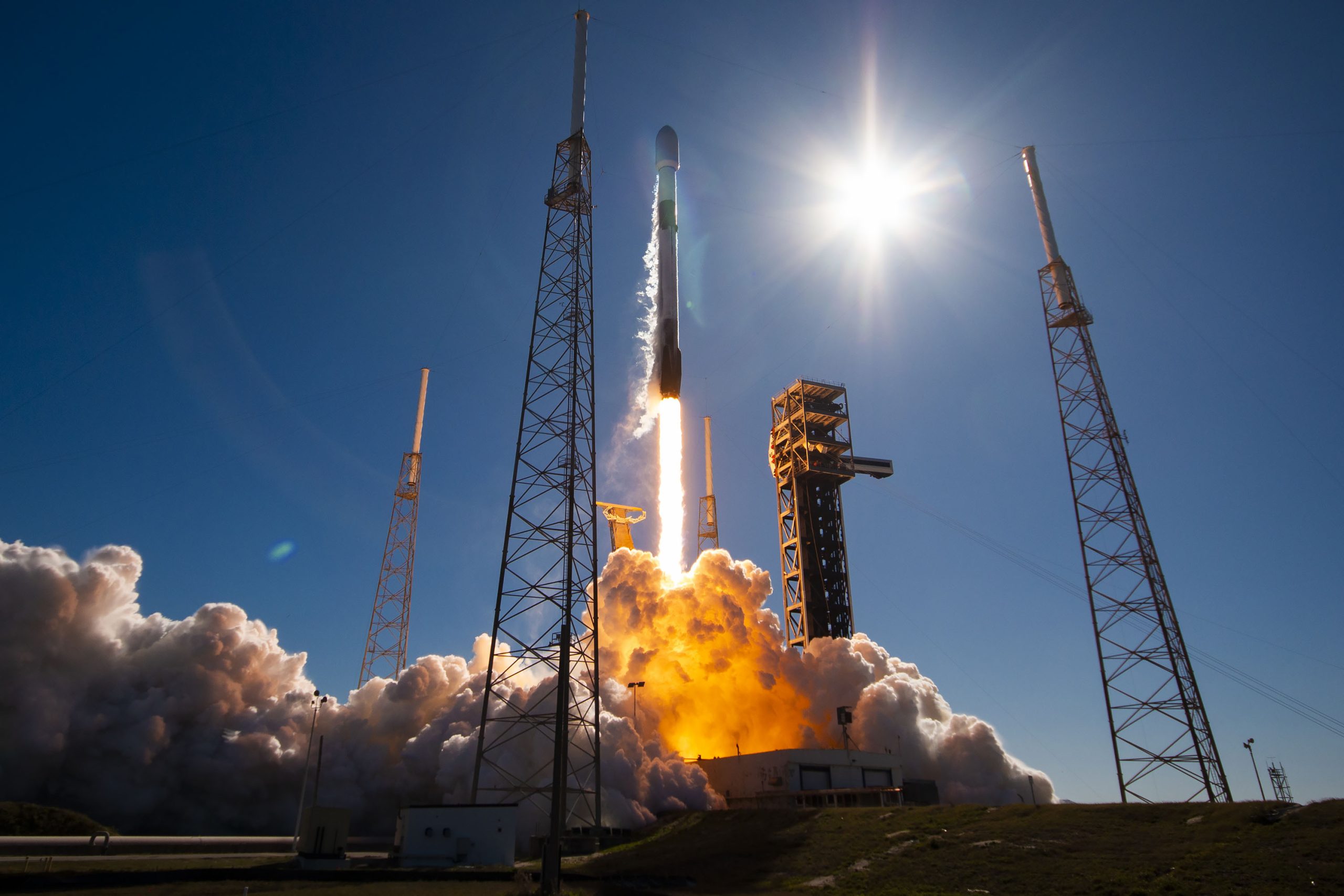
WASHINGTON & HAWTHORNE — In an industry historically defined by multi-year development cycles, astronomical cost overruns, and severe regulatory hurdles, SpaceX has achieved a benchmark that defies traditional aerospace paradigms. By officially closing out October with its 700th successful Falcon 9 launch, Elon Musk’s aerospace venture has transformed orbital access from an exclusive, high-risk government endeavor into a high-frequency, industrial-grade logistics pipeline.
For institutional investors, sovereign wealth funds, and defense analysts, this milestone represents far more than a numerical triumph. It is a definitive masterclass in infrastructure scalability, supply chain execution, and aggressive capital allocation. As aerospace incumbents scramble to pivot their legacy architectures toward reusable paradigms, SpaceX’s relentless cadence is actively rewriting valuation multiples across the global defense, telecommunications, and satellite manufacturing sectors.
The Evolution of a Workhorse: From First Flight to Industrial Dominance
Test Our Free AI & Tech Utilities Suite
Calculate LLM API token costs, analyze article dwell-time, or simulate tech DCA returns.
When the Falcon 9 made its maiden voyage from Cape Canaveral in June 2010, few industry observers anticipated the structural disruption it would unleash. Initially conceived as a partially reusable medium-lift vehicle, the rocket underwent relentless iterative engineering. The pivotal turning point arrived in December 2015, when SpaceX successfully landed an orbital-class booster back at Cape Canaveral for the first time.
That technological breakthrough fundamentally altered the economics of spaceflight. By decoupling the cost of the primary propulsion structure from the cost of the launch service, SpaceX unlocked unprecedented operating margins. Over the subsequent decade, the engineering team at Hawthorne refined booster recovery, fairing reuse, and second-stage optimization, driving down the marginal cost per kilogram to orbit to levels that rendered traditional expendable launch providers economically unviable.
Reaching the 700-launch milestone by the conclusion of October required an astonishing operational tempo. Throughout 2024, SpaceX routinely maintained a launch cadence exceeding one flight every three to four days. This hyper-frequent cadence relies on a sophisticated digital infrastructure, automated telemetry analysis, and rigorous predictive maintenance protocols reminiscent of enterprise cloud compute architecture rather than traditional rocketry.
Financial Architecture, Capital Allocation, and Market Valuation
The implications of the 700th Falcon 9 flight extend deep into global capital markets. Valued on private secondary markets in excess of $200 billion, SpaceX occupies a unique liquidity tier among private enterprises. The company's unique dual-engine business model—combining commercial launch services with the rapidly expanding Starlink broadband subsidiary—creates a powerful flywheel effect.
| Metric / Indicator | Early Phase (2010–2015) | Mature Scale (2020–Present) | Current Benchmark (Oct Close) |
|---|---|---|---|
| Cumulative Falcon 9 Launches | 20 Missions | > 100 Missions (Cumulative) | 700 Missions |
| Booster Reuse Rate | 0% (Expendable Focus) | ~70% of Flights | > 90% of Flights |
| Average Launch Cadence | 3 to 4 Launches / Year | 26 Launches (2020) | Exceeding 3 to 4 Days / Launch |
| Primary Payload Driver | Commercial & NASA Resupply | Mixed Commercial & Starlink | Predominantly Starlink Mega-Constellation |
Every internal Falcon 9 launch dedicated to deploying Starlink satellites functions as an internal capital expenditure that bypasses third-party markup. By utilizing its own hardware to build out a global enterprise connectivity grid, SpaceX maximizes enterprise ROI. This internal synergy insulates the company from external macroeconomic downturns, ensuring continuous cash flow generation from B2B and consumer broadband subscribers while simultaneously serving lucrative national security and civil space contracts for the U.S. Space Force and NASA.
Institutional portfolio managers note that this operational velocity creates a formidable economic moat. While European, Asian, and American competitors attempt to engineer competitive reusable launchers, SpaceX continues to iterate on its existing hardware, widening the technological and financial gap.
Industry & Market Implications: Winners, Losers, and Geopolitical Shifts
The attainment of 700 successful Falcon 9 flights crystallizes a profound structural shift in the global aerospace economy:
- The Winners: Enterprise customers requiring reliable heavy-lift access, global telecommunications consumers benefiting from low-latency broadband, and prime defense contractors partnering with SpaceX for national security payloads. Furthermore, agile subsystem suppliers that meet SpaceX’s rigorous quality-control and rapid-turnaround metrics have experienced exponential revenue growth.
- The Losers: Traditional aerospace primes and foreign space agencies tethered to cost-plus contracting models. Legacy launch providers in Europe (Arianespace) and Russia (Roscosmos) have witnessed their market share erode significantly, forcing sweeping structural reorganizations and emergency state subsidies to maintain sovereign launch capabilities.
- Geopolitical Realities: Western allied nations increasingly rely on SpaceX to maintain orbital supremacy. As geopolitical tensions rise, the United States Department of Defense views SpaceX’s responsive launch capability as a vital strategic asset capable of rapidly replenishing critical defense architecture in the event of orbital conflict.
Frequently Asked Questions (People Also Ask)
What makes the Falcon 9 rocket uniquely cost-effective compared to historical launch systems?
The primary driver of Falcon 9's cost-efficiency is its pioneering orbital-class booster and payload fairing reusability. By landing and refurbishing the most expensive components of the rocket—the first-stage boosters and Merlin engines—SpaceX amortizes manufacturing costs across dozens of flights per booster, drastically reducing the marginal cost per kilogram delivered to orbit compared to expendable legacy systems.
How does the 700-launch milestone impact the valuation and financial outlook of SpaceX?
Reaching 700 launches provides empirical proof of operational reliability and infrastructure scalability, directly reinforcing investor confidence. This proven execution capability supports private market valuations exceeding $200 billion, secures predictable revenue streams from institutional and government contracts, and de-risks the capital-intensive deployment of the Starlink satellite constellation.
Are Falcon 9 boosters reused indefinitely, or is there a hard limit on flight cycles?
While SpaceX has successfully flown individual boosters upwards of 20 to 25 times, each vehicle undergoes rigorous non-destructive testing, metallurgical inspection, and selective component refurbishment between flights. Engineers monitor fatigue limits and thermal degradation closely to ensure safety margins are strictly maintained, retiring boosters when structural parameters dictate.
What is next for SpaceX now that the Falcon 9 has achieved 700 launches?
While Falcon 9 continues to serve as the reliable workhorse for commercial and government payloads, SpaceX's primary engineering focus is transitioning toward Starship—its fully reusable, next-generation deep-space transportation system designed to eventually absorb both Starlink deployment and crewed missions to the Moon and Mars.
Future Outlook: Transitioning to the Starship Era
As SpaceX celebrates its 700th successful Falcon 9 mission, leadership eyes the horizon where the next technological frontier awaits. The lessons learned in rapid cadence, thermal protection, automated guidance, and regulatory navigation on the Falcon 9 program are serving as the foundational blueprint for the Starship program.
Over the coming years, as Starship achieves orbital reusability and ramps up flight frequency, industry analysts anticipate a gradual transition of heavy-lift duties from Falcon 9 to Starship. However, given the vast backlog of commercial, civil, and national security contracts currently manifested for Falcon 9, the industry workhorse is expected to remain operational well into the late 2020s.
For Wall Street, Silicon Valley, and global defense planners, October’s milestone serves as an enduring reminder: SpaceX has permanently transformed access to space from a bespoke scientific endeavor into an industrial commodity. As launch frequencies continue to accelerate, the economic architecture of the entire aerospace sector will be forced to adapt to a reality defined by relentless technological velocity.