The Next Giant Leap: Inside NASA’s High-Stakes Battle for the Moon, a New Boss, and Capitol Hill
WASHINGTON — As the calendar turns to 2026, the United States civil space program stands at the precipice of its most consequential twelve-month period since the Apollo era. With a billionaire-backed entrepreneur taking the helm at NASA headquarters, a historic crewed voyage around the Moon on the horizon, and a high-stakes ideological war brewing over the agency’s physical footprint, the space agency is bracing for a year of unprecedented turbulence and triumph.
According to primary reporting from the Houston Chronicle, the coming year will test the technical limits of deep-space hardware, the political agility of a newly restructured leadership team, and the preservationist instincts of Washington bureaucrats. For Wall Street, Silicon Valley, and the global aerospace sector, the stakes could not be higher. Billions in commercial contracts, national security imperatives, and the future of the burgeoning space economy hang in the balance.
A Billionaire at the Helm: Jared Isaacman Takes Control
The most immediate catalyst for change at the National Aeronautics and Space Administration is leadership. Jared Isaacman, the billionaire founder of payment processor Shift4 and a seasoned commercial astronaut who twice funded and commanded private flights with SpaceX, is stepping into the role of NASA Administrator.
Isaacman’s appointment represents a seismic shift for an agency historically helmed by career politicians, academics, or retired military generals. Known for his close working relationship with SpaceX founder Elon Musk and his advocacy for rapid, iterative commercial spaceflight, Isaacman’s ascension signals a pivot toward aggressive commercialization and streamlined procurement.
- Commercial Integration: Isaacman is expected to lean heavily on public-private partnerships, potentially accelerating timelines for lunar infrastructure.
- Budget Efficiency: Wall Street analysts anticipate a rigorous audit of legacy cost-plus contracts, favoring fixed-price models pioneered by commercial space upstarts.
- Safety vs. Speed: Critics within the agency’s traditional engineering ranks have privately expressed concern that Isaacman’s breakneck risk tolerance could clash with NASA’s conservative safety culture.
“Jared brings a practitioner’s eye to a job that has often been occupied by administrators who only understood space through a PowerPoint deck,” said a senior aerospace lobbyist speaking on condition of anonymity. “He has flown the hardware. That changes the dynamic overnight.”
Target Moon: The Return of Deep-Space Human Exploration

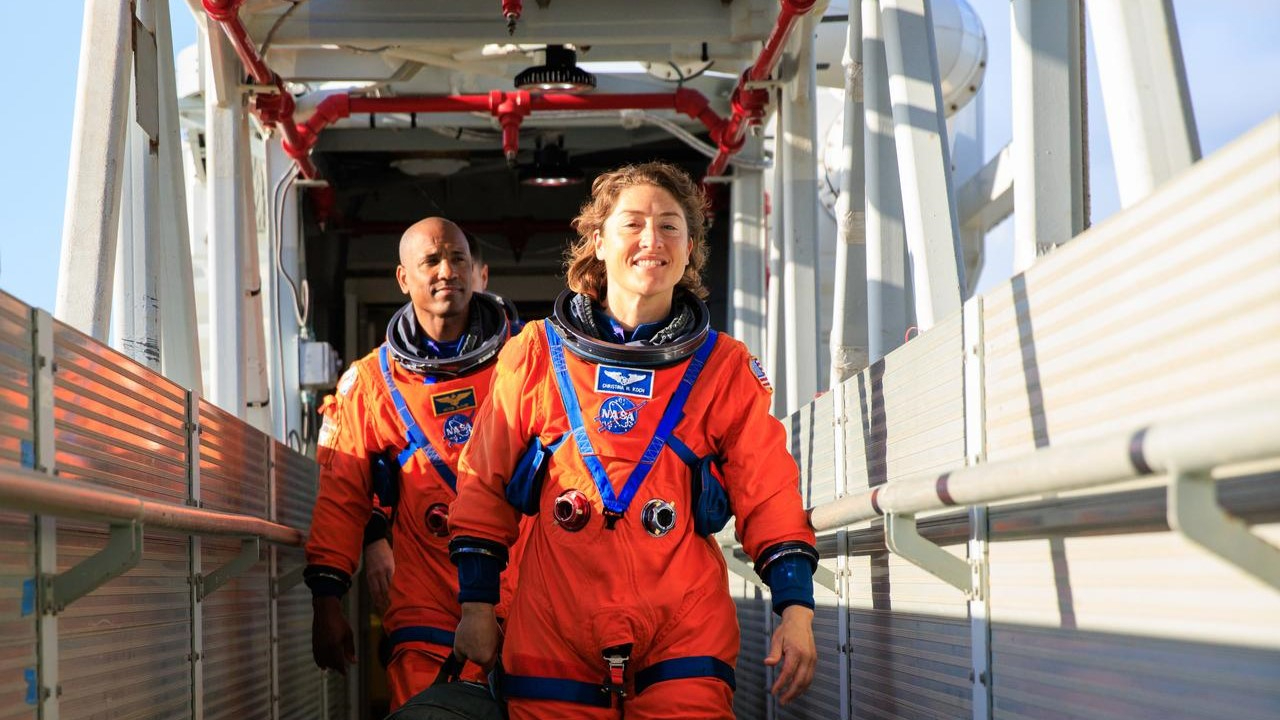
The crown jewel of NASA’s operational docket for 2026 is the Artemis II mission, which will dispatch a four-person crew on a lunar flyby. While Artemis I successfully tested the Space Launch System (SLS) rocket and Orion spacecraft uncrewed in late 2022, the upcoming mission will mark the first time humans have ventured into deep space since the conclusion of Apollo 17 in 1972.
The mission is designed to rigorously test the life support systems, navigation, and communication architectures required for sustained human presence on the lunar surface. However, the mission operates under an unforgiving spotlight. Any technical delay or safety anomaly will reverberate through global financial markets and heavily impact international partners who have contributed billions to the Gateway lunar space station.
| Mission / Project | Primary Objective | Projected Timeline | Strategic Significance |
|---|---|---|---|
| Artemis II | Crewed lunar flyby test mission | 2026 | First human return to deep space in over 50 years. |
| Dark Matter Space Telescope | Unravel cosmic mysteries and dark energy | Late 2026 / 2027 | Next-generation astrophysics following the James Webb Space Telescope. |
| Leadership Transition | Install Jared Isaacman as NASA Administrator | Immediate | Shifts agency focus toward commercial partnerships and agility. |
Unlocking the Universe: The Quest for Dark Matter
Beyond human spaceflight, NASA’s science portfolio is set to reach a milestone with preparations to launch a sophisticated new space telescope engineered to study dark matter and dark energy.
Accounting for roughly 95 percent of the universe's mass and energy, dark matter and dark energy remain among physics' most stubborn enigmas. The upcoming observatory will deploy advanced infrared optics and wide-field imaging capabilities to map the large-scale structure of the universe, offering clues about the forces accelerating its expansion.
Astrophysicists emphasize that the data returned by the telescope could rewrite textbooks, though project managers face tight budgetary constraints as they race to finalize testing before the launch window.
The Battleground on Earth: A Potential Museum Fight
Even as NASA looks to the stars, a terrestrial battle is brewing over its own history. Capitol Hill and local preservation groups are girding for a potential museum fight regarding the disposition of historic facilities, artifact preservation, and real estate management across major NASA installations, including Johnson Space Center in Houston and Kennedy Space Center in Florida.
As the agency modernizes its infrastructure to support commercial partners and deep-space operations, maintaining aging Apollo-era test stands and historic control rooms has become a multi-million-dollar financial burden. While preservationists argue these sites are sacred shrines of human achievement that belong in national museums, budget hawks within the administration view them as expensive dead weight.
“We are staring down a classic Washington collision between historical stewardship and fiscal reality,” noted a congressional staffer familiar with the upcoming appropriations cycle. “Deciding who pays to curate the artifacts of the 20th century while we are trying to fund the habitats of the 21st century is going to spark a genuine legislative war.”
Outlook for the Year Ahead
As NASA steps into 2026, the convergence of new commercial leadership, high-stakes human spaceflight, cutting-edge astrophysics, and domestic real estate battles ensures that the agency will rarely be out of the headlines.
For investors, policymakers, and space enthusiasts alike, the coming months will determine whether the bold promises of the new space economy can successfully merge with the rigorous demands of government exploration.
Frequently Asked Questions
Who is Jared Isaacman and why is his appointment significant?
Jared Isaacman is a billionaire entrepreneur, founder of Shift4, and commercial astronaut. His appointment as NASA Administrator is significant because it brings a private-sector, flight-experienced perspective to the agency, heavily favoring commercial partnerships and rapid technological innovation over traditional bureaucratic processes.
What is the primary goal of the Artemis II mission?
Artemis II is a crewed flight test that will send four astronauts on a trajectory around the Moon and safely back to Earth. It serves as a crucial stepping stone to verify life-support and communication systems before NASA attempts subsequent landings on the lunar surface.