Executive Takeaways
- The Compute Bottleneck: Generative AI and hyperscale cloud computing have driven an unprecedented surge in demand for physical digital infrastructure, transforming commercial real estate and semiconductor markets.
- The Core Seven: Market leaders span specialized real estate investment trusts (REITs), enterprise hardware innovators, and secure records-to-digital infrastructure providers.
- Capital Allocation Shift: Institutional investors are aggressively redirecting capital toward high-yield, asset-backed digital infrastructure to mitigate macroeconomic volatility and capture structural secular growth.
- Energy Constraints: Power availability and liquid-cooling architectures have become the primary variables determining enterprise scalability and valuation multiples.
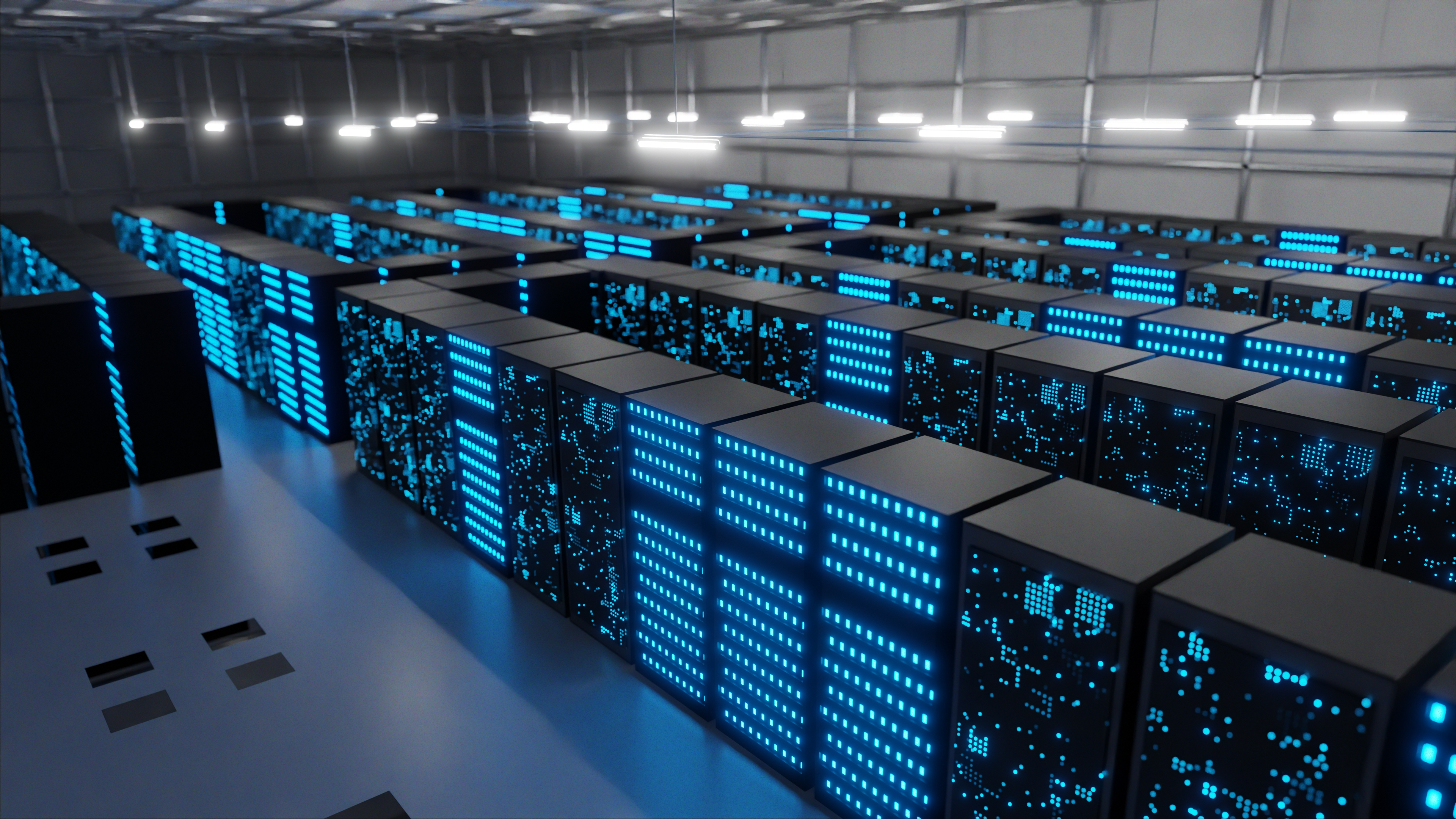
The global economy is undergoing a structural transformation of historic proportions. Behind every conversational large language model, automated enterprise workflow, and cloud-native application lies a vast, power-hungry ecosystem of server racks, liquid-cooled clusters, and ultra-low-latency fiber networks. As artificial intelligence models scale exponentially in parameter size, the traditional office and retail commercial real estate sectors are taking a back seat to a hyper-growth asset class: enterprise-grade data centers.
According to recent financial intelligence reports from major market trackers, institutional capital is flooding into a select group of equities uniquely positioned to capitalize on this secular infrastructure boom. Below is the definitive investigative analysis of the top-performing data center stocks, ETFs, and REITs reshaping modern portfolio management, capital allocation, and enterprise technology.
The Catalytic Shift: Why Data Centers Are the New Oil Refineries
To understand the unprecedented valuation multiples commanded by data center operators and hardware suppliers, one must look closely at the convergence of generative AI, enterprise cloud migration, and localized data sovereignty regulations. For decades, data centers were viewed as utilitarian corporate utilities—bland, windowless warehouses packed with servers. Today, they are the vital nerve centers of the global digital economy.
The shift accelerated dramatically with the mainstreaming of transformer-based AI models. Unlike traditional enterprise workloads, which require predictable, low-density power, modern AI training clusters demand continuous blocks of power measured in megawatts (MW). Hyperscalers like Microsoft, Amazon Web Services, and Google are scrambling to secure long-term leases on powered shell facilities before their competitors lock down regional power grids.
This dynamic has created a severe supply-demand imbalance. Vacancy rates in core tier-one data center markets—such as Northern Virginia, Silicon Valley, Dallas, and Frankfurt—hover near historic lows. Consequently, landlords with robust balance sheets, strong utility relationships, and capital expenditure pipelines are enjoying unprecedented pricing power. They are passing rising energy and construction costs onto tenants via long-term, inflation-linked triple-net leases.
Deconstructing the Elite Asset Class: Top Holdings and Market Drivers

Market intelligence from leading financial publications underscores a distinct tier of market leaders. These equities combine balance-sheet durability with aggressive capital expenditure programs designed to capture high-margin hyperscale demand.
1. Digital Realty Trust Inc. (DLR)
As one of the world's largest data center REITs, Digital Realty owns and operates a global footprint spanning hundreds of facilities across North America, Europe, Asia, and Latin America. DLR’s competitive moat lies in its PlatformDigital strategy, which allows enterprise clients to interconnect disparate IT infrastructure seamlessly. The company’s focus on high-density power configurations positions it perfectly to service enterprise AI deployments requiring advanced liquid-cooling systems.
2. Equinix Inc. (EQIX)
Equinix is the undisputed titan of carrier-neutral colocation and interconnection. Through its International Business Exchange (IBX) data centers, EQIX enables financial institutions, cloud providers, and digital media enterprises to exchange high-volume traffic with minimal latency. Equinix commands premium pricing power due to its unmatched "ecosystem effect"—once a financial exchange or enterprise network establishes its servers within an IBX facility, the switching costs become prohibitively high.
3. Iron Mountain Inc. (IRM)
While historically renowned as a physical document storage and records management firm, Iron Mountain has executed a masterclass in strategic pivot management. IRM has aggressively scaled its hyperscale and colocation data center portfolio, leveraging its existing enterprise relationships, secure logistics network, and brownfield real estate assets to capture rapid digital transformation demand. This hybrid business model provides investors with defensive cash flows from physical records paired with aggressive growth from digital infrastructure.
4. Nvidia Corp. (NVDA)
No analysis of the data center ecosystem is complete without examining the silicon engine driving the entire movement. Nvidia’s graphics processing units (GPUs) and proprietary CUDA software ecosystem form the foundational compute architecture for virtually all modern AI model training and inference. While technically a semiconductor designer rather than a real estate operator, Nvidia dictates the hardware standards, thermal specifications, and spatial layouts that modern data centers must be engineered to support.
5. Broadcom Inc. (AVGO)
Broadcom plays an indispensable role in data center networking and custom silicon development. As data centers scale to thousands of interconnected GPUs, network latency becomes the ultimate bottleneck. Broadcom’s high-performance switching chips, custom AI accelerators (XPUs), and enterprise software solutions ensure that massive data packets traverse server clusters at lightning speeds without packet loss.
6. Applied Digital Corp. (APLD)
Representing the high-growth, speculative edge of the infrastructure boom, Applied Digital specializes in designing, developing, and operating next-generation digital infrastructure tailored for high-performance computing (HPC) and AI applications. APLD has capitalized on the urgent need for rapid-deployment powered shells, attracting major institutional backing and multi-year lease agreements with leading AI hyperscalers.
Verified Data & Financial Metrics Breakdown
The following comparative matrix illustrates the structural diversity, valuation characteristics, and primary market focus of the leading equities driving the data center and AI infrastructure landscape:
| Company Name | Ticker | Asset Class / Sector | Primary AI Catalyst | Key Risk Factor |
|---|---|---|---|---|
| Digital Realty Trust | DLR | Data Center REIT | Hyperscale powered shells & liquid cooling | Interest rate sensitivity & debt refinancing costs |
| Equinix Inc. | EQIX | Colocation REIT | Carrier-neutral enterprise interconnection | High valuation multiples & land acquisition costs |
| Iron Mountain | IRM | Storage & Data Center REIT | Hybrid transition to digital records & colocation | Legacy paper storage secular decline |
| Nvidia Corp. | NVDA | Semiconductors / AI Compute | Monopoly on GPU architecture for AI training | Geopolitical supply chain risks (TSMC concentration) |
| Broadcom Inc. | AVGO | Semiconductors / Networking | Custom AI accelerators & ultra-fast switches | Customer concentration among top hyperscalers |
| Applied Digital Corp. | APLD | Next-Gen HPC Infrastructure | Rapid-deployment high-density AI data centers | Execution risk & capital expenditure intensity |
Industry & Market Implications: Winners, Losers, and Macroeconomic Realities
The structural pivot toward digital infrastructure is reshaping macroeconomic power dynamics. Investors analyzing this space must evaluate the broader ripple effects across global energy markets, real estate valuations, and sovereign policy.
The Winners: Infrastructure Providers and Utility Integrators
Real estate operators with deep liquidity, existing fiber backbones, and pre-negotiated utility access are capturing extraordinary economic rent. Furthermore, traditional energy companies and nuclear operators are emerging as unexpected winners. Because modern AI data centers require uninterrupted, baseload power, operators are increasingly partnering directly with clean energy producers and nuclear power plants to secure dedicated power purchase agreements (PPAs).
The Vulnerable: Legacy Commercial Real Estate and Underpowered Operators
Conversely, traditional commercial real estate asset classes—particularly suburban office parks and secondary retail malls—face prolonged structural headwinds. Landlords lacking the capital reserves or structural floor-load capacity to retrofit buildings into high-density tech facilities risk terminal obsolescence. Additionally, smaller data center operators struggling to secure multi-megawatt power connections face margin compression as grid operators prioritize massive hyperscale campuses.
Frequently Asked Questions (People Also Ask)
1. What makes data center REITs different from traditional commercial REITs?
Unlike retail or office REITs, which lease space based on square footage for human occupancy, data center REITs lease specialized, mission-critical real estate priced primarily on power capacity (measured in kilowatts or megawatts). These facilities feature robust structural engineering, redundant power generation (generators and uninterruptible power supplies), advanced cooling infrastructure, and stringent physical and cybersecurity measures. Consequently, they command higher rental rates, longer lease terms, and superior tenant retention.
2. How are power constraints impacting data center stock valuations?
Electricity availability has become the single most critical gating factor for data center expansion. As AI workloads push power densities per rack from historical averages of 5–10 kilowatts to over 100 kilowatts, local electrical grids are struggling to keep pace. Operators that secure guaranteed long-term power supply agreements—particularly zero-carbon or nuclear energy sources—possess a decisive competitive advantage, directly translating into premium valuation multiples from Wall Street analysts.
3. Are data center REITs a good hedge against inflation?
Yes. Most institutional data center leases include built-in annual escalation clauses tied to consumer price indices (CPI) or fixed percentage bumps (typically 2% to 4% annually). Combined with long lease durations (often spanning 10 to 15 years) and triple-net structures where tenants cover maintenance, taxes, and insurance, top-tier data center operators offer resilient, growing cash flows during inflationary cycles.
4. What role do AI ETFs play in a data center investment strategy?
For investors seeking diversified exposure without the idiosyncratic risk of individual stock picking, specialized tech and infrastructure exchange-traded funds (ETFs) offer balanced access. These funds bundle hardware designers, cloud providers, semiconductor fabricators, and specialized real estate operators into a single vehicle, smoothing out individual volatility while capturing the broader macroeconomic wave of enterprise digital transformation.
Future Outlook: Strategic Milestones to Monitor
As the artificial intelligence arms race matures, the trajectory of data center investments will be defined by three critical milestones:
- The Thermal Revolution: Watch for the widespread commercial adoption of direct-to-chip liquid cooling. Operators that successfully re-engineer legacy facilities for high-density liquid cooling will capture lucrative enterprise AI workloads while air-cooled facilities hit thermal ceilings.
- Grid Decoupling and Microgrids: Monitor regulatory approvals for behind-the-meter energy generation. To bypass congested public electrical grids, leading data center developers are increasingly investing in localized solar, wind, and small modular nuclear reactors (SMRs).
- Monetization of Enterprise ROI: Institutional capital expenditure will remain aggressive as long as enterprise clients demonstrate concrete productivity gains and revenue growth from AI integration. Tracking enterprise software adoption rates will provide early warning indicators for future infrastructure spending cycles.
Disclaimer: This investigative report is published for informational and analytical purposes only and does not constitute formal financial advice, endorsement, or securities underwriting. Investors should conduct independent due diligence and consult with a licensed financial professional before executing capital allocation strategies.