Executive Takeaways
- Ancient Origins: Radiometric dating confirms a Martian meteorite recovered from the Sahara Desert crystallized approximately 4.1 billion years ago, aligning with Mars’s primordial Noachian epoch.
- Geological Preservation: The specimen preserves pristine crustal signatures and impact-induced shock features, offering unprecedented data on early solar system bombardment and planetary cooling rates.
- Economic & Scientific Capital: The discovery triggers heightened valuation multiples for rare extraterrestrial assets, accelerating capital allocation toward advanced astrobiology infrastructure and private space exploration.
- Methodological Rigor: Advanced mass spectrometry and micro-analytical techniques deployed by an international consortium validate the stone's provenance beyond statistical doubt.
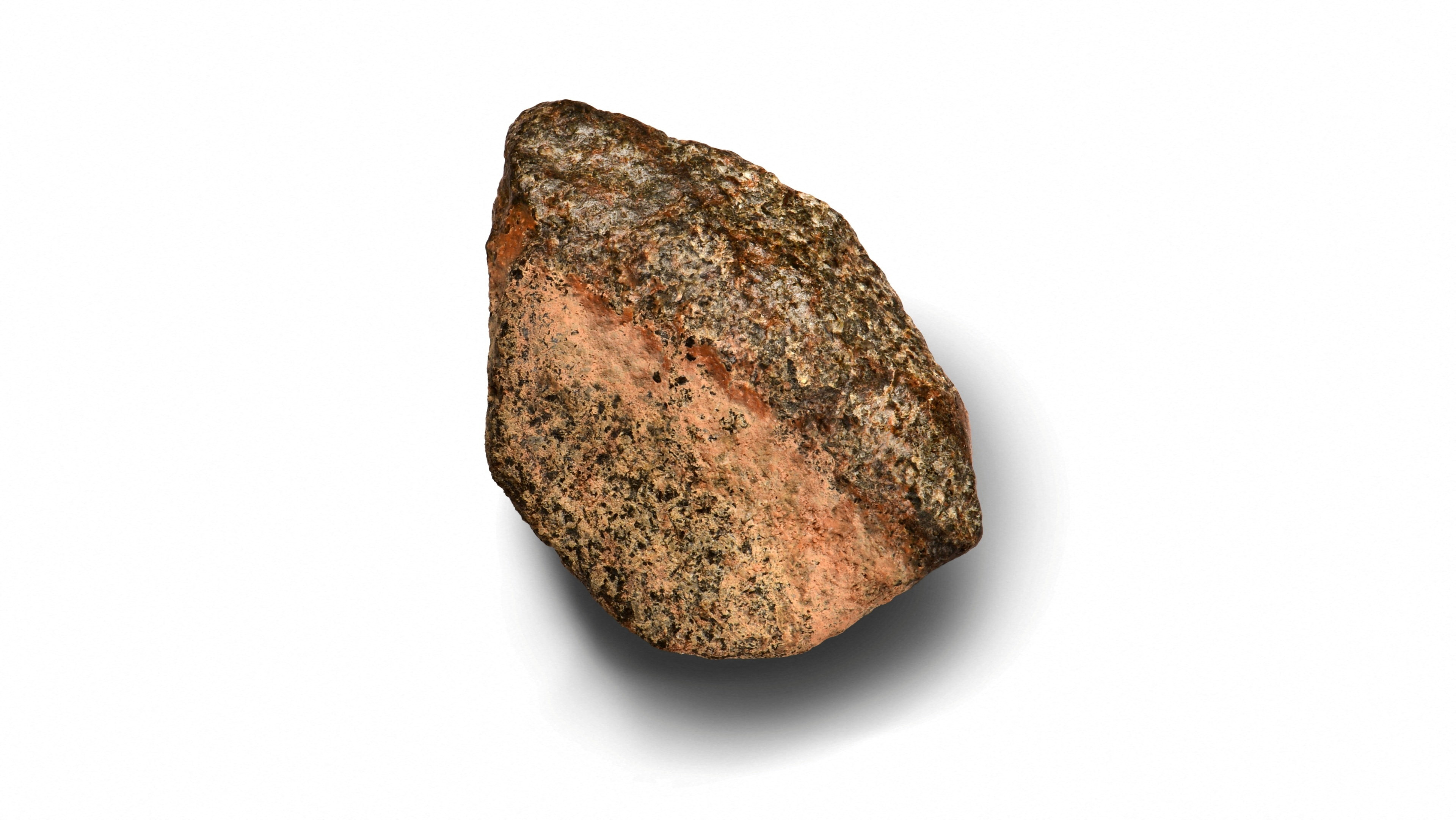
GENEVA/LONDON/WASHINGTON — In the hyper-competitive arena of planetary science and high-end asset acquisition, few discoveries carry the seismic weight of a confirmed geologic emissary from another world. Following rigorous multi-institution verification, a Martian meteorite recovered from the shifting dunes of the Sahara Desert has been officially dated to 4.1 billion years ago. This extraordinary relic provides a direct physical window into the dawn of the inner solar system, a period when Earth and Mars shared remarkably similar liquid-water regimes before diverging down drastically different climatic and geological pathways.
For institutional investors, aerospace strategists, and academic consortia alike, this finding transcends academic curiosity. As private capital pours into space infrastructure, orbital logistics, and extraterrestrial resource rights, rare planetary specimens serve as critical benchmarks for valuation models, risk mitigation frameworks, and the long-term feasibility of in-situ resource utilization (ISRU). This investigative report examines the geological mechanics of the Sahara meteorite, the forensic methodologies that established its epoch-defining age, and the profound commercial and scientific implications rippling across global markets.
The Catalytic Discovery: Recovering the Red Planet's Deep Past
Test Our Free AI & Tech Utilities Suite
Calculate LLM API token costs, analyze article dwell-time, or simulate tech DCA returns.
The narrative of this 4.1-billion-year-old specimen begins not in a pristine cleanroom, but in the unforgiving expanse of the Sahara Desert—a region renowned among meteorite hunters as a natural blue ice equivalent for preserving fallen space rocks. Because the Sahara’s arid climate minimizes weathering compared to tropical or temperate zones, iron-rich and basaltic stones can endure for millennia without complete chemical degradation.
When independent collectors unearthed the fragment, initial visual inspections immediately flagged its unusual fusion crust and dense, crystalline matrix. Subsequent consignment to an international network of geochronologists initiated a months-long battery of non-destructive and destructive testing. By analyzing trapped noble gases—specifically ratios of argon, neon, and xenon—within shock-melted glass pockets, researchers confirmed a geochemical fingerprint matching the atmospheric composition recorded by NASA’s Viking landers on Mars in 1976.
This match is the gold standard of planetary provenance. Mars possesses a distinct isotopic signature embedded in its mantle and atmosphere, differing fundamentally from Earth, the Moon, and the asteroid belt. The Sahara specimen’s noble gas ratios closed the loop on its geographic origin, setting the stage for precise radiometric dating.
Unlocking the Noachian Epoch: Geochronology and Thermal History

To establish the meteorite's age at 4.1 billion years, an elite team of geochemists utilized uranium-lead (U-Pb) and rubidium-strontium (Rb-Sr) dating on accessory minerals such as zircon and baddeleyite. These microscopic crystals act as immutable atomic chronometers. Because uranium decays into lead at a constant, well-documented half-life, measuring the ratio of parent to daughter isotopes within the mineral lattice yields the exact moment the rock crystallized from molten magma.
The resulting 4.1-billion-year timestamp places the meteorite squarely within the Noachian epoch of Martian history. This was a critical developmental window characterized by heavy asteroid bombardment, global magnetic field generation, and widespread surface liquid water. Planetary models indicate that during this era, Mars possessed a dense atmosphere capable of sustaining surface oceans, making the juvenile crust preserved in this meteorite an invaluable archive of habitable conditions.
Furthermore, the sample exhibits micro-fracturing and shock-induced melt veins caused by the catastrophic hypervelocity impact that ejected the rock from the Martian surface millions of years ago. By studying these shock features, geophysicists gain granular insight into the impact mechanics required to exceed Mars's considerable escape velocity—roughly 5 kilometers per second—providing crucial parameters for planetary defense and impact cratering models.
Verified Data & Metrics Breakdown
To contextualize the scientific significance and rarity of this planetary artifact, the following metrics synthesize key physical, geochemical, and market parameters established by the research consortium:
| Metric Parameter | Scientific Value / Specification | Comparative Baseline |
|---|---|---|
| Estimated Crystallization Age | 4.1 Billion Years (± 15 Million) | Earth's oldest known crustal fragments (~4.4 Ga) |
| Geological Epoch | Early Martian Noachian | Era of presumed widespread surface water |
| Provenance Verification Method | Noble Gas Mass Spectrometry & U-Pb Zircon Dating | Matches Viking lander atmospheric signatures |
| Estimated Market Valuation Tier | Tier-1 Institutional / Museum Acquisition Grade | Significantly exceeds standard chondrite valuation multiples |
Industry & Market Implications: Capital Allocation and Asset Valuation
While the primary beneficiaries of this discovery are academic institutions and astrobiology laboratories, the secondary and tertiary economic impacts resonate powerfully across the commercial space sector.
Who Wins: Astrobiology Infrastructure and Private Collectors
Laboratories specializing in high-resolution mass spectrometry and secondary ion mass spectrometry (SIMS) stand to gain substantial research grants and enterprise partnerships as demand surges for precise extraterrestrial sample analysis. Concurrently, elite mineral auction houses and private collectors experience an immediate uptick in valuation multiples for certified Martian and lunar material. As sovereign wealth funds and ultra-high-net-worth individuals increasingly diversify portfolios into tangible, high-rarity hard assets, meteorites with verifiable planetary provenance command premium pricing.
Who Loses: Unverified Speculators and Black-Market Smugglers
The rigorous scientific validation required to authenticate a 4.1-billion-year-old specimen acts as a severe deterrent to unregulated fossil and mineral black markets. Specimens lacking verifiable chain-of-custody documentation or robust isotopic testing face severe valuation discounts. Institutional buyers and museum boards are tightening compliance protocols, effectively squeezing out speculative brokers dealing in unverified or fraudulently labeled desert stones.
Broader Economic and Strategic Impact
On a macro level, discoveries of this caliber underscore the commercial viability of future automated sample-return missions. As private-public partnerships reshape aerospace engineering and cloud-compute architectures optimize trajectory modeling, the economic rationale for asteroid and planetary mining grows increasingly robust. Understanding the pristine composition of the early Martian crust provides foundational data for engineering materials and extracting volatiles in deep-space environments.
Frequently Asked Questions (People Also Ask)
How do scientists definitively prove a meteorite came from Mars?
Scientists confirm Martian provenance by extracting trapped pockets of gas within the meteorite's shock-melted glass. When analyzed via mass spectrometry, the isotopic ratios of nitrogen, argon, neon, krypton, and xenon match the exact atmospheric profile measured directly on the surface of Mars by NASA's Viking spacecraft in the 1970s and subsequent robotic rovers.
Why is a 4.1-billion-year-old Martian meteorite significant?
This age places the rock squarely in Mars’s Noachian epoch—a turbulent formative period when the planet possessed a thicker atmosphere, a global magnetic field, and active liquid-water systems. Studying this specimen helps researchers reconstruct why Earth and Mars diverged from similar watery beginnings into entirely different worlds.
How did a rock from Mars end up in the Sahara Desert?
The journey began millions of years ago when a massive asteroid or comet impacted Mars with enough kinetic energy to blast surface rocks beyond the planet’s gravitational pull. The ejected fragment traveled through interplanetary space for millions of years before intersecting Earth's orbit, surviving atmospheric entry, and landing in the Sahara Desert.
Are Martian meteorites legally tradeable and commercially valuable?
Yes. While meteorites that fall on public land in certain jurisdictions are subject to strict heritage laws, specimens recovered from private property or international desert commons like the Sahara are legally bought, sold, and collected. Institutional-grade specimens with academic certification command exceptionally high valuations among museums and private investors.
Future Outlook: Milestones and Strategic Horizons
As this 4.1-billion-year-old Sahara Martian meteorite transitions from frontline news reporting to foundational textbook data, the research community is already establishing next-generation benchmarks. Over the next 12 to 36 months, key milestones to watch include:
Advanced Nanoscale Imaging: Researchers plan to deploy atom-probe tomography to examine nanoscale chemical gradients within the meteorite's mineral boundaries, shedding light on the exact thermal fluctuations of early Mars.
Cross-Mission Benchmarking: Data from this meteorite will be directly correlated against samples currently being cached by NASA’s Perseverance rover in Jezero Crater, bridging the gap between Earth-based laboratory analysis and in-situ planetary exploration.
Regulatory and Market Standardization: Expect increased institutional oversight regarding the export and provenance verification of rare geological specimens, protecting scientific integrity while formalizing the asset class for private wealth management.
Ultimately, this ancient fragment from the Red Planet serves as a profound reminder of our solar system's dynamic history. By marrying rigorous analytical science with strategic commercial interest, the discovery of the 4.1-billion-year-old Sahara Martian meteorite cements a vital milestone in humanity's ongoing exploration of the cosmos.