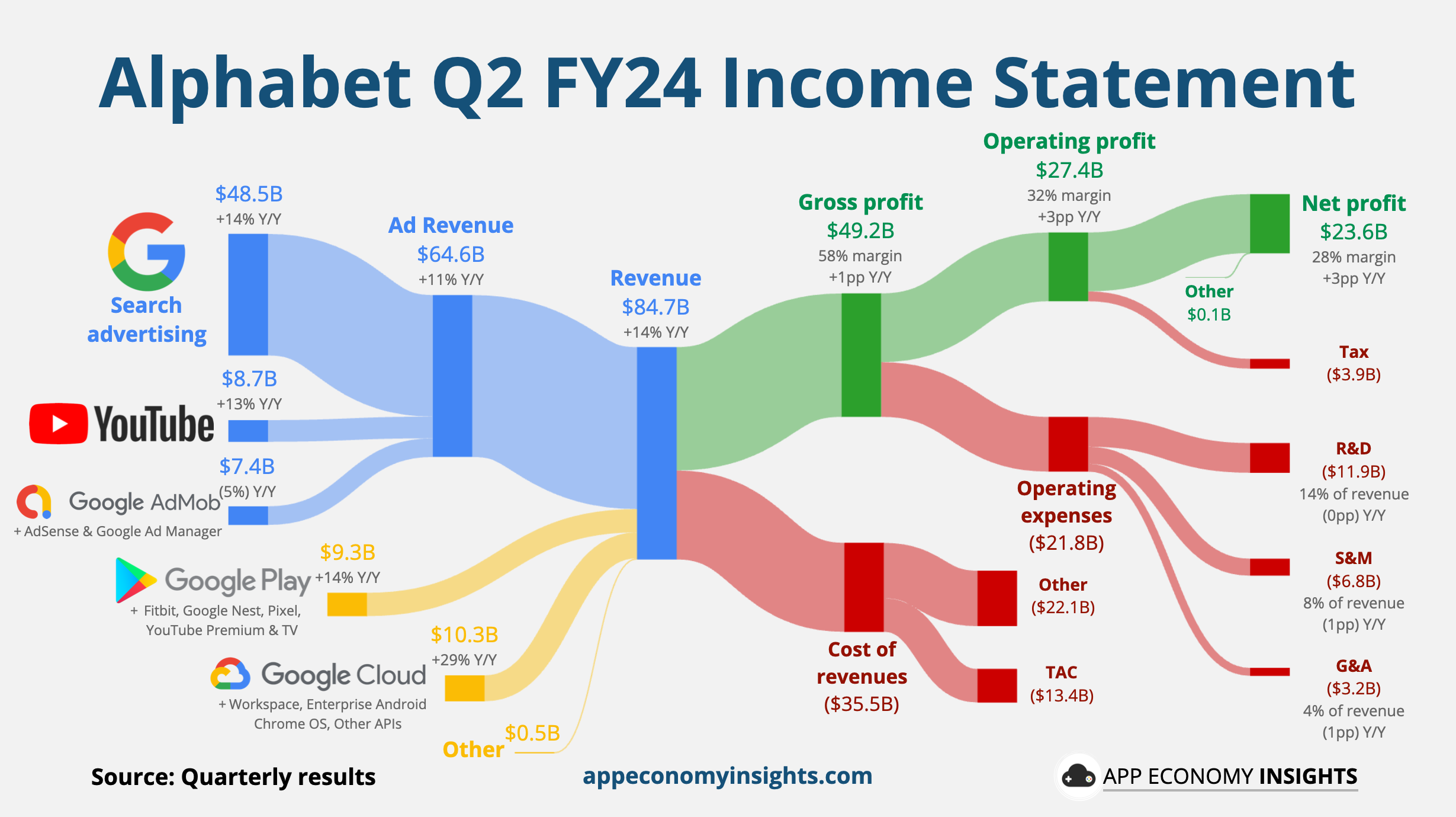
SAN FRANCISCO — In a strategic pivot that has sent immediate shockwaves through global financial markets, Alphabet Inc.’s Google has dramatically upended capital expenditure forecasts, pushing its projected 2026 outlays to a staggering $205 billion. This aggressive upward revision—well beyond even the most aggressive consensus estimates harbored by institutional analysts—underscores an uncompromising corporate commitment to dominating the generative artificial intelligence landscape. As hyper-scale cloud providers enter a hyper-capital-intensive arms race, Alphabet’s executive leadership is doubling down on massive data center buildouts, custom silicon architecture, and power infrastructure acquisitions, igniting a fierce debate over enterprise ROI, margin compression, and the long-term sustainability of the current valuation multiples in the technology sector.
For months, Wall Street had attempted to model the financial gravity of the generative AI boom. Yet, as verified data from recent disclosures illustrates, the capital intensity required to maintain competitive parity in foundational model training and inference has outstripped expectations. This investigative report dissects the macroeconomic implications of Google’s $205 billion capital allocation blueprint, evaluating the intricate web of semiconductor supply chains, energy grid dependencies, and investor anxiety that now defines the modern technology economy.
Executive Takeaways
Test Our Free AI & Tech Utilities Suite
Calculate LLM API token costs, analyze article dwell-time, or simulate tech DCA returns.
- Unprecedented CapEx Escalation: Google has revised its full-year 2026 capital expenditure ceiling to an astonishing $205 billion, vastly outpacing previous Wall Street consensus estimates.
- Infrastructure Scarcity Driving Costs: The surge is primarily propelled by aggressive acquisition of next-generation AI accelerators, specialized networking hardware, and proprietary data center real estate.
- The Energy Bottleneck: Sustaining these massive compute workloads has forced Alphabet into long-term clean energy and nuclear power procurement agreements to secure uninterrupted grid capacity.
- контенMargin Pressure vs. Market Dominance: Investors face a tense balancing act between near-term operating margin compression and the imperative of capturing long-term enterprise software and cloud market share.
The Anatomy of a Massive Financial Pivot: Tracing the $205 Billion Blueprint

To comprehend the magnitude of Google’s newly minted capital expenditure trajectory, one must examine the fundamental economics governing modern artificial intelligence. Training frontier models like Gemini, alongside deploying real-time inference workloads for billions of global users across Search, Workspace, and Cloud, requires an unprecedented density of compute architecture. Traditional enterprise IT infrastructure scalability models are fundamentally obsolete in the face of generative AI demand.
When Alphabet leadership initially signaled elevated spending cycles in late 2024 and 2025, market liquidity readily absorbed the news, buoyed by robust advertising revenues and accelerating Google Cloud adoption. However, the decision to scale 2026 projections as high as $205 billion reflects an internal realization: the window to secure market dominance in artificial intelligence is narrow, and under-investing carries existential risks. This capital allocation strategy is not merely a line-item expansion; it represents a complete restructuring of the firm’s balance sheet toward physical and digital infrastructure.
Industry insiders and quantitative analysts point out that a significant portion of this capital is earmarked for proprietary silicon development—specifically the continued iteration of Tensor Processing Units (TPUs)—to reduce reliance on merchant silicon providers and protect gross margins over the decade's horizon. Nevertheless, the immediate cash burn associated with fabricating advanced nodes, securing high-bandwidth memory (HBM), and constructing liquid-cooled server facilities has triggered intense risk mitigation discussions among institutional asset managers.
Verified Data & Metrics Breakdown
| Metric Category | Previous Consensus Estimates | Revised Google 2026 Projection | Strategic Driver / Operational Focus |
|---|---|---|---|
| Full-Year Capital Expenditures (CapEx) | $140B – $165B | Up to $205 Billion | Data center expansion, custom TPU procurement, and server hardware scaling. |
| Energy & Power Procurement | Regional utility scaling | Gigawatt-scale green/nuclear PPAs | Mitigating grid latency and ensuring continuous power for high-density racks. |
| Cloud Infrastructure Scaling | Incremental capacity additions | Aggressive global region deployment | Enterprise client data sovereignty and low-latency LLM inference. |
| Research & Development Intensity | Stable percentage of revenue | Accelerated front-loaded investment | Next-generation foundational model architectures and agentic workflows. |
Industry & Market Implications: Winners, Losers, and Economic Ripples
The macroeconomic ramifications of a $205 billion annual infrastructure commitment extend far beyond Alphabet’s corporate headquarters in Mountain View. A capital injection of this scale acts as a massive economic tide, lifting specific sectors while creating formidable barriers to entry for smaller market participants.
The Winners: Semiconductor foundries, specialized networking equipment manufacturers, and advanced cooling technology providers are enjoying an unprecedented golden era of demand. Companies specializing in optical transceivers, high-speed routing, and electrical grid engineering find themselves in an enviable pricing power position. Furthermore, enterprise clients stand to benefit from the relentless commoditization of AI inference compute, as hyper-scalers compete aggressively on price and performance.
The Losers and Vulnerabilities: Venture-backed AI startups and mid-tier cloud providers face an increasingly hostile competitive environment. Matching the infrastructural muscle of a $205 billion annual budget is virtually impossible for independent firms, potentially consolidating the generative AI ecosystem into a oligopoly of hyper-scalers. Concurrently, equity investors focused on near-term free cash flow yield have punished tech valuations following the announcement, signaling growing intolerance for open-ended capital expenditures without clear, accelerated monetization pathways.
Frequently Asked Questions (People Also Ask)
1. Why is Google raising its capital expenditure forecast so dramatically for 2026?
Google is scaling its capital expenditures to secure the physical and digital infrastructure required for the next generation of artificial intelligence. This includes building advanced liquid-cooled data centers, procuring massive volumes of AI accelerators (such as custom TPUs and GPUs), and securing long-term energy contracts to power high-density computing clusters necessary for training and running frontier large language models.
2. How are investors reacting to Alphabet’s increased AI spending?
Investor reaction has been mixed and cautious. While institutional shareholders recognize the necessity of maintaining technological leadership in AI, the sheer scale of the $205 billion price tag has stoked concerns regarding near-term operating margin compression, return on invested capital (ROIC), and free cash flow generation.
3. What role does energy infrastructure play in Google's massive CapEx budget?
Energy is one of the primary cost and operational bottlenecks for modern AI scaling. A significant portion of these multi-billion-dollar investments is channeled into securing reliable, long-term power sources—including advanced clean energy and nuclear power purchase agreements (PPAs)—to ensure uninterrupted operation of high-density server racks without straining local utility grids.
4. Does this spending announcement impact Google Cloud enterprise customers?
Yes. The massive infrastructure buildout directly translates into enhanced cloud computing architecture, offering enterprise clients superior scalability, faster inference times, greater data security compliance, and robust computational horsepower required to deploy mission-critical generative AI applications.
Future Outlook: Milestones and Strategic Horizons to Monitor
As the technology sector digests Google’s historic capital commitment, the coming quarters will serve as a crucial crucible for executive accountability and technological execution. Industry analysts will closely scrutinize upcoming quarterly earnings reports for concrete metrics regarding cloud revenue acceleration, enterprise adoption rates of specialized AI agents, and tangible efficiency gains in model training costs.
Ultimately, the $205 billion question is no longer whether Alphabet can build the infrastructure of the future, but rather how efficiently that infrastructure will translate into durable, high-margin enterprise revenue. As regulatory compliance landscapes shift and global energy markets adapt to the insatiable demands of artificial intelligence, Google’s high-stakes gamble will either be canonized as a visionary masterstroke of strategic foresight or scrutinized as an era-defining case study in over-exuberance. For now, the global tech economy watches and waits as the capital flows.