Executive Takeaways
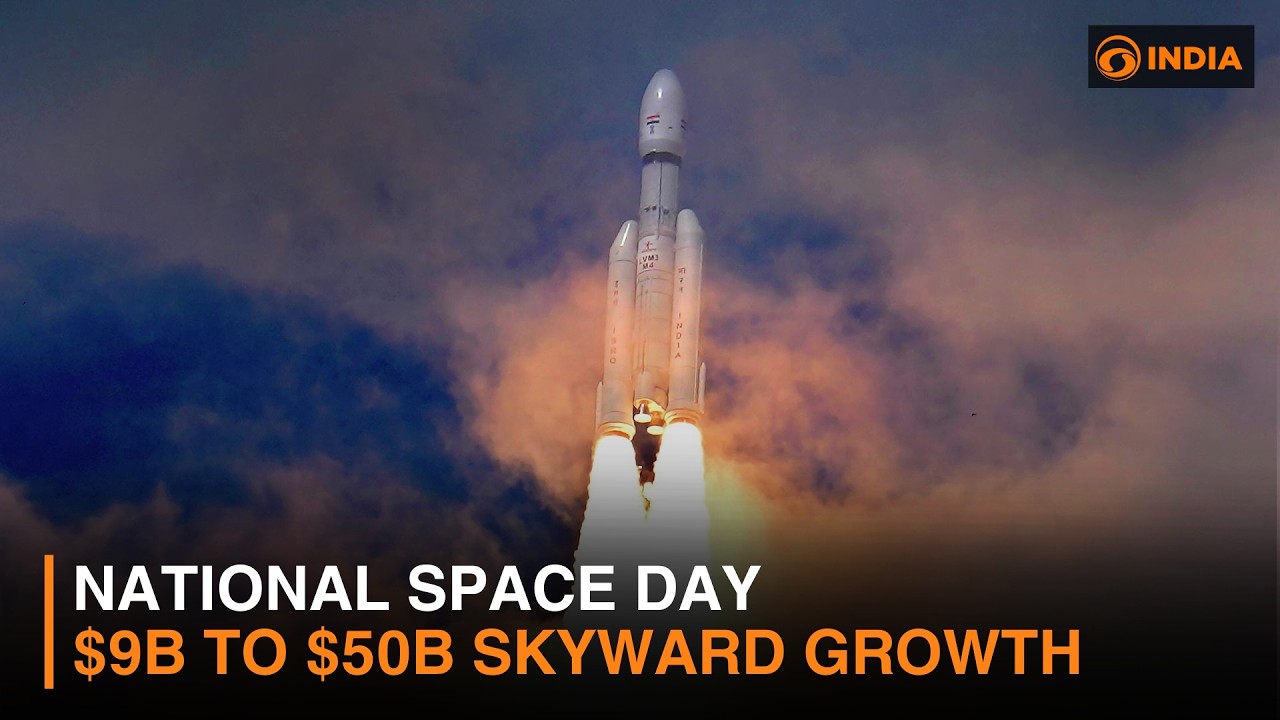
- Valuation & Growth Trajectory: India's space economy has matured into a $9 billion powerhouse, with institutional roadmaps projecting an aggressive expansion to $44 billion by 2033, capturing roughly 8% of the global market.
- Regulatory Modernization: The dissolution of historical state monopolies through the creation of IN-SPACe and liberalized FDI policies (up to 100% automatic route) has unlocked unprecedented private capital and enhanced market liquidity.
- Frugal Capital Allocation: ISRO’s trademark high-yield, low-cost engineering paradigm (demonstrated by Chandrayaan-3’s $75 million budget) serves as a global benchmark for enterprise ROI, contrasting sharply with legacy, capital-intensive Western programs.
- The 2035 Sovereign Roadmap: Strategic milestones are anchored by the Gaganyaan human spaceflight program, the establishment of the Bharatiya Antariksha Station (BAS) by 2035, and a crewed lunar landing targeted for 2040.
The Catalytic Transition: From Scientific Endeavor to Commercial Juggernaut
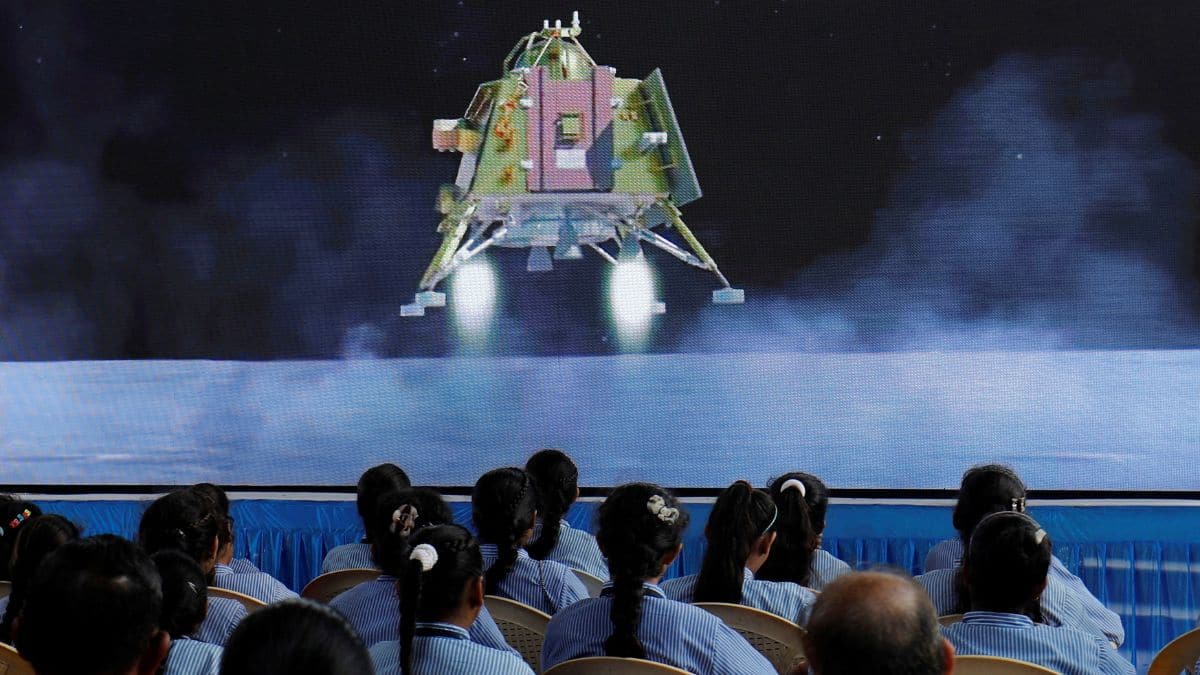
On August 23, India celebrated its inaugural National Space Day, commemorating the precise moment the Chandrayaan-3 lander touched down on the rugged terrain of the lunar South Pole. But beyond the geopolitical soft power and national pride, the event signaled a structural inflection point. India’s space program is no longer merely a high-minded public service or scientific endeavor; it has evolved into a highly integrated, commercial engine designed to maximize capital allocation efficiency and disrupt the global aerospace value chain.
Historically, India's Department of Space operated under a closed-loop framework, with the Indian Space Research Organisation (ISRO) serving as designer, manufacturer, operator, and regulator. This single-entity structure, while productive, limited the scale of private enterprise. Today, a sweeping regulatory overhaul has dismantled these bottlenecks, shifting ISRO’s role toward primary R&D and deep-space exploration, while leaving commercial execution, launch services, and downstream applications to private enterprises and NewSpace India Limited (NSIL).
The financial rationale behind this pivot is clear. The global space sector is undergoing a rapid transition toward low-Earth orbit (LEO) satellite constellations, high-throughput communications, and real-time geospatial analytics. By leveraging its highly skilled engineering talent pool and significantly lower operational cost structures, India is positioning itself as the primary back-end infrastructure provider for the global NewSpace ecosystem.
The Institutional Architecture: De-risking the Private Sector Sandbox
At the center of India's commercial space renaissance is a dual-institutional framework designed to de-risk private sector investments and ensure regulatory compliance:
1. IN-SPACe (Indian National Space Promotion and Authorization Center)
Acting as a single-window autonomous clearing house, IN-SPACe has bridged the gap between private space-tech startups and state-owned infrastructure. By allowing private entities to utilize ISRO’s testing labs, launch pads, and tracking facilities, the government has dramatically lowered the capital expenditure (CapEx) barrier to entry. This infrastructure scalability allows startups to bypass the asset-heavy phase of developmental testing, accelerating time-to-market for launch vehicles and satellite constellations.
2. NSIL (NewSpace India Limited)
Operating as the commercial arm of ISRO, NSIL specializes in asset monetization, technology transfer, and launch service aggregation. Instead of relying on state-directed budgets, NSIL operates on commercial principles, matching private launch demands with domestic launch capacity, such as the Polar Satellite Launch Vehicle (PSLV) and the Geosynchronous Satellite Launch Vehicle (GSLV) Mk III (LVM3).
Crucially, the relaxation of Foreign Direct Investment (FDI) guidelines in early 2024 has acted as a primary catalyst for capital inflows. By allowing up to 100% foreign investment in satellite manufacturing and up to 49% in launch vehicles under the automatic route, India has integrated its domestic aerospace sector with global capital markets. This regulatory compliance framework has eased concerns over intellectual property protection and cross-border capital repatriation, stimulating premium venture capital interest and elevating enterprise valuation multiples across the ecosystem.
Analyzing the Capital Efficiency of India’s Aerospace Infrastructure
To understand the disruptive potential of the Indian space economy, one must look at the unit economics of its missions. The entire Chandrayaan-3 lunar mission cost approximately $75 million (INR 615 crore). In comparison, NASA’s Artemis program is estimated to cost upwards of $93 billion through 2025, with individual SLS/Orion launches costing over $2 billion each. This discrepancy is not merely a function of lower labor costs; it is a structural advantage rooted in ISRO’s engineering philosophy:
- Iterative, Software-Defined Simulation: Rather than relying on expensive, physical prototype testing, Indian aerospace engineers utilize highly advanced, cloud-based simulation architectures to model structural stresses and thermal dynamics. This reduces material wastage and hardware iteration cycles.
- Gravity-Assist Trajectory Optimization: ISRO’s mission designers frequently employ highly calculated gravity-assist maneuvers, utilizing the Earth’s and Moon’s gravitational fields to boost spacecraft velocity. While this increases transit times, it minimizes fuel payloads, allowing for smaller, cheaper launch vehicles.
- Local Supply Chain Integration: Over decades of state-guided operations, ISRO nurtured a vast, domestic network of micro, small, and medium enterprises (MSMEs) like Larsen & Toubro, Godrej Aerospace, and Hindustan Aeronautics Limited (HAL). These domestic players provide high-precision, space-grade alloy fabrication and electronic components at a fraction of Western market rates.
Decentralizing the Launch and Downstream Geosector
The strategic deployment of capital has allowed private-sector players to design specialized solutions targeting the global commercial market. Startups like Skyroot Aerospace and Agnikul Cosmos are pioneering customized, 3D-printed launch vehicles designed for rapid deployment of small satellites. Skyroot’s Vikram series and Agnikul’s Agnibaan are engineered to offer high infrastructure scalability, catering to the growing global demand for dedicated, on-demand LEO launches.
In the downstream segment, companies like Pixxel and GalaxEye are deploying hyper-spectral and multi-sensor imaging satellite constellations. These platforms generate high-resolution Earth observation data, which is subsequently processed using advanced cloud compute architecture and machine learning algorithms. The commercial utility of this data is immense, offering high enterprise ROI for global sectors such as precision agriculture, logistical tracking, mining exploration, and climate risk mitigation.
Comparative Analysis of Global Space Economics & Institutional Trajectories
The table below highlights the comparative economic, operational, and structural metrics of India’s space ecosystem relative to global peers, emphasizing the strategic shift toward commercialization and privatization.
| Metric / Pillar | India (ISRO / Private Sector) | United States (NASA / Commercial) | European Union (ESA) | |
|---|---|---|---|---|
| Current Market Valuation | ~$9 Billion (targeting $44B by 2033) | ~$250+ Billion | ~$60-70 Billion | |
| Capital Allocation Model | Hybrid: State-funded R&D with hyper-leveraged private commercialization | Commercial-led: High private capital allocation backed by massive federal anchor contracts | Multilateral: Consortium-funded, heavily regulated state-backed framework | |
| Average Launch Cost (per kg to LEO) | ~$3,000 - $4,500 (highly optimized for small-mid payloads) | ~$1,500 - $2,500 (reusable systems, e.g., SpaceX Falcon 9) | ~$6,000 - $9,000 (legacy expendable systems) | |
| Private Capital Access & FDI | Up to 100% under automatic route (FDI policy reformed in 2024) | Highly liquid VC markets; strategic defense and security restrictions (ITAR compliance) | Strict sovereign security guidelines; multi-nation structural limitations | |
| Core 2035 Milestone | Bharatiya Antariksha Station (BAS); robust, private orbital launch ecosystems | Artemis basecamp on the Moon; commercial orbital habitats (post-ISS decommission) | Moon Village participation; independent heavy-lift capacity (Ariane 6 optimization) |
Industry & Market Implications: Who Wins, Who Loses?
The Winners
- Domestic Aerospace Component Manufacturers: Precision engineering conglomerates such as L&T, Godrej Aerospace, and dynamically scaling MSMEs are poised for sustained revenue growth as global OEMs seek out cost-efficient, non-Chinese supply chains. This "China+1" sourcing strategy in aerospace manufacturing plays directly to India's manufacturing strengths.
- Downstream Data Analytics Providers: Startups leveraging hyperspectral imaging data to deliver predictive analytics to agriculture, insurance, and resource extraction companies will capture high-margin revenue streams, demonstrating a clear path to enterprise ROI.
- Global Satellite Operators: Low-cost launch options via NSIL’s commercial launch vehicles will lower the barrier to entry for telecommunications and IoT startups looking to populate LEO constellations with minimal upfront capital expenditures.
The Loses / Threatened Legacies
- High-Cost Legacy Launch Providers: Traditional, state-subsidized launch entities in Europe and North America that cannot match the unit economics of India's private launch options or SpaceX's reusable fleet will find it increasingly difficult to compete for commercial, unclassified commercial contracts.
- Undercapitalized Space Startups: High interest rates and a global focus on near-term profitability mean that space startups without a clear path to commercial monetization (i.e., those focusing on purely speculative, long-horizon deep space tech) will face valuation compression and drying liquidity.
People Also Ask (FAQ)
What drove the transition of India's space program from a scientific endeavor to a commercial space economy?
The primary driver was the recognition of structural limitations within a single state-run entity. While ISRO excelled at executing complex scientific missions on restrictive budgets, it lacked the organizational bandwidth to scale commercial launch capacity, manufacture commercial satellites, and export downstream applications at a global scale. By introducing regulatory reforms, establishing IN-SPACe to democratize state infrastructure, and setting up NSIL to handle commercialization, India unlocked private-sector agility and venture capital. This decoupled deep-space scientific discovery from routine commercial operations, creating a highly efficient, multi-tiered space economy.
How does India's regulatory framework (IN-SPACe) facilitate private enterprise participation and foreign direct investment (FDI)?
IN-SPACe serves as an autonomous, single-window clearance agency that slashes bureaucratic red tape for domestic and international players. It provides private startups with direct access to ISRO’s world-class testing and launch facilities under structured pricing models, reducing initial capital expenditures. This is bolstered by India’s liberalized FDI policy, which permits up to 100% foreign investment in satellite manufacturing and up to 49% in launch vehicle development under the automatic route. This framework ensures regulatory compliance, builds confidence for international venture capital, and elevates global valuation multiples for Indian space-tech enterprises.
What are the key technological milestones in ISRO's roadmap to 2035 and 2040?
ISRO’s long-term plan features three distinct pillars of technological and human capability development:
- Gaganyaan Human Spaceflight: The foundational step to demonstrate human spaceflight capability to low-Earth orbit (LEO), validating life support systems and recovery procedures.
- Bharatiya Antariksha Station (BAS): Planned for full deployment by 2035, this sovereign space station will serve as a microgravity research laboratory, solidifying India’s permanent presence in space.
- Crewed Lunar Mission (2040): Leveraging technologies perfected in the BAS and Gaganyaan programs, this long-term objective involves landing an Indian astronaut on the lunar surface and establishing a sustained research presence.
How does the capital efficiency of Indian space missions compare with global peers?
India’s space missions operate on an entirely different capital allocation matrix compared to Western programs. By substituting physical prototyping with advanced software simulations, leveraging localized supply chains involving over 400 domestic MSMEs, and deploying highly optimized trajectory planning (such as gravity-assist maneuvers), ISRO minimizes propellant payloads and structural mass. The result is high-precision missions like Chandrayaan-3 and Mangalyaan (Mars Orbiter Mission) completed at fractions of the cost of equivalent NASA, ESA, or Roscosmos missions, representing an unrivaled benchmark in space-sector enterprise ROI.
Future Outlook: The Road to 2035 and Sovereign Dominance
As India advances along its strategic timeline, the key to sustaining this momentum lies in its ability to transition from a highly efficient low-cost service provider to a pioneer in frontier technologies. The roadmap to 2035 is not merely about launching more payloads; it is about establishing orbital infrastructure, sovereign heavy-lift capabilities, and advanced deep-space communication networks.
To achieve this, the next decade will require significant capital allocation toward the development of the Next Generation Launch Vehicle (NGLV). The NGLV, designed with a focus on partial reusability and heavy-payload carrying capacity (up to 10 tonnes to GTO), is critical to assembling the Bharatiya Antariksha Station (BAS) and lowering the cost-per-kilogram metric even further. If India can successfully manage this technological transition while maintaining its trademark cost efficiency, its $9 billion space economy will not only reach its $44 billion target by 2033 but will rewrite the geopolitical and commercial rules of the global aerospace industry.