
WASHINGTON & MOUNTAIN VIEW — In an aggressive escalation of the global war against digital fraud, Alphabet Inc.’s Google has officially commenced the widespread rollout of its advanced Enhanced Protection mode within the Google Messages ecosystem. Designed to neutralize increasingly sophisticated smishing (SMS phishing), financial scams, and automated bot networks, this architectural security overhaul represents a paradigm shift in how consumer messaging infrastructure defends against bad actors. As global economic losses from text-based cybercrime mount into the billions, this deployment introduces institutional-grade risk mitigation directly to the default messaging client powering hundreds of millions of Android smartphones worldwide.
For institutional investors, enterprise risk officers, and cybersecurity analysts, the rollout is more than a routine application update; it is a critical defensive maneuver designed to protect consumer trust, reduce enterprise liability, and fortify the operating margins of telecommunications networks and financial institutions alike. By shifting the paradigm from reactive filtering to preemptive heuristics, Google is setting a new benchmark for mobile communication security.
Executive Takeaways
Test Our Free AI & Tech Utilities Suite
Calculate LLM API token costs, analyze article dwell-time, or simulate tech DCA returns.
- Proactive Heuristics: Enhanced Protection mode shifts spam defense from static blocklists to dynamic, real-time behavioral analysis and machine learning models operating locally and in secure cloud enclaves.
- Enterprise & Financial Impact: The rollout serves as a vital risk mitigation tool against rampant smishing campaigns that siphon billions annually from retail banking customers and threaten brand equity.
- Privacy-First Architecture: Google leverages advanced privacy-preserving cryptographic techniques and differential privacy to analyze scam patterns without exposing plaintext user message contents to unauthorized third parties.
- Ecosystem Dominance: By tightening security standards across the Android ecosystem, Google reinforces consumer retention and raises the operational barrier to entry for malicious threat actors targeting mobile users.
The Catalytic Shift: Anatomy of a Global Scourge
The imperative for Google Messages’ Enhanced Protection mode stems from an alarming macroeconomic reality: traditional Short Message Service (SMS) protocols, originally engineered in the 1980s for reliability rather than security, are fundamentally porous. Over the past twenty-four months, malicious threat actors have weaponized automated cloud compute architecture to deploy hyper-targeted smishing campaigns at scale. These campaigns mimic trusted financial institutions, government agencies, and delivery services, trapping unsuspecting consumers in sophisticated social engineering funnels.
According to recent global cybersecurity data, text message scams have outpaced email-based phishing vectors in growth velocity, exploiting the psychological intimacy and immediacy of mobile alerts. For financial institutions and fintech startups, these attacks inflict severe collateral damage. Banks face mounting customer support expenditures, regulatory scrutiny regarding consumer authentication protocols, and substantial liabilities stemming from unauthorized account takeovers.
Google’s strategic response is the deployment of Enhanced Protection mode. Unlike standard spam filters that rely primarily on known sender blacklists and rudimentary keyword matching, Enhanced Protection utilizes advanced machine learning pipelines trained on global threat intelligence. This system evaluates structural anomalies in message delivery patterns, sender reputation metrics, and malicious URL payloads before the message alert even registers on the user’s display.
Technical Architecture and Operational Mechanics
To understand the enterprise value of Google’s latest security deployment, one must examine the underlying cloud compute architecture and data governance models. Operating at the intersection of on-device machine learning and secure cloud infrastructure, Enhanced Protection mode balances rigorous cybersecurity with strict user privacy guarantees.
When an incoming message triggers suspicious heuristics, the application utilizes differential privacy frameworks to analyze metadata and threat signatures. This ensures that while global threat intelligence networks are updated in real time to recognize emerging scam vectors, individual user privacy remains uncompromised. The system evaluates several core variables:
- Sender Behavioral Profiles: Analysis of sender volume, network origin, and historical reputation scores across decentralized telemetry networks.
- Payload Inspection: Real-time evaluation of embedded URLs against continuously updated threat databases to block zero-day phishing sites instantly.
- Linguistic Pattern Recognition: Natural Language Processing (NLP) models capable of detecting coercive financial language, urgency triggers, and fraudulent impersonation markers regardless of localized dialect variations.
This multi-layered defense matrix dramatically compresses the detection-to-mitigation lifecycle. In capital markets terms, it represents a compression of operational risk exposure, shielding retail investors and everyday consumers from catastrophic asset depletion.
Verified Data & Metrics Breakdown
| Metric Category | Legacy Protection Mode | Enhanced Protection Mode | Strategic Impact |
|---|---|---|---|
| Detection Mechanism | Static Blacklists & Keywords | Real-Time ML & Behavioral Heuristics | Identifies zero-day scams instantly |
| Privacy Architecture | Basic Local Filtering | Differential Privacy & Secure Enclaves | Zero plaintext exposure to third parties |
| Interception Latency | Delayed (Post-Delivery Batch) | Sub-Second (Pre-Notification) | Prevents user engagement entirely |
| Target Asset Class | Basic SMS Spam | Advanced Smishing & Financial Fraud | Protects retail banking & investments |
Industry & Market Implications
The rollout of Enhanced Protection mode sends profound shockwaves across multiple sectors, shifting competitive dynamics and redefining digital liability:
Who Wins
Consumer Banking & Financial Institutions: With fewer customers falling victim to sophisticated smishing attacks, banks experience a direct reduction in fraud-related operational costs, chargeback liabilities, and regulatory friction.
Alphabet Inc. (Google): By bolstering the security credentials of the Android ecosystem, Google strengthens its valuation multiples, enhances consumer loyalty, and differentiates its hardware and software offerings from competing platforms.
Cybersecurity Infrastructure Providers: Companies specializing in threat intelligence, cloud compute architecture, and identity verification stand to benefit from the rising tide of enterprise security integration.
Who Loses
Cybercriminal Syndicates: The economic viability of automated, high-volume smishing operations drops precipitously as conversion rates plummet due to proactive intercept mechanisms.
Rogue Telephony Providers: Telecommunications operators that inadvertently or negligently facilitate fraudulent traffic face heightened regulatory penalties and automated network blacklisting.
Frequently Asked Questions (People Also Ask)
What is Google Messages Enhanced Protection mode?
Enhanced Protection mode is an advanced security setting within Google Messages that leverages real-time machine learning, behavioral heuristics, and privacy-preserving cloud infrastructure to detect and intercept sophisticated smishing, financial scams, and malicious links before they reach the user.
Does Enhanced Protection mode compromise user privacy or read my private messages?
No. Google utilizes advanced differential privacy techniques and secure enclaves. The system analyzes message metadata and threat signatures to identify fraudulent patterns without exposing the plaintext contents of personal, end-to-end encrypted conversations to unauthorized entities.
How can users enable Enhanced Protection mode on their devices?
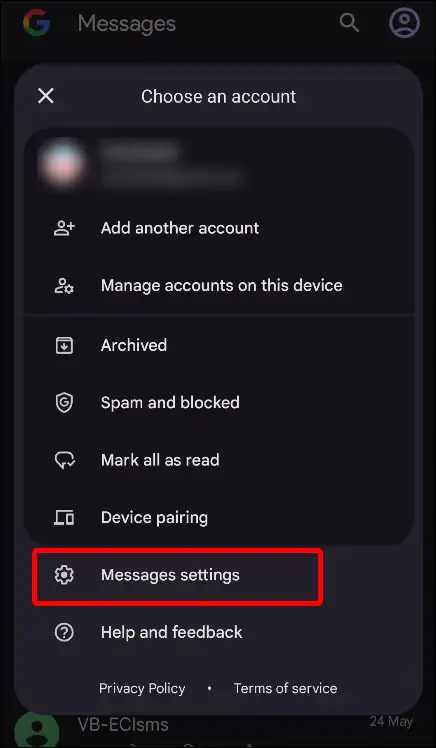
Users can activate the feature by navigating to Google Messages settings, locating the spam protection or advanced security menu options, and toggling on the Enhanced Protection mode. The rollout is occurring globally across compatible Android handsets via automatic updates.
Will this feature impact the delivery speed of normal text messages?
No. The heuristic evaluation occurs via optimized on-device machine learning models and high-speed cloud lookups that execute in sub-second intervals, ensuring a seamless, uninterrupted user experience for legitimate communications.
Future Outlook & Strategic Horizon
As we look toward the horizon of digital communications, the debut of Enhanced Protection mode in Google Messages is merely a baseline milestone. Industry analysts anticipate that Google will deepen integration between its mobile messaging infrastructure and broader operating system security layers, including Android’s Play Protect and real-time biometric verification protocols.
For capital allocators and technology executives, the broader lesson is unequivocal: cybersecurity is no longer a peripheral feature; it is the core determinant of platform valuation and enterprise trust. As threat actors inevitably adapt their methodologies using generative artificial intelligence, the defensive posture pioneered by Google will require continuous capital allocation, algorithmic refinement, and cross-industry collaboration. The organizations and ecosystems that successfully institutionalize proactive defense will dictate the future of secure global digital commerce.