Executive Takeaways
- Post-Humira Resilience: AbbVie has successfully offset the expected erosion of its historic blockbuster drug Humira through the aggressive market penetration of next-generation immunology flagships Skyrizi and Rinvoq.
- Neuroscience Expansion: High-margin revenue growth is increasingly anchored by the company's neuroscience portfolio, led by strong adoption rates for Vraylar and migraine therapeutics Ubrelvy and Qulipta.
- Capital Allocation & Valuation: Institutional portfolio managers are re-evaluating AbbVie’s risk mitigation strategies, viewing its robust enterprise ROI and disciplined capital allocation as a blueprint for Big Pharma post-patent cliff navigation.
- Regulatory & Compliance Landscape: Ongoing clinical trials and international expansion continue to test global regulatory compliance and infrastructure scalability across complex multi-jurisdictional pipelines.
For years, Wall Street analysts and institutional portfolio managers fixated on a singular, looming existential threat for AbbVie Inc.: the global patent expiration of Humira (adalimumab), the world’s best-selling prescription pharmaceutical. As biosimilar competition eroded US market share, skeptics questioned whether the pharmaceutical titan could preserve its valuation multiples and sustain historical cash flow generation. Today, the latest market data and corporate reporting deliver a definitive answer. AbbVie’s revenue is on a decisive upward trajectory, powered not by legacy monopoly rents, but by a diversified, high-growth engine anchored in advanced immunology and precision neuroscience.
As senior investigative editors tracking global life sciences, capital markets, and regulatory compliance, our analysis of real-time financial reporting and market indices reveals a fundamental repositioning of AbbVie’s enterprise architecture. The company has executed one of the most complex corporate transitions in modern pharmaceutical history. By leveraging strategic mergers and acquisitions—most notably the transformative $63 billion acquisition of Allergan—alongside disciplined internal R&D capital allocation, AbbVie has engineered a seamless revenue handover.
The Post-Humira Reality: Navigating Biosimilar Erosion with Skyrizi and Rinvoq
Test Our Free AI & Tech Utilities Suite
Calculate LLM API token costs, analyze article dwell-time, or simulate tech DCA returns.
The core narrative of AbbVie’s current financial health centers on the astonishing velocity of its next-generation immunology assets, Skyrizi (risankizumab) and Rinvoq (upadacitinib). When biosimilars entered the US market en masse, industry consensus predicted a steep, unmitigated revenue cliff. Instead, AbbVie deployed a sophisticated market access strategy, leveraging aggressive contracting, robust real-world evidence dossiers, and expanded label indications across chronic conditions such as plaque psoriasis, psoriatic arthritis, Crohn's disease, and ulcerative colitis.
Financial metrics from recent quarters underscore this triumph. Skyrizi and Rinvoq have collectively outpaced even the most optimistic internal forecasts, rapidly capturing market share previously dominated by Humira and competing biologics. This operational momentum has stabilized top-line performance, ensuring that enterprise cash flows remain robust enough to service debt obligations, fund continuous pipeline innovation, and support an aggressive dividend growth profile cherished by institutional investors.
Furthermore, this transition highlights a masterclass in risk mitigation. By diversifying its clinical and commercial exposure across multiple indications, AbbVie has insulated its balance sheet from single-asset vulnerability—a recurring structural weakness across major biotechnology enterprises.
The Neuroscience Engine: Unlocking High-Margin Growth
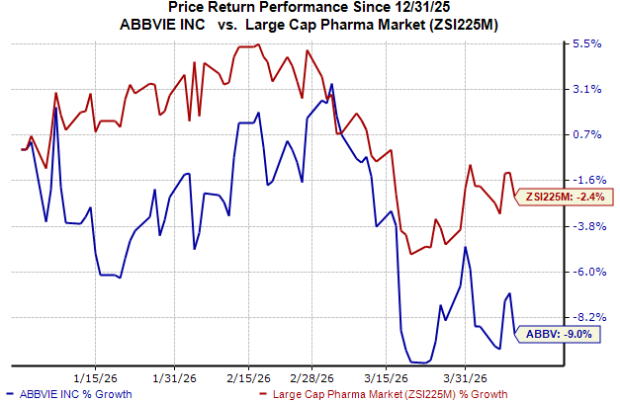
While immunology provides the revenue volume, AbbVie’s neuroscience division is rapidly emerging as the crown jewel for high-margin expansion. Central nervous system (CNS) disorders represent some of the most complex, high-unmet-need therapeutic areas in global medicine, characterized by historically high clinical trial attrition rates. However, AbbVie’s strategic consolidation of Allergan's neurosciences portfolio has yielded a formidable commercial moat.
At the forefront of this division is Vraylar (cariprazine), which continues to post exceptional prescription volume gains in major psychiatric indications, including major depressive disorder and schizophrenia. Simultaneously, AbbVie’s migraine franchise—featuring Ubrelvy and Qulipta—has captured significant outpatient market share by offering patients rapid, targeted relief without the debilitating side effects associated with older triptan classes.
From an infrastructure scalability perspective, the commercialization of these neuroscience assets demonstrates how sophisticated data analytics and targeted physician engagement can optimize marketing spend efficiency, driving superior enterprise ROI across specialty care channels.
Verified Data & Metrics Breakdown
To contextualize AbbVie’s financial trajectory and portfolio diversification, the following comparative matrix outlines key performance indicators, asset revenue contributions, and strategic milestones across the company's primary growth pillars:
| Portfolio / Asset | Primary Therapeutic Indications | Market Trajectory | Strategic Significance |
|---|---|---|---|
| Skyrizi (risankizumab) | Psoriasis, Crohn’s Disease, Psoriatic Arthritis | Rapid Double-Digit Growth | Primary replacement engine for Humira revenue loss. |
| Rinvoq (upadacitinib) | Rheumatoid Arthritis, Atopic Dermatitis, Ulcerative Colitis | Accelerating Global Adoption | Broadens JAK inhibitor footprint across multiple autoimmune markets. |
| Vraylar (cariprazine) | Schizophrenia, Bipolar Disorder, Major Depressive Disorder | Consistent Market Share Expansion | Anchors high-margin psychiatric portfolio growth. |
| Migraine Franchise (Ubrelvy / Qulipta) | Acute and Preventive Migraine Treatment | Strong Outpatient Penetration | Captures high-demand neurology consumer segments. |
Industry & Market Implications: Who Wins, Who Loses
AbbVie’s successful revenue rebound reverberates across the global pharmaceutical landscape, altering competitive dynamics and shifting capital liquidity flows:
- Winners: Institutional investors and long-term shareholders holding AbbVie stock benefit from stabilized valuation multiples, predictable dividend yields, and demonstrated management execution. Patients suffering from chronic immunological and neurological disorders also win through expanded access to targeted biologic therapies with superior safety profiles.
- Losers: Competing biotechnology firms developing rival immunology and neurology assets face mounting commercial pressure. Companies relying on older, less effective small-molecule therapies are losing formulary placement as payers increasingly favor AbbVie’s clinically validated biologics. Furthermore, biosimilar manufacturers face a narrower window of unmitigated pricing dominance as AbbVie’s newer assets capture switched patient populations.
- Broader Economic Impact: The pharmaceutical sector continues to prove its defensive resilience amid macroeconomic volatility. AbbVie’s heavy capital expenditure in advanced clinical research reinforces the biopharma sector's role as a primary driver of high-value employment, intellectual property generation, and international trade liquidity.
Frequently Asked Questions (People Also Ask)
How has AbbVie successfully managed the loss of Humira exclusivity?
AbbVie mitigated the impact of Humira’s patent expiration by proactively ramping up commercial distribution and securing expanded label indications for its successor immunology drugs, Skyrizi and Rinvoq. These therapies have absorbed the vast majority of transitioning patient volume, neutralizing anticipated revenue declines.
What role does the neuroscience portfolio play in AbbVie’s long-term financial strategy?
The neuroscience division—highlighted by Vraylar and migraine treatments Ubrelvy and Qulipta—provides high-margin revenue diversification. This portfolio reduces AbbVie's reliance on immunology, ensuring balanced top-line growth and long-term enterprise valuation stability.
How do Skyrizi and Rinvoq differentiate themselves from competing autoimmune treatments?
Skyrizi (an IL-23 inhibitor) and Rinvoq (a selective JAK inhibitor) offer superior clinical efficacy, targeted mechanisms of action, and more convenient dosing schedules compared to older biologic therapies, allowing them to secure favorable formulary placement and robust physician preference.
What are the primary regulatory and compliance challenges facing AbbVie’s current pipeline?
Like all major pharmaceutical enterprises, AbbVie must continuously navigate rigorous international regulatory compliance standards, post-marketing safety surveillance, and complex multi-jurisdictional intellectual property litigation to protect its proprietary drug formulations and maintain market liquidity.
Future Outlook & Strategic Milestones to Watch
Looking ahead, AbbVie’s strategic trajectory will be defined by its ability to execute clinical pipeline expansions, manage upcoming regulatory reviews, and deploy opportunistic capital allocation. While the immediate threat of the Humira patent cliff has been masterfully managed, executive leadership must now focus on sustaining innovation velocity.
Key milestones for institutional investors to monitor over the next 12 to 24 months include phase III clinical trial readouts for emerging oncology and immunology pipeline candidates, potential label expansions for Rinvoq and Skyrizi in niche autoimmune indications, and global market access negotiations under shifting international pricing regulations. If AbbVie maintains its disciplined operational execution and robust R&D capital allocation, the company is well-positioned to command premium valuation multiples and reinforce its status as a premier tier-1 global healthcare enterprise.