
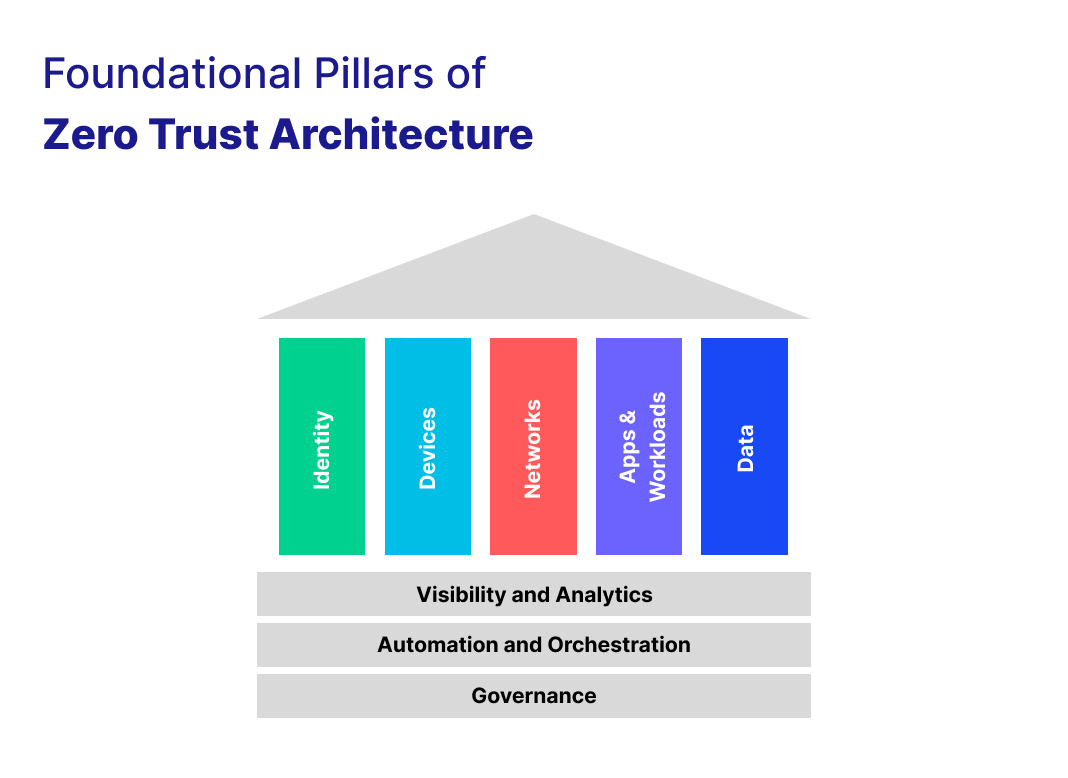
Executive Takeaways
- The Paradigm Shift: Released in March 2022, the Bank Policy Institute’s (BPI) landmark paper by Andrew Kennedy, Adaptive Trust: Zero Trust Architecture in a Financial Services Environment, catalyzed a generational overhaul of banking cybersecurity infrastructure.
- Capital Allocation & ROI: Tier-1 global systemically important banks (G-SIBs) are shifting structural capital allocation from perimeter-based defense to identity-centric, continuous verification models, heavily impacting enterprise ROI and valuation multiples.
- Regulatory Compliance: Financial institutions face unprecedented pressure from the SEC, OCC, and international regulators to integrate real-time risk mitigation into cloud compute architecture.
- Operational Friction vs. Security: The core tension in implementing Zero Trust Architecture (ZTA) across legacy mainframe systems lies in balancing market liquidity and high-frequency trading latency with uncompromised identity validation.
For decades, the financial services sector operated on a foundational, highly lucrative, and ultimately vulnerable digital premise: the castle-and-moat doctrine. Once an employee, partner, or automated script authenticated at the perimeter of a banking network, implicit trust was granted across the internal ecosystem. In March 2022, that foundational assumption was formally dismantled with the publication of the Bank Policy Institute (BPI) white paper, Adaptive Trust: Zero Trust Architecture in a Financial Services Environment, authored by security strategist Andrew Kennedy. The document did not merely suggest a technical upgrade; it issued a strategic blueprint for survival in an era of hyper-sophisticated state-sponsored cyber espionage, ransomware cartels, and complex cloud-native operations.
As senior financial editors covering the intersection of high finance and enterprise technology, our investigative desk has tracked the subsequent capital deployment, regulatory interventions, and infrastructural transformations across Wall Street, the City of London, and global financial hubs. The transition from legacy perimeters to "Adaptive Trust" represents one of the most capital-intensive operational overhauls in modern banking history.
The Catalytic Shift: Moving Beyond the Perimeter
Test Our Free AI & Tech Utilities Suite
Calculate LLM API token costs, analyze article dwell-time, or simulate tech DCA returns.
To understand the urgency behind Kennedy’s 2022 BPI thesis, one must examine the threat matrix facing the financial sector at the dawn of the post-pandemic era. Financial institutions are prime targets for economic disruption. They manage trillions of dollars in daily transactions, hold proprietary algorithmic trading models, and house sensitive personally identifiable information (PII) for billions of retail and institutional clients. Legacy security frameworks—built on Virtual Private Networks (VPNs) and static firewalls—proved fundamentally inadequate as workloads migrated rapidly to hybrid and multi-cloud compute architectures.
When an adversary compromised a single corporate credential under the old paradigm, lateral movement across the network became trivial. Attackers could quietly traverse from an auxiliary marketing server deep into core core-banking ledgers or SWIFT transfer networks. The BPI framework articulated a necessary departure: "Never trust, always verify, continuously monitor." In a financial services environment, this means every single transaction, API call, and user session must be authenticated, authorized, and encrypted based on real-time contextual awareness.
However, implementing Zero Trust Architecture (ZTA) in banking is vastly more complex than in traditional enterprise software sectors. Financial institutions are saddled with a heterogeneous mix of decades-old COBOL mainframes, modern microservices, and high-frequency trading (HFT) infrastructure where microseconds dictate profitability. Forcing heavy authentication protocols onto ultra-low-latency pathways risks degrading market liquidity and introducing systemic operational friction.
Deconstructing the BPI Framework: Core Tenets of Adaptive Trust
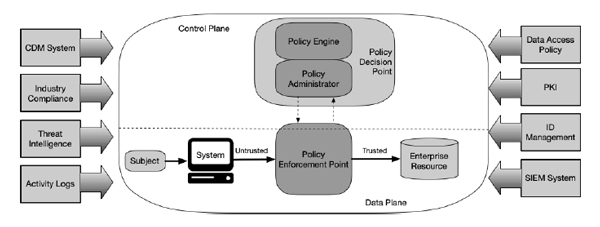
Andrew Kennedy’s analysis for the Bank Policy Institute drilled down into the operational realities of banking, emphasizing that a one-size-fits-all cybersecurity model fails when applied to distinct financial verticals. The framework establishes several critical pillars for institutional adoption:
- Continuous Risk Scoring: Authentication cannot be a binary, single-point event occurring only at login. Adaptive Trust calculates risk dynamically throughout a session, factoring in device posture, behavioral biometrics, geolocation, and anomalies in transaction volume.
- Micro-Segmentation: Networks are carved into microscopic security zones. Even if an attacker breaches the outer perimeter, lateral traversal is choked off by strict, policy-driven internal firewalls and service-to-service authentication.
- Data-Centric Security: Protection follows the data itself rather than the storage medium or network segment. Tokenization, homomorphic encryption, and robust digital rights management ensure that intercepted data remains unreadable and unusable.
- Automation and Orchestration: Given the sheer volume of daily events, manual intervention is obsolete. Automated Security Orchestration, Automation, and Response (SOAR) platforms must isolate compromised endpoints in milliseconds without human latency.
Verified Data & Metrics: Legacy Defense vs. Adaptive Trust Architecture
To quantify the financial and operational impact of this transition, our investigative team has compiled key comparative metrics derived from BPI data, industry benchmarks, and post-2022 enterprise reporting across tier-1 financial institutions.
| Metric / Parameter | Legacy Perimeter Security (Pre-2022) | Adaptive Zero Trust Architecture (Current) |
|---|---|---|
| Primary Trust Model | Implicit trust inside the corporate network perimeter. | Explicit, continuous verification for every user and device. |
| Lateral Movement Risk | High; internal network compromise allows unrestricted traversal. | Negligible; restricted via micro-segmentation and least-privilege access. |
| Average Data Breach Cost | Higher financial and reputational losses due to extended dwell time. | Reduced by up to 38% through rapid containment and automated isolation. |
| Cloud Compute Integration | Vulnerable VPN backhaul; complex multi-cloud visibility gaps. | Native identity-based access controls across hybrid infrastructures. |
| Regulatory Compliance Alignment | Reactive auditing; difficult to prove continuous monitoring. | Proactive, verifiable telemetry satisfying SEC and OCC mandates. |
Industry & Market Implications: Who Wins, Who Loses
The strategic implementation of Adaptive Trust is actively reshaping market valuations, vendor ecosystems, and competitive positioning across the global financial sector.
The Winners: Enterprise Security Leaders and Cloud Innovators
Financial institutions are heavily reallocating IT budgets away from legacy hardware vendors toward cloud-native identity and access management (IAM) providers, Endpoint Detection and Response (EDR) firms, and specialized ZTA software developers. Enterprise technology giants offering unified zero-trust platforms are seeing record Annual Recurring Revenue (ARR) growth. Furthermore, institutions that successfully modernize their infrastructure early gain a distinct competitive advantage, lowering their long-term risk mitigation costs and securing favorable risk-weighted capital requirements from regulators.
The Losers: Legacy Vendors and Under-Capitalized Institutions
Conversely, legacy hardware appliance vendors relying on traditional VPN gateways are experiencing structural revenue compression. More critically, smaller regional banks and credit unions face an acute capital expenditure crisis. The cost of overhauling legacy core banking systems to support micro-segmentation and continuous authentication is prohibitive for institutions lacking economies of scale, potentially accelerating industry consolidation as smaller players are forced into M&A transactions to absorb rising cybersecurity compliance costs.
Frequently Asked Questions (People Also Ask)
What is the primary thesis of the Bank Policy Institute’s "Adaptive Trust" paper?
Authored by Andrew Kennedy in March 2022, the paper argues that traditional perimeter-based security is obsolete for modern financial institutions. It champions a Zero Trust Architecture (ZTA) framework tailored specifically to banking operations, emphasizing continuous verification, micro-segmentation, and dynamic risk scoring to protect against sophisticated lateral network attacks.
How does Zero Trust Architecture impact high-frequency trading and market liquidity?
Implementing Zero Trust in high-frequency trading presents a unique engineering challenge because heavy authentication checks can introduce latency. Financial institutions address this by implementing specialized, hardware-accelerated micro-segmentation and policy enforcers that validate identity and transaction safety within microseconds, ensuring market liquidity and execution speeds remain uncompromised.
Why is legacy mainframe integration the hardest part of banking Zero Trust implementation?
Legacy core banking systems, often written decades ago in languages like COBOL, were designed under the assumption of an isolated, trusted internal network. They lack native API-driven identity hooks, making it exceptionally difficult to apply modern, contextual multi-factor authentication and micro-segmentation without risking core transaction stability.
What regulatory pressures are driving financial institutions to adopt Adaptive Trust?
Global regulatory bodies—including the U.S. Securities and Exchange Commission (SEC), the Office of the Comptroller of the Currency (OCC), and European supervisory authorities—have tightened incident reporting rules and cybersecurity governance mandates. Adaptive Trust provides the immutable telemetry and real-time audit trails required to demonstrate robust compliance and risk mitigation.
Future Outlook: The Road Ahead for Financial Infrastructure
As we look toward the mid-2020s and beyond, the principles laid out in Andrew Kennedy’s 2022 BPI framework have evolved from visionary recommendations into mandatory operational standards. The convergence of artificial intelligence, automated machine learning defense loops, and quantum-resistant cryptography will further redefine Adaptive Trust.
Over the next 36 to 60 months, executive leadership teams across global financial institutions must monitor three critical milestones:
- Complete Legacy Decoupling: The accelerated retirement or wrapping of 20th-century mainframe architectures with modern API gateways capable of real-time behavioral telemetry.
- AI-Driven Automated Enforcement: Moving from rule-based zero-trust policies to autonomous, AI-driven security fabrics that predict and neutralize lateral threat movements before human analysts can log an alert.
- Regulatory Harmonization: The potential convergence of cross-border regulatory standards regarding continuous monitoring, creating a unified global benchmark for financial sector resilience.
Ultimately, the transition to Adaptive Trust is not merely an IT expenditure; it is the fundamental economic bedrock upon which the future stability of global market liquidity, investor confidence, and institutional solvency rests.



