Executive Takeaways
- Structural Cost Destruction: DeepSeek-V3 achieved frontier-class capabilities at a training and inference cost fraction of Western counterparts, upending traditional enterprise software valuation multiples and capital expenditure assumptions.
- Architectural Innovations: By mastering Multi-head Latent Attention (MLA) and decentralized Mixture-of-Experts (MoE) routing, DeepSeek bypassed the bandwidth bottlenecks plaguing legacy dense models.
- Ecosystem Realignment: Enterprise cloud procurement is shifting from closed, hyperscaler-locked environments toward agile, hardware-agnostic infrastructure providers like Nebius, optimizing total cost of ownership (TCO).
- Capital Allocation Repricing: Wall Street is reassessing multi-billion-dollar data center buildouts as algorithmic efficiency threatens to outpace raw hardware scaling laws.
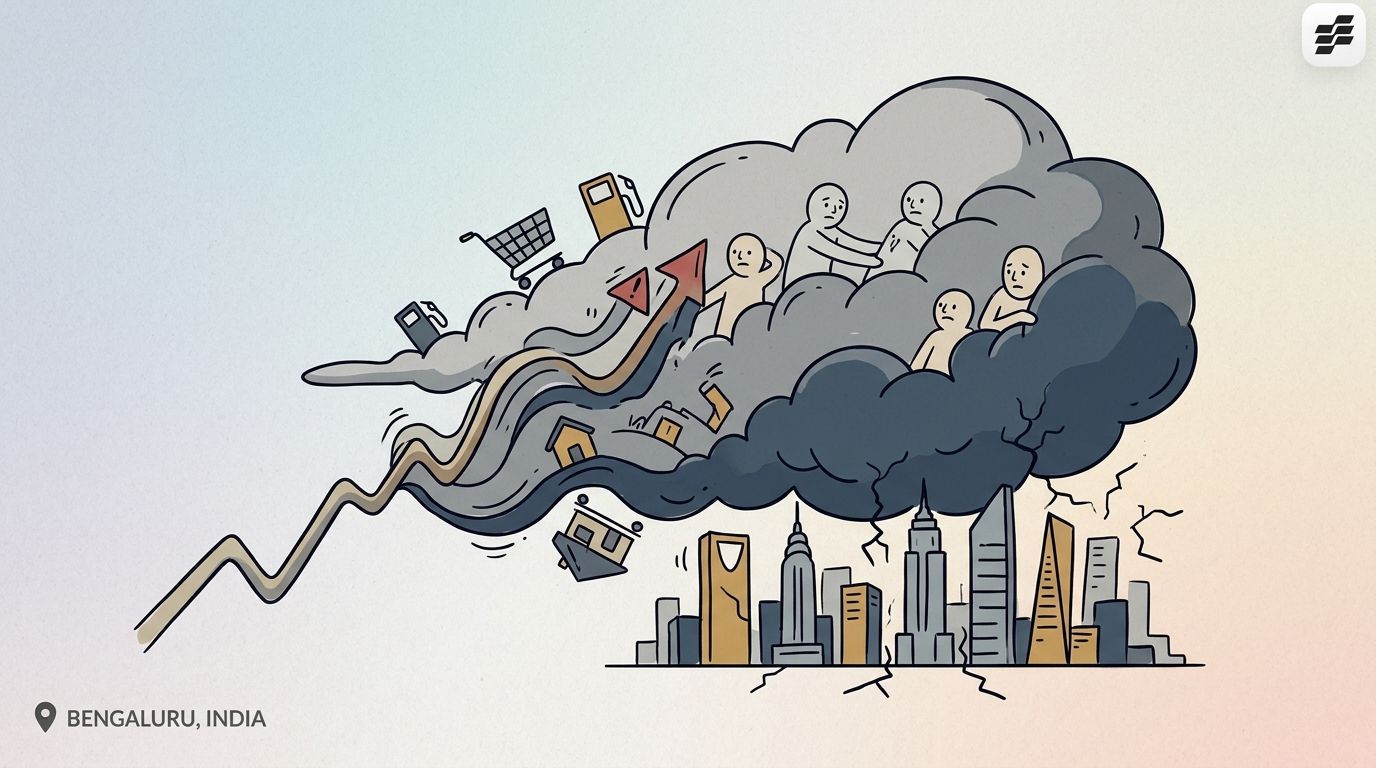
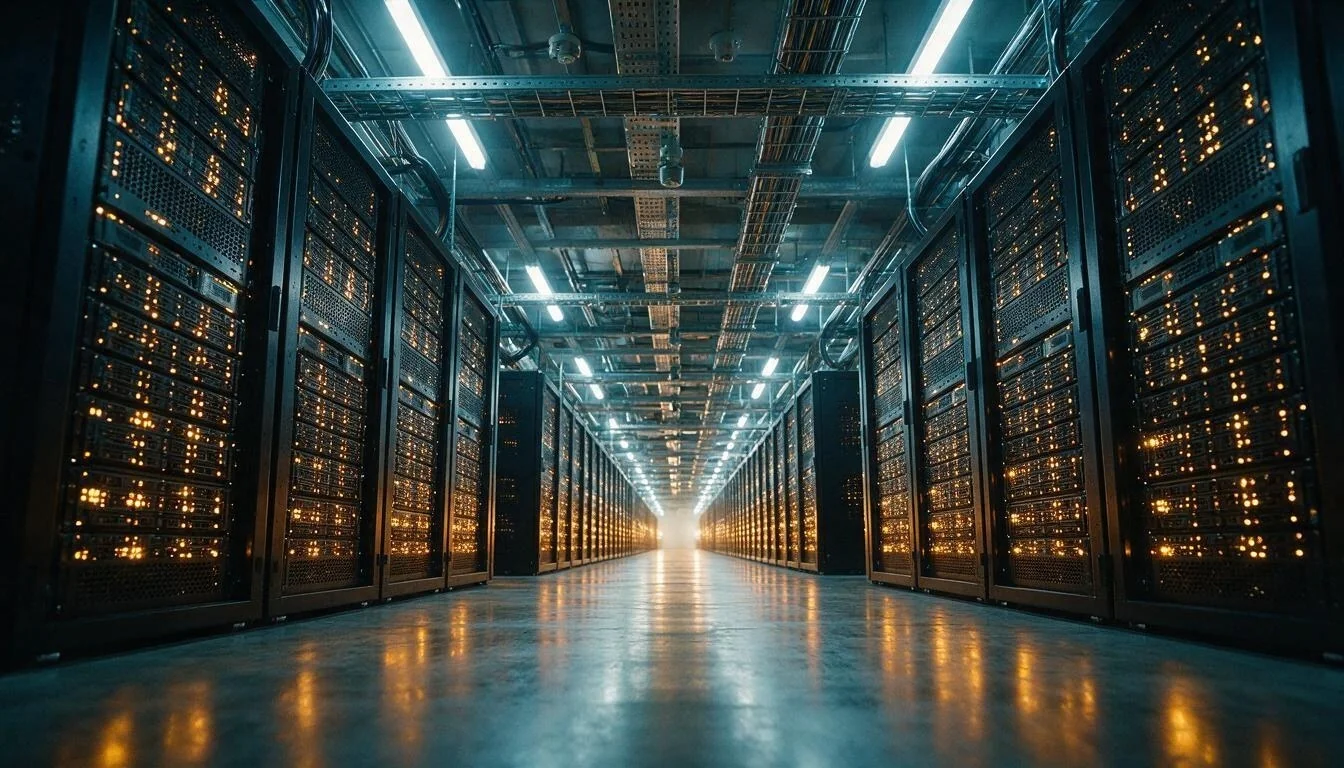
NEW YORK / LONDON — In the high-stakes theater of enterprise artificial intelligence, a seismic shift has upended the prevailing economic orthodoxy. For years, the prevailing consensus among Silicon Valley hyperscalers was brutally simple: supremacy in large language models required massive, unconstrained capital expenditure, endless clusters of cutting-edge NVIDIA GPUs, and an insatiable appetite for power. Then came DeepSeek-V3.
Disrupting a market dominated by proprietary models offered as closed cloud services with plug-and-play APIs, DeepSeek-V3 introduced an engineering paradigm that forced Wall Street analysts, venture capitalists, and chief technology officers to re-evaluate their fundamental assumptions regarding infrastructure scalability and enterprise ROI. As technical breakdowns and infrastructure data from providers like Nebius highlight, the core differentiator is no longer merely raw compute brute force, but radical algorithmic efficiency.
The Anatomy of Disruption: Why DeepSeek-V3 is Fundamentally Different
Test Our Free AI & Tech Utilities Suite
Calculate LLM API token costs, analyze article dwell-time, or simulate tech DCA returns.
To understand the disruption, one must examine how legacy LLMs operate. Traditional models rely heavily on dense architectures or straightforward scaling laws, demanding exponential increases in compute power for linear gains in reasoning and linguistic capability. This approach fits standard enterprise use cases where organizations accept high API costs as a necessary operational expenditure.
DeepSeek-V3, however, was engineered from the silicon up to solve the memory bandwidth and inference latency walls. While Western foundational models prioritize massive parameter counts managed through standard attention mechanisms, DeepSeek engineered a breakthrough approach:
- Multi-head Latent Attention (MLA): By drastically reducing the Key-Value (KV) cache memory footprint during inference, DeepSeek-V3 eliminates the memory bottlenecks that typically cripple standard transformer architectures under heavy enterprise workloads.
- Advanced Mixture-of-Experts (MoE) Routing: Instead of activating all parameters for every token generated, DeepSeek-V3 activates only a sparse fraction of its total parameter space, ensuring massive model capacity without proportional computational penalties.
- Optimized Training Pipelines: Executed across constrained hardware clusters, the training methodology proved that algorithmic cleverness can successfully bypass geopolitical semiconductor restrictions and exorbitant CapEx requirements.
This technical divergence transforms how CTOs calculate risk mitigation and infrastructure scalability. When inference costs drop by an order of magnitude, the economic viability of deploying generative AI across legacy systems changes overnight.
Comparative Metrics: DeepSeek-V3 vs. Legacy Frontier Models

Market liquidity and enterprise procurement decisions are increasingly dictated by quantifiable performance-to-cost ratios. Below is a rigorous breakdown comparing the structural attributes of DeepSeek-V3 against traditional dense and closed-source models.
| Metric / Dimension | DeepSeek-V3 (MoE Architecture) | Traditional Dense Western LLMs |
|---|---|---|
| Training Cost Efficiency | Extremely high; optimized via custom communication kernels and FP8 training. | Capital-intensive; requires vast multi-billion dollar clusters. |
| Inference Latency & KV Cache | Minimized via MLA, drastically reducing memory bandwidth pressure. | Higher memory overhead, requiring aggressive hardware provisioning. |
| Deployment Flexibility | Agile integration via specialized cloud and bare-metal providers (e.g., Nebius). | Often locked into proprietary hyperscaler walled gardens. |
| Parameter Activation | Sparse routing (only relevant expert networks fire per token). | Dense activation (entire parameter set engages continuously). |
Industry & Market Implications: Winners, Losers, and Capital Allocation
The arrival of DeepSeek-V3 has triggered immediate shockwaves across global financial markets. For semiconductor manufacturers and hyperscale cloud providers, the narrative of unending, linear hardware demand faces a formidable reality check. If sophisticated models can be trained and run at a fraction of previous costs, the valuation multiples assigned to AI infrastructure darlings face severe scrutiny.
Who Wins
Enterprise End-Users & CTOs: Corporations are no longer held hostage to high-margin API pricing models. The democratization of high-performance open and semi-open weights allows enterprises to run advanced reasoning models locally or via cost-optimized cloud partners.
Alternative Cloud Infrastructure Providers: Specialized, high-performance cloud platforms—such as Nebius—are uniquely positioned. Enterprises migrating away from monopolistic hyperscalers look to agile providers capable of delivering high-throughput compute clusters tailored to modern MoE architectures.
Who Loses
High-Margin Proprietary API Providers: Companies whose business models rely entirely on reselling closed-source token generation at steep markups face margin compression.
Undisciplined CapEx Spenders: Tech conglomerates that assumed market dominance could be bought solely through raw, unoptimized data center expansion are now forced to pivot toward algorithmic efficiency.
Frequently Asked Questions (People Also Ask)
How does DeepSeek-V3 differ fundamentally from standard API-driven cloud models?
While standard cloud models function as black-box APIs where users rent compute and inference capabilities directly from a single hyperscaler, DeepSeek-V3’s architectural innovations—specifically its Mixture-of-Experts design and Multi-head Latent Attention—allow for much greater deployment flexibility, lower hardware requirements, and drastically reduced token generation costs across independent cloud environments.
What makes the Mixture-of-Experts (MoE) and MLA approach so cost-effective?
MoE architecture ensures that only a small subset of the model's total parameters are activated for any given task, saving immense amounts of computational energy. Combined with Multi-head Latent Attention (MLA), which compresses the Key-Value cache, the system requires far less memory bandwidth during inference, slashing operating expenses for enterprise deployments.
How are enterprise buyers and cloud platforms adapting to this shift?
Enterprise procurement teams are conducting rigorous total cost of ownership (TCO) audits, shifting workloads away from expensive proprietary endpoints toward optimized infrastructure providers like Nebius. This allows firms to harness frontier-level performance without accepting vendor lock-in or inflated cloud compute margins.
Future Outlook: The Road Ahead for Algorithmic Efficiency
As the artificial intelligence sector matures past its initial land-rush phase, the metrics of success are undergoing a structural evolution. The era of unchecked capital expenditure and brute-force scaling is giving way to an era defined by engineering elegance, capital discipline, and resource optimization.
Key milestones to watch over the next 12 to 18 months include:
- Regulatory Compliance and Data Sovereignty: As open and efficient architectures proliferate, regulatory bodies will scrutinize how enterprises handle data governance when deploying models outside traditional walled gardens.
- Hardware-Software Co-Design: Silicon manufacturers are already redesigning next-generation accelerators specifically to support sparse MoE routing and advanced attention mechanisms popularized by models like DeepSeek-V3.
- M&A and Ecosystem Consolidation: Expect traditional enterprise software vendors to aggressively acquire or integrate hyper-efficient models to protect their application layers from low-cost disruption.
Ultimately, DeepSeek-V3 has proven that the frontier of artificial intelligence is not exclusively reserved for those with the deepest pockets. By elevating algorithmic innovation above raw compute accumulation, it has permanently rewritten the rules of engagement for the global technology economy.