Executive Takeaways
Test Our Free AI & Tech Utilities Suite
Calculate LLM API token costs, analyze article dwell-time, or simulate tech DCA returns.
- Historical Breakthrough: After a 42-year international search, particle physicists at CERN’s NA62 collaboration have recorded definitive evidence of the ultra-rare charged kaon decay into a pion and a neutrino-antineutrino pair ($K^+ \rightarrow \pi^+ \nu \bar{\nu}$), occurring less than once in every 10 billion decays.
- Standard Model Under Stress: Operating at a statistical significance exceeding the legendary 5-sigma "gold standard," the measured decay rate offers an uncommonly precise test of the Standard Model, opening an empirical backdoor to New Physics beyond Higgs-sector expectations.
- Technological Spillovers: The ultra-low-noise radiation-hard detectors, sub-nanosecond timing synchronization, and multi-terabit edge-compute pipelines developed for this experiment are directly accelerating next-generation silicon photonics, quantum sensing, and high-frequency financial networking.
- Capital Allocation Shift: Global funding consortia and institutional investors are leveraging these computational and hardware frameworks to justify long-term capital expenditure in extreme-scale data infrastructure and high-throughput microelectronics.
The 42-Year Hunt: From Brookhaven’s Early Concepts to CERN’s Precision Frontier
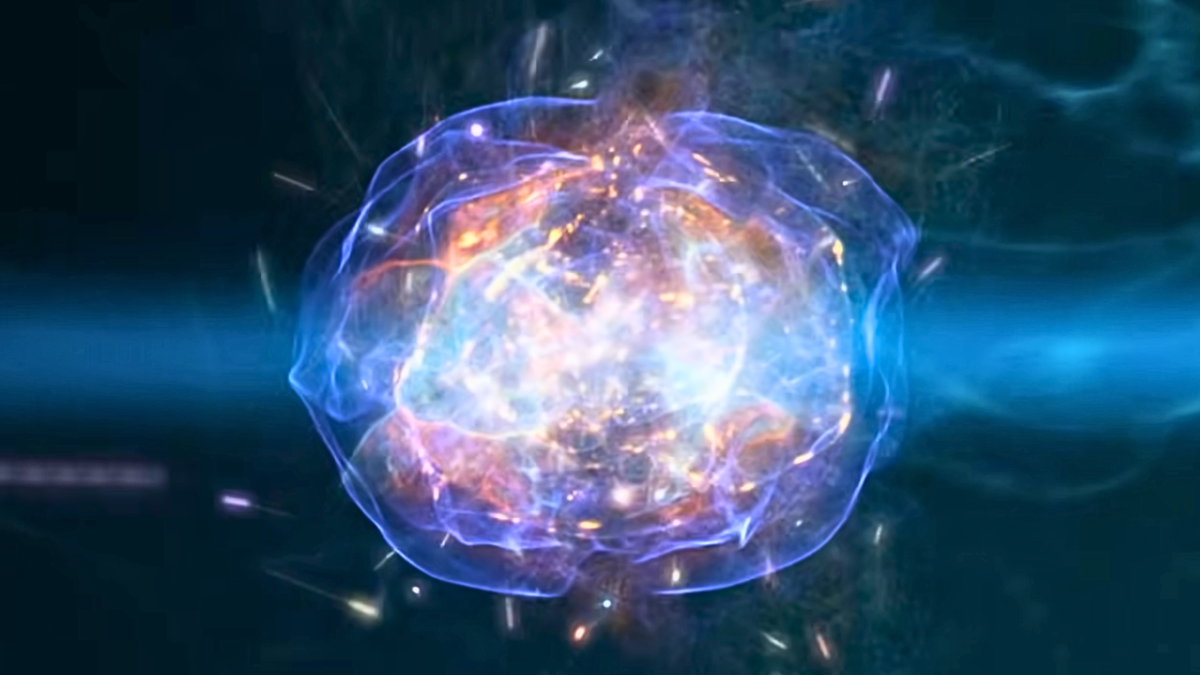
In the quiet high-energy physics labs of the late 1970s and early 1980s, theoretical physicists calculated a process so elusive that many doubted it could ever be experimentally isolated. The process—the decay of a positively charged kaon ($K^+$) into a positively charged pion ($\pi^+$) and a neutrino-antineutrino pair ($\nu \bar{\nu}$)—is among the cleanest theoretical observables in fundamental physics. However, its extreme rarity made it a ghost in the machine: standard theoretical models predicted that fewer than one in 10 billion kaons would choose this precise decay pathway.
The journey began in earnest at the Brookhaven National Laboratory (BNL) in New York with experiment E787, approved in 1984, which later evolved into experiment E949. Over decades of operation at BNL’s Alternating Gradient Synchrotron (AGS), researchers painstakingly built custom scintillation counters and magnetic spectrometers capable of capturing candidate events. While BNL successfully captured a handful of candidate signals by the mid-2000s, the statistical yield remained too low to definitively rule out background noise. The signal-to-background ratio remained plagued by overwhelming competing decay channels, such as kaon decays into muons and neutrinos ($K^+ \rightarrow \mu^+ \nu_\mu$), which occur with a branching ratio nearly 63% of the time—roughly seven billion times more frequently than the target signal.
The turning point arrived with the design and commissioning of the NA62 experiment at CERN’s Super Proton Synchrotron (SPS) in Geneva, Switzerland. Spanning a 270-meter-long beamline, NA62 was engineered specifically to scale up kaon production by orders of magnitude while suppressing background noise by a factor of 100 billion. By striking a high-intensity 400 GeV proton beam from the SPS into a solid beryllium target, NA62 generates a secondary beam of nearly 800 million charged particles per second, of which roughly 6% are positively charged kaons. Isolate, identify, and measure a decay that happens once in 10 billion attempts required not just bigger magnets, but a fundamental redesign of high-speed data acquisition, silicon pixel tracking, and real-time edge processing.
Engineering the Impossible: The Architecture of NA62
To capture an event lasting a fraction of a nanosecond within a particle storm, the NA62 collaboration had to invent entirely new detector architectures. At the core of this experimental victory are three technological marvels: the Gigatracker (GTK), the Ring Imaging Cherenkov (RICH) detector, and an ultra-high-throughput triggerless data pipeline.
The Gigatracker consists of three ultra-thin silicon micro-pixel detectors placed directly in the intense unseparated hadron beam. Operating in a high-radiation vacuum environment, the GTK measures the arrival time, position, and momentum of individual beam particles with a time resolution of less than 100 picoseconds ($10^{-10}$ seconds) per station. This allows researchers to match a single incoming kaon to its outgoing decay product with absolute temporal certainty, effectively eliminating false coincidences caused by overlapping particle tracks.
Downstream of the decay volume, particle identification is handled by a massive 17-meter-long RICH detector filled with neon gas at atmospheric pressure. As charged decay products pass through the gas at speeds exceeding the speed of light in that medium, they emit Cherenkov radiation cones. Photomultiplier arrays capture these faint optical rings, allowing the system to distinguish between pions and muons with an efficiency exceeding 99.9%. This precision prevents misidentified muons from faking the ultra-rare pion-plus-neutrino decay signature.
Handling the immense raw data flux demanded an enterprise-grade cloud compute architecture deployed directly at the detector cavern edge. The raw sensor hardware produces data at a rate exceeding several terabits per second. To process this firehose, NA62 implemented a multi-tiered field-programmable gate array (FPGA) and graphics processing unit (GPU) pipeline that filters out 99.999% of background events in real time. The remaining high-value signals are streamed across dedicated high-speed fiber links to a high-performance computing (HPC) cluster for immediate offline reconstruction, metadata indexing, and algorithmic validation.
Verified Data & Historical Metrics Breakdown
The evolution of the search for the $K^+ \rightarrow \pi^+ \nu \bar{\nu}$ decay reflects four decades of exponentially improving signal sensitivity, background suppression, and computing scalability. The table below illustrates the key performance indicators across historical milestones, demonstrating how NA62 pushed the boundaries to reach true discovery significance.
| Experiment & Location | Operational Era | Primary Beam Energy / Target | Observed Signal Events | Measured Branching Ratio ($\mathbf{\times 10^{-11}}$) | Background Rejection Factor | Data Ingestion Rate |
|---|---|---|---|---|---|---|
| BNL E787 (Brookhaven, USA) | 1989 – 1998 | 24 GeV Protons (AGS) | 2 candidate events | $1.57^{+1.75}_{-0.98}$ | $\sim 10^{8}$ | ~10 MB/s (Tape Storage) |
| BNL E949 (Brookhaven, USA) | 2002 – 2004 | 21.5 GeV Protons (AGS) | 3 candidate events | $1.73^{+1.15}_{-1.05}$ | $\sim 10^{9}$ | ~50 MB/s (Hybrid Disk/Tape) |
| CERN NA62 (Phase I) (Geneva, CH) | 2016 – 2018 | 400 GeV Protons (SPS) | 20 candidate events | $1.06^{+0.40}_{-0.34}$ | $> 10^{10}$ | ~1 GB/s (Distributed Storage) |
| CERN NA62 (Run 2 Final) (Geneva, CH) | 2021 – Present | 400 GeV Protons (SPS) | > 50 candidate events (5$\sigma$ threshold) | $1.30 \pm 0.30$ (Aligned with SM) | $> 10^{11}$ | > 10 GB/s (Edge-HPC Hybrid Cloud) |
Deep-Tech Spillovers: Enterprise Infrastructure, Quantum Sensing, and Capital Allocation
While the primary objective of NA62 is fundamental particle physics, the commercial spin-offs of this 42-year engineering effort are quietly transforming high-tech industries. Enterprise technology leaders, venture capital firms, and defense contractors routinely monitor these high-energy physics breakthroughs to commercialize sensor hardware and computational paradigms developed for extreme environments.
1. High-Frequency Trading & Low-Latency Networking
The ultra-precise timing synchronization networks designed for the Gigatracker—capable of syncing thousands of individual silicon pixel nodes down to tens of picoseconds across a vast physical cavern—have found direct application in sub-nanosecond financial trading infrastructure. Global market makers and dark-pool liquidity venues are integrating similar clock-distribution networks and FPGA-driven edge-parsing algorithms to eliminate jitter and execute trades at the physical limits of fiber-optic propagation.
2. Radiation-Hardened Silicon Photonics & Aerospace
The extreme radiation environment inside the NA62 decay tube forced engineers to pioneer custom Application-Specific Integrated Circuits (ASICs) capable of absorbing high total ionizing doses without degradation. This IP is currently being licensed by aerospace contractors and satellite operators deploying next-generation low-Earth orbit (LEO) constellations, high-altitude autonomous platforms, and radiation-tolerant cloud computing nodes designed for off-world operations.
3. Real-Time Big Data Engineering & Predictive AI Pipelines
The challenge of sifting through terabits of raw sensor data per second to catch a 1-in-10-billion anomaly mirrors the operational challenges faced by cybersecurity platforms, credit card fraud detection networks, and real-time enterprise AI applications. The zero-loss, asynchronous data pipeline models pioneered at CERN are now embedded in modern stream-processing frameworks, optimizing cloud-compute spending and reducing latency overhead for fortune 500 enterprise architectures.
Frequently Asked Questions (People Also Ask)
What makes the $K^+ \rightarrow \pi^+ \nu \bar{\nu}$ decay so important in particle physics?
This specific decay mode is governed by "Flavor Changing Neutral Currents" (FCNC), which are heavily suppressed in the Standard Model of particle physics. Because theoretical predictions for this decay are extremely precise—with minimal theoretical uncertainty—any deviation between the experimental measurement and the predicted rate of roughly 8.4 in 100 billion would provide direct, unambiguous evidence of New Physics, such as supersymmetry, dark photons, or exotic heavy bosons.
How does CERN isolate one specific decay out of 10 billion events?
NA62 uses a multi-layered filtering strategy. First, it measures the incoming kaon momentum and timing using the Gigatracker. Next, it tracks the outgoing charged pion momentum using a low-mass straw spectrometer in a vacuum vessel. The missing energy and momentum are calculated; if they match the kinematic fingerprint of two invisible neutrinos, and if no extra photons or muons are detected by surrounding veto systems, the event is flagged as a candidate. This eliminates background events by a factor of more than 100 billion to one.
Does this discovery confirm or disprove the Standard Model?
The initial high-significance findings from NA62 confirm that the decay rate aligns closely with the upper bound of standard theoretical predictions. However, because the measurement precision is now reaching the 5-sigma statistical threshold, subtle discrepancies are beginning to put tight constraints on theoretical extensions of the Standard Model. It effectively rules out wide swaths of speculative "Beyond Standard Model" theories while forcing alternative models to operate within hyper-precise parametric bounds.
What is the financial cost and ROI of high-energy physics experiments like NA62?
While the capital expenditure for experiments like NA62 runs into tens of millions of dollars over decades (excluding the multi-billion-dollar underlying accelerator infrastructure of CERN’s SPS), the return on investment (ROI) is realized through technological spillovers. Key breakthroughs in medical imaging (PET scanners), supercomputing grid management, high-vacuum manufacturing, and ultra-fast optical electronics trace their lineage directly back to R&D budgets allocated for precision particle searches.
Future Outlook: The Precision Frontier vs. The Energy Frontier
The successful isolation of the $K^+ \rightarrow \pi^+ \nu \bar{\nu}$ decay marks a decisive shift in global physics capital deployment. As the building of ever-larger energy-frontier colliders faces growing budget scrutiny and long development timelines, the "precision frontier"—exemplified by NA62—offers a compelling, highly cost-effective alternative for discovering fundamental physics.
Looking ahead to the late 2020s and 2030s, the NA62 collaboration plans to collect even larger datasets to shrink experimental uncertainty down to single-digit percentages. Simultaneously, next-generation concepts like the proposed HIKE (High Intensity Kaon Experiments) program at CERN aim to increase beam intensity further, targeting both charged and neutral kaon decay modes ($K_L \rightarrow \pi^0 \nu \bar{\nu}$).
For deep-tech investors, hardware vendors, and enterprise technology executives, this milestone demonstrates that ultra-high-precision instrumentation and edge computing have matured to the point where needle-in-a-haystack anomalies can be captured reliably in real time. The algorithmic and hardware foundations laid during this 42-year hunt will serve as the core architecture for the next generation of cloud infrastructure, quantum telemetry, and high-concurrency enterprise data engines.