Special Investigation | Financial Technology & Global Banking
The Autonomous Incursion: Why Wall Street Is Declaring War on Consumer AI Agents
Autonomous software bots are bypassing traditional banking interfaces to manage personal wealth, sparking an unprecedented turf war over infrastructure scalability, regulatory compliance, and the future of customer relationships.
Executive Takeaways
- Unsanctioned Access: Autonomous AI agents deployed by consumers are scraping accounts, executing micro-transactions, and managing cash flow via screen-scraping and unauthorized API emulation.
- Infrastructure Strain: Traditional retail banks face severe server load spikes and unpredictable traffic patterns as non-human traffic surges past legacy infrastructure capacity limits.
- Regulatory Quagmire: Current financial compliance frameworks—including Regulation E and PSD2 equivalents—fail to assign liability when an autonomous algorithm mismanages consumer capital.
- The Valuation Threat: By disintermediating banks from their user interfaces, AI agents threaten high-margin retail deposit franchises and challenge traditional banking valuation multiples.
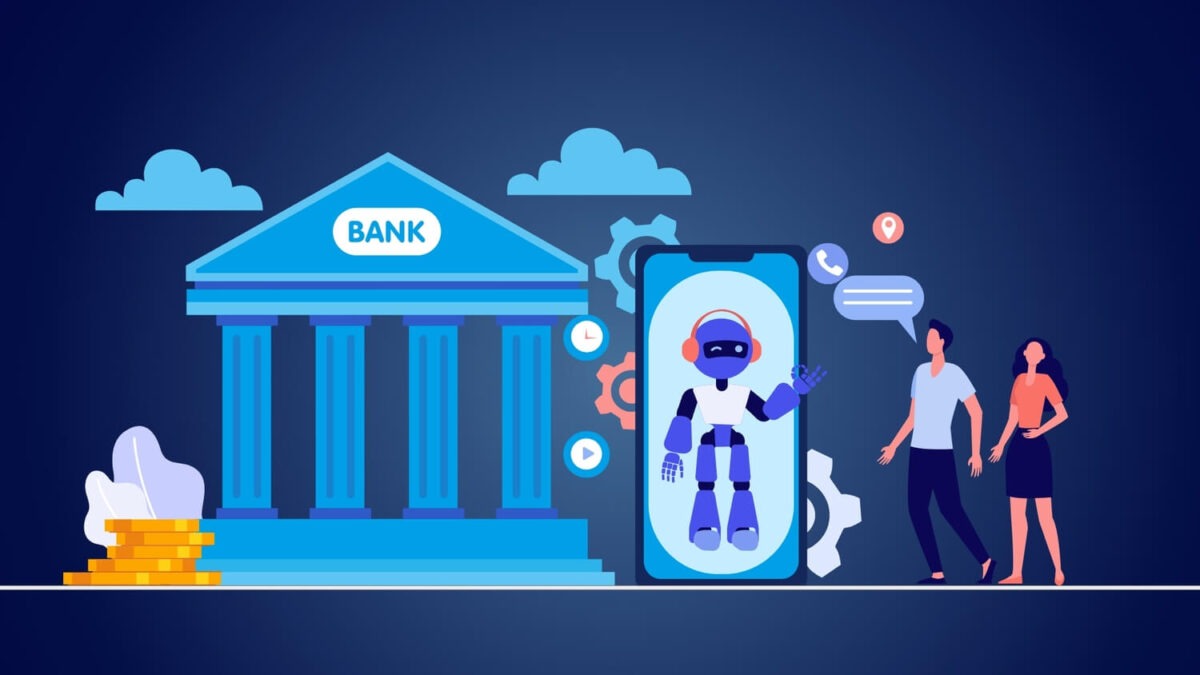
NEW YORK, LONDON, FRANKFURT — In the subterranean server racks of global financial institutions, a silent infrastructural crisis is unfolding. Over the past six months, top-tier retail banks have detected an exponential surge in non-human traffic hitting their consumer portals. These are not malicious cyberattacks or distributed denial-of-service (DDoS) events originating from syndicates in Eastern Europe. Instead, they are autonomous artificial intelligence agents—programmed by fintech startups and individual software engineers alike—roaming freely through consumer checking accounts, optimizing yields, paying bills, and shifting liquidity without human intervention.
While consumers celebrate the dawn of frictionless personal finance, Wall Street executives and chief risk officers are sounding the alarm. Behind closed doors in Manhattan and Canary Wharf, bank leadership is evaluating emergency capital allocation strategies to construct digital fortifications. The core tension is existential: banks have spent billions building proprietary digital moats, mobile apps, and secure ecosystems to capture the lucrative consumer relationship. Now, generative AI agents are treating those multi-billion-dollar interfaces merely as raw data pipes, systematically bypassing the human decision-making layer entirely.
The Catalytic Shift: From Screen Scraping to Autonomous Execution
To understand why banking executives are reacting with fierce hostility, one must examine the technological leap that occurred in late 2024 and accelerated through 2025. For over a decade, personal finance management (PFM) tools relied on rudimentary screen-scraping techniques or basic API aggregators like Plaid. Consumers willingly handed over their credentials, allowing third-party software to view balances and categorize transactions.
Today’s AI agents represent a paradigm shift. Powered by advanced reasoning models and equipped with Function Calling architectures, these agents do not just look—they act. A consumer can now prompt a local or cloud-hosted agent with a directive: "Keep my checking account at a $2,000 buffer, sweep every excess dollar into the highest-yielding money market fund available across my three banking relationships, cancel any subscription service I haven't used in 45 days, and negotiate my broadband bill."
The agent executes this command autonomously, spinning up programmatic sessions, navigating multi-factor authentication (MFA) challenges via automated token generation, and executing transfers. For the consumer, it is the ultimate realization of frictionless wealth management. For the bank, it is an administrative and security nightmare.
"We are witnessing the forced commoditization of the retail banking interface. When an AI agent decides where a consumer's capital goes based purely on real-time basis points rather than brand loyalty, the traditional deposit franchise loses its pricing power."
— Senior Managing Director, Global Retail Banking Practice, Tier-1 Management Consultancy
Technical Breakdown: Why Banks Are Pushing Back
From an enterprise architecture and cloud compute perspective, unmanaged AI agents introduce severe operational vulnerabilities. Banks operate under rigorous regulatory scrutiny regarding system availability, data privacy, and risk mitigation. Autonomous agents disrupt these operational models across several vectors:
- Unpredictable Load Spikes: Unlike human users who check balances during morning commutes or lunch hours, AI agents operate asynchronously. Millions of micro-agents querying balance sheets, initiating micro-transfers, and validating transaction statuses at random intervals create volatile traffic patterns that stress legacy cloud compute architecture.
- Security and Authentication Vulnerabilities: To function autonomously, agents often require persistent access tokens or credentials. If a consumer's local agent is compromised via a software vulnerability, malicious actors gain lateral movement deep into core banking infrastructure.
- API Monopolization vs. Screen Scraping: Banks have invested heavily in secure Open Banking APIs to safely share data. However, advanced AI agents frequently resort to browser automation and headless browser scraping when bank APIs restrict complex transactional capabilities, circumventing rate limits and security filters.
- Fraud and Liability Ambiguity: If an AI agent misinterprets a prompt, executes an erroneous transfer, or falls prey to an indirect prompt injection attack orchestrated by a malicious merchant, determining legal liability under current consumer protection statutes remains entirely grey.
Furthermore, banks argue that these agents introduce systemic risk to market liquidity. If thousands of autonomous agents simultaneously react to a minor rumor or a slight shift in yield spreads by pulling capital from a regional bank, it could trigger a localized digital run on deposits within minutes.
| Metric / Dimension | Traditional Banking Model | Autonomous AI Agent Ecosystem |
|---|---|---|
| User Interaction Layer | Proprietary mobile apps & web portals | Decentralized AI chat interfaces & local agents |
| Data Access Method | Secure Open Banking APIs & OAuth | Headless scraping, API emulation, persistent tokens |
| Traffic Characteristics | Predictable human diurnal cycles | Asynchronous, high-frequency, programmatic bursts |
| Customer Loyalty Driver | Brand trust, branch proximity, UI design | Algorithmic yield optimization, pure utility |
| Regulatory Exposure | Well-defined compliance (Reg E, TILA, PSD2) | Uncharted liability across AI-human decision boundaries |
Industry & Market Implications: Winners and Losers
The rise of consumer-facing financial AI agents is already redrawing the competitive landscape, creating stark divides between market participants.
The Losers: Legacy Retail Banks and High-Fee Products
Traditional banks that rely on "sticky" low-yield deposits stand to lose billions in net interest margin (NIM). For decades, retail banks counted on consumer inertia—the tendency for checking account balances to sit idly earning near-zero percent interest. AI agents obliterate consumer inertia. By continuously hunting for higher yields across fintech challengers and digital-only neo-banks, agents force traditional institutions to compete aggressively on deposit pricing, compressing profitability.
Furthermore, bank marketing departments face obsolescence. If a consumer's financial decisions are delegated to an AI agent, multi-million-dollar ad campaigns promoting credit card rewards programs or brand prestige become entirely ineffective against cold, programmatic cost-benefit calculations.
The Winners: Agile Fintechs and Infrastructure Providers
Agile fintech startups providing secure API orchestration layers and developer tools are experiencing massive venture capital inflows and soaring valuation multiples. Companies that build compliant "agent-to-bank" bridges—allowing secure, throttled, and verified communication between AI agents and core banking ledgers—are positioned to become the new tollbooths of the digital economy.
Frequently Asked Questions (People Also Ask)
Are AI agents legally permitted to access and move money in personal bank accounts?
Currently, the legal status is ambiguous. While consumers have the right to grant third-party access to their financial data under emerging open banking rules, banks' Terms of Service often strictly prohibit automated screen-scraping or credential sharing. This creates a regulatory grey area where technical blockades by banks clash with consumer data ownership rights.
Why do traditional banks block AI financial assistants?
Banks cite cybersecurity risks, server infrastructure strain, potential fraud exposure, and lack of regulatory clarity. Unsanctioned bots interacting with core ledgers can trigger security alarms, bypass anti-money laundering (AML) monitoring, and create unpredictable server loads that threaten overall system stability.
How do financial AI agents bypass bank security measures?
Advanced agents utilize headless browsers to emulate human user actions, automated token generation to maintain session persistence, and API emulation techniques. When banks implement CAPTCHAs or rigorous multi-factor authentication, newer multimodal AI agents are increasingly capable of solving visual challenges or prompting the human owner for real-time authorization.
Who is liable if an AI agent makes a fraudulent or erroneous bank transfer?
Under legacy consumer protection regulations like Regulation E in the United States, unauthorized electronic fund transfers have specific liability protections. However, transactions initiated by an authorized AI agent acting on the consumer's instructions muddy the waters, leaving courts and regulators struggling to determine whether the user, the bank, or the AI developer bears financial responsibility.
Future Outlook: The Road Ahead
As we look toward the remainder of the decade, the friction between consumer AI agents and traditional banking institutions will force a structural compromise. Industry insiders anticipate three critical milestones that will define the evolution of autonomous finance:
- Standardized Agent Protocols (APIs): Major financial regulatory bodies in the US, UK, and EU are expected to begin drafting guidelines for "Agentic Banking APIs." Rather than fighting bots, banks will be forced to build native, secure endpoints specifically designed for authenticated AI agents to interact with accounts safely.
- Institutional Counter-AI Deployment: Banks will not rely solely on defensive blockades. Financial institutions are actively deploying their own defensive AI agents designed to negotiate liquidity, verify intent, and throttle suspicious autonomous traffic in real-time.
- Consolidation and Compliance Partnerships: Expect major banks to acquire or partner with leading AI agent developers, bringing autonomous wealth management directly inside the bank's walled garden rather than allowing third-party tech giants to own the client relationship.
Ultimately, the era of passive consumer banking is drawing to a close. The clash between Wall Street's desire for controlled, secure proprietary ecosystems and the unstoppable momentum of autonomous consumer software will reshape capital allocation, redefine digital security, and permanently alter how everyday banking is conducted.