The Solid-State Breakthrough: Factorial Secures Landmark Karma Partnership and Inches Closer to Commercialization
Executive Takeaways
- Commercial Milestone: Factorial has finalized a high-profile integration pact with Karma Automotive, positioning its proprietary solid-state cells for real-world luxury EV deployment.
- Range & Performance: The upcoming integration targets an elite operational window, promising U.S.-bound Karma luxury vehicles a verified, zero-compromise 250+ mile range.
- Capital & Infrastructure Scaling: Backed by automotive heavyweights including Mercedes-Benz, Stellantis, and Hyundai, Factorial’s latest alliance de-risks its manufacturing roadmap and optimizes enterprise capital allocation.
- Market Disruption: This strategic move intensifies the global race for high-energy-density cell architectures, challenging traditional liquid lithium-ion incumbent moats.
The global automotive landscape is undergoing a silent structural upheaval, and at the epicenter of this technological arms race is the holy grail of electrification: the all-solid-state battery. In a definitive stride toward commercial reality, Massachusetts-based solid-state pioneer Factorial has announced a watershed partnership with luxury electric vehicle manufacturer Karma Automotive. This strategic alignment represents far more than a standard supply chain agreement; it is a critical proving ground for advanced energy storage systems designed to redefine enterprise ROI, infrastructure scalability, and consumer confidence in next-generation electric mobility.
As legacy automakers and venture-backed startups grapple with stringent regulatory compliance, thermal management hurdles, and capital allocation pressures, Factorial’s methodical execution offers a masterclass in risk mitigation and technological validation. By integrating its proprietary solid-state cells into upcoming Karma vehicle architectures, Factorial is validating its decades of research in materials science and proving that high-voltage solid-state systems are ready to transition from laboratory benches to commercial assembly lines.
The Catalytic Partnership: Factorial Meets Karma Automotive

For years, the promise of solid-state lithium-metal batteries has captivated the financial markets and automotive boardrooms alike. Traditional liquid electrolyte lithium-ion batteries—while foundational to the current EV boom—face inherent thermodynamic limitations, safety vulnerabilities regarding thermal runaway, and volumetric energy density ceilings. Factorial’s proprietary FASSTECH™ (Factorial Electrolyte System Technology) platform directly addresses these friction points by utilizing a solid electrolyte layer that stabilizes the lithium metal anode, vastly increasing energy density while suppressing dendrite formation.
The new alliance with Karma Automotive serves as a primary commercial catalyst. Karma, known for producing low-volume, high-design luxury performance vehicles, provides the ideal boutique testing environment for high-end battery integration. Unlike mass-market platforms that require multi-gigawatt-hour scale immediately, luxury niches allow engineering teams to fine-tune thermal management, battery management system (BMS) software, and power delivery curves under rigorous driving conditions.
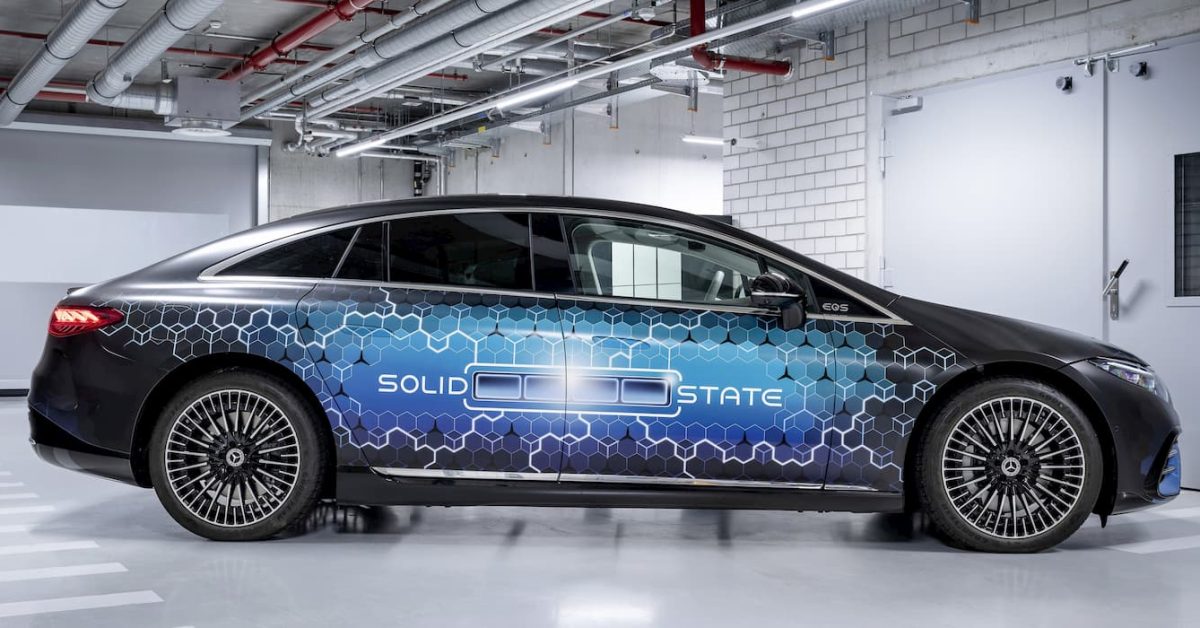
According to technical disclosures surrounding the partnership, the initial rollout will equip Karma vehicles with a robust 250+ mile range utilizing Factorial’s advanced solid-state cells. This milestone is not merely about mileage; it demonstrates that solid-state packs can achieve packaging efficiencies capable of fitting within existing vehicle chassis architectures without requiring radical, cost-prohibitive redesigns.
Capital Allocation, Institutional Backing, and Strategic Scaling
To fully understand Factorial’s trajectory, one must examine the macroeconomic architecture underpinning the enterprise. Transitioning from a research-and-development enterprise to a commercial-scale manufacturer requires staggering capital expenditure (CapEx) and meticulous financial engineering. Factorial has successfully navigated this valley of death by securing substantial venture investments and joint-development agreements from a tier-one automotive consortium that includes Mercedes-Benz, Stellantis, and Hyundai Motor Group.
These strategic investments serve a dual purpose. Financially, they provide the necessary market liquidity to fund continuous pilot-line optimization and automated cell manufacturing processes. Operationally, they embed Factorial directly into the supply chain strategies of global manufacturing giants. This de-risks future valuation multiples and positions Factorial as an indispensable component supplier rather than an isolated technology hopeful.
Industry analysts note that enterprise valuation in the advanced battery sector hinges on yield rates, supply chain resilience, and intellectual property defensibility. Factorial’s layered electrolyte approach avoids the extreme manufacturing pressures and moisture-sensitive cleanroom requirements associated with certain sulfide-based solid-state alternatives, presenting a more economically viable path to mass production.
Verified Data & Metrics Breakdown
To contextualize Factorial’s recent momentum within the broader energy storage landscape, the following comparative matrix evaluates key technical, operational, and financial dimensions of the company’s current market standing:
| Metric / Dimension | Factorial Specifications & Status | Traditional Liquid Li-Ion Benchmark |
|---|---|---|
| Primary Commercial Partner | Karma Automotive (Plus Mercedes, Stellantis, Hyundai) | Commoditized OEM Supply Chains |
| Initial Vehicle Range Target | 250+ Miles (Luxury Performance Segment) | 200 – 350 Miles (Standard Pack Configuration) |
| Electrolyte Architecture | FASSTECH™ Semi-Solid / Solid-State Transition | Flammable Liquid Organic Solvents |
| Safety & Thermal Stability | High temperature tolerance, reduced fire risk | Requires complex active liquid cooling systems |
| Manufacturing Scalability | Drop-in compatibility with existing lithium-ion lines | Fully mature, highly optimized global manufacturing |
Industry & Market Implications: Who Wins, Who Loses
The commercialization trajectory of solid-state batteries carries profound economic ramifications across the global energy and automotive value chains. As Factorial transitions closer to mass production, clear winners and losers are emerging:
- Winners:
- Advanced Materials Providers: Companies supplying specialized solid electrolyte components, lithium-metal foils, and proprietary binders stand to experience exponential revenue growth.
- Forward-Thinking OEMs: Automakers like Mercedes-Benz and Stellantis that secured early-stage joint-development stakes in Factorial will gain a decisive competitive moat in vehicle range, safety marketing, and battery weight reduction.
- Luxury & Performance Segments: Brands like Karma that can offer high-density, lightning-fast charging capabilities without hazardous thermal profiles will capture premium consumer mindshare.
- Losers:
- Commodity Liquid Cell Manufacturers: Traditional battery suppliers slow to adapt their production lines face the looming threat of technological obsolescence as premium segments pivot toward solid-state alternatives.
- Inflexible Supply Chains: Component suppliers heavily entrenched in heavy liquid-cooling apparatuses and complex fire-mitigation casing may see diminished demand as solid-state energy density simplifies structural pack design.
Frequently Asked Questions (People Also Ask)
What makes Factorial’s solid-state battery technology different from traditional lithium-ion cells?
Factorial utilizes its proprietary FASSTECH™ platform, which incorporates a solid electrolyte material that stabilizes lithium-metal anodes. Unlike traditional liquid lithium-ion cells that use flammable organic liquid electrolytes, Factorial’s approach significantly reduces fire risks (thermal runaway), increases volumetric and gravimetric energy density, and can be integrated into existing lithium-ion manufacturing infrastructure with minimal retooling.
How does the Karma Automotive partnership accelerate Factorial’s path to production?
The partnership with Karma Automotive provides Factorial with a real-world, high-end commercial deployment vector. By powering upcoming Karma luxury vehicles with a 250+ mile range, Factorial moves out of the laboratory testing phase and validates its cells under actual driving dynamics, regulatory environments, and consumer use cases—crucial steps for satisfying tier-one automotive compliance and scaling enterprise operations.
Which major automakers are backing Factorial financially?
Factorial has attracted significant institutional investment and strategic partnerships from global automotive leaders, including Mercedes-Benz Group, Stellantis, and Hyundai Motor Group. These alliances provide both crucial capital funding and collaborative pathways for large-scale automotive integration.
When can consumers expect to see vehicles powered by Factorial solid-state batteries on public roads?
While pilot integration and vehicle-level testing programs are accelerating through alliances like the Karma partnership, commercial volume scaling is projected to ramp up incrementally over the next several years. Initial low-volume luxury deployments serve as the foundational stepping stone toward broader mass-market automotive integration later this decade.
Future Outlook: Milestones to Watch
As Factorial edges closer to full-scale commercialization, industry observers, institutional investors, and regulatory bodies will be monitoring several critical benchmarks. The success of the Karma Automotive integration will be scrutinized not only for its headline range metrics but for long-term cycle life, degradation rates under extreme weather conditions, and fast-charging efficiency.
Furthermore, execution on manufacturing yield rates at Factorial’s pilot and production facilities will determine how rapidly the company can scale output to satisfy the massive demands of its multi-national backers like Mercedes-Benz and Stellantis. If Factorial successfully navigates these operational hurdles, it will cement its status as a definitive market leader in the post-liquid battery era, fundamentally rewriting the economics of electric vehicle propulsion.