Executive Takeaways
- Capital Allocation Vindicated: Google's unprecedented AI infrastructure spending finds immediate justification in accelerating enterprise cloud adoption and massive revenue acceleration.
- Enterprise ROI Realized: Unlike skeptics warning of an infrastructure bubble, Google Cloud’s performance proves that proprietary LLMs and custom silicon (TPUs) are driving tangible B2B monetization.
- Competitive Realignment: While legacy systems face severe contraction—exemplified by steep mainframe declines across competing legacy ecosystems—hyperscalers capturing enterprise workflows are cementing a structural market monopoly.
- Wall Street Re-rating: Institutional investors are shifting their calculus from raw capital expenditure anxiety to sustainable infrastructure scalability and long-term valuation multiples.
NEW YORK — In the high-stakes theater of enterprise technology, the ledger always comes due. For the past eighteen quarters, Wall Street analysts, venture capitalists, and corporate boards have fixated on a single, agonizing question: When will the staggering capital expenditures funneled into artificial intelligence yield a tangible return?
According to comprehensive financial disclosures and breaking industry reporting from TechCrunch, Google has provided a definitive, data-driven answer. Alphabet’s latest quarterly earnings reveal that a booming cloud business is not merely subsidizing its aggressive AI investments—it is actively validating them. As enterprise customers race to integrate generative intelligence, proprietary machine learning models, and complex cloud compute architecture into their core operations, Google’s aggressive infrastructure spending has transformed from a balance-sheet risk into a masterclass in market capture.
This deep-dive investigative report examines the mechanics behind Google’s financial pivot, the macroeconomic implications for enterprise buyers, and why the broader tech sector is bifurcating into structural winners and obsolete legacy players.
The Catalytic Shift: From CapEx Anxiety to Cloud Momentum
The narrative surrounding Big Tech for the past two years has been dominated by a singular anxiety: runaway spending. Alphabet, alongside Microsoft, Amazon, and Meta, committed hundreds of billions of dollars to secure advanced graphics processing units (GPUs), construct next-generation data centers, and secure unprecedented energy footprints. Skeptics frequently likened the AI gold rush to the fiber-optic overbuild of the early 2000s—a massive misallocation of capital chasing an overhyped consumer novelty.
However, the financial reality reported in late July 2026 shatters that simplistic thesis. Google’s Q2 performance demonstrates that enterprise demand for cloud-native AI infrastructure scalability has crossed an inflection point. Corporate clients are no longer experimenting with isolated proof-of-concept projects; they are committing to enterprise-wide digital transformations that require hyperscale compute power, secure data partitioning, and custom-built Tensor Processing Units (TPUs).
By tightly coupling its foundational AI models (Gemini) with Google Cloud Platform (GCP) services, Alphabet has created an integrated ecosystem. Enterprises cannot separate modern data warehousing, predictive analytics, and automated workflow generation from the underlying cloud infrastructure. Consequently, every dollar spent on silicon and server racks is directly translating into sticky, high-margin annual recurring revenue (ARR).
Financial Mechanics: Dissecting the Numbers
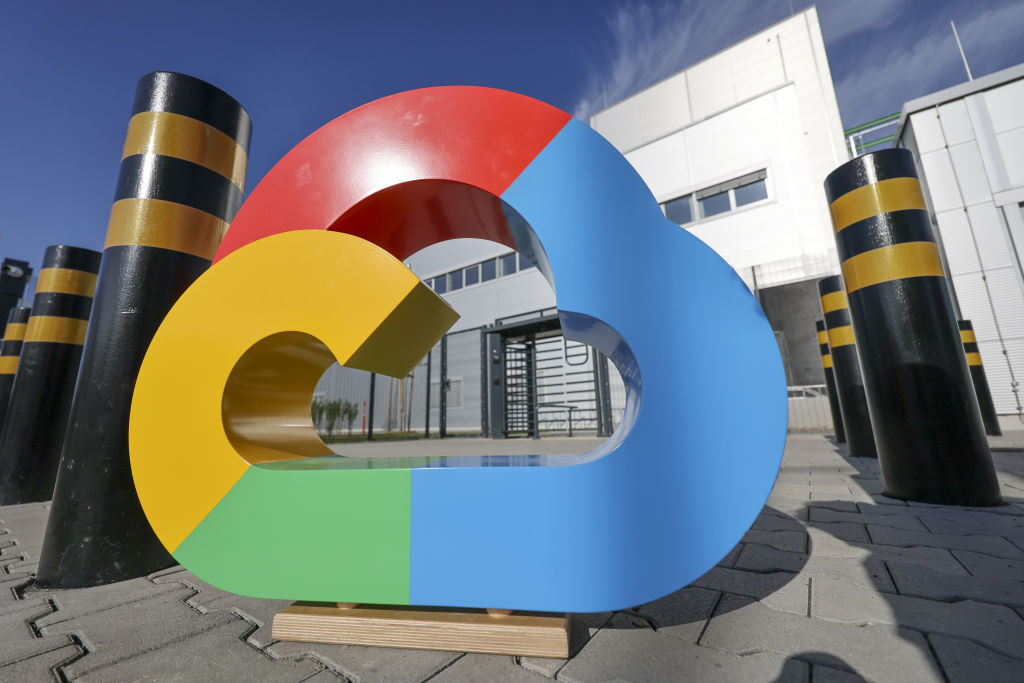
To understand the magnitude of Google’s strategic pivot, one must examine the broader macroeconomic climate within enterprise technology. While hyper-growth cloud segments are expanding exponentially, legacy hardware architectures are experiencing severe secular contraction.
Market data highlights a striking divergence in capital allocation. While Google Cloud reports record-breaking margins fueled by high-value AI workloads, legacy enterprise infrastructure is contracting sharply. For instance, recent industry metrics underscored this polarization when traditional hardware pillars—such as legacy IBM mainframe revenue—suffered a staggering 42% drop over the same comparative evaluation period.
This contrast illustrates a brutal zero-sum migration: capital is aggressively fleeing rigid, on-premise legacy mainframes and flowing directly into elastic, AI-ready cloud environments.
| Metric / Indicator | Google Cloud (GCP) AI Era | Legacy On-Premise Infrastructure | Strategic Impact |
|---|---|---|---|
| Revenue Growth Trajectory | Accelerating double-digit expansion | Severe contraction (-42% in key hardware lines) | Massive reallocation of enterprise IT budgets toward the cloud. |
| Infrastructure Focus | Custom TPUs, high-density AI data centers | Centralized mainframes, static server farms | Flexibility and parallel processing supersede traditional monolithic computing. |
| Client Monetization Model | Consumption-based SaaS, PaaS, and AI token billing | Upfront hardware sales and rigid multi-year maintenance licenses | Recurring cloud revenue provides superior valuation multiples. |
| Regulatory Compliance Profile | Automated governance, sovereign cloud frameworks | Manual audits, localized security perimeters | Cloud providers absorb rising compliance costs, lowering friction for buyers. |
Industry & Market Implications: Who Wins and Who Loses
The validation of Google’s AI expenditure strategy reshapes the competitive landscape across multiple sectors. Understanding the downstream effects requires analyzing the winners and losers in this macroeconomic realignment:
- The Winners — Hyperscale Cloud Providers with Proprietary Silicon: Google, Microsoft, and Amazon possess the balance sheets required to absorb massive upfront capital expenditure. By developing proprietary silicon (such as Google’s TPUs), these firms mitigate their reliance on third-party hardware monopolists, protecting operating margins as compute scale expands.
- The Winners — Enterprise Software Integrators: B2B consulting firms, system integrators, and specialized software vendors building verticalized AI agents on top of GCP are experiencing unprecedented deal flows.
- The Losers — Legacy Hardware Vendors: Companies reliant on traditional enterprise data center sales, proprietary mainframes, and legacy hardware maintenance contracts face an existential squeeze. As CIOs redirect budgets to cloud-native AI, legacy revenue streams are drying up faster than internal cost structures can be trimmed.
- The Losers — Under-Capitalized AI Startups: Pure-play foundational model startups that lack proprietary cloud distribution channels are finding it increasingly difficult to compete on unit economics against hyperscalers who subsidize inference costs through broader cloud ecosystems.
Frequently Asked Questions (People Also Ask)
How does Google justify its massive spending on artificial intelligence?
Google justifies its multi-billion-dollar AI capital expenditures through the direct financial performance of Google Cloud. As enterprises adopt generative AI tools, data analytics, and machine learning models, they must utilize underlying cloud infrastructure. This drives high-margin cloud consumption, transforming AI from a costly research experiment into a powerful revenue-generating engine.
What role do custom TPUs play in Google’s cloud profitability?
Google’s custom Tensor Processing Units (TPUs) provide a critical competitive advantage by reducing reliance on expensive, supply-constrained merchant GPUs. By designing its own silicon optimized for neural network training and inference, Google lowers its internal operational costs, allowing the company to offer competitive pricing to enterprise cloud clients while preserving healthy profit margins.
How are legacy tech hardware providers impacted by the cloud AI boom?
Legacy hardware providers—particularly those anchored to traditional on-premise architectures and mainframes—are experiencing severe revenue contractions. As corporate IT budgets shift toward elastic cloud environments capable of supporting heavy AI workloads, capital is rapidly deserting static, legacy infrastructure.
What does this mean for enterprise cloud valuation multiples on Wall Street?
The successful monetization of AI infrastructure is causing institutional investors to re-rate hyperscale cloud stocks favorably. Rather than viewing AI spending as an uncontrolled expense, Wall Street is increasingly recognizing it as necessary, high-ROI capital investment that cements long-term enterprise lock-in.
Future Outlook: Milestones to Watch
As we look toward the second half of 2026 and into 2027, the battleground for enterprise artificial intelligence will shift from infrastructure construction to operational efficiency and verticalized software dominance. Investors, analysts, and enterprise buyers should monitor three critical milestones:
- Energy and Grid Securitization: With data center power consumption reaching historic highs, hyperscalers' ability to secure stable, green energy contracts—including nuclear and advanced geothermal power—will dictate physical scalability limits.
- Agentic AI Monetization: The transition from conversational AI chat interfaces to autonomous, multi-step software agents deployed across enterprise supply chains, finance, and human resources will test the true depth of cloud software stickiness.
As data sovereignty laws tighten globally, Google’s ability to deploy localized, secure, air-gapped AI cloud instances will determine its success in capturing heavily regulated sectors such as defense, healthcare, and global banking.
Google’s latest financial disclosures have definitively altered the discourse surrounding the AI economy. The era of speculative exuberance is giving way to hard enterprise utility. For Alphabet, the massive capital outlay was not a gamble; it was the purchase price of undisputed market leadership in the next epoch of computing.