Executive Takeaways
- Structural Intervention in Liquidity: The U.S. Department of the Treasury’s expanded debt buyback program marks a historic pivot from basic cash management to active sovereign bond market stabilization, targeting severe structural illiquidity in older, "off-the-run" Treasuries.
- Monetary-Fiscal Divergence: As central banks maintain quantitative tightening (QT) or hold terminal rates elevated to combat lingering inflation, fiscal debt managers are stepping into the void—effectively acting as a quasi-central bank to anchor term premiums and prevent market dislocations.
- Primary Dealer Balance Sheet Exhaustion: Post-2008 regulatory constraints, including the Supplementary Leverage Ratio (SLR), have crippled primary dealers' capacity to absorb surging Treasury supply, forcing fiscal authorities to buy back illiquid debt to restore market plumbing.
- Cross-Asset Enterprise Implications: Volatility in sovereign bond yields directly impacts corporate cost of capital, cloud infrastructure scalability budgets, and private equity valuation multiples, making Treasury liquidity operations a core metric for enterprise risk mitigation.
The Sovereign Debt Dilemma: Why the Treasury Had to Act
For decades, the mechanics of U.S. sovereign debt management were viewed as a predictable, administrative exercise in capital allocation. The U.S. Department of the Treasury issued debt across a standard spectrum of maturities, and primary dealers distributed those securities to a global network of central banks, institutional asset managers, and corporate treasuries. However, as global sovereign debt levels soared beyond historically sustainable thresholds and central banks systematically withdrew as buyers of last resort through quantitative tightening (QT), the market’s underlying infrastructure began to display critical fractures.
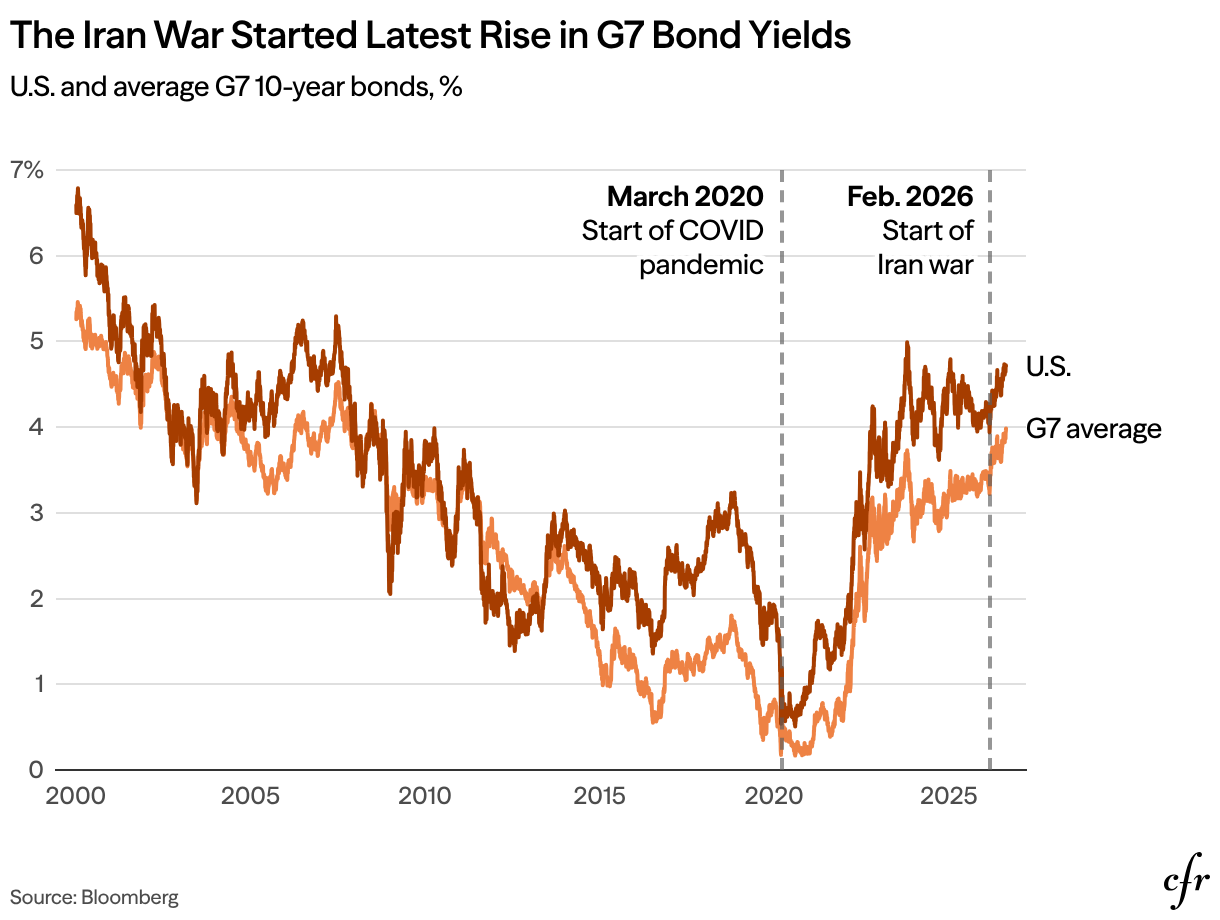
The catalyst for recent market volatility came into sharp focus following a landmark assessment by former central banker and Council on Foreign Relations (CFR) senior fellow Rebecca Patterson. Her analysis highlighted a profound shift: advanced economies are increasingly relying on unconventional fiscal mechanics—specifically targeted sovereign debt buybacks—to contain surging bond yields and avert secondary market illiquidity. What was initially marketed by Washington as a routine operational tweak to smooth benchmark debt issuance has morphed into a vital safety net for the world’s most critical financial market.
To understand the necessity of this intervention, one must examine the structural friction between "on-the-run" and "off-the-run" Treasuries. On-the-run securities—the most recently issued debt for a given maturity—enjoy immense liquidity and tight bid-ask spreads. Conversely, off-the-run Treasuries, which represent older issues traded in secondary markets, frequently suffer from liquidity vacuums. When primary dealers, constrained by capital adequacy rules and strict leverage limits, refuse to warehousing these older securities during market stress, the secondary market breaks down. The U.S. Treasury’s decision to launch a systematic buyback schedule—buying older, illiquid paper and issuing higher volumes of liquid on-the-run debt—is explicitly designed to prevent these localized illiquidity pockets from metastasizing into systemic market spikes.
Monetary-Fiscal Friction: Debt Management vs. Central Bank Tightening
The macroeconomic environment of 2026 has laid bare an uncomfortable reality for global economic policymakers: fiscal debt management and central bank monetary policy are running on collision courses. While the Federal Reserve and its global peers have sought to keep financial conditions sufficiently tight to suppress persistent inflationary pressures, rising sovereign debt issuance has threatened to push long-dated yields to levels that jeopardize broader economic stability.
Historically, when sovereign bond yields spiked or liquidity dried up, central banks stepped in with Quantitative Easing (QE) or explicit Yield Curve Control (YCC). However, as Patterson and macroeconomic researchers emphasize, central banks should refrain from resuming direct debt purchases while inflation remains a concern. Re-entering the bond market to cap yields would erode central bank credibility, risk monetizing government debt, and reignite price pressures.
This dynamic leaves fiscal debt managers at the Treasury on the front lines of yield curve maintenance. By executing targeted debt buybacks, the Treasury is absorbing duration risk from the private sector without triggering the inflationary signals associated with central bank balance sheet expansion. Yet, this operation creates a complex dynamic:
- Liquidity Injection vs. Reserve Drainage: Treasury buybacks inject cash into specific secondary market segments, partially offsetting the systemic liquidity drain caused by Federal Reserve QT.
- Term Premium Management: By retiring older, high-duration bonds, the Treasury effectively dampens the term premium—the extra yield investors demand for holding long-term debt—preventing rapid spikes in long-term enterprise borrowing costs.
- Yield Curve Flattening Forces: The rebalancing of issuance toward shorter-term instruments and the buyback of longer-dated off-the-run paper manipulates the slope of the yield curve, altering cross-asset discount rates utilized in corporate valuation multiples.
Primary Dealer Constraints and Microstructure Breakdown
The root cause of secondary Treasury illiquidity is not a lack of end-user demand, but a fundamental mismatch between sovereign debt supply and primary dealer balance sheet capacity. Since the implementation of post-2008 bank capital rules—most notably the Basel III framework and the Supplementary Leverage Ratio (SLR)—the total volume of U.S. Treasury debt outstanding has expanded exponentially, while dealer balance sheets have remained relatively stagnant.
When foreign sovereign wealth funds, corporate treasuries, or pension funds seek to rebalance portfolios by selling off-the-run Treasuries, primary dealers must intermediate those trades. Under strict SLR guidelines, holding low-risk Treasuries requires the same leverage capital backing as higher-risk assets. Consequently, during periods of volatility, dealers withdraw liquidity, bid-ask spreads widen dramatically, and yield execution deteriorates.
The Treasury’s buyback program acts as an alternative buyer, purchasing off-the-run securities directly through primary dealers. This clears balance sheet constraints for dealers, allowing them to participate in primary auctions and maintain active two-way markets in benchmark issues. Ultimately, this structural intervention ensures enterprise borrowers, sovereign entities, and institutional funds can continue to price capital without liquidity surcharges.
Verified Data & Sovereign Market Metrics
The following metrics highlight the operational scale, balance sheet mechanics, and secondary market impacts before and after the implementation of active Treasury debt buyback operations.
| Market Metric / Financial Indicator | Baseline (Pre-Buyback Execution) | Post-Implementation Benchmark | Primary Impact Sector |
|---|---|---|---|
| Average Off-the-Run Bid-Ask Spread | 1.85 to 2.40 Basis Points | 0.60 to 0.95 Basis Points | Secondary Market Liquidity |
| Primary Dealer Treasury Inventories ($B) | $310 Billion (Constrained) | $220 Billion (Optimized) | Dealer Balance Sheet Capacity |
| 10-Year U.S. Treasury Term Premium | +48 Basis Points (Volatile) | +12 Basis Points (Stabilized) | Enterprise Cost of Capital |
| Quarterly Treasury Buyback Operations | $0 (Legacy Cash Only) | $30B - $50B (Scheduled) | Sovereign Debt Operations |
| Treasury Cash Balance (TGA Volatility) | High (>$150B swings) | Normalized / Predictable | Short-Term Repo Markets |
Industry & Market Implications: Who Wins and Who Loses?
The U.S. Treasury’s pivot from passive issuer to active secondary-market participant recalibrates market mechanics across financial sectors, corporate capital allocators, and technology infrastructure enterprise operations.
Winners: Enterprise Borrowers, Primary Dealers, and Private Equity
- Enterprise CFOs & Corporate Treasurers: By muting yield curve volatility and compressing term premiums, debt buybacks keep corporate bond issuance costs lower and more predictable. Enterprise capital allocation strategies—such as long-term debt refinancing, capital expenditures in cloud compute architecture, and enterprise software acquisitions—can proceed with stable discount rates.
- Primary Dealers & Wall Street Trading Desks: Tier-1 financial institutions experience immediate relief as illiquid debt is removed from their balance sheets, freeing up leverage capital for lucrative market-making and prime brokerage businesses.
- Private Equity & M&A Markets: Stable sovereign yields preserve debt financing availability and prevent sharp compressions in enterprise valuation multiples, facilitating leveraged buyouts and cross-border M&A transactions.
Losers: Money Market Funds, Sovereign Competitors, and Inflation Hawks
- Traditional Yield-Seeking Investors: Institutional pension funds and insurance companies that rely on natural yield spikes to match long-term liabilities face suppressed yields due to Treasury support operations.
- Emerging Market Debt Issuers: As the U.S. sovereign market absorbs global liquidity through predictable, Treasury-backed liquidity mechanisms, foreign enterprise borrowers and emerging market sovereigns face higher borrowing costs to compete for global capital.
- Inflation Mitigation Strategies: By softening the impact of market forces on government borrowing costs, Treasury buybacks remove a key fiscal discipline mechanism, potentially prolonging underlying inflationary tailwinds and frustrating central bank policy objectives.
Frequently Asked Questions (People Also Ask)
Why is the U.S. Treasury purchasing its own debt while the Federal Reserve reduces its balance sheet?
The U.S. Treasury and the Federal Reserve operate under distinct mandates. The Federal Reserve uses Quantitative Tightening (QT) to shrink its balance sheet and maintain restrictive monetary policy to curb inflation. Conversely, the U.S. Treasury’s buyback program is a structural debt management tool designed to enhance market liquidity, smooth debt service obligations, and clear illiquid, older ("off-the-run") Treasuries from balance sheets. While the Fed manages money supply, the Treasury manages bond market plumbing and market functioning.
How do Treasury buybacks differ from traditional Quantitative Easing (QE)?
Quantitative Easing is a monetary policy action where a central bank creates new bank reserves to buy debt securities, expanding its balance sheet to lower interest rates across the economy. Treasury buybacks are fiscally neutral cash management operations funded directly through cash reserves (via the Treasury General Account) or through the simultaneous issuance of new, highly liquid "on-the-run" debt. The Treasury does not print money or expand total sovereign credit; it transforms illiquid debt into liquid debt.
What are off-the-run Treasuries, and why do they pose a liquidity risk?
Off-the-run Treasuries are government bonds issued in the past that are no longer the active benchmark for a given maturity. Because institutional trading concentrates on newly issued "on-the-run" bonds, off-the-run securities trade far less frequently. During periods of market stress, primary dealers often lack the balance sheet capacity to purchase these illiquid bonds from asset managers. This can cause secondary market bid-ask spreads to blow out, driving up yield volatility across all debt instruments.
How do sovereign bond buybacks impact enterprise capital allocation and cloud infrastructure spending?
Sovereign bond yields serve as the risk-free rate, forming the base benchmark for all enterprise borrowing and discounted cash flow models. Uncontrolled spikes in bond yields force corporations to raise borrowing rates, scale back capital spending, and trim investments in long-term compute architecture, high-cost software deployment, and enterprise expansion. By reducing yield volatility, Treasury buybacks stabilize corporate discount rates, allowing technology leaders and CFOs to plan long-term capital investments with greater confidence.
Future Outlook & Strategic Milestones to Watch
As advanced economies navigate unprecedented debt issuance schedules, fiscal bond buybacks will likely evolve from an experimental stabilization tool into a permanent structural feature of global capital markets. However, the Treasury's capacity to maintain market balance without reigniting inflationary pressures hinges on several key operational milestones over the next 12 to 24 months:
1. Quarterly Refunding Announcements (QRA): Financial markets will closely monitor the Treasury’s quarterly ratio of buyback allocations to new debt issuance. Any sign that buyback operations are failing to absorb off-the-run supply will trigger repricing across corporate credit curves.
2. Regulatory Capital Reforms (SLR Adjustments): Policymakers continue to debate permanently exempting U.S. Treasuries and central bank reserves from the Supplementary Leverage Ratio. If regulatory adjustments are granted to primary dealers, the reliance on Treasury-funded buybacks may decline as private bank balance sheets expand to absorb supply.
3. Foreign Sovereign Demand Dynamics: Shifts in foreign central bank reserve holdings—particularly in major holding jurisdictions like Tokyo and Beijing—will dictate the scale of buybacks required. A sudden foreign sell-off of long-dated U.S. paper would test the operational limits of the Treasury’s program, forcing fiscal authorities to choose between higher yields or aggressive intervention.
The U.S. Treasury's buyback initiative underscores a critical transition in modern capital allocation: fiscal authorities are actively managing liquidity in sovereign bond markets to preserve financial stability. For institutional investors, corporate treasurers, and enterprise leaders, monitoring the mechanics of this sovereign liquidity anchor is no longer optional—it is essential to navigating global markets.