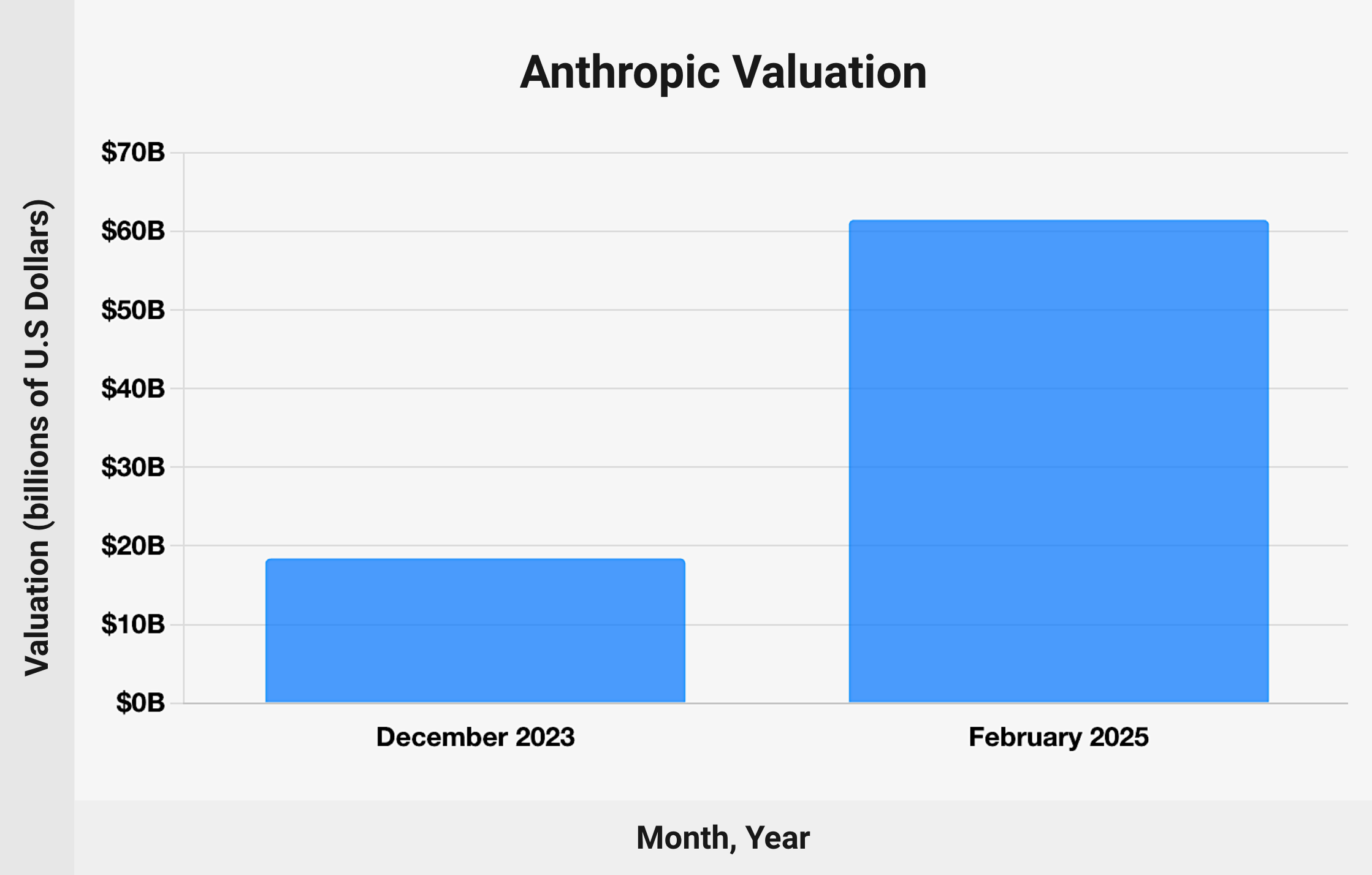
WALL STREET & SILICON VALLEY — The foundational artificial intelligence landscape is facing a profound stress test. According to confidential secondary market transactions, private equity desks, and institutional bookrunners, prospective buyers participating in early-look allocations for Anthropic’s anticipated initial public offering (IPO) are pricing the generative AI pioneer at a valuation as low as $1.1 trillion. While a multi-trillion-dollar ceiling has dominated venture capital boardrooms for much of the current technological supercycle, institutional capital allocation strategies are undergoing a sharp recalibration. Investors are increasingly demanding rigorous proof of enterprise ROI, infrastructure scalability, and sustainable cloud compute architecture before granting mega-cap tech multiples to frontier model developers.
This comprehensive investigative report examines the structural drivers behind the $1.1 trillion valuation floor, the mechanics of the private-to-public transition, and what this signals for the broader macroeconomic landscape governing the artificial intelligence sector.
Executive Takeaways
Test Our Free AI & Tech Utilities Suite
Calculate LLM API token costs, analyze article dwell-time, or simulate tech DCA returns.
- Valuation Floor Emerges: Secondary market transactions and syndicate feedback indicate private-to-public buyers are anchoring initial IPO pricing expectations near the $1.1 trillion threshold, reflecting a maturation in risk mitigation strategies.
- Infrastructure & Compute Costs: Intensive capital expenditure requirements—specifically regarding next-generation tensor processing units, GPU clusters, and power acquisition—remain the primary variables weighing on net-income projections.
- Enterprise Monetization Pressure: Institutional investors are shifting their valuation frameworks away from sheer parameter scale and training compute, pivoting sharply toward annualized recurring revenue (ARR) and enterprise software integration stickiness.
- Broader Market Liquidity: The pricing tension surrounding Anthropic serves as a bellwether for the upcoming tech IPO window, establishing a definitive valuation benchmark for competing foundational model labs.
The Catalytic Shift: From Hyper-Growth Speculation to Fundamental Valuation
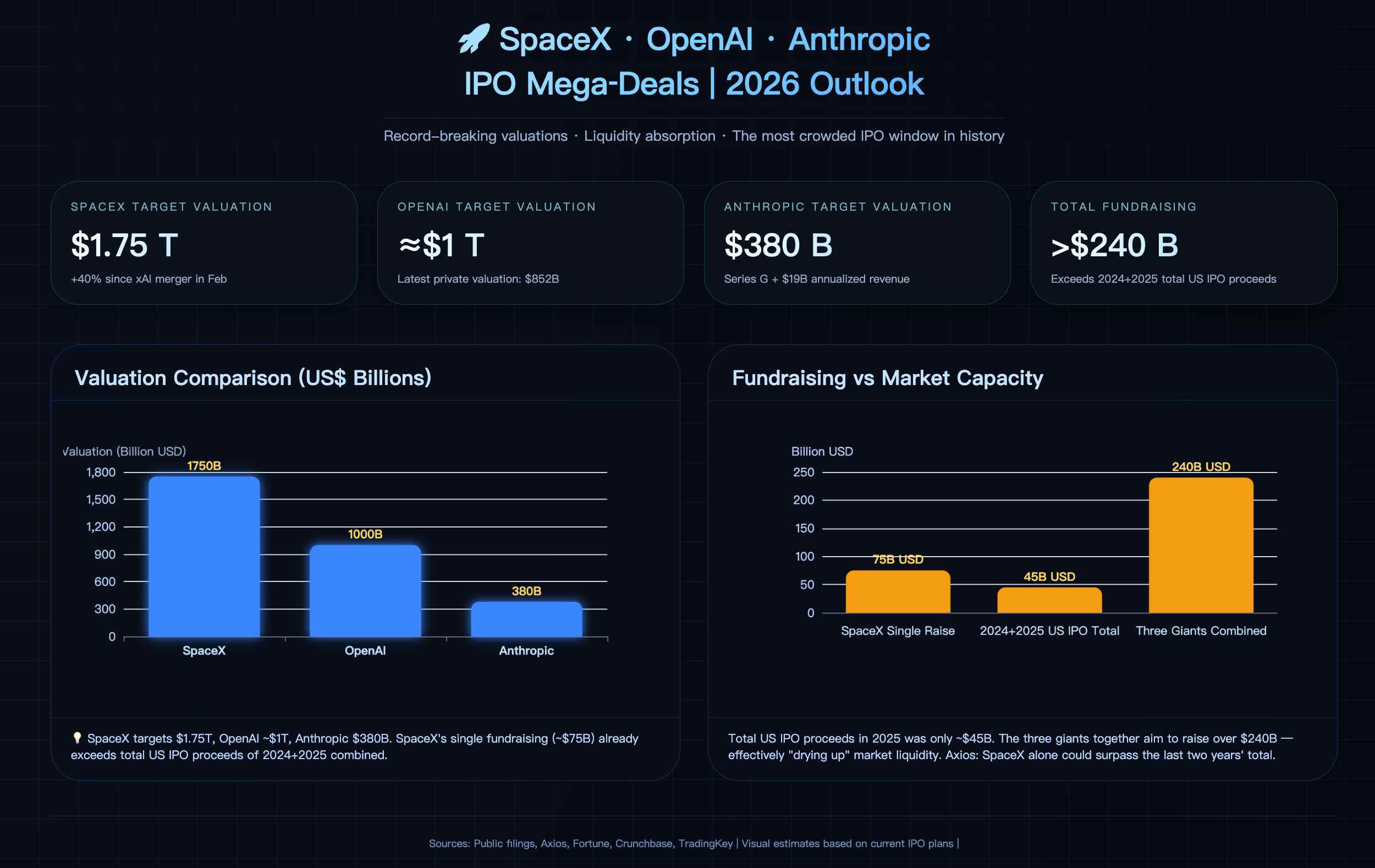
For the past three years, the generative artificial intelligence sector has operated under an extraordinary paradigm of venture capital exuberance. Fueled by multi-billion-dollar corporate syndications involving hyperscale cloud providers, sovereign wealth funds, and tier-1 venture capital firms, valuations for foundational model developers skyrocketed with little regard for near-term profitability. Anthropic—founded in 2021 by former OpenAI researchers including Dario and Daniela Amodei—positioned itself as an enterprise-first alternative with a pronounced emphasis on safety, constitutional AI alignment, and robust application programming interface (API) integrations.
However, as the company prepares for a highly anticipated public market debut, the institutional investor base is enforcing traditional valuation multiples. The appearance of $1.1 trillion price targets in private-market order books does not indicate a lack of demand; rather, it highlights a sophisticated arbitrage between venture capital markups and public market price discovery. Institutional fund managers charged with managing fiduciary risk are scrutinizing top-line revenue against soaring capital expenditures (CapEx). Training and running state-of-the-art large language models demands unprecedented cloud compute architecture, locking companies into multi-year commitments with hyperscalers that directly impact free cash flow.
Furthermore, regulatory compliance and antitrust scrutiny across both the United States and the European Union have introduced new variables into financial modeling. Prospective IPO buyers are discounting valuations to account for potential legal headwinds regarding training data acquisition, copyright liabilities, and algorithmic transparency mandates. Consequently, the $1.1 trillion figure represents a disciplined effort by institutional underwriters to establish a safety margin against macro-level volatility.
Comparative Metrics & Market Positioning
| Metric / Indicator | Venture Capital Peak Estimates | Secondary Market / IPO Floor | Core Driver |
|---|---|---|---|
| Implied Valuation | $1.5 Trillion+ | $1.1 Trillion | Institutional risk mitigation and valuation multiples compression. |
| Revenue Multiple (FWD) | 35x – 50x | 20x – 28x | Alignment with historical enterprise software and high-growth SaaS metrics. |
| Infrastructure CapEx | Uncapped / Variable | Strictly Audited | Scrutiny over cloud compute architecture efficiency and GPU utilization rates. |
| Enterprise ARR Share | Emerging Focus | Primary Metric | Demand for verified enterprise ROI and sticky corporate deployment contracts. |
Industry & Market Implications: Winners, Losers, and Economic Ripple Effects
The stabilization of Anthropic’s valuation expectations around the $1.1 trillion mark sends shockwaves through the broader technology ecosystem, reshaping capital allocation strategies across multiple verticals.
The Winners: Enterprise Buyers and Disciplined Capital Allocators
Enterprise clients stand to benefit significantly from this valuation recalibration. As foundational model labs face pressure to demonstrate tangible profitability and enterprise ROI, sales organizations are increasingly incentivized to offer flexible licensing, bespoke fine-tuning, and robust data privacy guarantees. Furthermore, disciplined private equity and crossover funds that avoided peak-bubble valuations now have a clear roadmap to participate in the IPO without inheriting unsustainable downside risk.
The Losers: Speculative Late-Stage Intermediaries and Over-Leveraged Startups
Secondary market brokers and special-purpose vehicle (SPV) operators who bought into late-stage private rounds at inflated valuations face potential paper losses or compressed returns. Additionally, smaller, less-differentiated generative AI startups that relied on riding the coattails of major foundational model valuations will find venture capital funding increasingly scarce. Investors are no longer willing to bankroll parity models without a distinct technological moat or proprietary data pipeline.
Macroeconomic Impact
On a macroeconomic scale, the Anthropic IPO pricing acts as a foundational anchor for public technology markets. It demonstrates that public market investors retain pricing power, effectively checking runaway private valuations and realigning venture markets with fundamental economic realities. This transition safeguards institutional portfolios from systemic shock while ensuring that capital continues to flow exclusively toward enterprises with durable operational models.
Frequently Asked Questions (People Also Ask)
Why are some IPO buyers valuing Anthropic at $1.1 trillion?
The $1.1 trillion valuation reflects a conservative pricing strategy employed by institutional investors and secondary market buyers who are factoring in high infrastructure costs, regulatory compliance burdens, and a demand for clearer paths to enterprise profitability. Rather than relying on speculative growth multiples, institutional bookrunners are applying traditional software and tech-giant valuation frameworks.
How does Anthropic's valuation compare to other foundational model developers?
While exact private valuations fluctuate rapidly, Anthropic occupies the upper echelon of the generative AI ecosystem alongside competitors like OpenAI. The $1.1 trillion secondary market indicator places it firmly in mega-cap territory, comparable to the valuations commanded by top-tier cloud and enterprise software giants during their respective scaling phases.
What are the primary cost centers impacting Anthropic's financial projections?
The primary cost drivers for foundational AI labs include massive cloud compute architecture expenditures, high-performance GPU procurement, specialized engineering talent acquisition, and continuous research and development required to maintain model state-of-the-art parity. Managing these overhead costs while scaling enterprise deployment is a central focus for prospective IPO investors.
How will this valuation impact future tech IPOs?
Anthropic's public market debut serves as a critical pricing litmus test for the entire artificial intelligence sector. A successful offering at or near the $1.1 trillion valuation will establish a credible benchmark, encouraging other mature AI startups to proceed with public listings while reassuring institutional allocators of the sector's long-term market liquidity.
Future Outlook and Key Milestones to Watch
As Anthropic moves closer to its official public offering, financial analysts, institutional investors, and technology executives will monitor several key performance indicators to gauge the health of the offering:
- S-1 Filing Disclosures: Detailed scrutiny of gross margins, customer concentration, and long-term cloud compute commitments contained within the forthcoming regulatory filings.
- Enterprise ARR Growth: The sustained velocity at which Global 2000 enterprises integrate Claude and associated API suites into core operational workflows.
- Hardware Supply Chain Resilience: Developments in next-generation silicon procurement and the company's ability to optimize inference costs relative to training expenditures.
- Regulatory Milestones: Navigating evolving antitrust frameworks and AI governance legislation across the United States and international jurisdictions.
Ultimately, the $1.1 trillion valuation floor does not signal a retreat from artificial intelligence innovation; rather, it marks the graduation of the generative AI sector from speculative venture experiment to a core pillar of the global enterprise economy. As market liquidity deepens and financial discipline takes root, Anthropic's impending public debut will set the standard for how the world's most advanced technology companies are valued in a mature capital market.