Executive Takeaways
- Unprecedented Scale: Anthropic’s newly disclosed $900 billion capital expenditure and infrastructure commitment shatters previous enterprise tech spending baselines ahead of its anticipated public market debut.
- Cloud Compute Architecture: The multi-year capital allocation targets massive deployments of next-generation accelerators, custom silicon, and dedicated data center real estate to secure long-term model training dominance.
- Valuation Multiples & ROI Pressures: Institutional investors face complex risk mitigation calculus as they weigh the staggering infrastructure overhead against enterprise software monetization and market liquidity realities.
- Regulatory & Supply Chain Scrutiny: The unprecedented capital intensity places intense focus on semiconductor supply chains, energy grid capacities, and impending global AI compliance frameworks.
The Anatomy of a Paradigm Shift
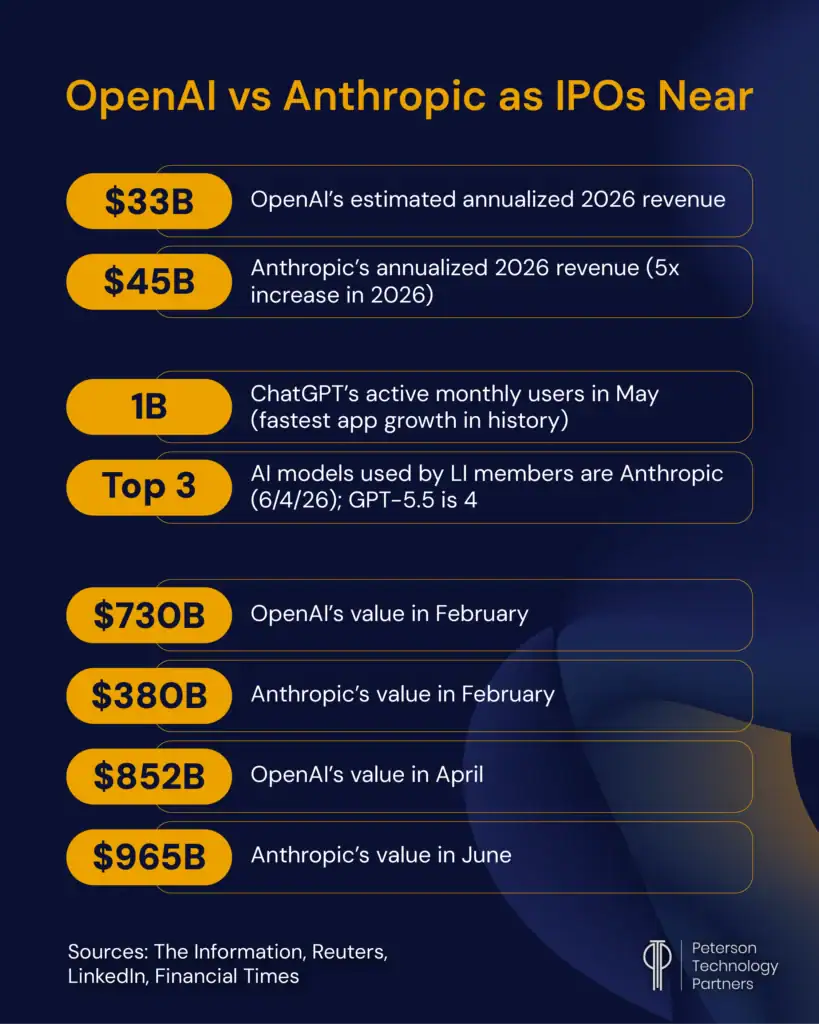
In a disclosure that has sent shockwaves through global capital markets and technology boardrooms, artificial intelligence pioneer Anthropic has revealed a staggering $900 billion aggregate AI spending commitment. Unveiled as the company positions itself for what is projected to be one of the largest and most complex initial public offerings (IPOs) in financial history, this monumental capital allocation signals a definitive turning point in the commercialization of generative AI. Far exceeding the initial growth phases of past software giants, Anthropic’s strategic roadmap underscores the hyper-capital-intensive nature of competing at the absolute frontier of foundational model development.
As institutional asset managers, private equity stakeholders, and sovereign wealth funds review the prospectus-preparatory disclosures, the overarching question centers on enterprise ROI and infrastructure scalability. The $900 billion figure encompasses multi-year cloud compute architecture contracts, power purchase agreements for specialized data centers, next-generation semiconductor procurement pipelines, and cutting-edge algorithmic research and development. This aggressive capital deployment is designed to insulate Anthropic from rising competitive pressures while locking in long-term enterprise clients across regulated verticals including finance, healthcare, and defense.
Catalytic Drivers: Why $900 Billion Now?
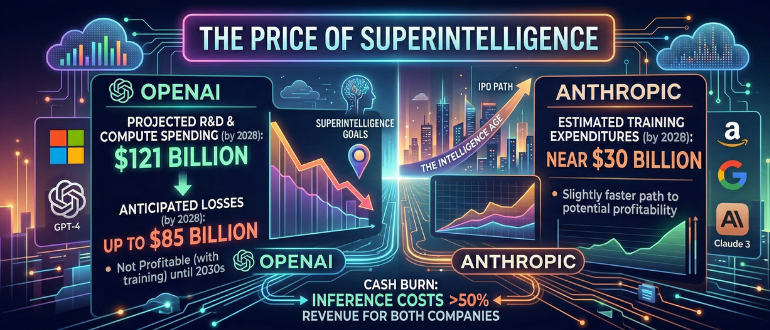
The decision by Anthropic’s executive leadership to front-load capital expenditures on this scale is driven by a convergence of technological imperatives and market dynamics. First, the scaling laws governing large language models demonstrate no immediate plateau; marginal gains in reasoning, coding, and autonomous execution require exponential increases in compute capacity. To maintain parity—and secure market leadership—over rivals backed by hyperscale cloud providers, independent labs must secure dedicated, long-term silicon capacity.
Second, enterprise adoption has shifted from experimental proofs-of-concept to mission-critical operational integration. Fortune 500 chief information officers demand guaranteed uptime, deterministic safety guardrails, and enterprise-grade security architecture—features that require vast, dedicated infrastructure clusters rather than shared cloud testing environments. By committing to this $900 billion expenditure framework, Anthropic is signaling to enterprise procurement committees that its operational continuity and technological roadmap are secured for the next decade.
Financial Engineering, Valuation Multiples, and Risk Mitigation
From a corporate finance perspective, executing an IPO against the backdrop of a nearly trillion-dollar infrastructure commitment requires sophisticated financial engineering. Underwriters are currently constructing valuation models that balance top-line annual recurring revenue (ARR) growth against unprecedented capital expenditure burn rates. Investment committees are scrutinizing unit economics, asking whether future enterprise margins can absorb the massive depreciation schedules associated with next-generation AI hardware clusters.
Risk mitigation strategies implemented by Anthropic include multi-party risk sharing with major cloud service providers, structured equity financing, and strategic partnerships with global energy providers to hedge against power volatility. Nonetheless, market liquidity for the upcoming IPO will hinge heavily on investor appetite for capital-intensive business models. While traditional software-as-a-service (SaaS) companies historically boasted high gross margins with minimal physical overhead, modern AI infrastructure providers operate more akin to telecommunications carriers or semiconductor foundries, necessitating a fundamental recalibration of valuation multiples.
Verified Data & Metrics Breakdown
To contextualize the scale of Anthropic’s financial roadmap, the following comparative matrix outlines key structural metrics, capital allocations, and strategic focus areas derived from preliminary wire disclosures and market analysis:
| Metric / Parameter | Prior Industry Baseline | Anthropic IPO Disclosure Target | Strategic Implications |
|---|---|---|---|
| Aggregate AI Spending Commitment | $50B – $150B (Cumulative across peers) | $900 Billion (Multi-Year) | Redefines capital intensity benchmarks for foundational AI labs. |
| Primary Cost Drivers | Standard cloud instances & R&D | Custom Silicon, Power Grid PAs, Dedicated Data Centers | Requires vertical integration and energy infrastructure partnerships. |
| Target Market Focus | General Consumer & Developer APIs | Regulated Enterprise, Defense, Financial Services | Prioritizes high-retention, high-margin enterprise compliance contracts. |
| Regulatory Compliance Profile | Self-regulatory guidelines | Rigorous Global Governance & Safety Frameworks | Mitigates systemic antitrust and sovereign security risks. |
Industry & Market Implications: Winners and Loses
The ripple effects of Anthropic’s $900 billion commitment will be felt across the global technology ecosystem. Winners in this paradigm include specialized semiconductor designers, advanced cooling and liquid-cooling technology providers, and renewable energy developers capable of supplying dedicated base-load power to hyper-scale AI data centers. Furthermore, enterprise cybersecurity firms specializing in LLM guardrails stand to capture significant B2B spending as corporate clients integrate these massive models into legacy infrastructures.
Conversely, laggards may include traditional software companies failing to transition their business models from seat-based licensing to consumption-based AI automation. Additionally, sub-scale AI startups lacking access to tier-1 capital markets or proprietary compute pipelines face immediate consolidation pressures, unable to compete with the sheer velocity and scale of capital deployed by category leaders.
Frequently Asked Questions (People Also Ask)
What makes Anthropic’s $900 billion spending commitment different from previous tech infrastructure booms?
Unlike the telecom or dot-com infrastructure buildouts of past decades, this commitment is tightly coupled with algorithmic scaling laws where compute directly translates into autonomous reasoning capabilities. It represents an unprecedented fusion of heavy industrial asset deployment (power and real estate) with bleeding-edge intellectual property.
How will this massive capital expenditure impact Anthropic’s upcoming IPO valuation?
Institutional investors will evaluate the IPO through a dual lens: recognizing the unmatched competitive moat provided by guaranteed compute access, while carefully stress-testing short-term cash flow burn rates, depreciation schedules, and long-term enterprise software monetization margins.
What are the primary energy and supply chain bottlenecks associated with this strategy?
The primary constraints involve access to reliable, high-capacity electrical grid power (often requiring direct co-location with nuclear or renewable energy sources) and secure allocations of advanced semiconductor fabrication capacity amidst global supply chain complexities.
How does this spending level affect enterprise clients and software pricing?
To achieve an acceptable return on invested capital, enterprise pricing models are expected to shift toward outcome-based and deeply integrated consumption tiers, ensuring that corporate users derive measurable operational ROI that justifies premium API and platform fees.
Future Outlook: Milestones to Watch
As Anthropic marches toward its public market debut, financial analysts and institutional desks will monitor several critical milestones. First, prospective investors will examine the official S-1 filings for granular breakdowns of the debt-to-equity structures financing the $900 billion buildout. Second, regulatory clearances from antitrust and foreign investment watchdogs will dictate the feasibility of cross-border data center expansions.
Ultimately, this historic financial maneuver redefines the boundaries of corporate strategy in the artificial intelligence era. Whether Anthropic’s massive upfront wager yields dominant market capitalization or invites stringent profitability scrutiny will serve as the litmus test for the entire technology sector over the next decade. Market participants are advised to maintain rigorous risk mitigation protocols and closely track upcoming regulatory and supply chain disclosures.