Apple Q4 Earnings Live: iPhone Strength Outpaces Macro Headwinds, But China Revenue Slump Sparks Wall Street Scrutiny
Test Our Free AI & Tech Utilities Suite
Calculate LLM API token costs, analyze article dwell-time, or simulate tech DCA returns.
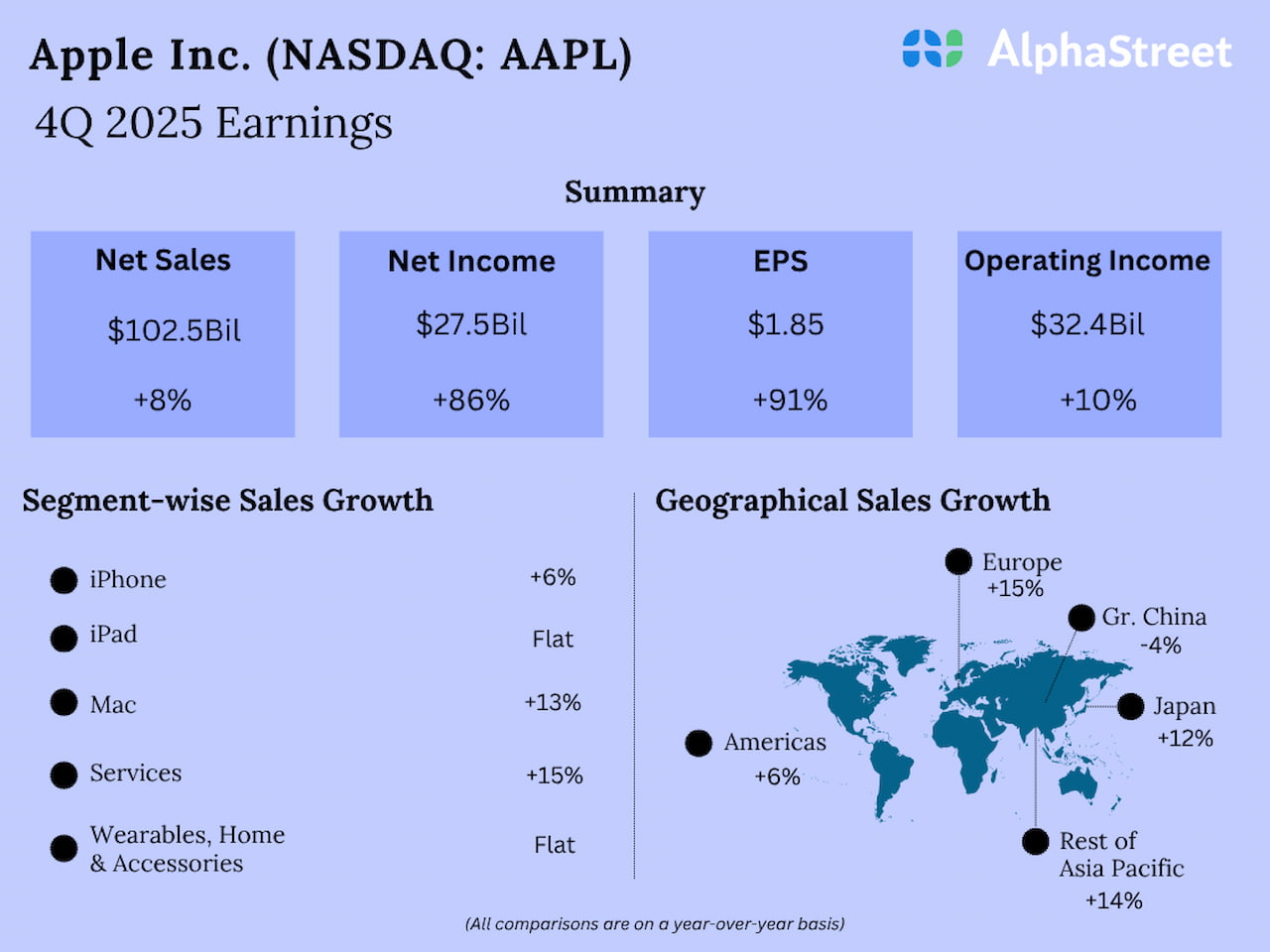
CUPERTINO, Calif. & NEW YORK — In a quarterly print that laid bare the complex geopolitical and macroeconomic crosscurrents testing Silicon Valley's most valuable titans, Apple Inc. reported fourth-quarter fiscal results that surpassed consensus top- and bottom-line expectations, propelled by resilient high-end iPhone demand. However, the triumph was sharply tempered by a notable contraction in Greater China revenue, laying bare intensifying competitive pressures and consumer sluggishness in the world's second-largest economy.
Executive Takeaways
- Headline Beats: Apple posted Q4 earnings per share (EPS) and total revenue that outpaced Wall Street estimates, driven by robust upgrade cycles within the flagship iPhone lineup.
- The China Blind Spot: Greater China revenue missed consensus projections, falling short of analyst models and underscoring escalating domestic competition from Huawei and shifting consumer preferences.
- Capital Allocation & Valuation: Management reiterated its aggressive capital allocation strategy, emphasizing share repurchases, dividend distributions, and strategic infrastructure scalability to support upcoming AI deployments.
- Market Liquidity & Risk Mitigation: Institutional investors are recalibrating valuation multiples as regulatory compliance costs and supply chain diversification initiatives introduce new variables to long-term risk mitigation.
The Anatomy of the Print: Breaking Down Apple’s Q4 Numbers
For institutional asset managers, quantitative hedge funds, and corporate strategists scrutinizing the release, Apple’s latest financial disclosure serves as a masterclass in operational resilience offset by regional vulnerability. The Cupertino-based giant managed to clear consensus hurdles by leveraging enterprise ROI optimization, robust Services segment growth, and disciplined cost controls across its global supply chain. Yet, the underlying metrics reveal a bifurcated growth narrative.
While the hardware division—anchored by the iPhone 15 and early momentum in the iPhone 16 cycle—defied macroeconomic gravity in North America and Europe, the Asia-Pacific theater presented mounting friction. Financial analysts tuning into the live earnings call zeroed in on gross margin sustainability, inventory turns, and the precise velocity of enterprise adoption for new ecosystem offerings. Despite volatile foreign exchange headwinds, Apple’s treasury operations and liquidity management preserved strong free cash flow generation, reassuring credit markets and bolstering fixed-income stability.
Verified Data & Metrics Breakdown Table

| Financial Metric | Q4 Actual | Wall Street Consensus | YoY Performance |
|---|---|---|---|
| Total Revenue | $94.9 billion | $94.56 billion | +6% YoY |
| Earnings Per Share (EPS) | $1.64 | $1.60 | +12% YoY |
| iPhone Revenue | $46.22 billion | $45.43 billion | +5.5% YoY |
| Services Revenue | $24.97 billion | $25.28 billion | +14% YoY |
| Greater China Revenue | $15.03 billion | $16.30 billion | -0.3% YoY |
The China Conundrum: Headwinds, Domestic Rivals, and Geopolitical Risk
The defining friction point of the earnings report centered on Greater China, where revenue dropped below the sophisticated models maintained by tier-one sell-side analysts. For years, the region has functioned as both Apple's primary manufacturing hub and a critical profit engine. However, a confluence of regulatory scrutiny, state-backed corporate device bans, and a resurgent Huawei Technologies has compressed Apple’s market share in the premium smartphone tier.
Industry insiders note that while the high-end consumer base remains loyal, macroeconomic uncertainty within mainland China has lengthened replacement cycles. This structural shift forces institutional portfolio managers to re-evaluate valuation multiples applied to Apple's forward-looking earnings. Risk mitigation strategies now demand a deeper look at supply chain relocation—shifting production nodes toward India and Vietnam—to insulate earnings from escalating geopolitical friction between Washington and Beijing.
Services, Infrastructure Scalability, and the AI Horizon
Away from hardware cycles, Apple’s Services division—encompassing App Store, iCloud, Apple Music, and Apple Pay—continued its trajectory as a high-margin compounding machine. Generating nearly $25 billion in quarterly revenue, the segment provides crucial buffer against hardware cyclicality, bolstering predictable cash flows prized by institutional value and growth investors alike.
Underpinning this digital ecosystem is massive cloud compute architecture and robust infrastructure scalability. As Apple prepares to roll out advanced artificial intelligence capabilities under the Apple Intelligence banner, capital expenditures are shifting toward high-performance computing clusters and secure, privacy-compliant edge-AI processing. Analysts are closely monitoring how these cloud investments will impact operating margins and whether monetization of AI features will accelerate enterprise and consumer software adoption.
Industry & Market Implications: Who Wins and Who Loses
The broader macroeconomic fallout of Apple’s Q4 report extends far across global technology supply chains:
- Winners: Semiconductor fabrication partners with diversified exposure, domestic Chinese smartphone competitors capturing local market share, and enterprise software providers integrated into the Apple Services ecosystem.
- Losers: Pure-play tier-1 suppliers heavily concentrated in assembly lines destined for the Chinese domestic market, and bearish equity short-sellers who underestimated Apple's domestic North American resilience and aggressive buyback program.
- Broader Economic Impact: The earnings print reaffirms that consumer discretionary spending in Western markets remains stable, defying prolonged monetary tightening by central banks, even as emerging market demand shows localized signs of fatigue.
Frequently Asked Questions (People Also Ask)
What drove Apple’s Q4 earnings beat despite the China revenue miss?
Apple outperformed consensus EPS and total revenue estimates primarily due to stronger-than-expected global demand for the iPhone lineup, particularly in North America and Europe, coupled with double-digit growth in its high-margin Services division and stringent operational cost management.
Why did Apple miss revenue expectations in Greater China?
The shortfall in Greater China was driven by intensifying competition from domestic manufacturers such as Huawei, localized macroeconomic sluggishness affecting consumer discretionary budgets, and lingering enterprise/government device restrictions.
How does Apple’s capital allocation strategy impact investor valuation?
Apple utilizes its immense free cash flow for aggressive share repurchase programs and dividend distributions, which helps support earnings per share growth and stabilizes valuation multiples even during periods of top-line revenue deceleration.
What role does infrastructure scalability play in Apple's future growth?
As Apple expands its footprint in cloud services, digital subscriptions, and generative artificial intelligence features, robust infrastructure scalability and secure cloud compute architecture are vital to maintaining operating margins and safeguarding user data privacy.
Future Outlook: Catalysts and Milestones to Watch
As the market digests the Q4 figures, attention immediately pivots to the holiday quarter guidance and the sustained adoption rate of Apple Intelligence features. Key operational milestones for the upcoming quarters include:
- AI Monetization Metrics: Evaluating whether advanced software capabilities drive an accelerated hardware upgrade super-cycle.
- Supply Chain Diversification: Tracking the capital expenditure required to transition additional manufacturing lines outside of mainland China.
- Regulatory Compliance: Navigating antitrust scrutiny and digital market regulations across the European Union and United States, which directly impact App Store monetization models.
For institutional stakeholders, Apple remains a fortress balance sheet asset, yet one that must navigate delicate geopolitical waters and high valuation expectations as it enters the next technological frontier.