Executive Takeaways
- Deep System Integration: Apple is rolling out API frameworks that grant third-party developers granular access to Siri’s on-device and cloud-based natural language processing cores.
- Enterprise & Financial Implications: This strategic shift transforms Siri from a closed utility into an open agentic ecosystem, directly impacting SaaS valuation multiples, enterprise workflow automation, and mobile app monetization.
- Infrastructure Scalability & Privacy: Balancing cloud compute architecture with Apple’s strict Private Cloud Compute (PCC) mandate requires massive capital expenditure while neutralizing regulatory compliance risks.
- Market Realignment: Competitors like Google Assistant and Amazon Alexa face intensified pressure as Apple leverages its active installed base of over 2.2 billion active devices to dominate consumer-facing agentic AI.
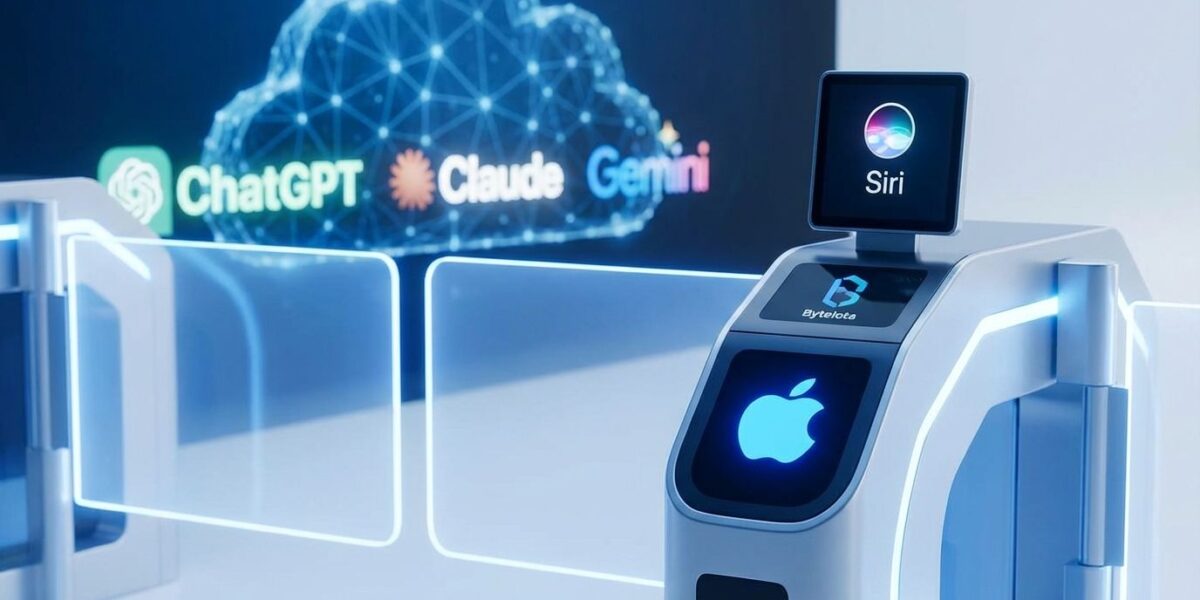
CUPERTINO, CA — In a structural pivot that redefines the contours of the consumer technology landscape, Apple Inc. has officially initiated the rollout of advanced developer APIs granting third-party applications deep, contextual access to Siri’s artificial intelligence engine. This long-anticipated architectural evolution marks the definitive end of Siri’s walled-garden era, transforming Apple’s proprietary voice assistant from a rigid, siloed utility into an open, agentic platform capable of executing cross-application workflows with unprecedented autonomy.
For financial markets, enterprise software vendors, and independent developers, the move represents a monumental realignment of mobile commerce and software distribution economics. By allowing external applications to plug directly into Siri’s intent-recognition models, Apple is not merely enhancing user convenience; it is establishing a new paradigm for digital interaction—one where natural language supersedes graphical user interfaces (GUIs) as the primary nexus of software navigation.
The Catalytic Shift: Moving From Closed Commands to Agentic AI
Test Our Free AI & Tech Utilities Suite
Calculate LLM API token costs, analyze article dwell-time, or simulate tech DCA returns.
For over a decade, Siri operated under a deterministic, keyword-driven paradigm. While sufficient for setting timers or playing music, it struggled against the fluid, probabilistic capabilities demonstrated by OpenAI’s ChatGPT, Google Gemini, and Anthropic’s Claude. Recognizing this competitive vulnerability, Apple executives orchestrated a multi-pronged corporate strategy anchored by Apple Intelligence, unveiled at WWDC, and systematically deployed across supported iOS, iPadOS, and macOS hardware.
The latest phase of this deployment—opening Siri to third-party applications via enhanced App Intents and SiriKit frameworks—bridges the chasm between operating system-level intelligence and third-party software utility. Instead of manually launching an application, navigating sub-menus, and executing a transaction, users can now instruct Siri to perform complex, multi-step actions spanning distinct software ecosystems. For instance, a single voice prompt can direct Siri to pull data from a proprietary enterprise resource planning (ERP) app, format the output via a word processor, and dispatch it through a third-party messaging client.
This capability relies on sophisticated cloud compute architecture and on-device neural processing units (NPUs). Apple’s engineering teams have deployed Private Cloud Compute (PCC), a proprietary cloud infrastructure designed to process complex AI requests without compromising user privacy. By routing encrypted data through custom Apple silicon servers that verify transparency guarantees cryptographically, Cupertino aims to mitigate the regulatory compliance risks that have historically plagued competitors in the big tech sector.
Market Dynamics and Economic Impact
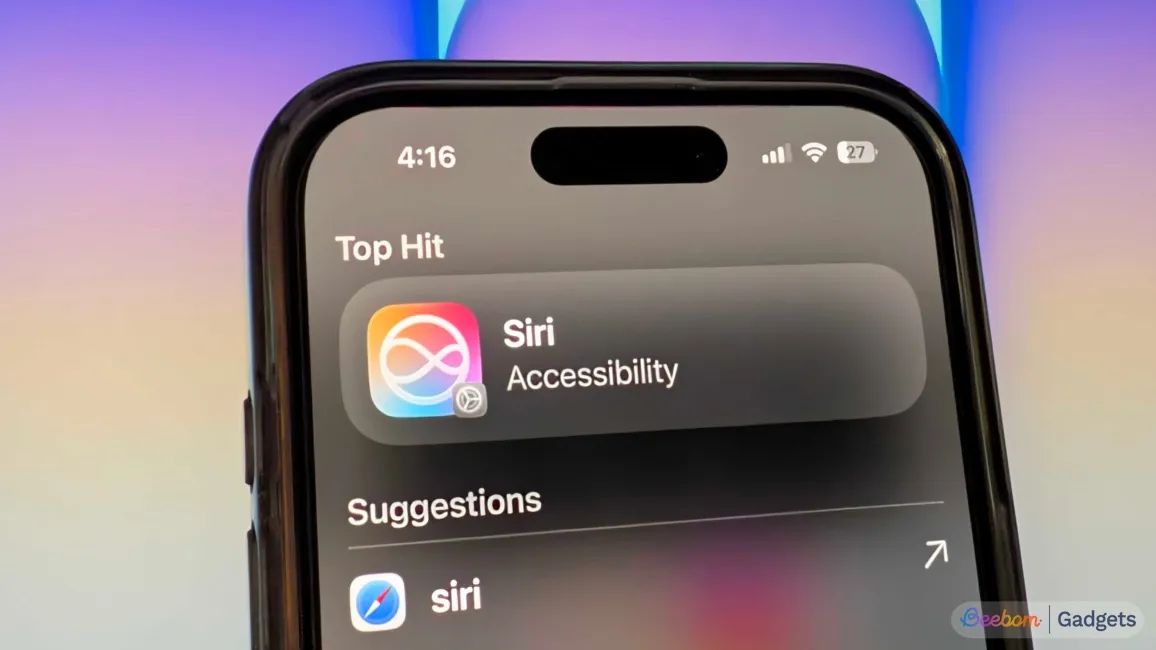
The financial implications of Apple’s open-Siri strategy reverberate across global technology markets, altering valuation multiples and forcing a strategic re-evaluation among venture capitalists and enterprise software conglomerates.
| Strategic Metric | Legacy Siri Architecture | Open-Siri AI Framework |
|---|---|---|
| Developer Integration | Restricted domains (rideshare, payments) | Granular App Intents across all software categories |
| Compute Infrastructure | Centralized Apple servers / rigid rules | Hybrid On-Device + Private Cloud Compute (PCC) |
| Monetization Channel | Indirect hardware sales driver | Service layer expansion, enterprise ROI, API fees |
| Regulatory Exposure | Low (limited data sharing) | High scrutiny (antitrust and data privacy compliance) |
From an enterprise ROI perspective, companies that adapt their software architectures to integrate seamlessly with Siri’s intent-parsing models stand to capture significant market share. In a mobile environment increasingly saturated with applications, consumer attention is scarce. Applications that achieve deep Siri integration bypass traditional GUI friction, securing prime digital real estate within voice-driven workflows.
Conversely, developers who fail to optimize their software for natural language execution risk obsolescence. As consumers transition from visual app discovery to conversational task execution, software visibility will depend less on App Store optimization (ASO) and more on algorithmic compatibility with Apple’s core AI models.
Risk Mitigation and Technical Hurdles
Despite the immense market potential, Apple’s execution faces rigorous technical and regulatory hurdles. Allowing third-party code to interface directly with core operating system functions introduces vector vulnerabilities that could jeopardize user security. To address this, Apple has instituted strict authorization protocols, requiring developers to undergo rigorous validation before their App Intents are granted deep system-level access.
Furthermore, capital allocation for cloud infrastructure remains a formidable consideration. Processing billions of contextual AI queries requires vast computational power. While Apple’s capital reserves provide an unmatched cushion, maintaining infrastructure scalability without eroding operating margins requires continuous optimization of large language models (LLMs) and on-device processing efficiencies.
Regulatory scrutiny, particularly from antitrust watchdogs in the European Union and the United States, adds another layer of complexity. Regulators are closely examining whether Apple’s gatekeeper status gives its proprietary applications an unfair advantage over independent developers within the newly opened Siri ecosystem. Ensuring fair, non-discriminatory API access is essential for risk mitigation against potential legal challenges and hefty regulatory fines.
Frequently Asked Questions (People Also Ask)
How do third-party apps integrate with the updated Siri AI?
Developers integrate their software by implementing updated App Intents and SiriKit frameworks provided in Apple’s latest software development kits (SDKs). These frameworks allow applications to expose specific functions, data structures, and user actions to Siri’s natural language processing engine, enabling the assistant to understand and execute commands within the third-party app.
Does opening Siri to external apps compromise user privacy?
Apple utilizes its Private Cloud Compute (PCC) infrastructure alongside on-device processing to ensure data privacy. Requests are processed with end-to-end encryption, and server-side computations are subjected to independent verification to ensure user data is neither retained nor utilized for third-party advertising profiling, adhering strictly to global regulatory compliance standards.
What are the primary financial and business impacts for software developers?
The shift democratizes software discovery, rewarding developers who optimize their applications for conversational AI workflows. Companies that successfully integrate into Siri’s agentic framework can bypass traditional GUI friction, driving higher user engagement, improved customer retention, and superior enterprise monetization metrics.
How does this move impact competing assistants like Google Gemini and Amazon Alexa?
Apple’s deep integration across a massive installed base of premium hardware pressures competitors to accelerate their own ecosystem integrations. While Google and Amazon possess robust cloud AI capabilities, Apple’s tight coupling of hardware, operating system software, and privacy-first architecture provides a distinct competitive moat in the consumer hardware sector.
Future Outlook and Strategic Milestones
As Apple continues to scale its AI infrastructure, industry analysts and institutional investors will monitor several key performance indicators and developmental milestones:
- Developer Adoption Rates: The velocity at which major enterprise, financial, and productivity apps adopt and optimize for App Intents will determine the immediate utility of the upgraded Siri.
- Hardware Refresh Cycles: Consumer demand for AI-capable devices featuring advanced neural engines will directly influence hardware revenue growth and average selling prices (ASPs).
- Regulatory Compliance Milestones: Ongoing dialogues with international antitrust authorities regarding API parity and open ecosystem access will shape the long-term geographic rollout of advanced features.
- Bruised by historical delays, Apple’s ability to deliver seamless, low-latency multilingual support across global markets will dictate its ultimate market penetration relative to competitors.
Ultimately, Apple’s decision to open Siri’s neural core to third-party applications is a calculated, high-stakes wager. By transforming its voice assistant into an open orchestration layer, Cupertino is positioning itself not merely as a hardware manufacturer, but as the indispensable gatekeeper of the next era of ambient, conversational computing.