Executive Takeaways
- Unprecedented Geopolitical Leap: The Japan Aerospace Exploration Agency (JAXA) has officially ignited its Martian Moons eXploration (MMX) mission, positioning Tokyo at the vanguard of deep-space capital allocation and interplanetary resource discovery.
- High-Stakes Technical Architecture: Unlike previous lunar or near-Earth asteroid missions, the MMX spacecraft must navigate the complex gravitational wells of both Mars and its moon Phobos, demanding cutting-edge propulsion systems and absolute risk mitigation.
- Commercial and Scientific Dividends: The mission holds profound implications for long-term infrastructure scalability, astrobiological asset valuation, and the broader commercialization of deep-space mining conglomerates.
- Global Supply Chain Integration: International collaboration—spanning NASA, ESA, CNES, and private aerospace prime contractors—underpins the mission's financial and technical resilience.
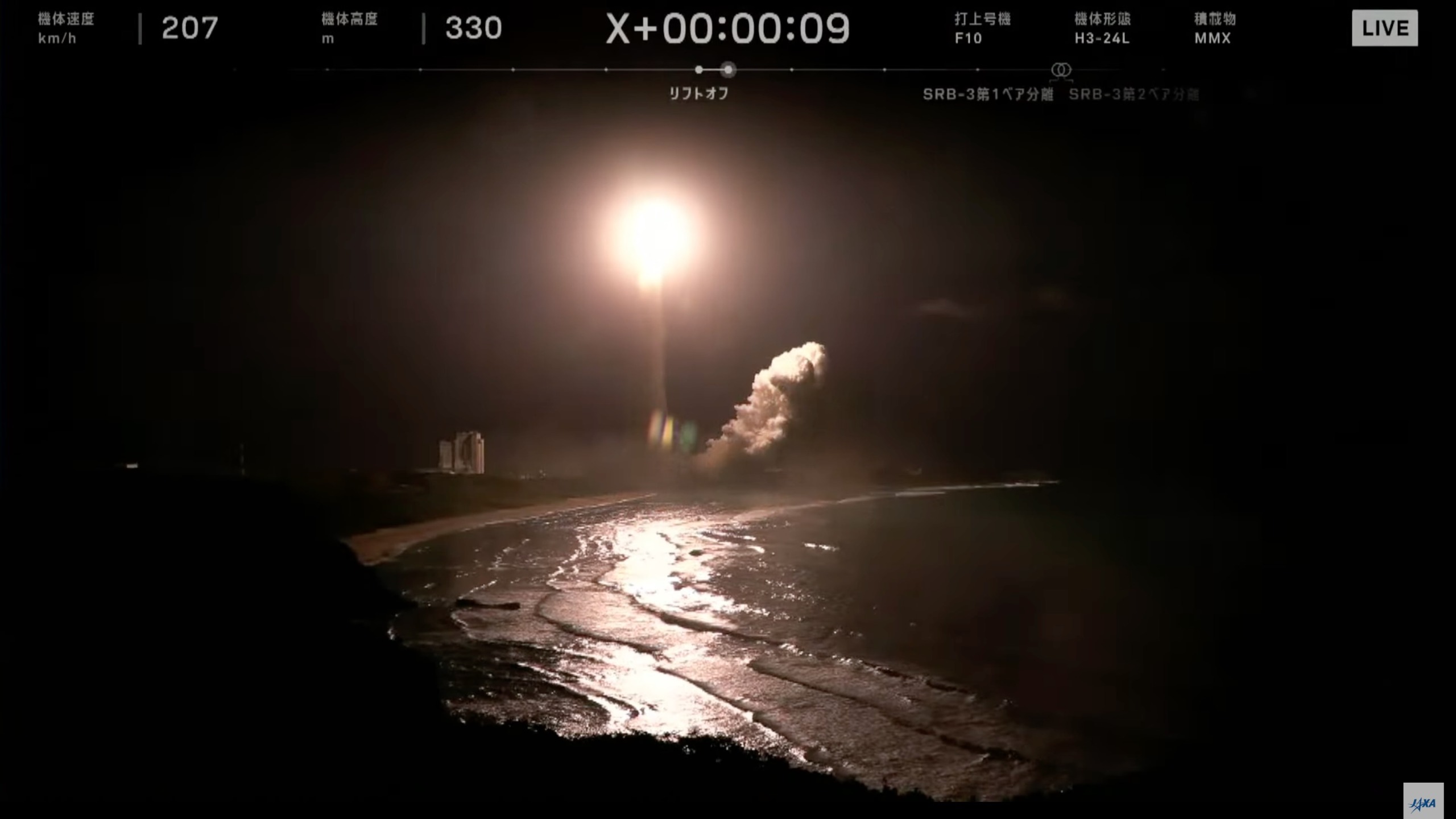
TOKYO AND WASHINGTON — In a decisive maneuver that redefines the geopolitical and economic boundaries of interplanetary exploration, the Japan Aerospace Exploration Agency (JAXA) has launched its historic Martian Moons eXploration (MMX) mission. Designed to intercept, orbit, and land upon Phobos—the larger and more enigmatic of Mars’ two captured asteroid-like moons—the campaign represents a masterclass in high-stakes capital allocation, precision engineering, and long-term scientific infrastructure investment.
As rendered in striking artist concepts featuring JAXA’s signature gold-foil-wrapped flight hardware, the MMX spacecraft is more than a triumph of astrophysics; it is a vital asset in the burgeoning global space economy. For institutional investors, aerospace prime contractors, and geopolitical strategists alike, the launch signals a paradigm shift. Outer space is no longer merely a theater for national prestige; it is an active frontier for resource validation, intellectual property generation, and multi-trillion-dollar long-term market liquidity.
The Catalytic Imperative: Why Phobos Matters Now
To understand the valuation multiples and strategic urgency driving JAXA’s MMX campaign, one must examine the fundamental limits of current deep-space data. While lunar exploration has attracted considerable private equity and government backing, and Mars surface missions have systematically mapped the Red Planet’s habitability potential, the Martian moons have remained tantalizingly out of reach.
Phobos and Deimos occupy a crucial grey area in planetary science. Are they captured primordial asteroids from the outer solar system, rich in carbonaceous chondrites and volatile organic compounds? Or are they the coalesced ejecta of a catastrophic impact on the Martian surface? Resolving this debate unlocks foundational insights into the formation of the inner solar system and the distribution of water and organic molecules across planetary bodies.
From an enterprise risk mitigation perspective, targeting Phobos instead of landing directly on Mars offers a superior risk-to-reward ratio. The Martian gravity well requires immense fuel reserves, complex entry, descent, and landing (EDL) sequences, and high planetary protection hurdles. Phobos, possessing a micro-gravity environment, allows for a more controlled rendezvous, multiple surface touch-and-go sampling operations, and a vastly simplified return trajectory back to Earth. This operational efficiency drastically reduces systemic mission failure probabilities while maximizing scientific yield.
Engineering Marvels and Mission Architecture

Executing a round-trip voyage to the Martian system requires unprecedented infrastructure scalability. The MMX spacecraft integrates multiple advanced subsystems to survive the punishing radiation belts of deep space and the thermal extremes of the Martian orbit.
This intricate hardware ecosystem relies heavily on resilient supply chains and cross-border technological integration. JAXA has partnered extensively with France’s Centre National d'Études Spatiales (CNES) and the German Aerospace Center (DLR), which are contributing a sophisticated rover to survey the surface of Phobos alongside NASA, which is providing critical deep-space communication instrumentation and neutron spectrometers.
Verified Data & Metrics Breakdown
The following comparative matrix outlines the core specifications, institutional partnerships, and fiscal parameters governing the MMX mission relative to historic sample-return benchmarks:
| Mission Metric | JAXA MMX (Phobos) | JAXA Hayabusa2 (Ryugu) | NASA OSIRIS-REx (Bennu) |
|---|---|---|---|
| Launch Date | Current Generation (Trending) | December 3, 2014 | September 8, 2016 |
| Target Destination | Phobos (Mars Moon) | Near-Earth Asteroid Ryugu | Near-Earth Asteroid Bennu |
| Primary Scientific Objective | Determine moon origin & Martian impact history | Primordial solar system organic compounds | Carbonaceous asteroid composition & resource mapping |
| Expected Sample Return | Targeting >10 grams (Coring & Pneumatic) | 5.4 grams | 121.6 grams |
| International Partners | NASA, ESA, CNES, DLR | NASA, DLR | JAXA, CSA |
Industry & Market Implications
The successful execution of the MMX mission carries profound ramifications for global financial markets and the commercial aerospace sector. As space agencies increasingly outsource specialized hardware and software integration to private enterprise, missions of this scale act as direct economic catalysts for advanced manufacturing, quantum-secured telemetry, and autonomous robotics.
Who Wins: Advanced composite manufacturers, optical navigation software developers, and specialized aerospace primes who secure JAXA subcontracts stand to reap immediate valuation uplifts. Furthermore, analytical laboratories equipped to process pristine extraterrestrial samples will see surging institutional research grants and commercial valuation multiples.
Who Loses: Traditional aerospace entities that rely solely on low-Earth orbit (LEO) satellite manufacturing or legacy launch systems face growing obsolescence risks. The market is aggressively rewarding firms that demonstrate deep-space survivability, autonomous decision-making architectures, and high-efficiency ion propulsion capabilities.
From a macroeconomic perspective, initiatives like MMX validate the economic viability of future in-situ resource utilization (ISRU). Proving that complex robotic architectures can land, anchor, and extract material from low-gravity extraterrestrial bodies lays the regulatory, engineering, and financial groundwork for eventual commercial asteroid mining and Martian infrastructure deployment.
Frequently Asked Questions (People Also Ask)
What is the primary objective of Japan’s MMX mission?
The Martian Moons eXploration (MMX) mission aims to determine the origin of Mars' moons, Phobos and Deimos. By landing on Phobos and returning pristine surface and subsurface samples to Earth, scientists seek to resolve whether these moons are captured asteroids or the byproduct of a massive impact on Mars, while providing critical data on the Martian system's evolution.
When are the MMX samples expected to return to Earth?
Following its launch, the MMX spacecraft is scheduled to spend several years transiting to the Martian system, conducting orbital surveys, and executing multiple sampling operations on Phobos. The return capsule containing the invaluable extraterrestrial material is projected to touch down on Earth in the early 2030s.
How does MMX differ from NASA's OSIRIS-REx or JAXA's Hayabusa2?
While Hayabusa2 and OSIRIS-REx targeted near-Earth asteroids (Ryugu and Bennu, respectively), MMX operates within the deep gravitational influence of Mars. This introduces significantly higher orbital complexity, demanding advanced propulsion, rigorous planetary protection protocols, and multi-agency international cooperation across JAXA, NASA, ESA, and CNES.
What role do international partners play in the MMX campaign?
While JAXA serves as the primary mission architect and financial sponsor, MMX is a truly global enterprise. France’s CNES and Germany’s DLR are contributing a surface rover, while NASA and the ESA are providing critical scientific instrumentation, navigation support, and deep-space communication tracking to ensure mission redundancy and risk mitigation.
Future Outlook & Milestones to Watch
As the MMX spacecraft clears its initial geocentric checkouts and plots its trajectory toward deep space, institutional investors and aerospace analysts must monitor several key operational milestones over the coming decade:
Ultimately, Japan’s MMX mission transcends mere academic curiosity. It is a calculated strategic masterstroke that secures Tokyo’s leadership in the next era of interplanetary commerce, scientific diplomacy, and advanced engineering scalability.