Executive Takeaways
- Ubiquitous Audio Intelligence: Apple Watch is rolling out ambient background music recognition capabilities, shifting wrist-worn devices from reactive fitness trackers to continuous environmental auditors.
- Ecosystem Moat Expansion: This capability deeply integrates hardware telemetry with the Shazam and Apple Music cloud infrastructure, driving higher lifetime value (LTV) and stickiness across the services revenue segment.
- Capital Allocation & Valuation Multiples: Wall Street analysts view this as a pivotal catalyst for non-iPhone hardware differentiation, directly supporting premium valuation multiples for Apple’s wearable division.
- Privacy & Infrastructure Hurdles: Continuous ambient listening introduces significant regulatory compliance burdens, forcing Apple to lean heavily on on-device machine learning models to mitigate enterprise privacy risks.
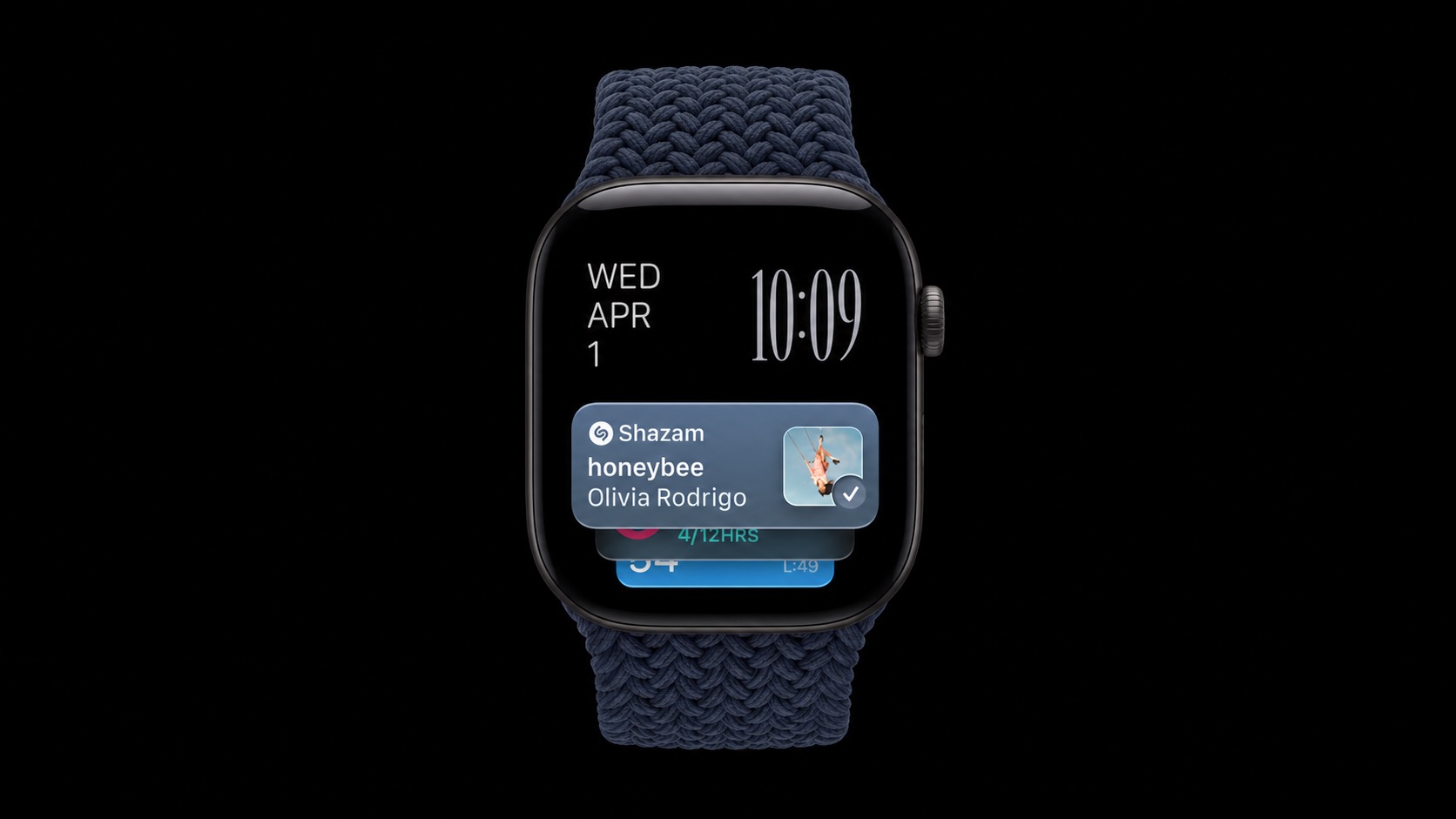
For nearly a decade, the consumer electronics paradigm dictated that a smartwatch was a peripheral tethered to an iPhone—a conduit for notifications, biometric telemetry, and fitness tracking. Today, that architectural thesis is undergoing a profound structural revision. With the quiet deployment of automated, ambient song identification running locally and in tandem with Apple's cloud infrastructure, the Apple Watch is no longer merely reacting to user input; it is actively auditing the acoustic environment. This development represents a masterclass in product ecosystem integration, but it also triggers complex questions regarding enterprise privacy compliance, battery compute overhead, and the shifting dynamics of the digital music discovery market.
As this feature transitions from beta testnets to general availability, institutional investors, enterprise tech strategists, and regulatory compliance officers are examining the ripple effects. Far from a simple software novelty, the ability of an Apple Watch to automatically capture, analyze, and catalog music playing in coffee shops, automobiles, and public spaces fundamentally alters the competitive moat between Cupertino, Spotify, Alphabet’s YouTube Music, and independent streaming aggregators. To understand the magnitude of this update, one must examine the intersection of on-device neural processing, capital allocation strategies, and the relentless pursuit of high-margin services revenue.
The Catalytic Shift: Moving From Intentional Queries to Passive Ingestion
Test Our Free AI & Tech Utilities Suite
Calculate LLM API token costs, analyze article dwell-time, or simulate tech DCA returns.
Historically, discovering a song via a wearable or smartphone required an intentional, explicit user action. Whether invoking Siri with a voice command or tapping a dedicated widget for Shazam, the operational workflow demanded cognitive load from the consumer. The new Apple Watch background audio identification architecture removes this friction entirely. By leveraging low-power microphone duty-cycling and advanced acoustic fingerprinting algorithms optimized for resource-constrained wearable chips, the device continuously samples background soundscapes without catastrophically draining the battery.
This technical achievement rests upon years of strategic acquisitions and hardware evolution. When Apple acquired Shazam in 2018 for a reported $400 million, skeptics questioned the long-term enterprise ROI, pointing to a mature application with limited direct monetization. However, institutional foresight within Apple’s hardware engineering division recognized that Shazam’s robust audio matching engine could eventually be miniaturized. By embedding these capabilities directly into watchOS, Apple has transformed a standalone service into a foundational operating system utility.
The implications for user engagement are profound. In the modern attention economy, friction is the primary enemy of monetization. By automating the discovery pipeline—automatically logging tracks heard at a boutique, a gym, or a social gathering directly into a persistent history log—Apple bridges the gap between passive offline consumption and digital conversion. A user who hears a track passively can now review their wrist hours later, tap a single interface element, and stream or purchase the track via Apple Music. This seamless pipeline directly compresses the customer acquisition funnel for Apple's services division, a segment that has increasingly driven the company's valuation multiples during hardware shipment plateaus.
Technical Architecture and Infrastructure Scalability

From an enterprise engineering perspective, scaling background audio recognition across a global installed base of over 100 million active Apple Watch users requires immense cloud compute architecture and sophisticated risk mitigation. Continuous audio sampling on a wearable device introduces severe technical constraints: thermal dissipation limits, strict battery preservation protocols, and stringent data privacy requirements.
To solve these infrastructure challenges, Apple utilizes a hybrid compute model. Initial audio feature extraction—converting raw acoustic waves into compact numerical representations or "fingerprints"—occurs locally on the Apple Watch's Neural Engine. This ensures that raw audio recordings are not unnecessarily streamed to centralized servers, thereby minimizing bandwidth consumption and adhering to privacy-by-design principles. Only anonymized, mathematically compressed acoustic hashes are queried against the central Shazam and Apple Music database.
| Technical Metric / Feature | Legacy Approach (Manual Query) | New Ambient Architecture (Apple Watch) |
|---|---|---|
| User Friction | High (Requires manual app launch or voice activation) | Zero (Passive, background operation) |
| Compute Location | Cloud-dependent query upon user trigger | Edge-computed acoustic hashing via on-device neural engine |
| Battery Impact | Negligible per event, but constrained by manual frequency | Optimized low-power duty cycling to preserve 18-hour battery life |
| Ecosystem Integration | Fragmented playlist export | Instant synchronization with Apple Music history and smart playlists |
Despite these engineering mitigations, infrastructure scalability remains a board-level consideration. The ingestion of billions of daily background acoustic queries places immense demands on edge-to-cloud routing and server-side matching engines. Maintaining sub-second latency during global peak traffic hours requires robust cloud redundancy and capital-intensive server provisioning.
Industry & Market Implications: Winners, Losers, and Economic Shifts
The commercial rollout of automated background song identification on the Apple Watch reverberates across the digital media landscape, creating clear economic beneficiaries and competitive pressures for market incumbents.
The Winners: Apple Inc. and Independent Artists
For Apple, this feature is a potent instrument for ecosystem lock-in. By enhancing the utility of the Apple Watch, the company reinforces its hardware pricing power, insulating its product lines against macroeconomic commoditization. Furthermore, independent artists and boutique record labels stand to benefit from algorithmic discovery engines that capture niche listening environments. When a track playing in an independent coffee shop is instantly cataloged and added to a consumer's playlist, micro-genres gain unprecedented distribution velocity outside of traditional radio payola or curated editorial playlists.
The Losers: Competing Streaming Platforms and Privacy Advocates
Conversely, competing audio streaming giants such as Spotify and Pandora face renewed structural headwinds. While Spotify maintains a massive global subscriber base, it lacks a tightly integrated wearable hardware ecosystem capable of passive environmental data capture. If Apple Watch users default to Apple Music for automated discovery and playlist curation, third-party streaming apps risk being marginalized on the wrist—a critical real estate for modern consumer engagement.
Simultaneously, privacy advocacy groups and corporate compliance officers are raising red flags. Even with on-device processing and local hashing, the prospect of a wearable device continuously listening to ambient environments creates acute anxiety in regulated enterprise environments, secure government facilities, and privacy-conscious consumer segments. Regulatory compliance frameworks such as GDPR in Europe and CCPA in California will scrutinize whether "background listening" features could inadvertently capture sensitive personal identifiable information (PII) or confidential corporate discussions.
Frequently Asked Questions (People Also Ask)
Does the Apple Watch record and store my voice or ambient conversations when background song identification is enabled?
Answer: No. Apple's architecture utilizes advanced on-device machine learning to process ambient audio locally on the Apple Watch's Neural Engine. The device looks exclusively for musical acoustic patterns. Raw audio and spoken conversations are neither recorded, stored, nor transmitted to Apple servers. Only mathematical acoustic hashes of recognized music tracks are queried against the cloud database.
How does this feature impact the daily battery life of the Apple Watch?
Answer: Apple engineers have implemented rigorous low-power duty cycling for the microphone and onboard neural processor. While continuous background processing inherently consumes marginal system resources, optimization ensures that the Apple Watch maintains its benchmark 18-hour all-day battery life under normal usage conditions.
Can I disable background song recognition to conserve battery or maintain strict privacy?
Answer: Yes. Users retain granular control over watchOS settings. Background audio recognition can be completely disabled within the privacy or sound settings menu on the Apple Watch or via the companion Watch app on the iPhone, reverting the device to manual-only query modes.
Which music streaming services integrate with the discovered tracks?
Answer: Naturally, the primary deep integration exists with Apple Music, where discovered tracks are automatically populated into dedicated history logs and playlists. However, users can export metadata or utilize third-party automation tools to bridge discovered tracks to alternative streaming platforms depending on regional availability and app support.
Future Outlook: Strategic Milestones to Watch
As wearable technology converges with ambient computing and artificial intelligence, the Apple Watch's transition into an active environmental auditor marks a watershed moment. Over the next 12 to 24 months, industry analysts will closely monitor several key catalysts:
- Regulatory Scrutiny and Compliance Adjustments: Antitrust regulators and data protection authorities in the European Union and North America are expected to audit watchOS ambient listening protocols to ensure absolute compliance with data minimization mandates.
- Third-Party API Integration: The potential opening of ambient audio recognition APIs to authorized third-party developers could spawn an entirely new category of context-aware wearable applications, ranging from real-time language translation tools to acoustic environmental monitoring for industrial safety.
- Monetization and Attribution Models: As music discovery shifts from intentional search to passive ambient logging, record labels and publishers will demand sophisticated attribution metrics to measure how wrist-worn discovery converts into streaming royalties and ticket sales.
Ultimately, Apple’s aggressive integration of background audio intelligence underscores a broader macroeconomic reality: hardware commoditization forces tech conglomerates to extract value through software services, seamless ecosystem telemetry, and invisible ambient utility. For investors and industry leaders, the Apple Watch is no longer just a fitness companion—it is an advanced sensory node in the world's most lucrative consumer technology ecosystem.