Executive Takeaways
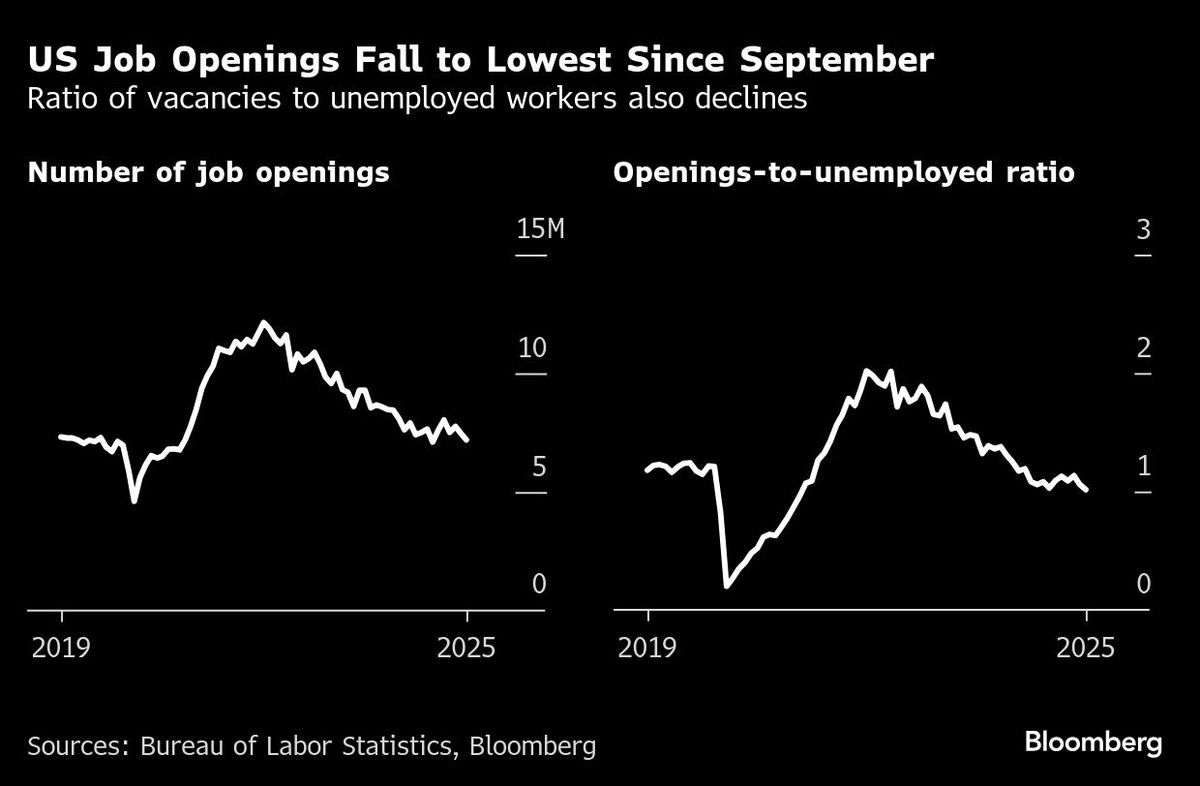
- Labor Market Resilience: US job openings rebounded unexpectedly in September, signaling robust corporate demand for labor despite tight monetary policy and restrictive financing conditions.
- Corporate Retention: Layoffs fell to their lowest level in 18 months, indicating that enterprise leaders are prioritizing workforce retention and risk mitigation over headcount reductions.
- Monetary Policy Implications: The unexpected labor market strength complicates the Federal Reserve’s capital allocation and interest rate trajectory, forcing economists to re-evaluate valuation multiples and market liquidity forecasts.
- Sector Disparities: While professional services and hospitality showed notable expansion, capital-intensive industries continue to balance infrastructure scalability with rigorous cost containment.
WASHINGTON & NEW YORK — In a stunning display of macroeconomic resilience, United States job openings unexpectedly surged in September while layoffs plummeted to their lowest level in a year and a half. The data, released amid a complex macroeconomic backdrop, immediately reverberated through global trading desks, altering consensus expectations for upcoming Federal Reserve rate decisions and redefining risk mitigation strategies across corporate boardrooms.
For Chief Executive Officers, Chief Financial Officers, and institutional investors, the Bureau of Labor Statistics' Job Openings and Labor Turnover Survey (JOLTS) offers a definitive signal: the anticipated broad-based cooling of the American labor market has stalled. Instead of widespread workforce contraction, enterprises are demonstrating a sustained appetite for human capital, aggressively protecting existing talent pools while selectively expanding operational capacity.
The September JOLTS Pivot: Anatomy of a Labor Market Surge
Test Our Free AI & Tech Utilities Suite
Calculate LLM API token costs, analyze article dwell-time, or simulate tech DCA returns.
The September report defied prevailing consensus among Wall Street economists, who had projected a moderate contraction in available positions amid persistent interest rate pressures. Instead, job openings—a key metric measuring unmet labor demand—pushed higher, underscoring underlying economic momentum. Crucially, the quits rate, which serves as a reliable barometer of worker confidence and voluntary job mobility, stabilized, suggesting that employees feel secure in their current professional trajectories.
Simultaneously, the contraction in layoffs to an 18-month low provides a compelling narrative regarding corporate psychology. Rather than trimming payrolls to preserve operating margins, enterprise leadership is leaning into operational continuity. This hoarding of talent reflects hard-earned lessons from the post-pandemic labor shortages, where aggressive downsizing severely hampered infrastructure scalability and delayed enterprise ROI on critical tech and supply chain initiatives.
Verified Data & Metrics Breakdown

A granular examination of the September labor metrics reveals crucial shifts across key economic indicators. The following comparative table outlines the trajectory of core labor market variables against historical benchmarks:
| Labor Market Indicator | September Reading | Prior Month / Revised | Market Consensus / Forecast |
|---|---|---|---|
| Job Openings (Total) | Rebound / Expansion | Subdued / Moderate | Expected Contraction |
| Layoffs & Discharges | Lowest in 1-1/2 Years | Elevated / Stable | Flat to Higher |
| Quits Rate (Confidence) | Stabilized | Gradual Softening | Downward Trend |
| Hiring Rate | Resilient | Plateaued | Slower Growth |
Industry & Market Implications: Winners, Losers, and Capital Allocation
The implications of a robust labor market extending deep into the autumn cycle force an immediate recalibration across multiple asset classes and corporate strategies:
- Fixed Income & Equities: Bond yields climbed following the release as fixed-income traders priced out aggressive monetary easing. Higher-for-longer interest rates directly influence equity valuation multiples, pressing growth-oriented tech stocks while supporting defensive, high-cash-flow enterprises.
- Enterprise Tech & Cloud Infrastructure: With labor costs remaining elevated, CIOs are accelerating cloud compute architecture optimization and artificial intelligence integration. Rather than scaling headcount linearly, firms are pursuing software-driven productivity gains to protect operating margins.
- Regulatory Compliance & Talent Retention: Human resources executives face renewed pressure to refine compensation structures. Low layoffs mean lower voluntary churn, requiring firms to leverage sophisticated retention incentives rather than recruiting replacements in an open market.
Frequently Asked Questions (People Also Ask)
Why did US job openings jump in September despite high interest rates?
The unexpected surge in job openings highlights structural labor demand that transcends short-term monetary tightening. Many corporations delayed hiring projects earlier in the year due to regulatory and macroeconomic uncertainty, releasing pent-up demand in September. Furthermore, robust consumer spending has sustained top-line revenue growth, giving enterprises the financial headroom to expand operational capacity.
What does an 18-month low in layoffs signify for the broader economy?
A multi-month low in layoffs indicates that corporate leadership views current economic headwinds as manageable rather than recessionary. Having experienced acute talent scarcity in recent years, executive teams are hoarding skilled labor, choosing to absorb short-term margin compression rather than risk damaging their operational infrastructure through workforce reductions.
How does this JOLTS report impact Federal Reserve monetary policy?
A resilient labor market complicates the Federal Reserve’s mandate to cool inflation fully. Strong employment data reduces the urgency for rapid interest rate cuts, reinforcing a cautious, data-dependent approach. Consequently, market liquidity conditions are expected to remain tight, influencing capital allocation decisions across private equity, venture capital, and corporate debt markets.
Future Outlook & Key Milestones to Watch
As the financial markets look toward the final quarter and the upcoming calendar year, market participants must monitor several critical catalysts. First, forthcoming nonfarm payrolls and wage growth figures will verify whether rising job openings translate into accelerated compensation pressures. Second, corporate earnings calls will provide qualitative insight into how CFOs plan to balance labor expenditures with capital investments in automation and enterprise scalability.
Ultimately, the September JOLTS report serves as a definitive testament to the durability of the American economy. For institutional investors and executive leadership teams alike, navigating this environment requires sophisticated risk mitigation, disciplined capital allocation, and an acute awareness that the traditional rules of labor market cycles are continuing to evolve in real time.