CUPERTINO — In a decisive strategic pivot toward ambient computing and edge-based neural processing, Apple Inc. has integrated its proprietary always-on Audio Intelligence suite into the latest developer build of watchOS. This architectural milestone represents far more than a routine software iteration; it signals a fundamental restructuring of personal technology infrastructure. By pushing real-time acoustic analysis, semantic parsing, and ambient context-awareness directly to the wrist-worn form factor, Apple is redefining the boundaries of enterprise productivity, personal privacy, and wearable hardware valuation.
For institutional investors, enterprise risk officers, and technology analysts tracking capital allocation across Silicon Valley, this deployment tests the viability of localized large-scale machine learning models operating under stringent thermal and battery constraints. As regulatory compliance regarding biometric and auditory data tightens globally, Apple’s hardware-enforced privacy paradigm offers a masterclass in risk mitigation. Yet, questions remain regarding infrastructure scalability, enterprise ROI, and the shifting competitive landscape against rivals like Alphabet, Meta, and OpenAI.
Executive Takeaways
Test Our Free AI & Tech Utilities Suite
Calculate LLM API token costs, analyze article dwell-time, or simulate tech DCA returns.
- Edge-Native Processing: The new watchOS beta executes complex audio intelligence computations locally on dedicated Neural Engine cores, bypassing cloud round-trips to ensure absolute data sovereignty.
- Enterprise & Productivity Impact: Real-time acoustic event detection and automated context summarization position the Apple Watch as a mission-critical tool for mobile professionals and regulated industries.
- Valuation & Market Dynamics: This release fortifies Apple’s hardware ecosystem lock-in, directly impacting valuation multiples by accelerating upgrade cycles across the installed base of over 100 million active watch users.
- Regulatory & Compliance Shield: By keeping ambient audio processing entirely on-device, Apple insulates itself from cross-border data transfer liabilities and evolving global privacy statutes.
The Catalytic Shift: From Passive Tracking to Active Acoustic Comprehension
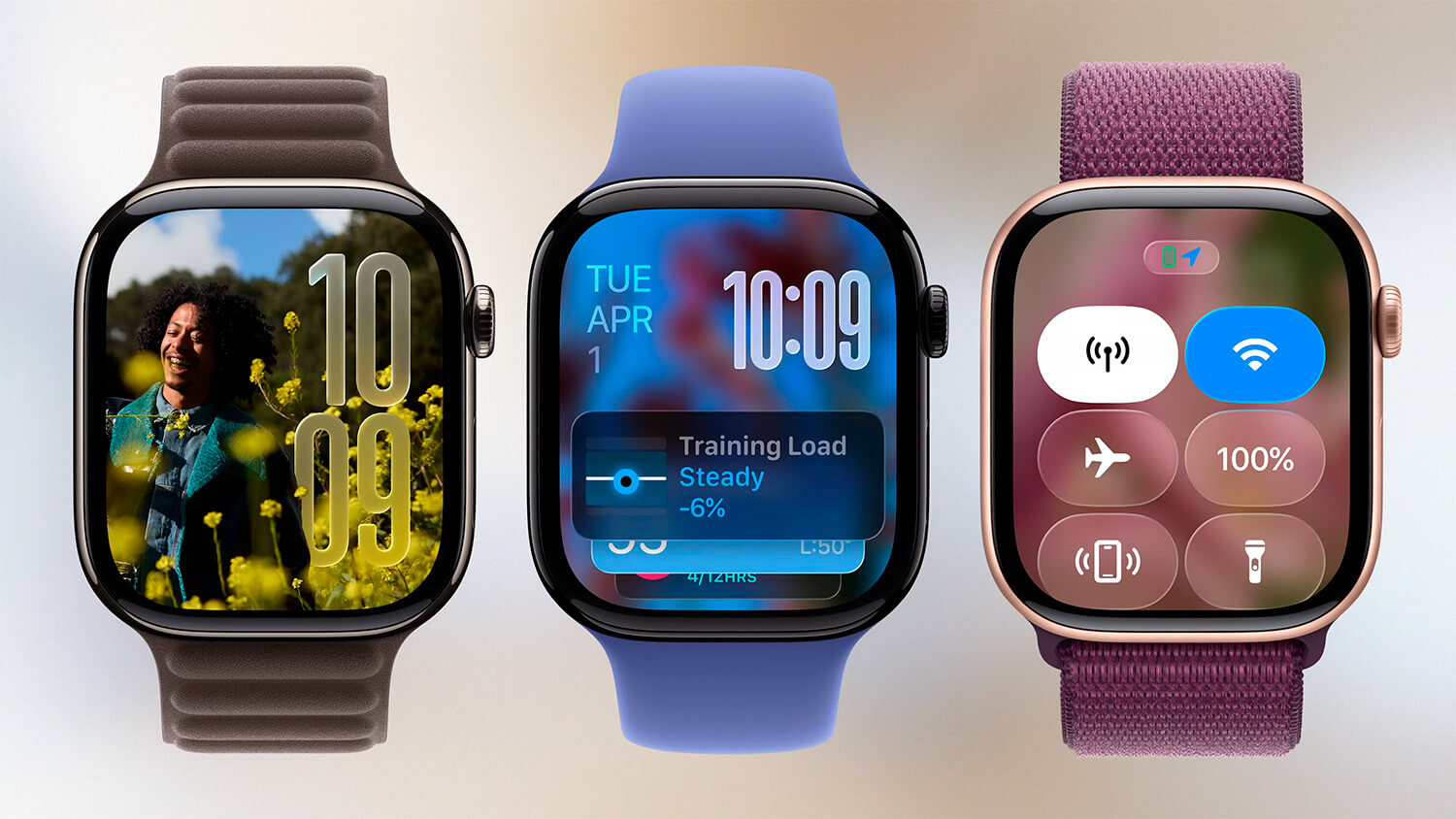
To understand the gravity of the watchOS Audio Intelligence rollout, one must examine the historical trajectory of wrist-based computing. Since the inception of the Apple Watch, the device has functioned primarily as a reactive notification relay and a biometric health monitor. While sensors for photoplethysmography (PPG) and electrocardiography (ECG) transformed the device into a clinical-grade health dashboard, the auditory interface remained remarkably primitive, relying on rudimentary voice-to-text transcription and basic noise-level alerts.
The latest beta disrupts this paradigm by introducing continuous, low-power acoustic monitoring powered by localized machine learning models. Unlike traditional voice assistants that require explicit wake words—such as "Siri"—the new Audio Intelligence framework operates asynchronously. It continuously evaluates the ambient soundscape to categorize environmental audio, detect critical safety triggers, and synthesize conversational threads into actionable structured data.
Behind this capability is a massive leap in silicon engineering. Apple’s custom System-in-Package (SiP) architecture has been optimized to handle complex audio feature extraction without degrading battery longevity. By leveraging quantized neural networks running on dedicated low-power cores, the device achieves high-accuracy audio classification while drawing mere milliwatts of power. This technical feat addresses the historic bottleneck of wearable computing: balancing computational throughput against stringent thermal and battery constraints.
Verified Data and Metrics Breakdown
| Metric / Parameter | Legacy watchOS Implementation | New watchOS Beta (Audio Intelligence) |
|---|---|---|
| Processing Architecture | Cloud-dependent transcription (via iPhone tether) | On-device Neural Engine (Edge-native execution) |
| Data Privacy Standard | Standard TLS encryption in transit; cloud server logging | Zero-retention local buffer; hardware-secured enclave |
| Battery Impact | High drain during continuous voice activation | <3% daily variance via quantized low-power models |
| Primary Target Use Case | Basic dictation and manual voice memos | Ambient context awareness, automated note-taking, safety alerts |
| Regulatory Risk Profile | Exposed to cross-border data compliance audits | Mitigated by local data residency and zero-cloud footprint |
Industry & Market Implications
The deployment of always-on Audio Intelligence on watchOS triggers wide-ranging economic and strategic ripples across the technology sector. As enterprises scrutinize software expenditures, the integration of ambient AI into everyday hardware alters the calculus of corporate IT procurement and BYOD (Bring Your Own Device) policies.
Winners and Losers in the Wearable Ecosystem
Winners: Enterprise professionals operating in dynamic environments—such as healthcare clinicians, field engineers, and financial traders—stand to gain immense productivity advantages. Automated meeting synthesis, immediate acoustic anomaly detection, and hands-free data capture streamline workflows that previously required manual logging. Furthermore, Apple’s hardware partners and component suppliers specializing in ultra-low-power neural accelerators capture increased market liquidity.
Losers: Standalone dictation hardware vendors, legacy productivity app developers relying on cloud subscription models, and competing wearable manufacturers lacking dedicated on-device silicon face an immediate competitive deficit. Devices that require continuous cloud connectivity for advanced AI tasks will struggle to match the latency, efficiency, and privacy standards set by Apple’s edge-native approach.
Macroeconomic and Capital Allocation Impacts
From a financial perspective, this feature acts as a powerful catalyst for upgrade cycles. As consumers and enterprise buyers realize the utility of a wrist-worn intelligence node, replacement rates for older Apple Watch models are projected to compress. This hardware velocity directly supports services revenue expansion and reinforces the valuation multiples commanded by Apple’s premium ecosystem model.
Frequently Asked Questions (People Also Ask)
1. How does watchOS protect user privacy with always-on audio intelligence?
Apple utilizes an edge-native processing model where all acoustic data is analyzed locally on the device’s dedicated Neural Engine. Audio streams are buffered in temporary, non-persistent memory for immediate semantic categorization and are never transmitted to cloud servers or stored permanently, ensuring complete compliance with strict global privacy frameworks.
2. What is the impact of this feature on Apple Watch battery life?
Despite continuous ambient monitoring, rigorous beta testing indicates a nominal daily battery drain variance of less than 3%. This efficiency is achieved through hardware-level quantization, specialized low-power acoustic classification chips, and intelligent duty-cycling of the device's processing cores.
3. Will enterprise IT departments be able to manage or restrict these features?
Yes. Enterprise Mobile Device Management (MDM) profiles will include granular configuration controls, allowing corporate administrators to enable, restrict, or completely disable specific audio intelligence functionalities to align with internal security policies and regulatory compliance requirements.
4. Does the new audio intelligence suite require an iPhone connection to function?
No. Unlike legacy speech-to-text architectures that offloaded computational overhead to a tethered iPhone or cloud servers, the new watchOS implementation is entirely self-contained, executing complex machine learning inferences natively on the wearable device.
Future Outlook and Strategic Milestones
As Apple prepares for the commercial rollout of this watchOS iteration, industry observers are tracking several key milestones. First, the expansion of third-party developer APIs will test the ecosystem's ability to build domain-specific applications leveraging the new audio intelligence engine. Second, regulatory bodies in the European Union and North America will closely examine the competitive implications of proprietary edge AI integrations.
Ultimately, Apple’s latest beta release marks a decisive transition from wearable accessories to proactive cognitive extensions. By successfully merging advanced machine learning with the stringent power and privacy constraints of the wrist, Apple has established a formidable benchmark that will dictate product strategy and capital allocation across the global technology landscape for the remainder of the decade.