In a seismic shift for the digital media and enterprise software sectors, Serif has officially launched its acclaimed Affinity creative suite for the iPad as a completely free-to-use tier for individuals. This strategic pivot—accelerated by deep-pocketed corporate consolidation and shifting market liquidity—marks a watershed moment in the visual design industry. For over a decade, creative professionals and hobbyists alike have chafed under subscription-locked models, paying recurring monthly fees for vector illustration, photo editing, and desktop publishing tools. By removing the capital barrier for individual users on Apple’s dominant tablet infrastructure, Affinity is not merely distributing software; it is actively weaponizing user adoption to reshape valuation multiples across the entire creative software landscape.
As capital allocation strategies among tech conglomerates shift toward platform lock-in and high-frequency user engagement, this development demands rigorous examination. What are the underlying financial mechanics driving a major suite to pivot to a zero-dollar model? How will enterprise ROI calculations shift as employees onboard consumer-grade tools onto corporate-managed hardware? And crucially, how does this put immediate pressure on incumbent giants like Adobe to defend their market share?
Executive Takeaways
Test Our Free AI & Tech Utilities Suite
Calculate LLM API token costs, analyze article dwell-time, or simulate tech DCA returns.
- The Free-Tier Inflection Point: The complete Affinity creative suite (encompassing Photo, Designer, and Publisher capabilities) is now available for individual users on iPadOS at zero financial cost, transforming the competitive baseline for mobile creative tools.
- Strategic Parentage & Capital Backing: Following its recent acquisition by Australian tech giant Canva, the Affinity brand possesses the enterprise scalability and financial runway to absorb short-term monetization hits in exchange for massive long-term market capture.
- Direct Challenge to Subscription Incumbents: By eliminating entry friction, the move directly pressures Adobe’s subscription-heavy mobile revenue streams and forces a re-evaluation of pricing elasticity in the creator economy.
- Enterprise & Professional Integration: While individual licenses are free, commercial deployments, team infrastructures, and enterprise-grade cloud compute architectures will likely remain monetization focal points for corporate risk mitigation and compliance frameworks.
The Catalytic Event: Inside the Canva-Affinity Synergy
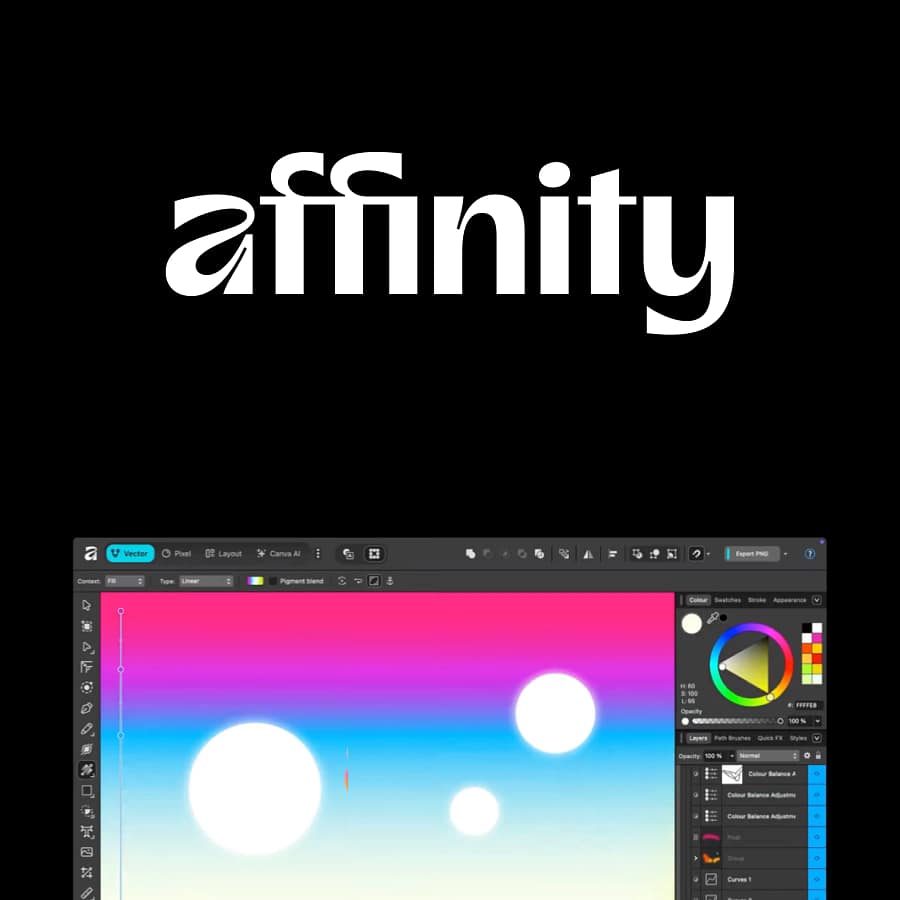
To understand the gravity of the Affinity iPad announcement, one must trace the macroeconomic trajectory of Serif over the past twenty-four months. Long celebrated by purists as the perpetual-license antidote to subscription fatigue, Affinity carved out a loyal market share by offering robust, GPU-accelerated performance without recurring costs. However, competing in the heavy-infrastructure arena of cloud-connected creative suites requires relentless capital expenditure—particularly in hardware optimization, continuous AI integration, and cross-platform sync.
Enter Canva. The design unicorn’s strategic acquisition of Serif provided the exact liquidity and infrastructure scalability needed to execute a long-term market disruption play. Rather than maintaining isolated revenue streams from standalone iPad app downloads, the post-acquisition leadership recognized that modern enterprise ROI is driven by funnel velocity. By opening the floodgates for individual iPad users, Canva can aggregate a massive, hyper-engaged user base, leveraging network effects to upsell cloud collaboration, team asset management, and advanced AI features.
Technically, bringing the full breadth of a desktop-class design suite to iPadOS represents an engineering triumph. Affinity’s utilization of Apple’s Metal framework, Apple Pencil latency optimization, and native file handling ensures that mobile creators experience zero performance degradation. This technical parity between desktop hardware and mobile tablets removes the traditional compromises associated with on-the-go design work.
Market Dynamics and Competitive Pressures
The timing of this release introduces severe risk mitigation challenges for legacy software providers. For years, the creative software market operated on a predictable pricing model where professional tools commanded high, recurring annual subscriptions. Wall Street analysts have long monitored user churn rates and Average Revenue Per User (ARPU) metrics for these incumbents as bellwether indicators of tech sector health.
With Affinity offering enterprise-grade vector manipulation, non-destructive raster editing, and multi-page layout capabilities on the iPad for free, the value proposition of entry-level paid mobile apps collapses. Freelancers, students, and independent contractors—historically a crucial pipeline for long-term enterprise software adoption—now have zero financial incentive to commit to competing paid ecosystems for mobile workflows.
Furthermore, this move alters supply-chain dynamics within corporate purchasing departments. As knowledge workers increasingly demand device flexibility, IT administrators evaluating software deployment and license compliance must now account for robust, zero-cost alternatives that integrate smoothly into modern cloud compute architectures.
Verified Data & Metrics Breakdown
| Metric / Specification | Legacy Industry Standard | Affinity for iPad (New Model) | Strategic Implications |
|---|---|---|---|
| Individual Entry Cost | $9.99/mo to $54.99/mo (Subscription) | $0.00 (Free for Individuals) | Eliminates entry friction; accelerates viral adoption curve. |
| Hardware Optimization | Variable mobile optimization | Native Apple Metal & Apple Pencil Integration | Delivers desktop-class performance without latency penalties. |
| Ecosystem Backing | Fragmented independent developers | Backed by Canva Infrastructure & Capital | Ensures long-term R&D sustainability and rapid feature rollouts. |
| Monetization Focus | Direct consumer license fees | Enterprise tiers, teams, & cloud services | Shifts revenue capture to high-value corporate and collaborative structures. |
Industry & Market Implications
The ripple effects of this free-tier rollout extend far beyond consumer convenience, fundamentally altering the financial calculus for industry stakeholders:
- Who Wins:
- Independent Creators & Freelancers: Gain access to professional-grade tools without ongoing overhead, directly improving profit margins.
- Apple: Further cements the iPad Pro and iPad Air as indispensable, high-performance creative powerhouses capable of running heavy workflows.
- Canva: Successfully expands its top-of-funnel user acquisition engine, positioning itself as an inescapable hub for all tiers of visual communication.
- Who Loses:
- Paid Mobile App Developers: Single-purpose utility apps and subscription-locked drawing tools face severe margin compression.
- Legacy Incumbents: Must aggressively defend their market share against a competitor offering high-end capabilities at zero entry cost, potentially forcing margin-eroding price adjustments.
From a macroeconomic perspective, this signals a broader trend across enterprise software: the unbundling of basic creation tools from monetization, shifting the profit center toward collaboration, governance, and proprietary cloud infrastructure.
Frequently Asked Questions (People Also Ask)
Is the Affinity iPad app truly free with no hidden subscription fees for individuals?
Yes. Serif and Canva have structured the new offering so that individual users can download and utilize the core Affinity applications (Photo, Designer, and Publisher functionalities tailored for iPadOS) without incurring recurring subscription costs or mandatory upfront license fees.
Can these free tools be used for commercial and enterprise projects?
While individuals can use the software freely for personal and independent commercial work, organizations requiring centralized IT deployment, team management controls, enterprise security compliance, and collaborative cloud infrastructure will need to look toward designated business and enterprise licensing tiers.
How does this impact existing desktop users of Affinity?
Existing desktop users retain their current licensing structures (whether perpetual or transitional), but the massive influx of new mobile users promises to accelerate overall R&D funding, feature deployment cross-platform, and community asset sharing.
Will Adobe and other competitors respond with their own free mobile tiers?
Industry analysts anticipate intensified pricing competition. While legacy giants rely heavily on locked-in enterprise ecosystems, they may introduce tiered freemium models or streamlined mobile app versions to prevent early-career creators from migrating to the Affinity and Canva orbit.
Future Outlook and Key Milestones
As the digital design market absorbs this disruption, industry observers should monitor several critical milestones over the coming quarters. First, track adoption velocity metrics and user growth figures reported by Canva to gauge how effectively the free iPad tier converts into broader ecosystem engagement. Second, watch for counter-strategies from Adobe and other software giants during upcoming earnings calls, particularly regarding mobile pricing structures and cloud integration bundles.
Ultimately, the democratization of professional design tools on mobile hardware signifies a permanent elevation of user expectations. Software is no longer judged solely by its feature list, but by the frictionless immediacy of its deployment. In redefining how individuals access high-end creative infrastructure, Affinity has set a new benchmark for software economics in the digital age.