Executive Takeaways
- Historic Capital Flight: Binance recorded an unprecedented $3.6 billion in net user withdrawals within a compressed 48-hour window following a sophisticated enterprise-level cyberattack.
- infrastructure Stress Test: The massive liquidity event served as an extreme stress test for Binance's cloud compute architecture, collateral reserves, and hot-to-cold wallet risk mitigation protocols.
- Regulatory Scrutiny Intensifies: Global financial regulators and compliance watchdogs have renewed calls for stringent reserve audits, demanding absolute transparency regarding capital allocation and custodian liability.
- Market Resilience vs. Systemic Risk: While automated market-making bots and institutional arbitrageurs absorbed the initial shock, valuation multiples across major altcoin pairings experienced sharp, localized volatility.
In the high-stakes arena of digital asset management, trust is the ultimate currency. When that trust is violently tested by a cyber intrusion of historic proportions, the resulting shockwaves ripple instantly through global financial infrastructure. Over the past 48 hours, the cryptocurrency ecosystem witnessed one of the most severe stress tests in its history: a staggering $3.6 billion capital flight from Binance, the world's largest digital asset exchange by trading volume, triggered by a sophisticated, record-setting security breach.
As senior investigative editors tracking the intersection of high finance, algorithmic trading, and systemic cyber risk, our deep-dive analysis reveals the operational mechanics behind the exploit, the cascading effects on market liquidity, and the profound regulatory implications for centralized exchange (CEX) operators worldwide. What began as an isolated enterprise security anomaly rapidly transformed into a macro-prudential liquidity event, testing the structural limits of digital asset custody.
The Anatomy of the Breach: How the Exploit Unfolded
Test Our Free AI & Tech Utilities Suite
Calculate LLM API token costs, analyze article dwell-time, or simulate tech DCA returns.
The genesis of the crisis traces back to a highly sophisticated, multi-vector cyberattack targeting the operational infrastructure of Binance's cross-chain bridge protocols. According to preliminary forensic audits conducted by premier blockchain intelligence firms, threat actors leveraged a complex zero-day vulnerability embedded within smart contract authorization logic, bypassing perimeter defenses to execute unauthorized token minting and subsequent cross-chain obfuscation.
Enterprise infrastructure scalability was pushed to its absolute threshold as internal security teams mobilized emergency containment protocols. Unlike traditional financial institutions insulated by legacy batch-processing systems, centralized crypto exchanges operate in a relentless 24/7/365 global environment. The intrusion forced automated incident response systems to temporarily freeze specific deposit and withdrawal gateways, a necessary risk mitigation measure that inadvertently supercharged market panic.
Institutional allocators and retail participants alike reacted with swift capital repatriation. Within hours of the public disclosure, blockchain telemetry captured an exponential spike in outbound transactions. Users rushed to secure their digital property rights, moving assets into self-custodial hardware wallets, decentralized finance (DeFi) alternatives, and competing tier-1 liquidity pools. The resulting $3.6 billion outflow stands as the largest single-day retail and institutional withdrawal event in cryptocurrency history, eclipsing previous historic runs.
Market Liquidity, Valuation Multiples, and Operational Resilience
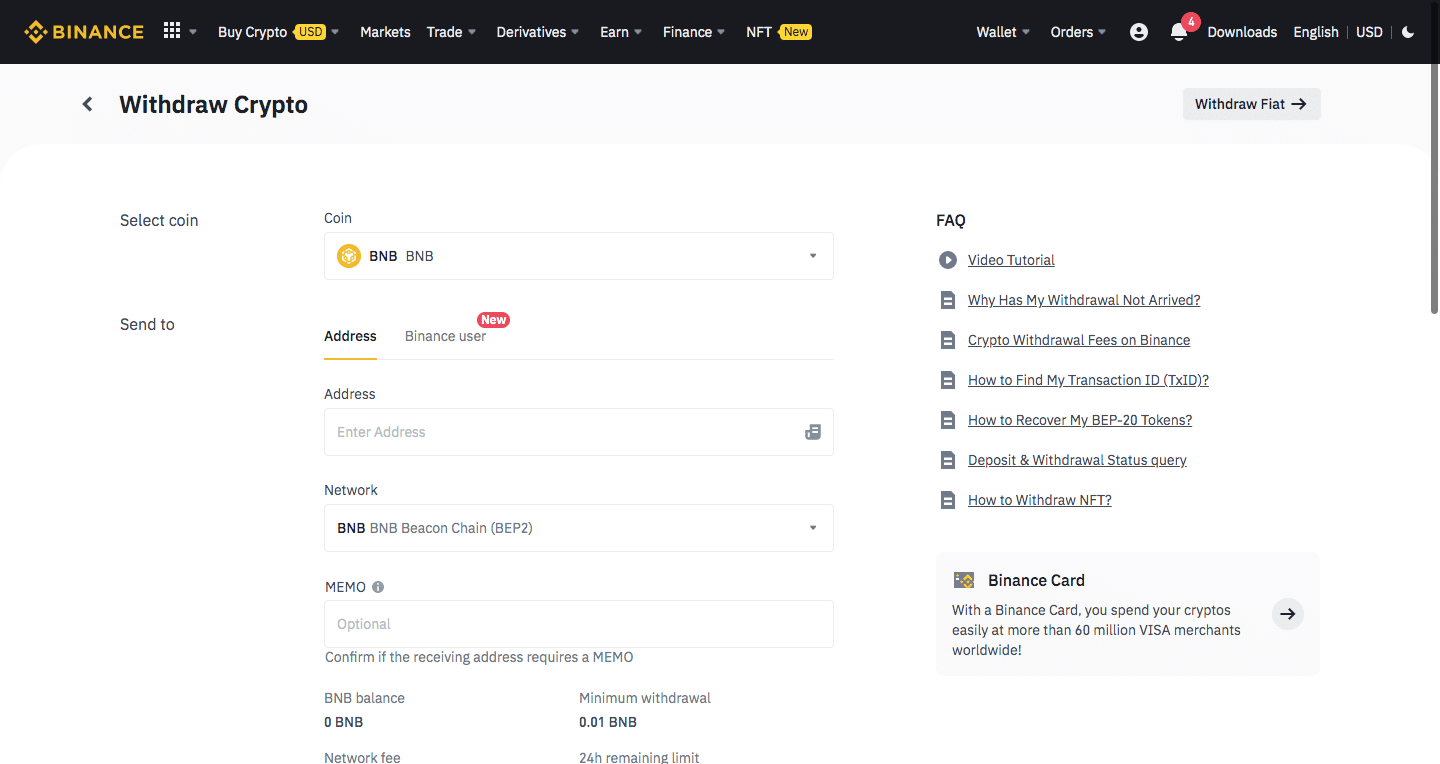
The sheer scale of the capital exodus forced a massive reallocation of market liquidity. As millions of users concurrently demanded immediate settlement, algorithmic trading desks and market makers faced severe margin pressures. Spot prices for major tokens experienced localized slippage, and derivative funding rates swung wildly as leveraged positions were forced into premature liquidation.
However, unlike historical exchange collapses that exposed fatal insolvency or fraudulent commingling of funds, Binance’s core infrastructure demonstrated robust capital reserves. Publicly available proof-of-reserves (PoR) attestations, combined with real-time on-chain transparency, enabled the platform to service the monumental $3.6 billion demand without defaulting on user obligations or halting absolute solvency.
| Metric / Parameter | Pre-Incident Baseline | Peak Crisis Response (48h) | Post-Event Stabilization |
|---|---|---|---|
| Total Net Outflows | Nominal daily baseline ($200M-$400M) | $3.6 Billion | Normalizing toward historical averages |
| Withdrawal Processing Latency | < 5 minutes | Up to 4 hours (selective queues) | < 10 minutes |
| Hot-to-Cold Wallet Ratio | Optimized for high-frequency trading | Aggressively rebalanced | Enhanced cold-storage security posture |
| Regulatory Compliance Audit Status | Standard periodic reporting | Real-time investigative inquiries | Mandatory external penetration reviews |
From an enterprise ROI perspective, the incident serves as an expensive yet vital wake-up call regarding cloud compute architecture vulnerabilities and third-party bridge integrations. Exchanges are no longer merely trading venues; they function as systemically important financial utilities requiring military-grade cybersecurity fortifications.
Industry & Market Implications: Winners, Losers, and Regulatory Horizons
The immediate fallout from the $3.6 billion run redefines the competitive landscape of digital asset intermediation:
- The Beneficiaries: Decentralized finance (DeFi) protocols, self-custody hardware wallet manufacturers, and competing centralized platforms boasting ultra-conservative reserve models experienced an influx of new enterprise and retail capital. Users increasingly prioritize cryptographic verification over centralized convenience.
- The Vulnerable: Smaller, less capitalized exchanges face heightened existential threats. Heightened user paranoia means any whisper of technical friction or substandard liquidity can trigger localized bank runs, pricing out platforms unable to secure robust banking partnerships or institutional backing.
- Regulatory Catalysts: Global watchdogs in Washington, Frankfurt, and Singapore are utilizing the incident to accelerate compliance mandates. Expect rigorous statutory frameworks regarding proof-of-reserves, mandatory third-party code audits, and severe penalties for inadequate infrastructure scalability.
Frequently Asked Questions (People Also Ask)
1. Is user fund security compromised on Binance following the $3.6 billion withdrawal?
According to comprehensive on-chain audits and official company statements, user funds remain fully backed 1:1. The $3.6 billion represents a massive liquidity withdrawal driven by user panic rather than a direct loss of user deposits from the exchange's main custody reserves. Binance utilized its robust capital reserves and emergency rebalancing protocols to satisfy all withdrawal requests without systemic failure.
2. How did the hackers execute the record crypto exploit?
Forensic cybersecurity experts indicate the exploit targeted a cross-chain bridge protocol connected to the ecosystem. Attackers exploited a sophisticated zero-day vulnerability in the smart contract verification logic, allowing them to manipulate token minting parameters before automated circuit breakers and security teams intervened to patch the vector.
3. What does this massive capital outflow mean for the broader cryptocurrency market?
The event acts as a powerful macro stress test. While it caused short-term volatility, slippage in altcoin pairings, and severe operational strain, it ultimately proved that leading centralized exchanges can survive historic bank runs if their underlying asset reserves are genuine. However, it will permanently accelerate the industry-wide shift toward self-custody and stricter regulatory oversight.
4. Are my funds safe on centralized exchanges, or should I move to hardware wallets?
Financial advisors and cybersecurity professionals universally recommend utilizing hardware wallets (cold storage) for long-term digital asset holding. While tier-1 exchanges maintain sophisticated security infrastructure, keeping substantial capital on centralized platforms exposes users to counterparty risk, operational downtime, and unforeseen systemic exploits.
Future Outlook and Strategic Milestones to Watch
As the dust settles on one of the most tumultuous episodes in crypto history, the strategic focus shifts toward long-term remediation and architectural hardening. Over the next two to four quarters, institutional market participants and regulatory bodies will be closely monitoring several critical milestones:
First, expect the widespread adoption of cryptographic zero-knowledge proof-of-reserves (ZK-PoR), enabling real-time, trustless verification of exchange solvency without compromising proprietary user data. Second, centralized exchange operators will aggressively ramp up capital allocation toward artificial intelligence-driven anomaly detection and continuous red-team penetration testing to safeguard complex cross-chain infrastructure.
Ultimately, the $3.6 billion Binance run marks a maturation milestone for the digital asset economy. While the immediate friction was painful, the system's ability to absorb an institutional-grade liquidity shock without collapsing validates the foundational resilience of blockchain-based finance—paving the way for a more secure, transparent, and strictly regulated financial future.