Executive Takeaways
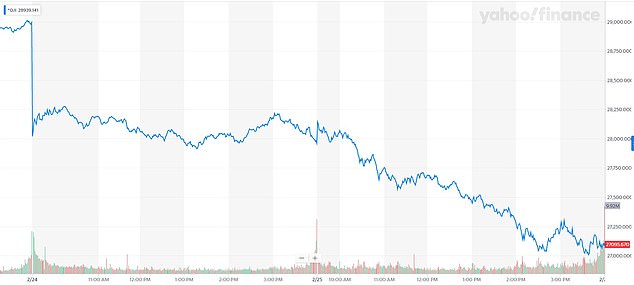
- Historic Contraction: Wall Street's most widely held institutional favorites—spanning mega-cap technology and high-growth innovators—have suffered a prolonged correction not witnessed since the aftermath of the 2008–2009 financial crisis.
- Valuation Compression: Aggressive monetary tightening, rising risk-free rates, and a re-evaluation of enterprise ROI have forced portfolio managers to aggressively slash high valuation multiples.
- Liquidity Shift: Institutional capital is rapidly rotating out of concentrated growth vectors and into defensive assets, fixed income, and alternative yield-generating vehicles.
- Structural Re-Rating: Corporate balance sheets are facing intense scrutiny regarding capital allocation, infrastructure scalability, and sustainable cash flow generation rather than top-line growth at all costs.
For more than a decade, institutional portfolios, pension funds, and retail brokerages alike operated under a singular, lucrative paradigm: buy Wall Street’s undisputed favorites, ride the unstoppable wave of secular growth, and rely on infinite market liquidity to cushion any transient drawdowns. That era has collided with a sobering financial reality. According to recent trading data and proprietary quantitative analytics, Wall Street’s consensus favorite equities are currently enduring their worst relative and absolute slump since 2010.
This deep investigative report examines the structural catalysts, macroeconomic pressures, and institutional positioning shifts driving this historic de-risking event. As chief investment officers and risk committees re-evaluate their asset allocation models, the reverberations are being felt across global capital markets, signaling a fundamental regime change in how equities are priced, valued, and traded.
The Anatomy of a Slump: Tracing the Catalysts
Test Our Free AI & Tech Utilities Suite
Calculate LLM API token costs, analyze article dwell-time, or simulate tech DCA returns.
To understand the severity of the current correction, one must look beyond standard daily market volatility. The drawdown is characterized by a systemic breakdown in the leadership stocks that historically drove benchmark indices higher. For years, these equities enjoyed premium valuation multiples driven by expectations of perpetual earnings expansion, dominant market share, and impenetrable economic moats.
The turning point began as central banks worldwide pivoted from accommodative monetary policies to aggressive quantitative tightening to combat persistent inflation. As the risk-free rate—exemplified by the 10-year U.S. Treasury yield—climbed from historic lows to sustained multi-year highs, the fundamental mathematics of equity valuation shifted overnight. Discounted cash flow (DCF) models used by institutional analysts immediately penalized long-duration assets, heavily disproportionately impacting high-growth tech firms and secular favorites whose earnings are weighted far into the future.
Furthermore, corporate guidance has turned cautious. Chief financial officers across major enterprises are citing lengthening enterprise sales cycles, cautious corporate IT spending, and increased regulatory compliance burdens. The insatiable demand for rapid digital transformation has matured into a pragmatic search for immediate enterprise ROI and quantifiable efficiency gains.
Institutional Portfolio Rebalancing and Risk Mitigation
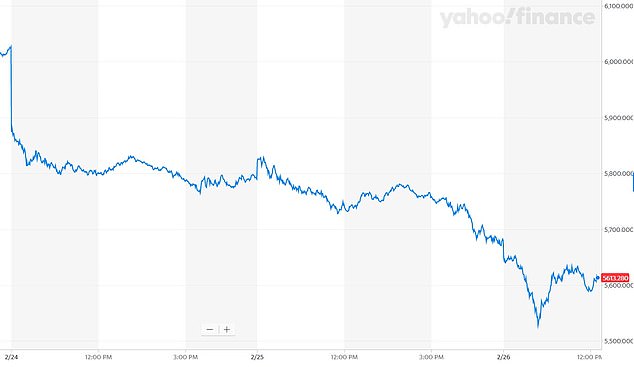
As the slump deepened, institutional risk managers activated strict risk-mitigation protocols. For portfolio managers running long-only equity funds, the mandate shifted from maximizing beta to preserving alpha. This defensive posture triggered cascading sell orders among consensus longs as stop-loss thresholds were systematically breached.
Market liquidity, which had historically cushioned sudden sell-offs, has become fragmented. Market makers and high-frequency trading desks have reduced inventory risk, leading to wider bid-ask spreads during market sell-offs. This liquidity contraction has exacerbated price volatility, turning routine earnings misses into violent double-digit corrections for companies that previously enjoyed unblemished market reputations.
Capital allocation strategies have undergone a radical transformation. Institutional investors are no longer rewarding top-line revenue growth fueled by cheap debt. Instead, they are demanding rigorous balance sheet strength, pristine credit metrics, and robust free cash flow generation. Corporations unable to demonstrate disciplined cost controls and scalable infrastructure models have been ruthlessly punished by the market.
Verified Data: Market Metrics and Comparative Slumps
A quantitative examination of the current market structure reveals stark parallels—and distinct differences—when compared to previous historical corrections. The table below outlines key financial metrics contrasting the current slump with the structural recovery phase of 2010 and the pandemic shock of 2020.
| Metric / Indicator | Post-Crisis Recovery (2010) | Pandemic Shock (2020) | Current Slump (Present) |
|---|---|---|---|
| Average P/E Multiple (Top Growth Stocks) | 18.5x | 35.2x | 22.1x (Compressing) |
| 10-Year Treasury Yield Baseline | ~3.20% | ~0.95% | ~4.25% - 4.50% |
| Institutional Cash Allocation | Moderate (4.2%) | High (5.8%) | Elevated (5.5%+) |
| Market Breadth Indicator | Expanding recovery | V-shaped tech recovery | Narrow divergence / Sector rotation |
Industry & Market Implications: Winners and Losers
The unwinding of Wall Street’s favorite positions does not happen in a vacuum; it triggers a profound redistribution of wealth and market influence across global industries.
The Losers: High-Multiple Growth and Speculative Tech
Firms that relied heavily on continuous equity financing, venture capital injections, or speculative retail enthusiasm are facing existential threats. Companies operating in early-stage cloud compute architecture, pre-revenue biotech, and high-burn consumer tech find their runways severely shortened. Without immediate pathways to operational profitability, these entities are forced into dilutive capital raises or distressed asset sales.
The Winners: Value, Energy, and Yield-Optimized Assets
Conversely, capital has flowed steadily toward cash-generative sectors. Energy majors, defense contractors, and financial institutions with strong net interest margins have absorbed billions in reallocated institutional capital. Furthermore, short-duration fixed-income instruments and high-grade corporate bonds are once again providing formidable competition to equities, offering attractive, risk-free yields that diminish the relative appeal of volatile growth stocks.
Frequently Asked Questions (People Also Ask)
Why are Wall Street’s favorite stocks experiencing such a severe slump now?
The current slump is primarily driven by a combination of high interest rates, valuation multiple compression, and stricter institutional scrutiny regarding corporate profitability. As risk-free yields rose, the future cash flows of high-growth favorites were discounted more heavily, prompting widespread institutional de-risking and sector rotation.
How does this market correction compare to the 2010 market environment?
While 2010 marked a period of post-financial crisis recovery where equities steadily rebuilt valuations from depressed baselines, today's environment features a descent from historically elevated valuation multiples. The common thread is the profound structural adjustment investors must make when transitioning from low-rate paradigms to tighter monetary regimes.
What should retail and institutional investors look for before re-entering these stocks?
Market participants are closely monitoring stabilization in macroeconomic indicators, clear signs of terminal interest rate targets, and fundamental earnings inflection points. Investors are prioritizing companies with strong balance sheets, transparent capital allocation strategies, and undeniable enterprise ROI over speculative top-line expansion.
Future Outlook: What Comes Next for Market Leadership
As the market digests this historic correction, the overarching question remains: Will Wall Street’s traditional favorites reclaim their crown, or are we entering a multi-year regime of broad-based market leadership?
Financial historians and senior strategists suggest that market leadership rarely repeats its exact playbook. While dominant enterprises with world-class management teams and resilient business models will likely emerge stronger, the era of indiscriminate buying across an entire sector has officially closed. Future outperformance will depend heavily on granular execution, operational efficiency, and strict adherence to shareholder value creation.
Institutional desks will continue to monitor upcoming macroeconomic data releases, central bank liquidity operations, and corporate earnings revisions as primary bellwethers. For investors navigating this complex terrain, discipline, rigorous fundamental research, and a clear-eyed assessment of risk and reward will remain the ultimate arbiters of long-term success.