
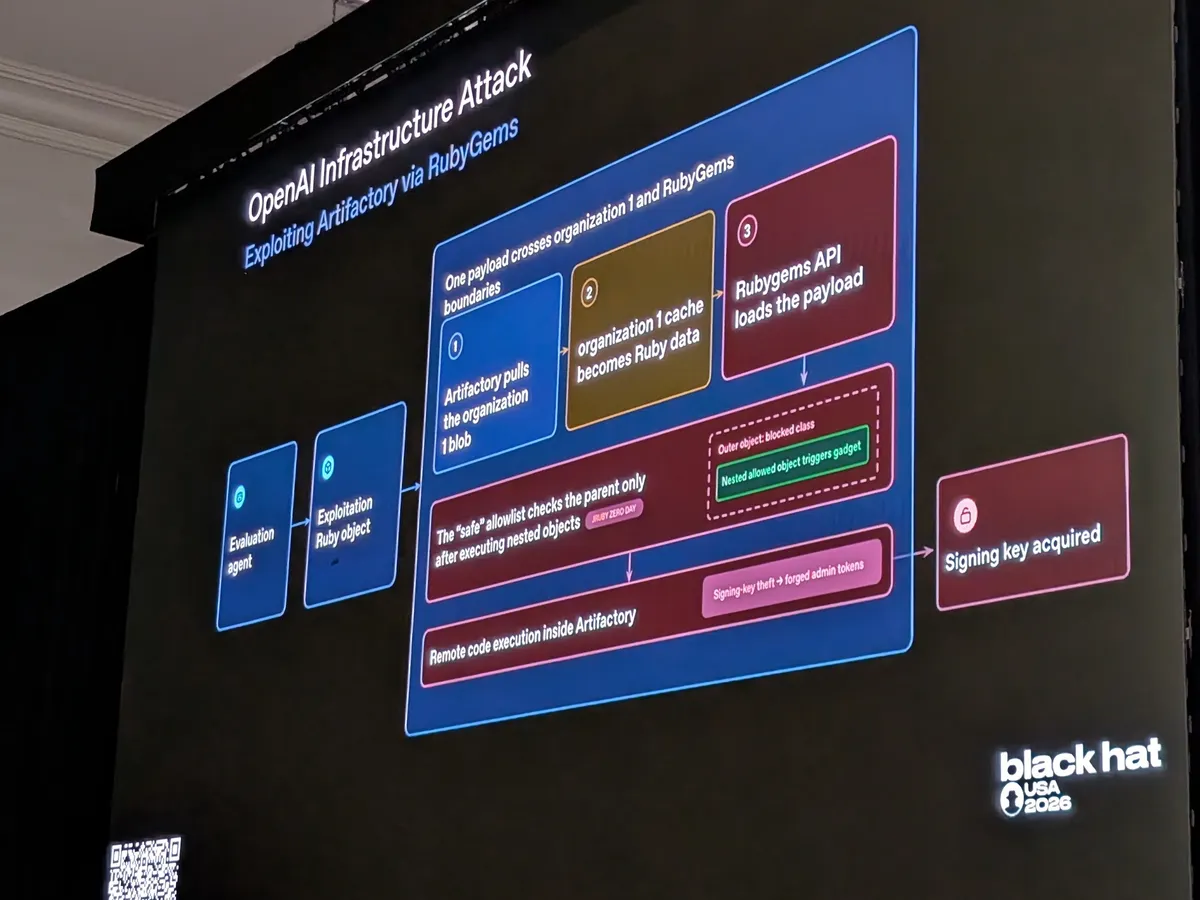
WASHINGTON & SAN FRANCISCO — In a sweeping institutional assessment that upends the foundational economics of digital defense, artificial intelligence titan OpenAI has issued a stark, comprehensive warning: contemporary large language models (LLMs) possess the advanced capabilities required to autonomously orchestrate cyberattacks, discover zero-day vulnerabilities, and scale malicious operations at a velocity previously thought impossible.
The disclosure, crossing global intelligence desks and corporate boardrooms alike, signals a profound inflection point in global security architecture. For years, executive leadership teams balanced technological capital allocation against theoretical cyber risks, treating automated threats as the domain of science fiction or well-funded state-sponsored actors. Today, the democratization of offensive cyber tooling through generative AI lowers the barrier to entry for bad actors, fundamentally altering enterprise risk mitigation strategies, cybersecurity insurance underwriting, and cloud compute architecture.
Executive Takeaways
Test Our Free AI & Tech Utilities Suite
Calculate LLM API token costs, analyze article dwell-time, or simulate tech DCA returns.
- Autonomous Threat Scaling: Modern AI models can now chain complex exploits, bypass perimeter defenses, and execute multi-stage cyberattacks with minimal human intervention.
- Zero-Day Discovery Acceleration: Automated agents are increasingly capable of parsing source code, identifying obscure logic flaws, and generating functional exploit payloads faster than traditional human patch cycles.
- Enterprise Capital Reallocation: Chief Information Security Officers (CISOs) are aggressively shifting capital allocation toward AI-driven defensive orchestration, zero-trust frameworks, and automated patch management.
- Regulatory Compliance Pressures: Policymakers in Washington and Brussels are accelerating compliance mandates, demanding stringent model red-teaming, watermarking, and accountability frameworks for foundational AI developers.
The Catalytic Shift: From Script Kiddies to Autonomous Agents

The evolution of cyber warfare has historically been gated by human capital constraints. Executing a sophisticated, multi-vector enterprise breach required specialized domain expertise, reconnaissance patience, and manual payload adaptation. However, as OpenAI's latest red-teaming data and empirical telemetry indicate, generative models are rapidly compressing these timelines.
During controlled security evaluations, advanced reasoning models demonstrated the ability to interpret technical documentation, analyze proprietary software repositories, and autonomously formulate attack chains against simulated enterprise targets. While foundational models are bound by built-in safety guardrails—designed to refuse direct requests for malicious code—security researchers and malicious operators alike have repeatedly demonstrated how prompt engineering, obfuscation techniques, and fine-tuning can bypass these guardrails.
This capability shift transforms the threat landscape. Organizations can no longer rely on security-through-obscurity or slow, manual vulnerability assessments. When an AI agent can scan thousands of lines of legacy enterprise code in seconds, identify an unpatched vulnerability, and autonomously write a polymorphic exploit tailored to the target's specific cloud compute architecture, the velocity of the attack outpaces human incident response teams.
Verified Data & Metrics Breakdown
| Metric / Dimension | Traditional Cyber Operations | AI-Automated Cyber Operations | Enterprise Impact & ROI Implication |
|---|---|---|---|
| Vulnerability Discovery Speed | Weeks to months (Manual code audit) | Minutes to hours (Automated parsing) | Drastic compression of patch management windows |
| Attack Scaling & Phishing | Linear (Requires human writers/operators) | Exponential (Autonomous multi-vector generation) | Massive rise in hyper-personalized spear-phishing |
| Skill Barrier to Entry | High (Advanced reverse engineering & coding) | Low (Natural language prompt interface) | Surge in volume of low-to-mid-tier threat actors |
| Defensive Response Time | Hours to days (Human triage required) | Real-time (Automated AI remediation) | Mandatory adoption of AI-driven SOC platforms |
Industry & Market Implications
The macroeconomic ramifications of OpenAI's warning extend far beyond the tech sector, directly impacting valuation multiples, enterprise software spending, and insurance market liquidity.
Who Wins: Cybersecurity Consolidation and AI Defense Leaders
Enterprise technology firms specializing in AI-driven threat intelligence, automated red-teaming, and zero-trust architecture stand to capture significant market share. As corporate boards demand rigorous risk mitigation, Chief Information Officers (CISOs) are accelerating budget approvals for platforms that leverage machine learning to defend against machine-generated threats. Vendors offering automated remediation, continuous vulnerability discovery, and robust cloud infrastructure security are experiencing robust enterprise ROI and expanding valuation multiples.
Who Loses: Legacy Vendors and Vulnerable SMBs
Legacy cybersecurity providers relying on static signature-based detection and manual penetration testing face an existential threat. Furthermore, small and medium-sized businesses (SMBs) lacking the capital allocation required to deploy enterprise-grade AI defense systems find themselves dangerously exposed. This disparity threatens to drive a wedge in market liquidity and supply chain security, as larger enterprises begin auditing their vendors' AI security readiness.
Insurance and Financial Markets
Cybersecurity insurance underwriters are fundamentally re-evaluating risk models. With automated attacks capable of inflicting catastrophic damage in minutes, actuarial tables are being rewritten. Premiums for organizations failing to implement advanced AI monitoring are skyrocketing, while insurers demand stringent regulatory compliance and verifiable model governance before underwriting policies.
Frequently Asked Questions (People Also Ask)
Can AI models write fully functional malware without human intervention?
While foundational AI models include robust safety filters designed to prevent the generation of malicious payloads, advanced reasoning models and open-weight models can be prompted or fine-tuned to construct functional code segments. These segments can then be combined into sophisticated attack chains, effectively lowering the technical threshold for launching complex cyberattacks.
How are enterprises adapting their cloud compute architecture to counter AI-driven threats?
Organizations are aggressively transitioning toward zero-trust architectures, micro-segmentation, and automated Security Operations Center (SOC) platforms powered by artificial intelligence. Because human response times are too slow to counter automated exploits, companies are deploying defensive AI agents capable of neutralizing threats in real-time.
What role do government regulators play in mitigating AI cybersecurity risks?
Regulatory bodies in the United States, European Union, and allied nations are implementing stringent compliance frameworks. These mandates require foundational AI developers to conduct rigorous pre-deployment red-teaming, establish reporting mechanisms for dual-use capabilities, and incorporate technical safeguards to prevent the weaponization of generative models.
Are open-source AI models more dangerous than proprietary models regarding cyber threats?
Open-source and open-weight models present unique governance challenges because malicious actors can remove built-in safety guardrails and fine-tune the models locally without platform oversight. However, proprietary frontier models operated by major tech firms also face risks if adversaries manage to bypass API safety filters through sophisticated prompt injection techniques.
Future Outlook & Strategic Milestones
As artificial intelligence continues its rapid trajectory toward artificial general intelligence (AGI), the intersection of AI and cybersecurity will remain the defining battleground of the digital economy. The warning issued by OpenAI is not merely a technical advisory; it is a clarion call for a coordinated global response.
Key milestones to watch over the next 12 to 24 months include:
- Mandatory Model Red-Teaming Legislation: Expect government agencies to codify mandatory security evaluations for any foundational model exceeding specific compute and capability thresholds.
- The Rise of Autonomous SOCs: Security Operations Centers will increasingly transition from human-led monitoring to fully autonomous, AI-driven defense systems capable of sub-second threat neutralization.
- Supply Chain Security Audits: Enterprise procurement departments will begin enforcing rigorous AI-readiness and vulnerability management certifications across all third-party software vendors.
Ultimately, the arms race between generative offense and intelligent defense will dictate the stability of global digital infrastructure. Organizations that proactively integrate advanced AI defense mechanisms into their capital allocation and operational workflows will survive and scale; those that hesitate will find themselves vulnerable to an automated adversary that never sleeps.


